The best flower garden ideas for shade combine shade-tolerant blooms, colorful leaves, and plants suited to your soil and climate. Use hostas, astilbes, coral bells, begonias, and woodland flowers to create a lovely garden with little direct sun.
Across the United States, many yards have spots that miss out on full sun. A large oak tree may cast a cool shadow over the lawn. A north-facing porch may stay dim for most of the day. Even a narrow strip beside a house can be hard to fill with flowers. Yet these spaces can become calm, colorful gardens with the right plants and a simple plan.
The key is to match each plant to the amount of light, the soil, and the local climate. Some flowers bloom well in partial shade, while others grow best in deep shade with bright, indirect light. Leaf color and shape also matter. A mix of flowers, ferns, and leafy plants can keep a shady bed attractive even when few blooms are open.
Source: i.pinimg.com
Understand Your Shade Before You Plant
Start by watching the garden through a full day. Note when direct sunlight reaches the soil and how long it stays. Morning sun is often less harsh than strong afternoon sun, especially in hot parts of the United States. A site that gets a few hours of gentle morning light may support more flowering plants than a spot under a dense evergreen tree.
Shade also changes with the seasons. A bed under a deciduous tree may receive spring sunshine before the leaves open, then become much darker in summer. This can suit spring woodland flowers, but it may limit plants that need steady light to bloom. Check the area in the season when you want the garden to look its best.
Source: bhg.com
Partial shade
These areas receive limited direct sun or several hours of filtered light. Many astilbes, coral bells, bleeding hearts, and shade-tolerant begonias can grow here, depending on the climate and variety.
Full shade
These spots receive little direct sunlight, although they may have bright indirect light. Focus on foliage plants and flowers that tolerate low light, such as some hellebores and woodland species.
Dry shade
Tree roots may take up much of the available water. Choose plants suited to dry shade and water new plantings while they establish.
Moist shade
These areas hold more moisture and may suit astilbes, ferns, and other plants that prefer evenly moist soil. Avoid letting the soil stay waterlogged unless a plant tolerates it.
Test Your Soil and Local Growing Conditions
Good shade garden design begins below the surface. Check whether your soil drains after rain, feels sandy, or contains heavy clay. A soil test from a local extension service can help you learn the pH and nutrient levels before adding amendments. Do not assume that every shade-loving plant needs acidic soil or constant moisture.
Under mature trees
Plant small specimens between major roots when possible. Avoid cutting large roots or piling deep layers of soil over them.
Near foundations
Check how rain reaches the bed and whether roof overhangs keep the soil dry. Select plants that fit those conditions.
Choose Flowers That Thrive in Shade
The easiest way to build a flower garden for shade is to start with plants that naturally suit the light and moisture levels. Some produce bold flowers, while others offer small blooms above bright leaves. Choose several plants with different bloom times so the bed does not lose all its color at once.
Plant labels matter. The same flower may tolerate partial shade in a cool northern garden but struggle in a hot southern yard. Check the mature size, hardiness range, moisture needs, and light requirements for the exact variety you plan to buy.
Source: bhg.com
Astilbe
Astilbe produces soft plumes in shades such as pink, red, white, and purple. It often grows best in partial shade with consistently moist, well-drained soil.
Bleeding heart
Bleeding heart has arching stems with heart-shaped flowers. Many types bloom in spring and prefer cool, moist conditions with protection from harsh afternoon sun.
Coral bells
Coral bells offer rounded leaves in green, bronze, purple, and other colors, along with delicate flower stems. Their light needs vary by variety, so check the plant tag.
Hellebores
Hellebores can provide flowers in late winter or early spring in suitable climates. They often prefer partial to full shade and soil that drains well.
Begonias
Many wax and tuberous begonias add bright seasonal color to shaded beds and containers. Most are grown as annuals in colder parts of the United States.
Impatiens
Impatiens offer steady seasonal color in shady beds and pots. Choose varieties suited to local disease conditions and keep the soil moist without leaving roots in standing water.
Add Foliage Plants Between the Flowers
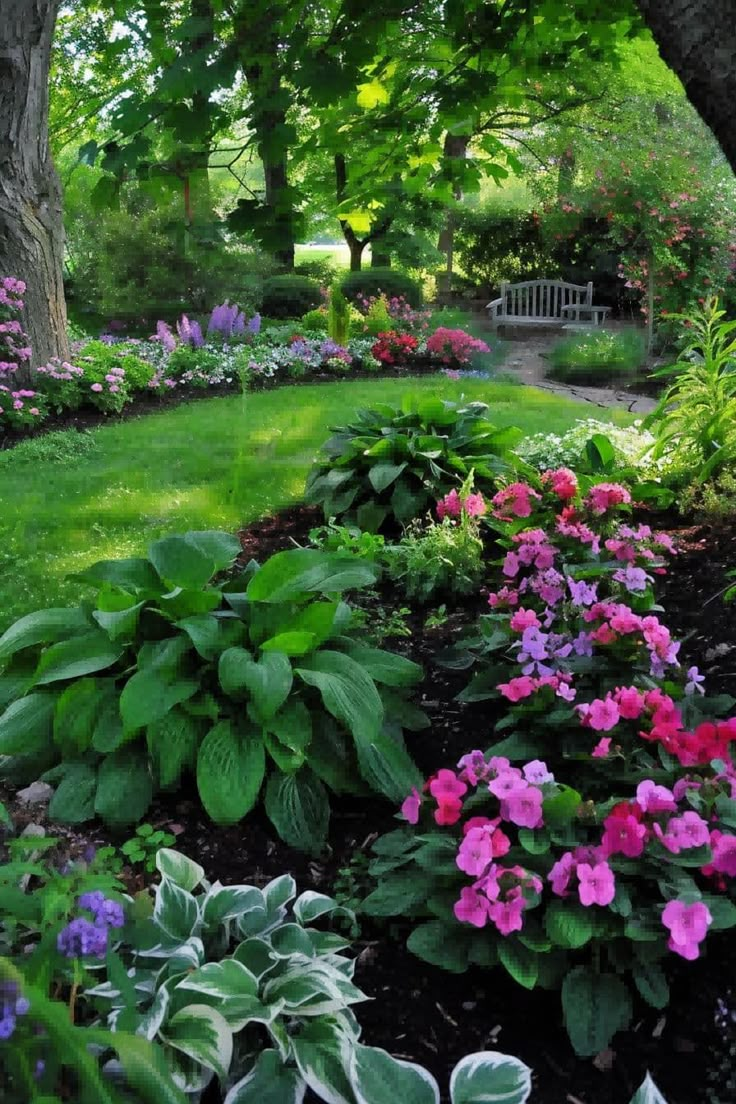
Flowers do not need to carry the whole design. Hostas offer broad leaves in green, blue-green, or variegated shades. Ferns add fine texture, while Japanese forest grass can create a soft, arching shape in suitable conditions. These plants help the garden look full between bloom periods.
For bold leaves
Use hostas as focal plants, leaving enough space for their mature width.
For a woodland look
Combine ferns, woodland perennials, and spring flowers where soil and climate suit them.
For color without many flowers
Mix coral bells and variegated foliage to brighten dark corners.
Create a Layered Shade Flower Garden
A layered planting plan makes a shady garden feel natural and full. Place taller plants toward the back of a border or near a wall, medium plants in the center, and low plants along the front edge. If the bed can be viewed from every side, put the tallest plants near the middle instead.
Think about mature plant size rather than the size of a nursery pot. Small plants can spread over several seasons, and crowded roots compete for water and nutrients. Leave enough room for airflow and access to the soil. A little open space at planting time can prevent a crowded bed later.
Source: i.pinimg.com
Back layer
Use larger hostas, tall ferns, or suitable shade-tolerant shrubs as a green backdrop. Check the final height and width before planting.
Middle layer
Place astilbes, bleeding hearts, and medium-sized flowering perennials where their blooms can be seen.
Front layer
Use low-growing ground covers or compact foliage plants along paths and bed edges. Keep spreading plants away from areas where they could block walkways.
Repeat Plants to Make the Bed Feel Calm
Repeating a few plant types gives the garden a clear pattern. For example, group three coral bells near a path, then repeat their leaf color farther along the border. Use odd-numbered groups as a flexible design guide rather than a strict rule. The goal is to create a rhythm without making the bed look crowded.
Keep the color palette simple
Choose two or three main flower colors and support them with green foliage.
Vary leaf shapes
Pair broad hosta leaves with fine fern fronds and small ground-cover leaves for contrast.
Try These Flower Garden Ideas for Shade
A shady spot can support many styles, from a relaxed woodland bed to a neat border beside the house. Choose a layout that fits the shape of your yard and the amount of time you want to spend on upkeep. A small, well-planned bed often looks better than a large one filled with plants that do not suit the site.
Use these ideas as starting points, then adjust the plant choices to your local growing zone and soil. The same layout can look different in a cool New England yard, a humid Mid-Atlantic garden, or a warm Southern landscape.
Source: s-media-cache-ak0.pinimg.com
Woodland flower garden
Plant ferns, hellebores, and suitable spring woodland flowers beneath deciduous trees. Use leaf litter as a natural mulch where it is healthy and appropriate.
White flower garden
Combine white impatiens or begonias with pale flowers and green foliage. White blooms can stand out against darker leaves, especially in the evening.
Colorful foliage border
Mix hostas, coral bells, and shade-tolerant grasses for a display that stays attractive even when flowers fade.
Cottage-style shade bed
Combine compatible flowering perennials in loose groups. Use varied heights and bloom times while leaving enough room for each plant to grow.
Small shade garden beside a path
Use a few compact plants along the edge, then place taller flowers farther back. Keep plants from spilling over the path.
Make a Shade Garden in Containers
Containers are useful when the soil beneath trees is full of roots or when a porch receives little direct sun. Choose pots with drainage holes and use a suitable container mix rather than heavy garden soil. Place taller foliage at the back of a pot, flowering plants in the middle, and trailing plants near the rim.
For a porch
Try shade-tolerant begonias with compact foliage plants in a pot that receives bright indirect light.
For a covered entry
Choose plants based on the light that reaches the entry and check containers often because pots can dry out faster than garden beds.
Design a Shade Garden for Small Backyards
A small backyard does not need many plant types to feel lush. Start with the strongest feature, such as a tree, a fence, a shaded wall, or a narrow side yard. Then build a compact planting plan around it. A clear edge and a few repeated plants can make a tiny garden look intentional rather than cramped.
Vertical space can help when ground space is limited. A trellis may support a suitable climbing plant if the site gets enough light, while wall-mounted pots can hold shade-tolerant seasonal plants. Make sure containers are secure and can be watered without damaging the wall or creating a slippery path.
Source: i.pinimg.com
Use a curved border
A gentle curve can soften a narrow bed beside a lawn or path. Keep the curve broad enough to allow easy mowing and plant care.
Choose compact plants
Look for dwarf or small-growing varieties when space is tight. Confirm their mature spread instead of relying on the size of the young plant.
Keep one clear focal point
A large hosta, a decorative pot, or a small garden seat can anchor the design without taking over the whole area.
Leave room to walk
Avoid placing large leaves or spreading ground covers where they will block a gate, steps, or a narrow walkway.
Plan a Low-Cost Shade Flower Bed
You can start small and add plants over time. Begin with a short list of plants that match your light and soil, then buy healthy specimens from a local nursery or plant sale. Perennials may spread enough to divide later, but wait until each plant is established and follow the needs of that species.
Start with three plant types
Choose one flowering plant, one foliage plant, and one low-growing edging plant that can grow in the same conditions.
Use suitable divisions
Ask a local gardening group or nursery about dividing mature plants. Do not take plants from parks or wild areas without permission.
Prepare the Soil and Plant Your Shade Garden
Healthy soil helps shade plants settle in and grow strong roots. Remove weeds by hand where possible, then loosen the soil gently without cutting large tree roots. Add compost only when it suits the soil and planting plan. Heavy additions of soil over tree roots can reduce air and water flow, so avoid raising the ground level around mature trees.
Plant during a suitable season for your region, often spring or fall for many hardy perennials. Avoid planting during extreme heat or drought when possible. Water each plant well after planting, then monitor the soil as roots establish. Follow the spacing and depth on the plant label, since crown and root requirements differ among species.
Source: bhg.com
Step 1: Mark the bed
Use a garden hose or string to outline the shape. Check access to paths, water sources, and nearby tree trunks.
Step 2: Remove weeds
Pull weeds and remove invasive roots as fully as practical. Avoid deep digging where tree roots or buried utilities may be present.
Step 3: Set out the plants
Keep nursery pots in place while you test the layout. Check mature height, spread, and flower color before digging.
Step 4: Plant at the right depth
Follow the plant label. Most perennials should not be buried deeper than they grew in their pots, although exact requirements vary.
Step 5: Water and mulch
Water the root zone thoroughly and apply a light layer of suitable mulch. Keep mulch away from plant crowns and tree trunks.
How to Know If the Plants Are Settling In
New plants may take time to adjust after transplanting. Look for firm stems, healthy new leaves, and soil that stays moist without becoming soggy. Some perennials may wilt briefly in warm weather, but lasting wilt can signal a watering problem, root stress, or poor drainage. Check the soil before adding more water.
Dry soil
Water slowly at the root zone, then check whether moisture reaches the root ball.
Wet soil and yellow leaves
Check drainage and watering frequency. Some shade plants decline when roots remain waterlogged.
Little new growth
Review light levels, planting depth, season, and root competition before adding fertilizer.
Maintain Your Shade Flower Garden
Shade gardens often need less water than sunny beds, but shade does not always mean cool, moist soil. Tree roots can draw out water, and a roof overhang may block rain. Check the soil near the roots before watering. A finger test or a small soil probe can help you judge whether the root zone is dry.
Keep maintenance simple and regular. Remove damaged leaves, trim spent flower stems when appropriate, and pull weeds before they spread. Some plants benefit from dividing after they become crowded, while others prefer to stay undisturbed. Use the needs of each species as your guide rather than following one schedule for every plant.
Source: cdn.diycraftsy.com
Water based on soil moisture
Water deeply when the root zone begins to dry, adjusting for rain, temperature, soil type, and the needs of each plant.
Refresh mulch when needed
A suitable organic mulch can help reduce weeds and slow moisture loss. Keep it away from stems and crowns.
Remove weeds early
Hand-pull weeds while they are small, taking care not to disturb shallow roots of nearby perennials.
Check for pests and disease
Inspect leaves for chewing, spots, or unusual growth. Improve airflow and avoid wetting foliage late in the day when disease is a concern.
Keep Flowers Coming Back Each Season
Combine plants with different bloom times to avoid a garden that looks colorful for only a few weeks. Spring flowers can lead into summer blooms from astilbes or begonias, while foliage plants maintain structure through the gaps. In regions with cold winters, choose perennials suited to the local hardiness zone and protect young plants when their labels recommend it.
Spring
Use suitable woodland flowers and hellebores where they thrive.
Summer
Add astilbes, impatiens, begonias, or other locally suitable shade flowers.
Fall
Let attractive foliage provide structure and remove diseased plant material as needed.
Common Shade Garden Mistakes to Avoid
The most common problem is choosing plants based on appearance alone. A flower may look lovely in a photo but need more sunlight or cooler summers than your yard can provide. Check the growing requirements of the exact variety and compare them with the conditions in your garden before buying several plants.
Another mistake is assuming every shaded bed stays damp. Soil under trees may dry quickly, while a low spot near a downspout may stay too wet. Watering without checking can make either problem worse. The best plan responds to the actual site rather than the label of shade garden.
Source: onlinegardendesign.com.au
Planting sun-loving flowers in deep shade
Poor flowering and weak growth may follow when a plant lacks the light it needs. Move it to a brighter site or replace it with a shade-tolerant option.
Overcrowding plants
Crowded plants compete for water and airflow. Follow mature spacing guidance and allow room for growth.
Adding too much fertilizer
Excess nutrients may encourage weak growth or harm plants. Use a soil test and plant-specific guidance before feeding.
Ignoring invasive species
Some fast-spreading ground covers can escape garden beds. Check local invasive plant lists and choose noninvasive alternatives.
Overlooking plant safety
Some ornamental plants can be harmful if eaten or may irritate skin. Check reliable plant safety information if children or pets use the garden.
What to Do When Shade Flowers Do Not Bloom
First, check the amount of light the plant receives during its growing season. A site may be darker than it seemed in early spring. Next, review watering, drainage, plant maturity, and pruning. Some perennials need time to establish, and some naturally bloom for only a short period.
Too little light
Move the plant if practical or replace it with a species suited to deeper shade.
Excess shade from new growth
Recheck the site as trees and shrubs mature. Avoid removing major branches without considering tree health and qualified guidance.
Poor drainage or dry roots
Correct the watering plan and choose plants that match the site’s moisture conditions.
Frequently Asked Questions
Q
What flowers grow best in full shade?
Hellebores and some woodland flowers can grow in full shade, depending on the local climate and soil. Many gardens also use hostas and ferns for foliage because these plants add shape and color even when flowers are limited. Check the needs of each variety, since full shade can range from bright indirect light to very dark conditions.
Q
How can I make a shady flower garden more colorful?
Use a mix of flower colors and bright foliage. White flowers can stand out against dark green leaves, while coral bells offer purple, bronze, or lime-toned foliage. Add plants with different bloom times and repeat a few colors across the bed for a balanced look.
Q
Can flowers grow under large trees?
Yes, some shade-tolerant flowers can grow beneath large trees, but competition for water and root space can make planting harder. Choose small plants that fit between major roots, avoid deep digging, and water new plants as needed. Do not cover the tree’s root zone with thick layers of soil or mulch.
Q
What are the best low-maintenance plants for shade?
Hostas, ferns, and suitable shade-tolerant perennials can be low-maintenance once established. The best choice depends on local weather, soil moisture, and the amount of shade. Select plants that fit the site so you spend less time correcting problems with watering, poor growth, or disease.
Q
When should I plant a shade flower garden?
Spring and fall are often good times to plant hardy shade perennials because temperatures are milder. The best planting window depends on your USDA hardiness zone, the plant species, and local weather. Seasonal plants such as begonias and impatiens are usually planted after the risk of frost has passed in colder regions.
Q
How often should I water flowers in a shade garden?
There is no single watering schedule for every shade garden. Check the soil near the roots and water when it begins to dry to a depth that suits the plant. Containers and beds under tree roots may need more frequent checks, while moist clay soil may need less water. Avoid keeping roots constantly waterlogged.
✦ Wrapping Up
Conclusion
Flower garden ideas for shade work best when the plants match the light, soil, and climate in your yard. Astilbes, bleeding hearts, coral bells, hellebores, and begonias can bring color to suitable shaded spaces, while hostas and ferns add shape between blooms. A layered layout, thoughtful plant spacing, and a clear color plan can turn a dark corner into an inviting garden.
You do not need to fill every inch at once. Start with a small bed, choose a few plants with similar needs, and watch how they respond through the season. Add more varieties once you know how the light and soil behave. With steady care and suitable plant choices, a shady yard can become a lovely part of your landscape.
💡 Key Takeaway
Today, track the sunlight in your chosen garden spot, check the soil moisture, and select three shade-tolerant plants that suit your USDA hardiness zone. Sketch a simple layout before buying plants.