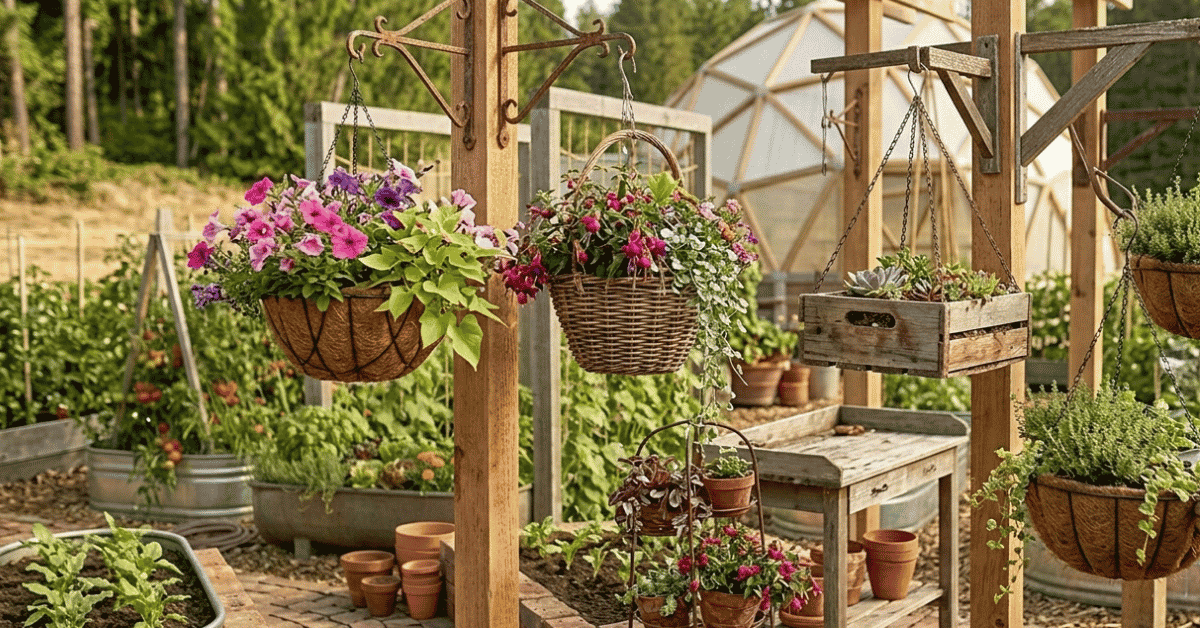
Imagine vibrant flowers cascading down, transforming your porch or patio. Hanging baskets bring color and life to any space. They add charm easily.
I’ve spent many sunny afternoons fussing over mine. It’s a rewarding hobby. Let’s explore how to create stunning hanging baskets that will wow your neighbors.
What’s So Special About Hanging Basket Gardening?
Honestly, it’s about high-impact beauty. Hanging baskets let you garden vertically. This is great for small spaces.
You can trail plants over walls or fences. They draw the eye upward. This makes a garden feel bigger.
I love how they greet you at the door. They add instant curb appeal. Plus, you can control the soil and light easily.
This helps plants thrive. It’s a fun way to experiment with colors. You can change them each season.
Adding Color and Dimension
My favorite thing is the sheer burst of color they offer. You can choose soft pastels. Or go for bold, bright hues.
Trailing petunias are classic. They spill over the edges like waterfalls. Fuchsias offer unique, delicate blooms.
They look so elegant. Don’t forget foliage. Colorful leaves add texture.
Think about silver dichondra or deep purple sweet potato vine. These add layers. They make the basket look full.
I like mixing textures too. Fuzzy lamb’s ear next to smooth begonia leaves. It’s a feast for the eyes.
Maximizing Small Spaces
This is where hanging baskets truly shine. If you have a tiny balcony, they’re a lifesaver. You can hang them from porch ceilings or eaves.
Even a simple shepherd’s hook can create a focal point. I remember living in a small apartment. My only garden space was a tiny patio.
Hanging baskets were my secret weapon. They made it feel like a real oasis. You get maximum impact with minimal ground footprint.
It’s smart gardening.
Easy Access and Maintenance
Because they hang, baskets are often at a good height. This means less bending. It’s easier to water and weed.
I find it much simpler to check on my plants. I don’t strain my back. It also helps keep pests away.
Slugs and snails have a harder time reaching them. This means healthier plants for you. This is a big pro for me.
I’ve got enough aches and pains from general life.
Creating Your Dream Hanging Basket
Creating a beautiful hanging basket isn’t complicated. It’s about choosing the right plants. It’s also about giving them a good start.
I always start with a good quality potting mix.
Selecting the Perfect Pot
The container is important. Baskets come in many materials.
- Plastic: Lightweight and holds moisture well. Great for beginners.
- Wire/Coco Liners: Classic look. They drain well but dry out faster. You’ll need to water more.
- Terracotta: Pretty but heavy. They dry out very quickly. Need frequent watering.
- Ceramic: Heavy and can be expensive. Offer great visual appeal.
Think about the style you like. Also, consider how much watering you can do. For me, coco-lined baskets are my go-to.
They look so rustic.
Choosing Your Plants: The “Thrill, Fill, Spill” Method
This is the golden rule. It makes creating a balanced basket easy.
- Thrillers: These are your tall, dramatic plants. They go in the center. They grab attention. Think upright fuchsias or coleus.
- Fillers: These are mounding plants. They fill in the middle space. They add bulk. Calibrachoa or geraniums work well.
- Spillers: These trail over the edge. They create that lush, cascading look. Lobelia, ivy, or sweet potato vine are perfect.
I love to mix and match. For example, a tall, spiky ornamental grass as the thriller. Then, some vibrant calibrachoa as fillers.
And finally, trailing vinca vine spilling down. It creates such a dynamic effect.
The Right Soil Matters
Don’t use garden soil! It compacts too much. It won’t drain well.
Use a good potting mix. Look for one designed for containers. It should be light and airy.
It must have good drainage. I often add a bit of slow-release fertilizer to my mix. This gives the plants a steady food source.
My mix usually has peat moss or coir. It also has perlite to help with aeration.
Planting Your Basket
Start by placing your thriller in the center. Then, add your fillers around it. Finally, tuck the spillers in.
Make sure the plants are spaced well. Don’t overcrowd them. They need room to grow.
Gently firm the soil around the roots. Water everything thoroughly. I always give them a good soak after planting.
This helps settle the soil.
Caring for Your Hanging Gardens
Watering is key. Hanging baskets can dry out fast. Especially in hot weather.
Watering Wisely
- Check daily: Stick your finger into the soil. If the top inch feels dry, it’s time to water.
- Water deeply: Soak the soil until water runs out the bottom. This ensures all the roots get water.
- Water the soil: Try to water the soil directly. Avoid wetting the leaves too much. This can prevent disease.
I sometimes use a watering can with a long spout. It helps me reach the baskets easily. If it’s really hot or windy, I might water twice a day.
You can feel the weight of a dry basket. It’s much lighter.
Feeding Your Plants
Plants in containers need regular feeding. They use up the nutrients in the potting mix quickly.
- Liquid fertilizer: Use a balanced liquid fertilizer every 2-3 weeks.
- Slow-release: If you added it to the soil, you might not need much else. Follow product instructions.
I like to use a general-purpose fertilizer. Something like a 10-10-10 formula works well. It provides a good balance of nutrients.
This keeps my plants healthy and blooming.
Pruning and Deadheading
Keeping your baskets tidy helps them look their best.
- Deadhead: Remove spent flowers. This encourages more blooms.
- Prune: Trim back any leggy growth. This keeps the plants bushy.
I make it a habit to walk around my baskets with my pruners. Snipping off tired blooms is a quick task. It makes a big difference.
Popular Plant Choices for Hanging Baskets
There are so many wonderful plants. Here are a few of my favorites:
For Sun-Loving Baskets
These plants thrive in full sun. They need at least 6 hours of direct sunlight daily.
- Petunias: Classic choice. So many colors and varieties. Trailing types are excellent.
- Calibrachoa (Million Bells): Similar to petunias but smaller flowers. Very prolific bloomers.
- Geraniums (Pelargoniums): Both upright and trailing varieties work. Very heat tolerant.
- Verbena: Many trailing types with clusters of flowers. Good for covering the edges.
- Bacopa: Small, delicate flowers. Trails nicely and adds a soft touch.
I have a bright red geranium in a basket on my porch. It’s been blooming non-stop since May. It just brightens my whole day.
For Shady Spots
These plants do well with less direct sun. Morning sun or dappled shade is ideal.
- Fuchsias: Stunning, unique flowers. Many varieties have elegant, trailing habit. They prefer cooler, shadier spots.
- Impatiens: Bright, cheerful flowers. Great for shady areas. Walleriana types are compact. New Guinea impatiens are larger.
- Begonias: Many types offer beautiful foliage and flowers. Wax begonias are reliable performers. Tuberous begonias have showy blooms.
- Lobelia: Delicate, often blue or purple flowers. Trails beautifully. Needs consistent moisture.
- Ferns: Add lovely texture. Japanese Painted Fern offers beautiful silvery foliage.
My north-facing porch gets very little sun. It’s the perfect spot for my fuchsia baskets. They look so ethereal.
Common Hanging Basket Challenges and Solutions
Even with the best intentions, things can go wrong. Here’s how to tackle common issues.
Plant Comparison Table
| Plant Type | Sun Needs | Water Needs | Blooming Season | Key Feature |
|---|---|---|---|---|
| Petunia | Full Sun | Moderate | Spring to Fall | Cascading blooms, many colors |
| Fuchsia | Partial Shade | Moderate | Summer to Fall | Unique, dangling flowers, elegant |
| Calibrachoa | Full Sun | Moderate | Spring to Fall | Prolific small blooms, self-cleaning |
| Impatiens | Shade | Moderate | Spring to Fall | Bright, continuous color in shade |
| Sweet Potato Vine | Full Sun to Part Shade | Moderate | All Season (Foliage) | Vigorous trailing foliage, various colors |
Pests and Diseases
Aphids and spider mites can be a problem.
- Solution: A strong spray of water can dislodge many pests. Insecticidal soap is also effective. For more serious issues, consider neem oil. This is a wonderfully simple method that saved my crops once. https://gardeningtipsideas.com/this-strange-gar…k-saved-my-crops/
Basket Drying Out Too Quickly
This is super common, especially in summer.
- Solution: Use a good potting mix with moisture-retaining elements like coir. Add a layer of mulch on top. Consider a larger basket. Water more frequently, perhaps twice a day in hot weather. I sometimes use a moisture-retaining gel mixed into the soil.
Lack of Blooms
Sometimes plants just don’t flower well.
- Solution: Ensure they are getting adequate light for their needs. Fertilize regularly. Deadhead spent flowers to encourage new ones. Too much nitrogen can lead to leafy growth without flowers. Check your fertilizer balance. This is a topic that really changed my plot. https://gardeningtipsideas.com/this-simple-gard…k-saved-my-plot/
FAQs About Hanging Basket Gardening
Do I need a special pot for hanging baskets?
No, but choose lighter materials. Ensure it has drainage holes. This is crucial for plant health.
How often should I water my hanging baskets?
Check the soil daily. Water when the top inch feels dry. Hot, windy weather may require daily watering.
What’s the best soil for hanging baskets?
Use a high-quality, well-draining potting mix. Avoid heavy garden soil. It compacts easily.
Can I mix different types of plants in one basket?
Yes, use the “thrill, fill, spill” method. This creates a balanced, attractive design.
How do I keep my hanging baskets looking good all season?
Regular watering, feeding, and deadheading are key. Prune leggy growth to maintain shape.
This simple garden secret can really impact your yard. https://gardeningtipsideas.com/this-simple-gard…sy-backyard-plot/