
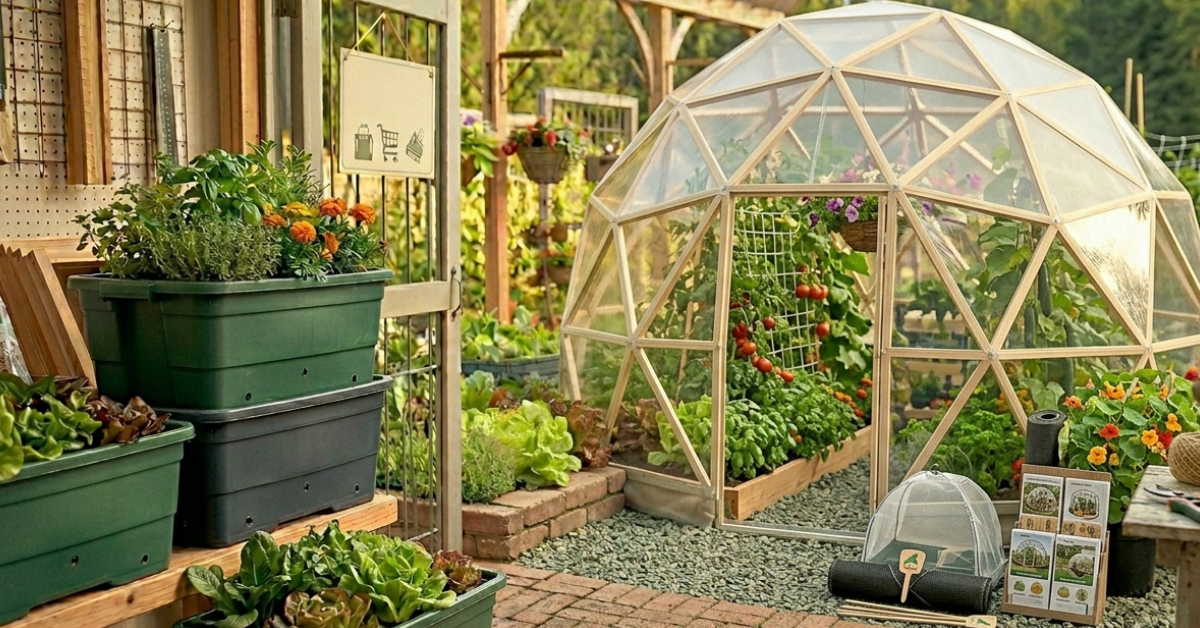
Dreaming of a better garden space? My gardening globe tent changed my whole backyard. It’s a game-changer for growing anything.
Find out if one is right for you.
What Exactly Is a Gardening Globe Tent?
Let me tell you, this thing is amazing. A gardening globe tent, also called a geodesic dome greenhouse, is basically a sturdy, transparent bubble for your plants. It’s shaped like a ball, made of connected triangles.
It’s tough, but it lets in tons of sunlight. I first saw one online and thought, “No way!” But my little garden was getting crowded and the weather was so unpredictable. I was losing seedlings to late frosts and pesky bugs.
This tent felt like a wild idea, but I took the leap, and wow. It’s not just for growing tomatoes; it’s a whole new way to enjoy my garden space, even when it’s chilly or raining outside.
Why Would I Want a Gardening Globe Tent?
Honestly, I wanted to grow more things, for longer. My soil isn’t the best, and some plants just don’t do well in my area. A globe tent gives me control.
I can start seeds super early, way before the last frost. I can keep tender plants safe all winter. It also keeps out critters.
Rabbits, deer, even those annoying squirrels can’t get in. Plus, the humidity inside is perfect for certain plants. Think about growing peppers in a cooler climate, or starting delicate herbs without worry.
It’s like having a mini-climate zone that you control. For me, it meant delicious salads in autumn and fresh basil in November. It’s more than just a structure; it’s a reliable growing partner.
Extend Your Growing Season
This is the biggest win. I used to only have a few short months for veggies. Now, I’m picking lettuce and spinach well into fall.
I’ve even managed to keep some hardy kale going through mild winters. It feels pretty magical to have fresh greens when everyone else’s garden is brown. I remember last year, a surprise frost hit in April.
My neighbors lost their young plants. Mine were tucked safely inside the globe tent, happy as can be. It’s like giving your garden a cozy blanket and a warm hug.
Protect Your Plants From Pests and Weather
Pests are a total nightmare. Slugs, aphids, caterpillars, you name it, they’ve munched my leaves. The globe tent is a fortress.
Once it’s zipped up, those garden invaders can’t get a look in. And the weather? Wind, hail, heavy rain, they all get bounced off.
This means less stress for me and healthier plants. I don’t have to cover things up every time the sky looks gray. It lets me focus on the fun part: watching things grow.
It’s incredibly freeing.
Create an Ideal Growing Environment
Every plant has its perfect conditions. Some love dry heat, others need moist air. Inside the globe tent, I can manage that.
I can open vents to let in air on hot days. I can keep it closed up tight when it’s cold and humid. This controlled environment means plants that might struggle outdoors can really thrive.
I’ve had amazing success with cucumbers and even some delicate flowers that always died before. It’s like giving each plant its own little spa day, tailored just for them.
Setting Up Your Gardening Globe Tent: My Experience
Putting up my globe tent was an adventure. It came in a big box, with lots of metal poles and plastic connectors. The instructions looked a bit daunting at first, but they were actually pretty clear.
It took me and a friend a couple of hours. We spread out all the pieces. Then we clicked the poles together, following the diagram.
The fabric cover went over the frame last. You have to be careful to get it smooth. It needs to be pulled tight so it doesn’t flap in the wind.
I anchored mine down really well because I live in a windy spot. I used long stakes driven deep into the ground. Some people use sandbags or concrete blocks.
Whichever way you secure it, make sure it’s solid. Once it was up, I felt so proud! It looked amazing, like a giant, shiny bubble in my yard.
Pro Tip: Get an extra pair of hands if you can. It makes the process much smoother, especially when stretching the cover.
Choosing the Right Location
This is super important. You want to place your globe tent where it gets plenty of sunlight. Most vegetables need at least 6-8 hours of direct sun each day.
I picked a spot in my backyard that gets sun from morning to late afternoon. Avoid areas shaded by tall trees or buildings. Also, think about drainage.
You don’t want water pooling around your tent. A slightly elevated spot is good. And make sure it’s level.
It’s easier to set up and the structure will be more stable. Lastly, consider access. You’ll need to get to it easily with water and tools.
Assembling the Frame
The frame is usually made of metal poles. They connect with special fittings. It’s a bit like building a giant erector set.
My tent had color-coded poles, which helped a lot. You lay out the pieces and start connecting them. It’s a geometric puzzle.
The key is to follow the instructions precisely. Don’t force parts together. If something doesn’t fit easily, re-check the step.
The structure needs to be perfectly assembled for the cover to fit right. I found it helpful to go slow and double-check each connection.
Attaching the Cover
This is often the trickiest part. The cover is made of clear plastic or strong greenhouse film. It’s designed to stretch taut over the frame.
You usually start at the bottom and work your way up. Many covers have zippers for doors. Make sure these are oriented correctly before you pull the cover tight.
If it’s a windy day, this job can be tough. You might need to weigh down edges or have someone hold sections in place. Once it’s on, you secure it using ties, clips, or a tensioning system.
A tight cover helps the tent withstand wind and rain better. My first attempt had a few wrinkles, but it still worked great.
Anchoring Your Tent
This is non-negotiable. A gardening globe tent needs to be securely anchored. If it’s not, a strong gust of wind can send it tumbling.
This could damage the tent and your garden. My tent came with ground stakes. I hammered them deep into the soil at several points around the base.
I also added some heavy rocks around the skirt. Some larger tents might need more robust anchoring, like concrete footings. Always follow the manufacturer’s recommendations.
Better safe than sorry gets you a happy garden, not a mangled tent.
What Can You Grow Inside a Gardening Globe Tent?
The possibilities are pretty wide open! I started with simple things, but I’ve branched out. Here’s a taste of what thrives inside:
- Leafy Greens: Lettuce, spinach, arugula, kale, Swiss chard. They grow faster and last longer.
- Herbs: Basil, mint, cilantro, parsley, rosemary. They stay lush and fragrant.
- Fruiting Vegetables: Tomatoes, peppers, cucumbers, beans, peas. They love the warmth and humidity.
- Root Vegetables: Carrots, radishes, beets. They can be started earlier and harvested later.
- Flowers: Annuals and perennials that need a bit of protection.
I’ve even tried growing strawberries earlier than usual. The results were fantastic! It allows me to experiment with plants that might not normally survive my local climate.
I’m currently planning a section for exotic peppers, something I’d never have attempted before. It’s truly a creator’s space for your garden.
Gardening Globe Tent Features to Consider
When you’re looking at these tents, a few things stand out as really important. It’s not just about the size.
| Feature | My Experience | What to Look For |
|---|---|---|
| Size | I started with a 10-foot diameter. It’s good for a few raised beds. Could always go bigger. | Measure your space and decide what you want to grow. Bigger is often better, but needs more space. |
| Cover Material | Mine is thick, clear plastic. It’s held up well to sun and wear. | Look for UV-resistant, heavy-duty greenhouse film or polycarbonate panels. Durability is key. |
| Ventilation | It has zippered openings. I can control airflow quite well. | Essential for temperature and humidity control. Roll-up windows or vents are great additions. |
| Door Access | A simple zipper door. Works well. Easy to get in and out. | Ensure the door is large enough for you and your tools. Zipper quality matters for longevity. |
| Frame Strength | Pretty sturdy metal. It feels solid once assembled. | Steel or aluminum frames are generally strongest. Wider diameter poles offer more stability. |
| Anchoring System | Came with stakes. I added extra security. | Check what’s included and if it’s sufficient for your climate. Heavier-duty options might be needed. |
The Importance of Ventilation
For real success, you need good airflow. Without it, the inside can get too hot, too humid, or stagnant. This can lead to fungal diseases.
I make sure to open up my tent on warm days, even if it’s still cool in the morning. Many tents have built-in vents or roll-up panels. These are brilliant.
They let you fine-tune the air circulation. Proper ventilation is as crucial as sunlight. It keeps your plants healthy and happy.
Durability and Weather Resistance
Gardening is outside, so your tent has to handle the elements. Strong winds are the biggest challenge. A poorly anchored tent can be destroyed.
Look for robust frame materials like steel or thick aluminum. The cover material should be UV-treated so it doesn’t break down in the sun. Heavy-duty greenhouse film or polycarbonate panels are good choices.
I check mine after strong storms to ensure everything is still secure. My initial setup has survived a few serious gales, which gives me real peace of mind.
My Gardening Globe Tent Journey: Real Joys
This gardening globe tent has brought so much unexpected joy. It’s not just about the extra produce, though that’s fantastic. It’s about the connection to nature I feel, even on a cold day.
I can go out and tend to my plants, feel the soil, and watch things grow. It’s a peaceful escape. I remember planting some delicate snapdragons in late fall.
I watched them bloom inside the tent while snow fell outside. That was a real moment of magic. It transformed my backyard into a year-round haven.
This wasn’t just about growing food; it was about creating a special place for myself. It’s a tangible link to the earth, accessible no matter the season. It actually made me want to do more creative gardening. https://gardeningtipsideas.com/real-joy-demands…or-gardening-now/
My journey has shown me that a gardening globe tent is more than just a greenhouse. It’s an investment in your gardening passion. It opens up new possibilities and brings a deeper connection to growing.
I’ve found that simple garden structures can really change your outlook. https://gardeningtipsideas.com/this-simple-gard…ck-saved-my-plot/
FAQs About Gardening Globe Tents
Are gardening globe tents hard to assemble?
Most are designed for DIY assembly. Kit instructions are usually clear, with poles clicking into connectors. Getting help can make it easier.
Can a gardening globe tent withstand strong winds?
Yes, if properly anchored. Sturdy frames and secure anchoring are vital for wind resistance.
What size gardening globe tent should I buy?
Consider your garden space and growing goals. A 10-foot diameter is good for a few beds.
How much sun do plants need inside a globe tent?
Most plants need 6-8 hours of direct sun. Choose a sunny location for your tent.
Can I leave a gardening globe tent up all year?
Yes, most are designed for year-round use. Ensure good ventilation and secure anchoring.