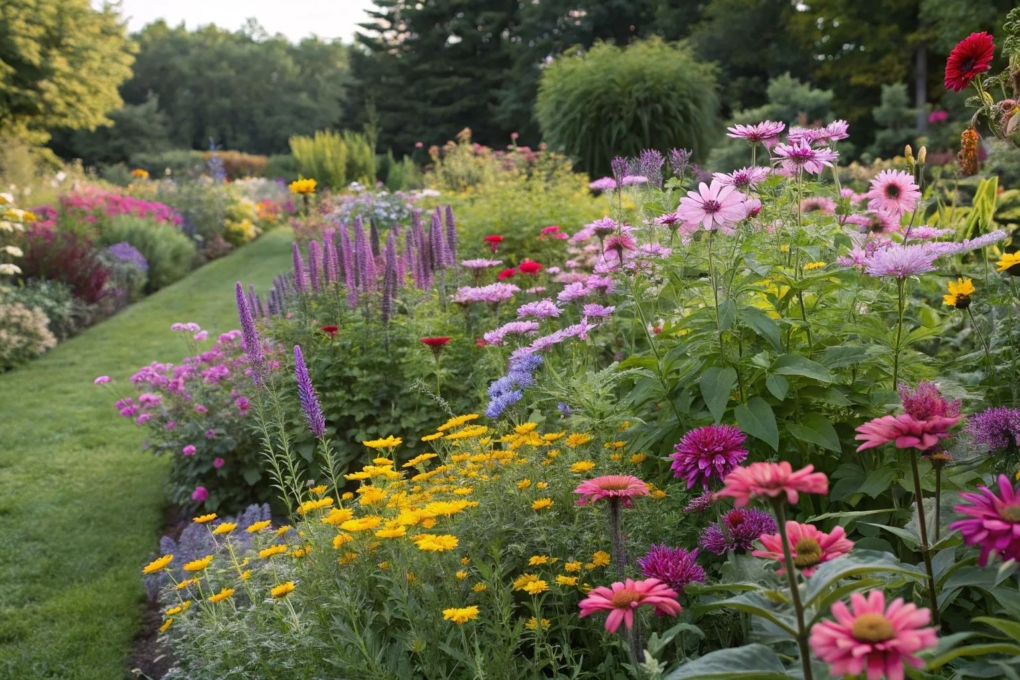
The best perennial flower bed plans group plants by sunlight, soil, mature size, bloom time, and water needs. Place tall flowers toward the back, medium plants in the middle, and low-growing flowers near the front. Choose a mix of early, midseason, and late bloomers for color from spring through fall.
Across the United States, a well-planned perennial flower bed can bring color to a front yard, patio, fence line, or backyard. Perennials are plants that live for more than two years, although their growth and bloom cycles vary by species and climate. Many die back in winter and return when conditions suit them. A good plan helps you use space well, avoid crowded roots, and enjoy flowers without starting over each spring.
Your local climate should guide every plant choice. A flower that thrives in a cool Minnesota summer may struggle in a hot Texas yard. USDA plant hardiness zones can help you check winter survival, but they do not tell the whole story. Sun exposure, summer heat, drainage, rainfall, and soil also shape how well a plant grows. Start with your site, then choose a layout that fits your yard and the time you can give it.
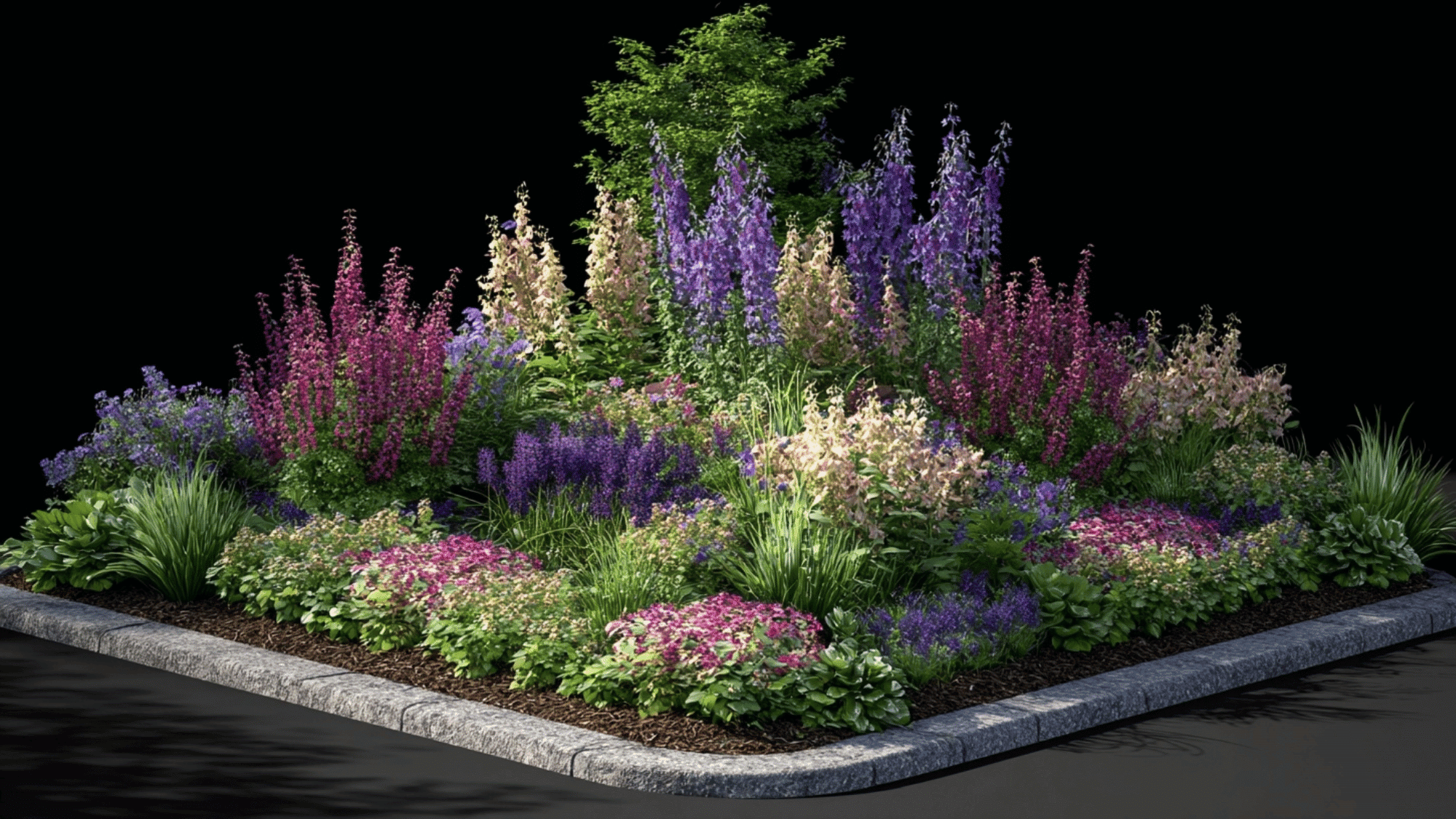
Choose a layout based on where the bed sits and how you will view it. A bed against a house usually works best with tall plants at the back and short plants at the front. An island bed surrounded by lawn needs a different approach because people can see it from several sides. In that case, place the tallest plants near the center and step down in height toward the edges.
Before buying plants, note the bed’s length, width, sunlight, and soil condition. Watch the area through the day to see which parts receive full sun and which remain shaded. Check whether water drains after rain or stays in low spots. These details can save money and help prevent a common problem: buying attractive plants that never thrive in the chosen location.
Source: cdn.opplehouse.com
For a narrow border
Use a simple row or staggered bands of low, medium, and tall plants. Avoid too many large varieties that may spill over a path.
For a wide garden bed
Create groups of three or more plants where space permits. Repeat the groups along the bed to form a clear pattern.
For a small yard
Choose a short plant list with different flower shapes and bloom times. A few well-matched varieties often look better than a crowded mix.
For a low-care garden
Favor plants suited to your soil and climate, use mulch where appropriate, and leave enough space for mature growth.
Measure the Bed Before You Buy Plants
Measure the length and width of the planting area. For a simple rectangular bed, multiply the length by the width to find its area in square feet. If the bed curves around a tree or follows a winding path, divide it into smaller shapes and estimate each section separately. Mark the outline with a garden hose or rope so you can judge its shape before digging.
Next, check the mature width listed on each plant label. A plant that grows three feet wide needs more room than a small label photo may suggest. Space plants according to their expected size, not the size of the pot at purchase. The bed may look sparse in its first year, but proper spacing supports airflow and helps prevent overcrowding.
Example calculation
A bed that measures 12 feet long and 4 feet wide has 48 square feet of surface area. This is the area to plan for, not a guarantee that a certain number of plants will fit.
Check Sunlight and Soil
Most full-sun perennials need about six or more hours of direct sunlight each day, though plant requirements vary. Part-shade plants often tolerate less direct sun, while some woodland species prefer filtered light. Observe the bed in the morning, around midday, and later in the afternoon before deciding which plants belong there.
Soil matters just as much. Many common garden perennials grow well in soil that drains reasonably well, but some prefer moist conditions and others need sharp drainage. If the ground stays wet long after rain, address the drainage issue or select plants suited to that site. Avoid adding sand to heavy clay as a quick fix; the result may not improve the soil structure. Organic matter can help, but the right approach depends on the soil and planting goal.
Full sun
Consider coneflower, garden phlox, yarrow, salvia, and many daylilies when their moisture and climate needs match the site.
Part shade
Consider coral bells, hardy geraniums, and some astilbes where soil moisture and local conditions suit them.
Deep shade
Consider shade-tolerant foliage plants and suitable woodland perennials. Flower choices may be more limited, especially in dry shade.
Seven Perennial Flower Bed Plans for Different Yards
A useful plan does not need a complex drawing or dozens of plant types. Start with one design that suits your yard, then adjust the plant list to your climate and available space. The layouts below are adaptable examples rather than fixed planting prescriptions. Check mature sizes and local hardiness before using any plant in your final plan.
For a tidy look, repeat plants in clear groups and keep a visible edge along the lawn or path. For a relaxed look, mix flower shapes and allow some plants to lean naturally. Both styles can work well when the plants share similar growing needs.
Source: i.pinimg.com
Plan 1: Classic Front-of-House Border
Set compact edging plants at the front, medium perennials in the middle, and taller flowers near the wall or foundation. Leave room for windows, vents, walkways, and access to outdoor equipment. Avoid planting large varieties too close to the house.
Plan 2: Curved Cottage Garden Bed
Use a broad curve along the lawn with loose groups of coneflowers, garden phlox, hardy geraniums, and other suitable perennials. Repeat the same plants in more than one spot so the bed feels connected rather than random.
Plan 3: Small Corner Flower Bed
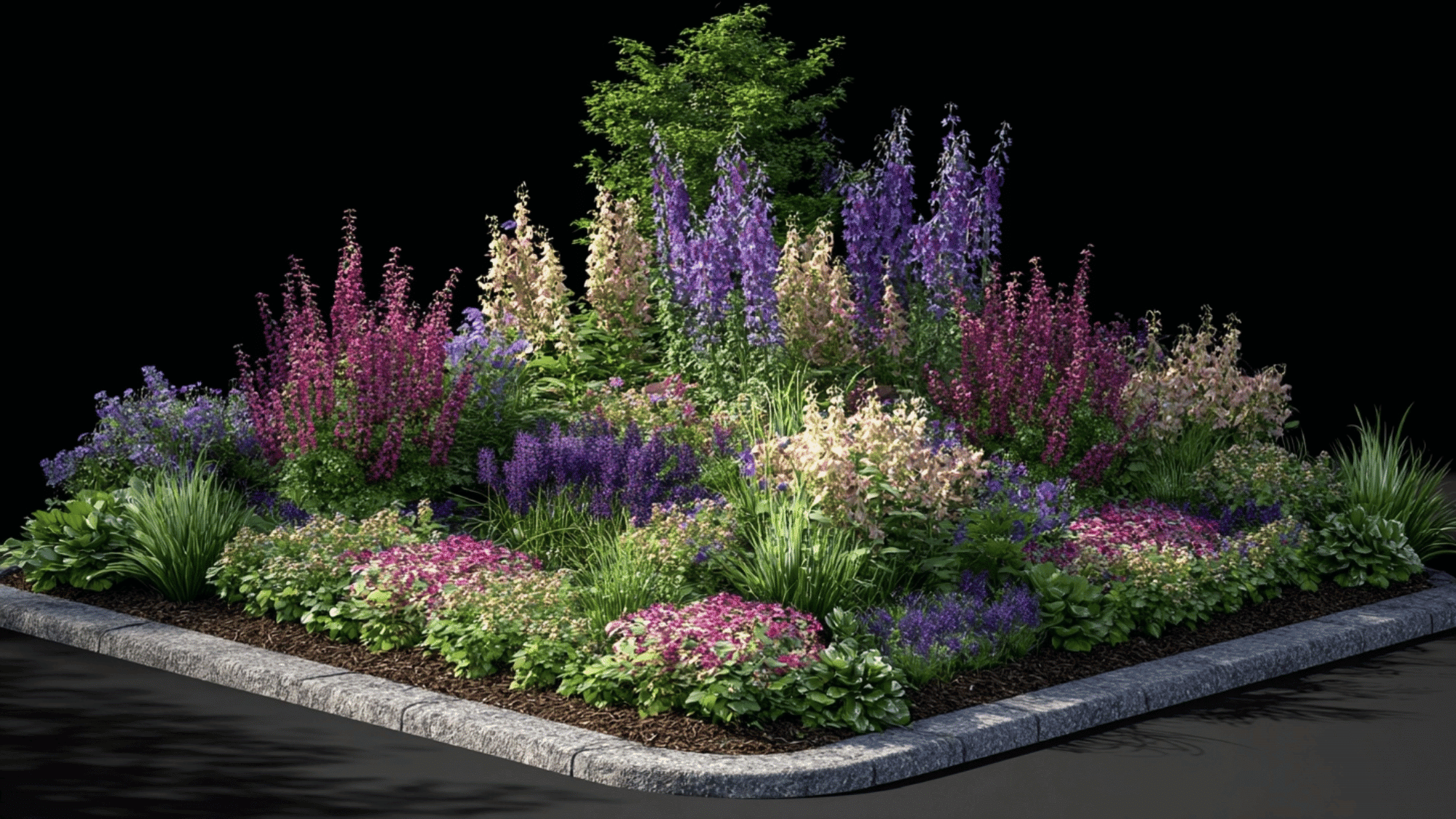
Place one taller plant or a small group near the back corner, then add medium plants along each side. Finish with low plants at the front. Keep the number of varieties modest so the small space does not feel busy.
Plan 4: Sunny Pollinator Border
Group nectar-rich flowers that bloom at different times. Coneflowers, native asters, and suitable native salvias can support pollinators when matched to the region. Choose native species from local or regional plant lists when possible.
Plan 5: Part-Shade Woodland Bed
Combine shade-tolerant flowering plants with foliage plants for texture. Use species suited to the actual soil moisture, since dry shade beneath trees differs from moist shade beside a downspout.
Plan 6: Low-Water Perennial Bed
Use climate-suited plants that tolerate the site’s typical dry periods once established. Group plants with similar water needs and improve the soil only as needed. Low-water planting still needs regular care during establishment.
Plan 7: Island Bed in the Lawn
Arrange the tallest plants near the center and lower plants around the perimeter. Use repeated clusters of flowers and foliage to make the bed attractive from every side. Add a clear edge so grass does not creep into the planting area.
Sample Planting Plan for a 12-by-4-Foot Sunny Border
For a hypothetical 48-square-foot border, use three planting bands. Place taller plants toward the back, medium plants through the center, and compact plants at the front. A possible plant mix includes garden phlox, purple coneflower, salvia, and hardy geranium, provided each plant suits the local climate and soil.
The exact plant count depends on mature width and the spacing recommended for each species. Draw circles that represent mature plant spread on graph paper before purchasing. Adjust the number of plants until the circles fit without excessive overlap. Leave access to the back of the bed if pruning or dividing will be needed.
Back band
Use selected tall perennials such as garden phlox or other upright plants that fit the available height and climate.
Middle band
Repeat medium-height plants such as purple coneflower or suitable salvia in groups rather than single scattered plants.
Front band
Use compact hardy geraniums or another low-growing perennial that will not block taller plants from view.
Arrange Flowers by Height, Shape, and Mature Width
Plant height is one of the simplest ways to make a flower bed look planned. In a border viewed from one side, tall plants generally belong toward the back, while low plants work near the front. For a bed viewed from all sides, use a central high point and step down toward the edges. There are exceptions, but this basic rule helps prevent shorter plants from disappearing behind taller ones.
Height alone does not create a balanced design. Upright flower spikes, rounded flower heads, fine foliage, and broad leaves all create different shapes. Pairing contrasting forms can make a bed more interesting, while repeating a few shapes keeps it from looking chaotic. Use foliage as part of the design because many perennials remain visible even when flowers fade.
Source: i.pinimg.com
Tall plants
Choose upright varieties for the rear of a border or the center of an island bed. Check the mature height and whether the plant may need support.
Medium plants
Use these to link the tall layer with the front edge. Repeated groups help create rhythm and visual balance.
Low plants
Place compact perennials near paths and lawns. Confirm that they will not spread too aggressively or block nearby paving.
Foliage plants
Use leaf color, size, and texture to fill gaps between bloom periods. Select plants whose light and water needs match the surrounding flowers.
How Much Space Should You Leave Between Perennials?
Follow the spacing guidance for each plant rather than using one distance for every species. Small clump-forming plants may need much less room than broad ornamental perennials. The goal is to allow mature plants to develop while leaving enough airflow and access for care.
If a plan uses plants with a mature width of 24 inches, spacing them around 24 inches apart may be a useful starting point, but the final distance depends on the species and the desired look. Tighter spacing can create a fuller display sooner, while wider spacing can reduce competition and make maintenance easier. Do not crowd plants simply to hide bare soil during the first season.
Check plant labels
Use the listed mature width and recommended spacing to estimate how many plants fit.
Allow for access
Leave room to reach plants that need deadheading, division, or support.
Plan for Flowers From Spring Through Fall
A perennial bed can have flowers in several seasons, but no single plant blooms all year in most outdoor gardens. Combine early, midseason, and late bloomers to extend the display. The best mix depends on the length of your growing season, local temperatures, and the plants that thrive in your region.
Build the plan around a few reliable bloom periods. Then add foliage contrast and seed heads where appropriate so the bed still looks good between flower cycles. Deadheading can extend bloom for some plants, but it does not work the same way for every species. Check each plant’s care needs before cutting off spent flowers.
Source: i.pinimg.com
Spring bloomers
Depending on the region, consider creeping phlox, certain hardy geraniums, and other locally suitable early perennials. Confirm bloom time for your climate.
Summer bloomers
Purple coneflower, daylilies, salvia, and garden phlox can provide summer color when their growing requirements are met.
Late-season bloomers
Native asters and some sedums can extend color into late summer or fall, depending on the variety and location.
Use a Simple Bloom Calendar
Write each plant name beside its expected bloom season before you finalize the plan. Mark early spring, late spring, early summer, midsummer, late summer, and fall as separate periods. If every plant peaks in midsummer, the bed may look colorful for a short time and plain for the rest of the season.
A bloom calendar is an estimate, not a fixed schedule. Warm spells, late frosts, drought, and local growing conditions can shift flowering dates. Keep a few notes each year so you can see which plants bloom when in your own yard.
Track bloom periods
Record the first flowers, peak bloom, and when each plant fades.
Fill seasonal gaps
Add suitable plants for periods when little color remains, rather than adding more plants that all bloom at the same time.
Choose Perennials for Your USDA Hardiness Zone
Your local winter lows help determine which perennials can survive from year to year. The USDA Plant Hardiness Zone Map groups locations by average annual extreme minimum winter temperature. Use it to check whether a plant is likely to survive winter in your area, then review its heat, moisture, and soil needs before buying it.
Hardiness zones are a starting point rather than a full growing guide. Two yards in the same zone can have different conditions because of shade, wind, slopes, urban heat, and soil drainage. Some plants tolerate cold winters but struggle in humid summers, while others need a cool period to grow well. Local extension services and regional native plant resources can help narrow the choices.
Source: bhg.com
Cold-winter regions
Choose plants rated for the local winter conditions. Check whether the selected varieties can handle late frosts and the length of the growing season.
Hot-summer regions
Look for plants suited to local summer heat and humidity. Provide adequate establishment water and avoid placing moisture-sensitive plants in hot, dry spots.
Dry regions
Consider regionally suitable drought-tolerant perennials and group them by water needs. A new planting still needs water while roots establish.
Humid or rainy regions
Favor plants that tolerate local moisture levels and give them enough spacing for airflow. Correct poor drainage where practical.
Native Plants and Pollinator-Friendly Choices
Native plants can be useful choices because many are adapted to regional soil, rainfall, and seasonal patterns. Their value to wildlife depends on the species and the local ecosystem. A plant native to one part of the United States may not be native to another, so check regional plant lists rather than relying on the word native alone.
For a pollinator bed, select a range of suitable flowers that bloom at different times. Avoid treating every ornamental flower as equally useful to local wildlife. Where possible, choose plants that provide nectar, pollen, or other habitat value, and avoid pesticide use that could harm visiting insects.
Check local plant lists
Use a state or regional native plant organization, botanical garden, or cooperative extension resource to verify species.
Plan for more than flowers
Consider seed heads, shelter, and suitable host plants where they fit the garden’s purpose.
Prepare the Flower Bed Before Planting
Good soil preparation gives perennial roots a better start. Remove weeds and unwanted grass, check drainage, and loosen compacted soil where needed. If the area has a history of poor growth, a soil test can help you decide whether the soil needs a specific change. Avoid adding fertilizer or lime without a reason because excess nutrients or the wrong pH can harm some plants.
Clear the planting area before laying out the pots. Set each pot on the soil in its planned position and view the bed from the house, sidewalk, or main seating area. Move plants until the heights and groups make sense. This dry layout is easier to change than a bed that has already been dug and planted.
Source: bhg.com
Remove weeds carefully
Pull or dig out persistent weeds, including as much root as practical. Avoid tilling perennial weeds into small pieces that may regrow.
Improve soil when needed
Use soil test results and plant requirements to guide amendments. Work organic matter into the soil where suitable rather than assuming every bed needs the same treatment.
Check drainage
Observe how quickly water leaves the area after rain or irrigation. Select moisture-tolerant plants or adjust the planting site if drainage remains unsuitable.
Mark the layout
Use small labels or temporary markers to identify each plant location before digging holes.
Plant at the Right Depth
Dig each hole wide enough to accommodate the root ball without forcing roots into a tight space. In most cases, set the plant at about the same depth it grew in its nursery container, unless its specific planting instructions say otherwise. Cover the roots, firm the soil gently, and water the plant in.
Do not bury crowns or stems that need to remain at soil level. Some species have special planting requirements, so read the label before setting the plant. After planting, add mulch where suitable while keeping it away from crowns and stems to reduce the risk of rot.
Water after planting
Water thoroughly to settle soil around the roots, then follow a schedule suited to the plant, weather, and soil.
Check for settling
If the root ball sinks too low after watering, correct the planting depth before the plant becomes established.
Water, Mulch, and Maintain the New Bed
New perennials need closer care than established plants. Check soil moisture near the root zone instead of watering on a rigid schedule. Sandy soil may dry faster than clay, and hot or windy weather can increase water loss. Water deeply when needed, but do not keep the roots constantly wet unless the plant requires moist conditions.
A suitable layer of organic mulch can help limit weeds and reduce moisture loss. Keep mulch from piling against stems or crowns, and avoid covering low-growing plants that need light and airflow. Mulch type and depth should fit the planting and local conditions. Replenish it when needed rather than adding a thick new layer each time.
Source: cdn.opplehouse.com
Water by need
Check the soil before watering and adjust for rainfall, temperature, and plant type.
Remove weeds early
Small weeds are easier to remove before they form deep roots or spread seed.
Deadhead selectively
Remove faded flowers when it helps the plant or suits the design. Leave selected seed heads if they provide food for wildlife or winter interest.
Divide when needed
Some clump-forming perennials benefit from division when they become crowded or flower less. Timing varies by species, so check the plant’s care guidance.
What to Do When a Perennial Is Not Thriving
Yellow leaves, weak growth, and poor flowering can have several causes. Before replacing the plant, check soil moisture, sunlight, planting depth, root crowding, and signs of pests or disease. A plant in deep shade may grow leaves but produce few flowers, while a plant in soggy soil may decline even if it receives enough light.
Change one likely cause at a time when possible. Moving a plant, adding fertilizer, changing irrigation, and pruning heavily all at once can make it hard to learn what went wrong. If symptoms spread quickly or several plants fail in the same area, seek advice from a local cooperative extension service or qualified plant health professional.
Few flowers
Check light levels, plant maturity, pruning timing, and whether the variety is suited to the site.
Wilting in wet soil
Check for poor drainage and root damage before adding more water.
Plants crowding each other
Compare actual growth with mature widths and divide or move plants at a suitable time.
Repeated winter loss
Recheck hardiness, drainage, winter exposure, and local conditions before choosing replacements.
Common Perennial Flower Bed Planning Mistakes
Most planting problems begin with a mismatch between the plan and the site. A flower may look great in a photo but still need more sun, cooler summers, or better drainage than your yard can provide. A few checks before planting can prevent wasted money and reduce the need to move plants later.
A bed should also fit the way you use your yard. Leave enough room for mowing, paths, doors, utility access, and routine pruning. A design that looks full on paper may be hard to maintain if plants spread into walkways or block access to the back row.
Source: i.pinimg.com
Choosing plants from photos alone
Use pictures for design ideas, then verify mature size, hardiness, sunlight, and water needs.
Planting too closely
Allow for mature width instead of filling every gap with another plant. Crowding can increase competition and reduce airflow.
Using too many varieties
Repeat a smaller set of plants to create a more connected look and simplify care.
Ignoring winter structure
Consider how stems, foliage, and seed heads look after flowering ends. Remove material when plant health or local conditions call for it.
Watering every plant the same way
Group plants with similar moisture needs and adjust watering for soil, rainfall, and weather.
Failing to control invasive plants
Check whether a plant spreads aggressively in your region. Avoid species listed as invasive locally and choose suitable alternatives.
How to Keep the Design Attractive in Winter
A perennial bed does not need flowers in every month to remain attractive. Grasses, evergreen foliage, seed heads, and sturdy stems can provide form after the growing season ends. Select plants that fit your local climate and leave standing material only when it remains healthy and does not create a pest or disease problem.
In areas with harsh winters, avoid a layout that depends entirely on tender plants or long-lasting leaves. Plan for spring cleanup and keep paths clear. Some seed heads may support wildlife, while other stems may need removal based on the plant’s health and local guidance.
Add structure
Use suitable ornamental grasses, evergreen perennials, or plants with lasting seed heads.
Plan spring cleanup
Leave room to reach plants and remove damaged material without trampling new growth.
A Simple Checklist for Your Final Planting Plan
Before you buy plants, review the plan from the viewpoint of someone who will care for it. A practical layout accounts for the bed’s shape, plant size, bloom periods, water needs, and access. Keep a copy of the plan with plant names and locations so you can track growth and make changes over time.
Use the checklist below as a final review. If one item does not fit your yard, adjust the plan before planting. A flexible design is more useful than a strict pattern that ignores real growing conditions.
Source: bhg.com
Site
Measure the bed and record its daily sunlight, soil condition, drainage, and exposure to wind or heat.
Plant choice
Confirm each plant’s hardiness, mature height, mature width, bloom time, and moisture needs.
Layout
Place tall plants where they will not shade shorter plants too much, and repeat groups to create rhythm.
Seasonal color
Include suitable early, midseason, and late bloomers instead of relying on one short flowering period.
Maintenance
Plan for watering, weeding, deadheading, division, winter care, and access to the back of the bed.
Local advice
Check cooperative extension resources and regional plant guides when a plant’s suitability is unclear.
Keep a Record After Planting
Write down the planting date, plant names, and any care notes. During the first growing season, record which areas dry out quickly and which plants bloom earlier or later than expected. These notes will help you make useful changes instead of guessing next year.
Review the bed at the end of each growing season. Move plants only when needed, and choose a suitable time for each species. A perennial garden can improve over several years as roots establish and the layout matures.
Track what works
Note strong growth, bloom gaps, water issues, and plants that outgrow their spaces.
Make small changes
Adjust spacing or plant choice in response to observed conditions rather than redesigning the whole bed without a clear reason.
Frequently Asked Questions
Q
What is the best layout for a perennial flower bed?
The best layout depends on the bed’s shape and viewing angle. For a border against a house or fence, place taller plants at the back, medium plants in the middle, and shorter plants at the front. For an island bed viewed from all sides, place the tallest plants near the center and lower plants around the edges. Always check mature plant sizes before planting.
Q
How many perennial plants do I need for a flower bed?
The number depends on the bed’s area, plant spacing, and mature width. Measure the bed, then mark each plant’s expected spread on a drawing. A 12-by-4-foot bed has 48 square feet, but that does not mean a fixed number of plants will fit. Follow the spacing guidance for each species and leave room for growth.
Q
When is the best time to plant perennial flowers in the United States?
Spring and early fall are common planting periods for many hardy perennials, but the best time varies by region and species. Spring planting gives roots time to establish before winter, while early fall planting may work well where the soil remains warm and enough growing time is left. Avoid planting during extreme heat or when the soil is frozen or waterlogged.
Q
How can I make a perennial flower bed low maintenance?
Choose plants suited to your climate, sunlight, soil, and rainfall. Group plants with similar water needs, space them according to mature width, and use suitable mulch to limit weeds. Native or regionally adapted plants may reduce some care needs, but no perennial bed is completely maintenance-free. Watering, occasional pruning, weed control, and division may still be needed.
Q
Can I mix annuals and perennials in the same flower bed?
Yes. Annual flowers can fill gaps while perennial plants grow and may add color between perennial bloom periods. Choose annuals with similar light and water needs, and avoid planting them so closely that they compete with established perennial roots. Treat annuals as flexible seasonal additions rather than the main structure of a long-term perennial plan.
Q
Do perennial flowers come back every year?
Many perennials return each year when they grow in suitable conditions and survive local winters. Some die back to the ground and regrow from their roots or crowns, while evergreen types retain some foliage. A plant may fail to return because of unsuitable hardiness, poor drainage, drought, pests, disease, or other growing problems. Check the plant’s requirements before assuming it will thrive in your yard.
Q
Should I use native flowers in my perennial garden?
Native flowers can be valuable choices for regional wildlife and may suit local conditions well. However, native status depends on the region, and not every native plant fits every yard. Check state or regional native plant resources for suitable species, then match their light, soil, moisture, and mature size to your bed.
✦ Wrapping Up
Conclusion
Good perennial flower bed plans start with the site, not the shopping list. Measure the space, check sunlight and soil, and choose plants that fit your local climate. Arrange them by mature height and width, then mix bloom periods to keep the garden interesting through more of the growing season.
A small, well-planned bed can be easier to manage than a large mix of plants with different needs. Use repeated groups, leave room for growth, and keep a record of how the garden performs. Adjust the plan as the plants mature, and the bed can become fuller and more useful over time.
💡 Key Takeaway
Measure your flower bed today, note its sunlight and drainage, and sketch a layout with tall plants at the back or center. Choose a short list of suitable perennials, check their mature widths and bloom periods, and mark each plant’s location before buying.