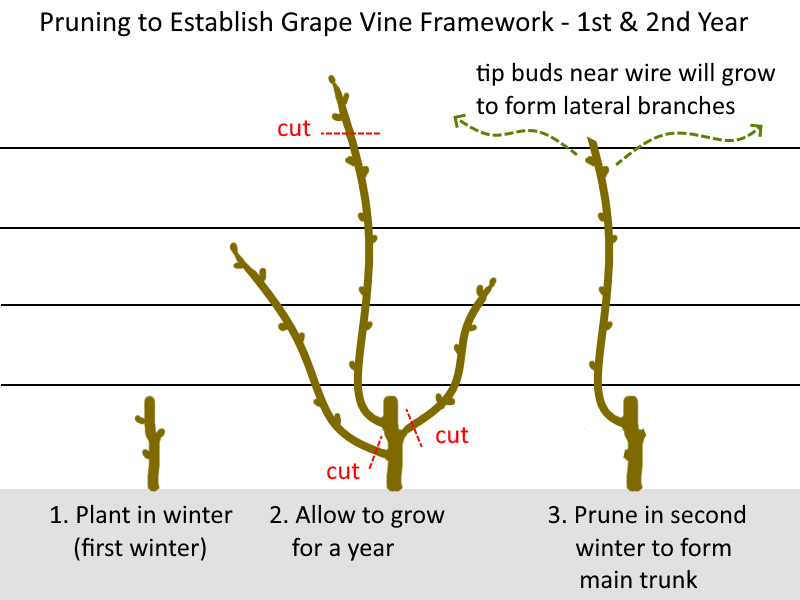
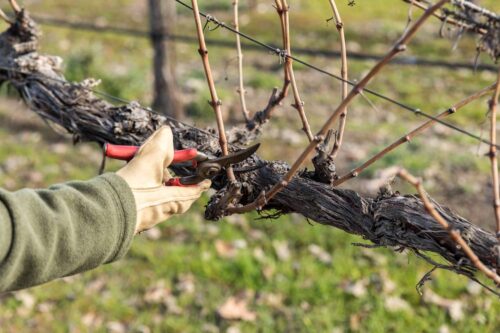
Prune most established grapevines during dormancy, usually in late winter, and keep only the fruiting canes or short spurs that suit the vine’s training system. Use pictures to identify the old trunk, permanent arms, and one-year-old wood before making cuts.
Across the United States, grapevines grow in home gardens, backyard orchards, and vineyard rows. The right pruning time depends on local winter weather, the grape variety, and the way the vine grows on its support. A vine in a cold northern state may need a different pruning schedule from one in a mild part of California or the Southeast.
Pruning can look harsh at first. A tangled vine may lose most of its long growth, leaving only a few short branches on a sturdy trunk. This is normal for many trained grapevines. Grapes often grow on new shoots that emerge from buds on wood formed the previous year, so removing excess old growth helps set up the next crop.
This guide explains how to prune grape vines with visual references, simple steps, and examples of cane and spur pruning. It also covers young vines, summer trimming, common mistakes, and what to do if you cut too much. The goal is a vine with a clear structure, enough healthy buds, and room for sunlight and air.
A useful grape vine pruning picture should show which parts stay and which parts come off. Before you follow a cut shown in a photo, check the vine’s age, support, and training style. A picture of a mature vineyard vine may not match a young backyard plant or a grape grown over a pergola.
Start by finding the trunk. This is the main woody stem that rises from the ground. On a trained vine, permanent arms extend from the trunk along a wire or support. The fruiting canes or spurs grow from these arms and carry buds that can produce new shoots.
Source: artofit.org
Trunk
The main stem from the roots to the head or upper framework. Keep it sound and free of needless damage.
Permanent arms or cordons
Older wood trained along a trellis wire. These parts form the framework of many mature vines.
One-year-old cane
A shoot from the previous growing season that has matured into firm, brown wood. It often holds the buds used for the next crop.
Spur
A short piece of one-year-old wood left with a small number of buds. Several spurs may be spaced along a permanent arm.
Bud
A small growth point on a cane or spur. Buds can produce shoots, leaves, and flower clusters during the growing season.
How to Tell Old Wood From Fruiting Wood
Old framework wood is often thick, rough, and gray or brown. One-year-old canes are usually smoother and more evenly brown, although color varies with variety and climate. Very thin, weak, damaged, or poorly placed shoots are usually less useful than healthy canes that grew well and matured during the last season.
Do not assume that the thickest branch is the best one to keep for fruit. The aim is to select suitable one-year-old wood in the right position. A thick old branch may be useful as part of the permanent structure, but it may not be the right fruiting cane.
Keep
Healthy, mature one-year-old canes or well-placed spurs that fit the chosen training system.
Remove
Dead, broken, diseased, crowded, or badly placed growth, while avoiding unnecessary injury to the trunk and permanent arms.
When to Prune Grape Vines in the United States
For many established grapevines, late winter is the main pruning season. The vine has dropped its leaves and entered dormancy, so the framework and buds are easier to see. Pruning before spring growth starts also gives you time to shape the vine without working through a mass of new leaves.
The best date varies across the country. In cold regions, very early pruning can leave retained buds exposed to severe winter injury. Some growers delay final pruning until the risk of the worst cold has passed, or leave extra buds at first and remove the surplus later. In milder areas, pruning may take place earlier, but local weather and the variety still matter.
Grapevines can bleed sap from fresh cuts as spring growth begins. This sight can worry new growers, but sap flow alone does not mean the vine is dying. It is still sensible to finish routine pruning before strong shoot growth, when practical, rather than delay without a reason.
Source: epicgardening.com
Late winter
The usual main pruning period for established vines while buds remain dormant.
Very cold climates
Consider local extension guidance on winter injury and delayed final pruning, especially for varieties that are sensitive to cold.
Spring
Remove clearly dead or broken wood with care. If buds have begun to open, avoid heavy reshaping unless there is a specific need.
Summer
Thin excess shoots and manage the leafy canopy. Summer work does not replace the main dormant-season pruning.
Should You Prune Before or After the Last Frost?
There is no single last-frost date that works for every grape-growing area. Dormant buds can tolerate conditions that would harm tender new shoots, and varieties differ in their response to cold. Once growth begins, a late frost can damage the young shoots that carry the developing crop.
If your area has harsh winters, check recommendations from your state university extension service or a local grape specialist. The timing may also depend on whether the vine is trained on a permanent trellis, grown over an arbor, or managed in a region with frequent winter damage.
Check local guidance
Use recommendations for your state, grape type, and growing conditions instead of relying only on a calendar date.
Watch bud development
Dormant buds are easier to assess and handle than tender shoots that have already started to grow.
Cane Pruning vs. Spur Pruning
Cane pruning and spur pruning are two common ways to manage mature grapevines. Both remove much of the previous season’s growth, but they leave different amounts and types of fruiting wood. The right choice depends on the grape variety, the training system, and how well buds near the base of each cane produce fruit.
Cane pruning keeps selected long canes from the previous season and ties them to a support. Spur pruning keeps short sections of one-year-old wood along permanent arms. Do not choose between these methods just because one picture looks simpler. Some grape varieties crop poorly from basal buds, so keeping long canes can be important.
Source: lotusmagus.com
How Cane Pruning Works
In a cane-pruned system, the grower selects one or more strong, healthy canes that grew during the last season. Each chosen cane should be well positioned and mature, with enough length to fit the support. The cane is tied along a wire, and the remaining unnecessary growth is removed.
A renewal spur is often kept near the head or base of the selected fruiting cane. It provides new growth that can supply a replacement fruiting cane for the following year. Without this renewal step, the fruiting zone may gradually move away from the main trunk.
Select
Choose healthy, mature canes with suitable spacing and a sound connection to the vine framework.
Tie
Secure the retained cane to the trellis without crushing it or bending it sharply.
Renew
Keep suitable renewal wood near the head so the fruiting position can be refreshed next season.
How Spur Pruning Works
In a spur-pruned system, permanent arms remain along the trellis. Healthy canes from the previous season are cut back to short spurs at planned intervals along those arms. Each spur retains a small number of buds, often around two or three, but the correct count depends on the variety and local pruning system.
Spurs should not be allowed to pile up into a crowded, tangled row of old stubs. Select well-spaced growth and remove excess shoots so the fruiting zone stays open. Over time, poorly placed spurs may need renewal to prevent the arm from becoming crowded or extending too far from the trunk.
Space the spurs
Keep retained spurs separated enough for shoots to grow without heavy crowding.
Keep useful buds
Leave the number of buds suited to the variety and the vigor of the vine.
Refresh crowded areas
Remove weak or badly placed wood while preserving a healthy path for future replacement growth.
Step-by-Step: How to Prune an Established Grape Vine
The easiest way to prune an established vine is to identify the permanent framework first, choose the fruiting wood second, and remove the extra growth last. This order reduces the risk of cutting away a useful cane before you understand where it fits. Work in good light so you can see the buds and the points where branches join.
Before starting, make sure the vine is securely supported. Wear eye protection when working near springy canes or overhead growth, and use pruning tools that are sharp enough to make clean cuts. Keep your hands clear of the blade and avoid cutting a branch while it is under strong tension.
Source: healthy-juice.co
Step 1: Identify the Trunk and Main Arms
Follow the vine from the ground up. Find the trunk, then trace each permanent arm along its support. If the plant has been trained in a different shape, such as a head-trained vine or a pergola vine, identify the main structure before deciding what to retain.
Remove loose ties only when needed to inspect the framework, and replace any that are cutting into the bark. Do not remove a major arm simply because it looks old. Permanent wood can support future growth, provided it is healthy and suited to the training system.
Trace each branch
Know which wood is part of the framework before making major cuts.
Step 2: Remove Dead, Broken, and Poorly Placed Wood
Cut out dead and broken wood first. Remove shoots that cross, rub against the trunk, or grow into a crowded cluster when they have no useful role. If you suspect a serious trunk disease, do not assume that removing one dead branch will solve it; the vine may need closer assessment.
Make each cut with enough room to avoid damaging a bud or the branch that should remain. Do not cut deeply into the trunk or leave long, ragged stubs where they serve no purpose. The right cut position depends on whether you are removing a whole cane, shortening a cane, or preserving a spur.
Clear the clutter
Remove dead and unwanted growth before selecting the main fruiting wood.
Step 3: Select the Fruiting Canes or Spurs
For cane pruning, look for healthy canes from the previous season that are mature, well placed, and easy to secure along the support. For spur pruning, select suitable one-year-old growth along the permanent arms and shorten it to the planned spur length.
Avoid keeping every strong cane. Too many retained buds can lead to a dense canopy and uneven ripening, while too few may limit the crop. The correct number depends on the vine’s vigor, variety, spacing, and training method.
Choose for position and health
A well-placed cane that fits the training plan is often more useful than a vigorous cane growing in the wrong direction.
Step 4: Make the Final Cuts and Secure the Vine
After selecting the wood to keep, remove the remaining unwanted canes and shorten the retained wood as needed. On cane-pruned vines, tie the selected canes to the support. On spur-pruned vines, check that the remaining spurs are spaced along the permanent arms rather than crowded into one spot.
Step back and look at the whole plant. You should be able to see the trunk and main arms without a dense tangle of old canes. The vine may look sparse, but that is often expected after dormant pruning. Do not make extra cuts just to create a perfectly symmetrical shape.
Check the framework
Make sure the trunk and permanent arms remain intact and the fruiting wood is distributed along the support.
Secure retained canes
Use suitable ties and leave room for growth so the canes are not pinched.
How Much Should You Cut Off a Grape Vine?
A mature grapevine may need a large share of its previous season’s growth removed during dormant pruning. That can look severe if you are used to trimming shrubs, but grape production depends on managing the new shoots that grow from retained buds. The exact amount is not a fixed percentage for every vine.
A vigorous, healthy vine with a well-built trellis can often support a different pruning plan from a weak vine with a damaged trunk. Heavy pruning can stimulate strong vegetative growth, while retaining too many buds can create excess shoots and shade. Aim for the right number of healthy buds for the chosen system rather than a target based only on the amount of wood removed.
Source: focus.menindrag.org
Use the Vine’s Condition to Guide Your Cuts
If the vine grew well last season, use its mature canes to select suitable fruiting wood. If growth was weak, check for problems such as poor light, water stress, damaged roots, nutrient issues, disease, or too much crop load before making severe changes. Pruning alone cannot fix every cause of poor growth.
For an overgrown vine, restore the structure in stages when a single drastic cut would remove the framework needed for recovery. If the trunk or main arms are badly damaged, identify healthy replacement growth before removing the old structure. A neglected vine may take more than one season to return to a useful shape.
Strong growth
Select suitable mature wood and manage the bud load according to the variety and training system.
Weak growth
Investigate the cause and avoid removing so much useful wood that the vine has little healthy growth left.
Overgrown structure
Plan which arms or trunks will remain, and consider gradual renewal rather than random cutting.
Pruning Young Grape Vines
Young grapevines need a different approach from mature vines. During the first growing seasons, the main goal is to build a sound trunk and the arms or head that will support later fruiting wood. Heavy crop production too soon can compete with the growth needed to establish the plant.
The best training method depends on the trellis, the variety, and the local climate. Some systems train one main shoot upward to form a trunk, then develop permanent arms later. Others use a different framework. Follow a method suited to your support instead of leaving several competing trunks without a clear plan.
Source: hardyfruittrees.ca
First Year: Build a Strong Trunk
Choose a healthy shoot that can be trained toward the intended trunk position. Tie it loosely to a stake or support as it grows, checking ties often so they do not constrict the stem. Remove competing shoots when they interfere with the selected trunk, but retain enough healthy leaves to support growth.
At the end of the growing season, assess how well the shoot matured and whether it reached the height needed for the next stage. If it remains weak or short, continue building the trunk rather than forcing the vine into its final shape too soon.
Choose one main trunk shoot
Train a strong, well-positioned shoot where the selected system calls for a single trunk.
Check ties often
Keep the shoot upright without binding the growing stem tightly.
Second Year and Beyond: Form the Framework
Once the trunk is strong enough, select the arms or head growth needed for the training system. Position them on the support so future canes or spurs have room to develop. Remove growth that competes with the framework, while keeping healthy leaves during the growing season.
A young vine may produce some grapes before the framework is complete, but fruiting should not take priority over a weak trunk or poorly formed arms. If the plant is still small, focus on structure and use local extension advice to decide whether to retain or remove flower clusters.
Form the support structure
Keep only the arms or head growth needed for the selected training plan.
Be patient with fruit
A sound framework can support more consistent management in later seasons.
Summer Pruning and Shoot Management
Summer pruning controls excess growth after shoots and leaves develop. It differs from dormant pruning because the vine is actively growing and its leaves are making energy for the plant and fruit. The aim is to keep the fruit zone manageable, not to strip the vine bare.
During spring and summer, remove unwanted shoots that crowd the trellis, rub against other growth, or emerge from places where they do not fit the training plan. If shoots are shading grape clusters heavily, selective thinning can improve airflow and light exposure. The right amount depends on climate, sun intensity, and the risk of sunburn.
Source: daisycreekfarms.com
How to Thin Shoots Without Harming the Crop
Start with the most crowded areas. Remove weak, misplaced, or redundant shoots while retaining healthy leaves near the grape clusters. If the vine grows over an arbor, keep the overhead canopy under control but avoid removing so much foliage that fruit and exposed stems face intense afternoon sun.
Fruit-zone leaf removal is not the same as cutting every long shoot short. In hot areas, sudden exposure can scorch grapes that developed under shade. Gradual, selective work is safer than stripping a large section of the canopy in one session.
Remove unwanted shoots
Focus on shoots that crowd the support or have no useful place in the training system.
Keep healthy leaves
Leaves feed the vine and fruit, so avoid excessive defoliation.
Watch for sunburn
Retain enough shade for the local climate, especially during hot spells.
Should You Cut Back Long Green Shoots?
Long shoots may need tipping or shortening when they extend far beyond the available support or interfere with nearby plants. However, repeated severe trimming can stimulate more side growth and alter the canopy. Use the training system as your guide and avoid cutting so far back that you remove useful leaves or developing fruit.
If a vine has little growth, yellowing leaves, or poor fruit development, do not respond by cutting more foliage without finding the cause. Check soil moisture, drainage, light, pests, and signs of disease first.
Shorten only when needed
Control growth that interferes with the trellis or blocks access, while preserving useful leaf area.
Common Grape Vine Pruning Mistakes
Most pruning problems begin when the grower cuts before identifying the vine’s structure. A few minutes spent tracing the trunk and main arms can prevent the loss of a useful fruiting cane. If you are unsure which branch to remove, pause and compare it with a reliable diagram for your exact training system.
Source: ru.pinterest.com
Cutting at the wrong time
Pruning too early in a cold region may expose retained buds to winter injury. Use local timing advice and consider the variety’s cold tolerance.
Removing every old branch
Some old wood forms the permanent trunk and arms. Keep healthy framework wood that the training system requires.
Keeping too many canes
Excess fruiting wood can create a crowded canopy. Retain the amount suited to the vine’s vigor and system.
Using the wrong pruning system
A variety that needs longer fruiting canes may crop poorly if reduced to short spurs. Check variety-specific guidance.
Making ragged cuts with dull tools
Poor cuts can damage the remaining wood and make the work harder. Use a suitable sharp tool and avoid twisting branches apart.
Removing too many leaves in summer
Excessive leaf removal can expose grapes to sunburn and reduce the leaf area that supports fruit development.
Ignoring a damaged trunk
Dead sections, cankers, or unexplained dieback may indicate a deeper problem. Do not rely on routine pruning alone when the main framework is affected.
What If You Accidentally Cut Off a Fruiting Cane?
Do not panic if one selected cane is lost. Check whether other suitable canes or spurs remain, and avoid making more cuts while upset or unsure. The effect on the crop depends on the variety, the training system, the timing, and how much fruiting wood remains.
If you removed most of the fruiting wood, the vine may produce a smaller crop that season. Keep the remaining healthy framework, maintain sensible watering and weed control, and use new growth to plan replacement wood for the next pruning cycle. Do not add excess fertilizer in an attempt to force a quick recovery.
Stop and reassess
Identify the healthy wood that remains before making any further cuts.
Protect future growth
Keep useful shoots that can renew the fruiting zone, and return to the normal training plan when possible.
Pruning Tools, Clean Cuts, and Safety
For most small backyard grapevines, sharp bypass pruners can handle many of the smaller canes. Older, thicker wood may need loppers or a pruning saw. Choose a tool that can cut the branch cleanly without forcing the blade or crushing the wood.
Inspect your tools before each session. Clean off dirt and plant residue, keep the blades sharp, and follow the tool maker’s instructions for cleaning and care. When disease is suspected, clean and disinfect tools between affected plants using a method suitable for the tool and the plant pathogen. Disinfectants can damage metal or require a contact time, so follow the product label.
Source: storage.googleapis.com
Wear eye protection
Dry canes can spring back when released, especially when tied to wires or bent under tension.
Use stable footing
Do not overreach from a ladder to reach an arbor. Reposition the ladder or use suitable equipment.
Watch for trellis wires
Keep fingers and blades clear of tensioned wires and branches that may shift when cut.
Avoid unnecessary trunk wounds
Make the cut suited to the branch being removed, and do not carve into the permanent framework.
When to Seek Local Help
Ask a local grape grower, county extension office, or qualified arboriculture or viticulture professional for help when the trunk is badly damaged, the vine has repeated dieback, or you cannot identify the training system. A specialist can assess the variety, local weather risks, and condition of the permanent wood before recommending major cuts.
Local advice is also useful when a vine has been neglected for years or grows over a large pergola. These plants may need a staged plan rather than a single pruning session.
Get help with serious damage
Have the vine assessed if disease, extensive trunk injury, or structural failure may be involved.
Frequently Asked Questions
Q
Can I prune grape vines in the fall?
In most areas, it is better to wait until late winter for the main pruning. Fall pruning can remove wood that might help protect the vine during winter, and the plant may still be moving nutrients into its permanent structure. Remove broken or clearly dangerous growth when needed, but plan the main cuts around your local climate and grape variety.
Q
Do grape vines grow grapes on old or new wood?
Most common cultivated grapevines produce fruit on new shoots that grow from buds on one-year-old wood. The older trunk and arms support the plant, but they do not usually replace the need for suitable one-year-old fruiting wood. This is why dormant pruning focuses on choosing canes or spurs from the previous season.
Q
Can I prune a grape vine that has already started growing?
Yes, limited corrective pruning may still be possible, but avoid unnecessary heavy cuts once buds have opened. Fresh cuts may bleed sap, and removing shoots that carry flower clusters can reduce the crop. If a major branch is broken or diseased, assess the damage and make only the cuts needed to address it.
Q
Why does my grape vine grow lots of leaves but produce few grapes?
Possible causes include excess nitrogen, too much shade, unsuitable pruning, poor pollination in some circumstances, winter bud injury, or a vine that is not yet mature enough to crop well. Some varieties also need a particular training and pruning method for good fruit production. Review the vine’s variety, light, fertilizer use, and retained bud pattern before changing several things at once.
Q
How many buds should I leave on a grape vine?
There is no single correct number for every grapevine. The number depends on variety, vine vigor, the length of the retained canes or spurs, and the training system. Follow a variety-specific pruning guide when possible, and adjust the bud load based on the vine’s past growth and crop performance.
✦ Wrapping Up
Conclusion
Learning how to prune grape vines becomes easier when you use pictures to identify the trunk, permanent arms, canes, spurs, and buds. For many established vines, late winter is the main time to prune. The key is to keep the right one-year-old fruiting wood for the variety and training system, while removing dead, weak, crowded, and misplaced growth.
Cane pruning and spur pruning use different methods, so identify the system before making large cuts. Young vines need time to build a strong framework, while summer pruning calls for a lighter touch that keeps useful leaves and protects grapes from harsh sun. Local growing conditions can change the best timing and the number of buds to retain.
💡 Key Takeaway
Before your next pruning session, take a clear picture of the whole vine and a close-up of its trunk and main arms. Mark the wood you plan to keep, check local advice for your grape variety, and then make clean, deliberate cuts.