Shocking Truths About Hay vs. Straw in Your Garden
For years, I’ve heard folks mixing up hay and straw for their gardening. It’s a common mix-up, and honestly, it can trip up even seasoned gardeners. I remember one spring day, I was bagging up some old stuff from my shed, thinking I was ready to mulch my tomato plants.
Turns out, the “stuff” was mostly hay, and my poor tomatoes got a whole lot more than they bargained for! Let me tell you, it’s a simple mistake, but it makes a big difference. This guide will clear the air for good.
Hay or Straw for Gardening: Which is Best?
This is the big question, isn’t it? I’ve worked with both hay and straw in my garden for ages, and picking the right one can seem tricky. But once you know the real differences, it’s actually pretty simple.
They both look alike, they’re both natural, but what they do for your garden is worlds apart. Stick with me, and I’ll break down exactly why one usually wins out for most gardeners.
Understanding the Big Two: What They Are
Let’s start with the basics. What exactly are hay and straw? Think of them as cousin products, but with very different jobs.
It all comes down to what they’re made from.
Hay is basically dried grass, alfalfa, clover, or other similar plants. People harvest it when the plants are still green and full of life. Then, it gets dried and baled up.
Its main purpose is animal feed. Because it’s harvested from living plants, it’s packed with nutrients. This is great for animals, but not always for your garden.
Straw, on the other hand, is the leftover stalk of cereal grains. Think wheat, barley, oats, or rye. After the grain heads are harvested for food, the remaining dry stalks are baled.
It’s much drier than hay, and it has fewer leaves and seeds. This makes it a much cleaner option for us gardeners.
Why the Mix-Up Matters for Your Garden
I’ve seen my share of garden fails, and using the wrong one is a big one. It’s not just about looks. The real issue comes down to what’s in the material.
For me, this became super clear with my zucchini plants one year. They were looking sickly, and I couldn’t figure out why. Then I remembered the “mulch” I’d put down.
It was full of seeds!
Hay, because it’s made from the whole plant, often contains seeds from weeds and the crop itself. If you use hay as mulch, those seeds can sprout all over your garden. You end up pulling more weeds than you ever thought possible.
It’s a gardener’s nightmare. Plus, hay has more nutrients than straw. While nutrients are good for animals, they can also feed weed seeds that are already in your soil.
This gives them a head start.
Straw, on the other hand, is much cleaner. It’s mostly just dry stalks. This means far fewer seeds.
When I switched to straw for my garden beds, the difference was huge. Fewer weeds popping up. My plants had less competition for water and food.
It made my gardening life so much easier. Straw also tends to break down more slowly than hay, which means it lasts longer as a mulch.
Straw: The Gardener’s Champion
Now, let’s talk about why straw is usually the go-to choice for us garden folks. I’ve spent countless hours spreading straw, and I’ve learned to love it.
- Fewer Seeds: This is the top reason. If you buy straw that’s meant for animal bedding, it’s usually processed in a way that removes most of the seeds. This saves you a massive headache. I can’t stress this enough. My sanity in the garden depends on fewer weeds.
- Breaks Down Slowly: Straw is tough. The stalks hold their shape and structure for a long time. This means it acts as a great mulch for a longer period. It keeps moisture in the soil and suppresses weeds for months, not just weeks. This saves me time and effort in the long run.
- Good for Soil Health: As straw breaks down, it adds organic matter back into the soil. This is like adding a little bit of compost. Over time, it helps improve your soil’s structure, making it airier and better at holding water. I’ve noticed my soil feels much nicer after a few seasons of using straw.
- Keeps Soil Cool and Moist: Straw is an excellent insulator. In the summer, it keeps the soil surface from getting too hot. This protects plant roots from scorching. It also acts like a sponge, reducing water evaporation from the soil. I water less often, and my plants stay happier.
The Downside of Hay: Why It’s Less Ideal
I know some folks might think, “Well, hay is cheaper!” And sometimes, that’s true. But you have to weigh the cost against the work.
- Full of Seeds: As I’ve said, this is the biggest problem. Those tiny, unwanted guests will sprout up everywhere. You’ll spend more time weeding than enjoying your garden. I once had a whole patch of volunteer wheat because I used hay. It was a funny story later, but not when I was pulling it all.
- Nutrient Rich, But Too Much: Hay is essentially dried, nutrient-rich plant material. This sounds good, but for mulch, it can be too much. It can break down quickly, and that extra nitrogen can sometimes “burn” tender seedlings or feed unwanted algae on the soil surface. It’s like overfeeding a plant, not always a good thing.
- Can Compact: Sometimes, hay can get a bit damp and then compact together. This can make it harder for water and air to get into the soil. It can also be a bit harder to work around when it’s clumped up.
When Hay Might Actually Be Okay (With Caveats)
Are there any situations where hay could work for you? Well, maybe. If you have access to hay that you know is completely free of weed seeds and grain seeds, then it could be an option.
This is rare. It would have to be something you grew yourself and knew the history of. Maybe you want to add a boost of organic matter quickly.
In that case, you could compost it first. Composting hay breaks down those nutrients and kills most seeds.
I’ve never personally found hay that I was 100% sure of for direct mulching. So, for me, it stays out of the garden beds and stays with the chickens as bedding.
How to Use Straw Effectively in Your Garden
Okay, so you’ve decided straw is the way to go. Great! Here’s how I like to use it to get the best results.
1. Prepare Your Garden Bed:
Before you add straw, make sure your soil is ready. Loosen it up a bit if it’s compacted. Add your compost or other soil amendments.
Do any necessary digging or tilling.
2. Water the Soil:
I like to water the soil well before I put down the straw. This helps keep the moisture in the ground longer. It also makes the straw settle in a bit better.
3. Apply a Thick Layer:
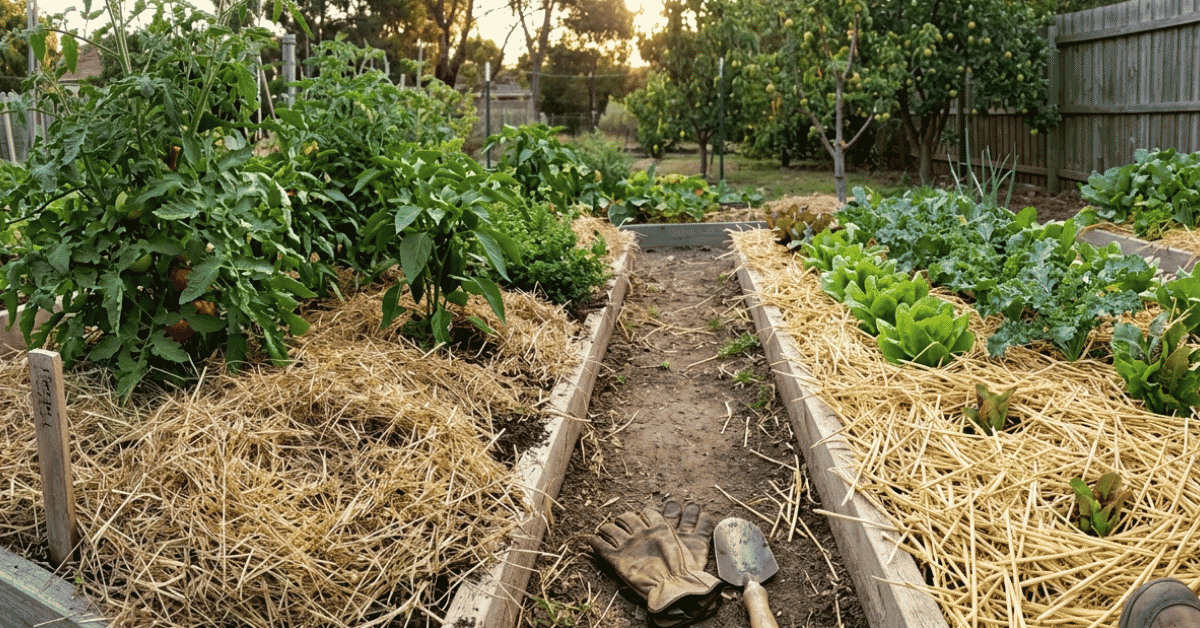
Don’t be shy with the straw! I usually aim for a layer that’s about 3-4 inches thick. This provides the best weed suppression and moisture retention.
You can always add more later if it settles.
4. Keep it Away from Stems:
This is important for preventing rot. Leave a small gap, maybe an inch or two, around the base of your plants. This allows for air circulation and stops moisture from building up right against the stems.
5. Replenish as Needed:
Over the season, the straw will settle and break down a bit. You might need to add another layer, especially in areas where it’s thinned out. I usually do a top-up in mid-summer.
What Kind of Straw?
Not all straw is created equal! When I’m buying straw, I look for a few things:
- Grain Straw: Wheat, barley, or oat straw are my favorites. They are typically drier and have fewer seeds than rye straw, though rye can work too.
- Avoid “Sweet” or “Hay-like” Straw: Sometimes straw can get wet and start to grow some green shoots. This is a sign it’s more like hay and might have seeds. I look for a nice golden color and a dry, brittle texture.
- Look for Cleanliness: If you can see the bale before buying, check for a lot of small, dark seeds. If it looks like it’s full of them, it’s probably not the best choice.
Comparing Hay and Straw for Garden Use
Here’s a quick look at how they stack up. This helps me make the quick decision at the garden center or farm store.
| Feature | Hay | Straw |
|---|---|---|
| Source Material | Dried grass, legumes | Stalks of cereal grains (wheat, oats, barley) |
| Seed Content | High (weed seeds, crop seeds) | Low |
| Nutrient Content | High | Low |
| Decomposition | Faster | Slower |
| Weed Suppression | Poor (due to seeds) | Excellent |
| Moisture Retention | Good | Excellent |
| Soil Improvement | Adds organic matter, can over-fertilize | Adds organic matter |
| Primary Use | Animal feed | Animal bedding, mulch |
My Personal Straw Success Stories
The most obvious win for me was the reduction in weeding. I used to spend hours upon hours pulling out little green sprouts that looked suspiciously like weeds. After switching to straw, that time dropped dramatically.
I could actually enjoy my evenings in the garden instead of battling an endless green army.
Another great benefit was how much less I had to water. In the hot summer months here, the soil used to dry out so fast. With a good layer of straw, I noticed I could go an extra day or two between waterings.
My plants, especially my thirsty tomatoes and cucumbers, thanked me for it. I even use it around my newer blueberry plants, keeping the soil cool and consistently moist.
Hay or Straw for Garden Beds: The Verdict
So, if you’re heading out to the garden store or visiting a local farm, remember this conversation. For mulching your garden beds, suppressing weeds, and keeping your soil happy and moist, straw is almost always the better choice. It’s simpler, cleaner, and leads to less work for you and healthier plants.
I’ve learned this through trial and error, and a lot of back-breaking weeding. Trust me on this one. Save the hay for your animals and use the straw for your precious garden.
You won’t regret it. It’s a small change that makes a world of difference. It’s like trading in a noisy old lawnmower for a quiet, efficient one, your garden and your ears will thank you.
Do you think using hay or straw is better for flower beds?
Straw is better for flower beds too. It suppresses weeds and holds moisture just like in vegetable gardens.
Is straw safe to use around young seedlings?
Yes, straw is very safe for seedlings. Its dense nature helps protect them from harsh sun and wind.
Can I use hay for compost and then add it to my garden?
Absolutely! Composting hay before adding it to your garden is a great idea. It breaks down nutrients and kills unwanted seeds.
How can I tell if the material is hay or straw if it’s not labeled?
Look closely! Hay usually has more leaves and pieces of the whole plant. Straw is mostly dry, hollow stalks.
If you see many small seeds, it’s likely hay.
Will straw break down fast enough to add nutrients to my soil?
Yes, straw will break down over time, adding valuable organic matter to your soil. This process improves soil structure and fertility. Learn more about soil health.