
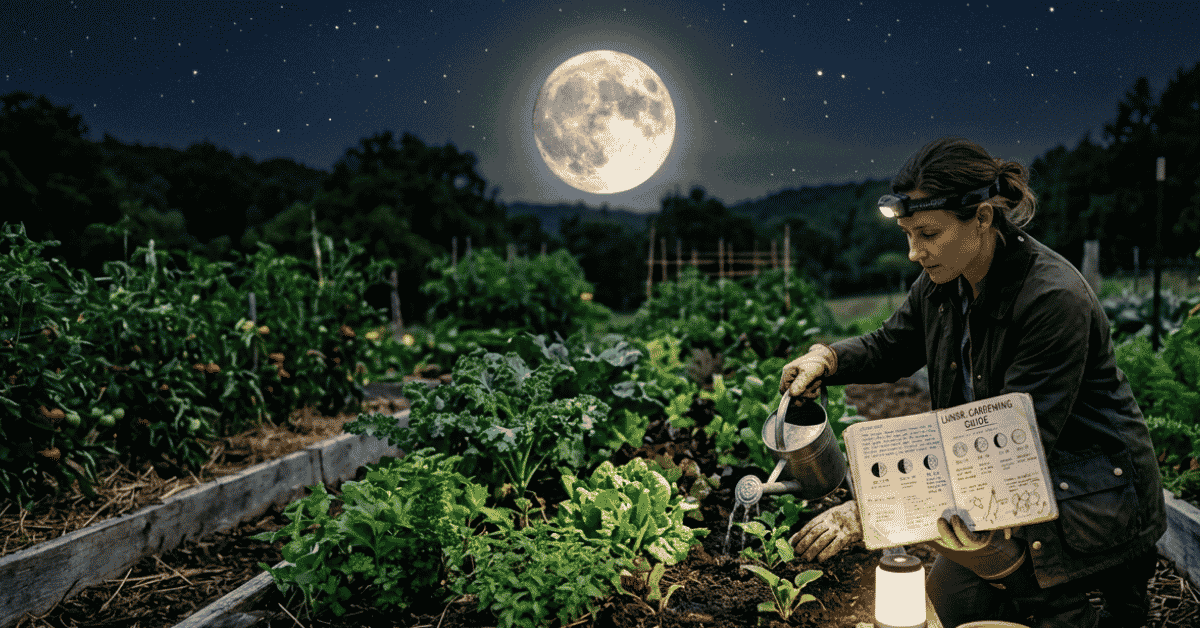
Cosmic Harvest: Your Lunar Gardening Guide
Planting under the moon? It sounds wild, I know. But I’ve seen incredible growth and richer flavors from my veggie patch by tuning into lunar cycles.
It’s not magic; it’s tapping into nature’s rhythm. Let me show you exactly how to get started.
What Exactly Is Lunar Gardening?
Think of lunar gardening as working with the moon’s phases. Just like we know the sun impacts plants, the moon does too, in its own subtle way. It influences water movement (tides in the ocean, and in plants too) and light levels just enough to affect growth.
I started lunar gardening because I wanted my garden to feel more connected, more alive. When I first tried it, I was skeptical. But the difference was noticeable.
My tomatoes seemed juicier, and my lettuce grew fuller. It’s about patience and observation, seeing how the moon’s pull affects everything around us, including our gardens. It’s a beautiful, old way of gardening that feels really grounding.
Why Follow the Moon for Your Garden?
Following the moon can make a real difference. It’s not just a good idea; I’ve seen it boost my yields. It helps plants grow stronger and healthier.
This method focuses on timing your planting and care tasks with the moon’s cycle. This ensures your plants get what they need, when they need it. It’s like giving them a gentle nudge at the best moment for growth.
I’ve found that understanding this rhythm helps me predict when my plants will thrive. It takes the guesswork out of gardening sometimes.
Planting the Right Way: Waxing Moon Magic
The waxing moon, from new moon to full moon, is a critical time for planting. This is when the moon is growing. Its light increases.
This encourages above-ground growth. Think leafy greens and fruits. This is the time to sow seeds for plants that produce above the soil line.
I always plant my beans, peas, and cucumbers during this phase. My favorite thing is seeing the tiny sprouts push through the soil. It feels like a direct gift from the moon.
- Leafy Greens: Lettuce, spinach, kale, and chard love the waxing moon.
- Fruiting Veggies: Tomatoes, peppers, squash, and melons do best when planted now.
- Herbs: Basil, cilantro, and parsley will flourish.
I remember one year my basil was so fragrant. It bloomed beautifully under the waxing moon. It truly felt special.
Harvesting and Root Growth: Waning Moon Power
The waning moon, from full moon to new moon, is when the moon is shrinking. Its light decreases. This pulls energy downward.
It encourages root development. This is the perfect time to plant root vegetables. It’s also a great time for harvesting.
I find my root crops are sweeter and more robust when planted during this phase. Carrots, potatoes, and beets are my top choices for the waning moon. I’ve learned that digging up crisp carrots feels incredibly rewarding after planning with the moon.
- Root Vegetables: Carrots, radishes, beets, potatoes, and onions grow strong roots.
- Garlic and Shallots: Plant these now for bulbs that develop well.
- Pruning: This is an ideal time for pruning. It helps plants recover better.
I noticed my garlic bulbs were significantly larger one harvest. It showed me the power of timing.
Understanding the Moon’s Phases
The moon doesn’t just change size; it goes through distinct phases. Knowing these phases helps you plan your gardening tasks. Each phase brings a different energy to your garden.
It’s a cycle that repeats every month.
New Moon: A Time for Rest and Preparation
The new moon is the darkest phase. The moon is not visible. This is a time for rest.
For the garden, it’s a time to prepare. It’s not ideal for planting. Instead, focus on soil health.
Clean up beds. Add compost. Plan your garden layout.
I use this phase to reflect on what worked last season. I also order new seeds. It feels like a quiet pause before the real growing begins.
I spent many new moons just dreaming up new garden plans.
First Quarter: Growth Begins
The first quarter moon is when the moon is half illuminated. It’s about one week after the new moon. This is when growth starts to pick up.
It’s a good time for planting. Especially for plants that establish quickly. Those that need a strong start.
I often seed fast-growing greens now. Like spinach and radishes. They sprout up so fast.
Full Moon: Peak Energy for Above-Ground Growth
The full moon is the brightest phase. It’s often seen as the peak. This is when energy is at its highest.
It’s excellent for planting. Especially for crops that develop above ground. Think fruits and leafy vegetables.
The increased light and energy fuel quick growth. I always feel a buzz in the garden during the full moon. My flowers seem brighter too.
Third Quarter: Nurturing Roots and Harvesting
The third quarter moon is the second half-illumination. It’s about one week after the full moon. Energy begins to recede.
This phase is good for root crops. It’s also perfect for harvesting. You want to gather your bounty.
The plants are slowing down. It’s a time to gather the fruits of your labor. I find harvesting my best tomatoes during this phase feels very natural.
Lunar Gardening and Soil Health
Soil is the foundation. Lunar gardening emphasizes nurturing it. The moon’s influence can be harnessed for better soil.
Fertilizing and Composting Cycles
Adding nutrients is key. The moon phases can guide this. I like to add compost during the waning moon.
This helps roots absorb nutrients. It’s also good to fertilize before the full moon. This gives plants a boost for increased growth.
Healthy soil means healthy plants. I’ve found that using good compost makes all the difference. It’s a key part of my garden’s success.
Exploring options like coconut coir for healthier plants can really improve your soil structure.
Soil Amendments for Moon Phases
Different soil amendments work best at different times. Using materials wisely is crucial.
| Soil Amendment | Best Moon Phase | Why It Works |
|---|---|---|
| Compost | Waning | Feeds roots |
| Manure | Waning | Builds soil |
| Worm Castings | Waxing | Boosts growth |
| Mulch | Any | Retains water |
I learned that using coarse sand for my best soil helped with drainage. It’s about finding the right mix.
Specific Plant Guidance Under the Moon
Not all plants are the same. Some benefit more from certain lunar timing.
Root Vegetables and the Waning Moon
This is the time for roots to grow deep. The waning moon pulls energy downward. It supports this kind of development.
I always plant my carrots and potatoes when the moon is shrinking. My harvests have been consistently better. The roots are plumper.
The flavor is richer. It’s a simple but effective trick.
Fruiting Plants and the Waxing Moon
Above-ground growth shines during the waxing moon. This is when the moon’s light is increasing. It pushes plants upward.
For tomatoes, peppers, beans, and squash, this is prime time. I plant these when I see that sliver of moon growing. My tomato plants have produced more fruit than ever before.
I swear the moon encourages them. I also sometimes use coconut gardening to give plants an extra edge.
Leafy Greens and Continuous Harvests
Leafy greens are forgiving. They can be planted throughout much of the cycle. But they do best with the waxing moon’s upward pull.
I sow lettuce and spinach in succession. This way I have a continuous harvest. Planting every few weeks aligns with the moon’s journey.
It ensures a steady supply.
Beyond Planting: Other Lunar Gardening Tasks
It’s not just about when to plant. You can do other things by the moon.
Watering and Lunar Cycles
Watering needs can shift. During the waxing moon, plants use more water for growth. I water more deeply.
During the waning moon, they use less. I adjust my watering schedule. It prevents overwatering.
Especially for root crops. This saves water too. I have found that my plants are less stressed.
Weeding and Pest Control
Weeding is often best done during the waning moon. Plants are using less energy. They recover faster from being disturbed.
For pest control, I prefer natural methods. Applying treatments during the waning moon can be effective. It’s when many pests are less active.
I’ve had good luck with this approach. It feels more in tune with nature. Adding copper for garden beds can also help deter some pests.
Harvesting at the Right Time
Harvesting is a critical task. The full moon is a peak time. Many gardeners harvest then.
But the third quarter moon can also be good. It’s when things are winding down. This can mean more concentrated flavors.
I tend to harvest my fruits and vegetables when they are perfectly ripe. The moon phase can influence this. Some say you get a stronger flavor when harvesting during the waning moon.
I’ve noticed my herbs seem more potent then.
Common Questions About Lunar Gardening
When should I start my seeds indoors?
Start most seeds indoors around the new moon. This gives them a good start before transplanting.
Is lunar gardening just for vegetables?
No, lunar gardening benefits all plants! Flowers and fruits grow better with this timing.
How do I know which crops are root or fruit?
Root crops grow underground (carrots, potatoes). Fruit crops grow above ground (tomatoes, berries).
Can I lunar garden if I don’t have a garden?
Yes, you can still use lunar gardening in containers. Just adapt the timing to your pots.
Does extreme weather affect lunar gardening?
Weather is a bigger factor. Always consider frost and heat. Lunar timing is best when conditions are favorable.
Learning to garden by the moon has been a journey for me. It connects me to something ancient and natural. It’s a gentle way to encourage life in my garden.
Give it a try. You might be surprised by what you grow.