
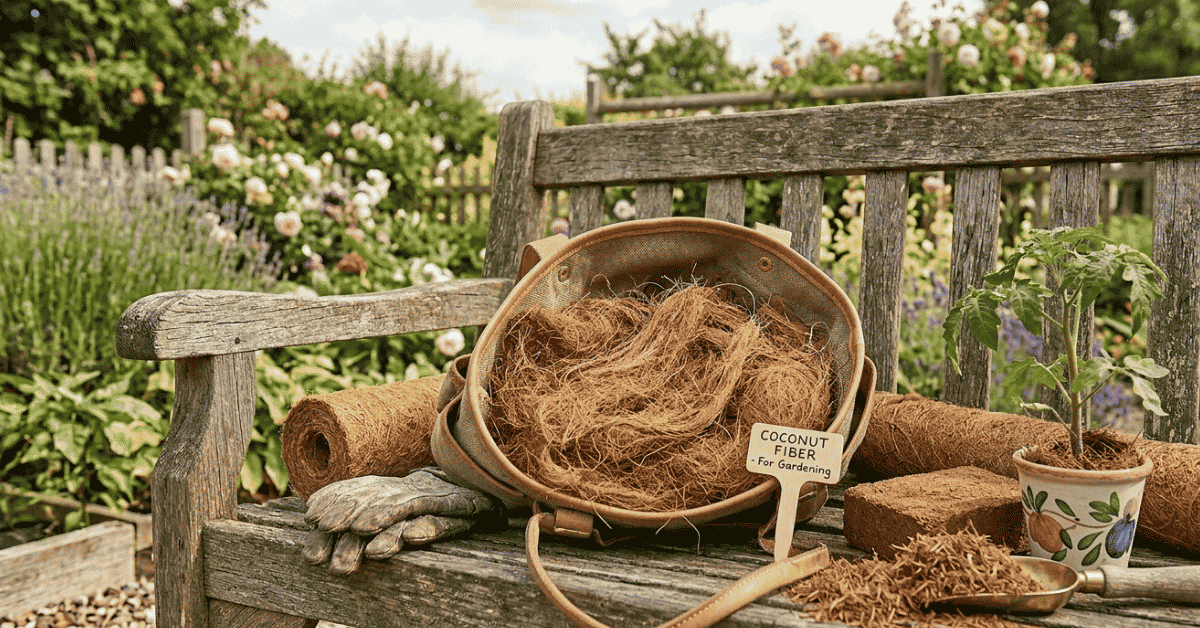
Coconut fiber for gardening helps roots grow strong, holds water well, and improves soil structure. Learn how to use it for better results.
I first used coconut fiber for gardening during a hot July week. My container plants dried out fast. No matter how much I watered, the soil seemed thirsty. A gardening friend suggested coconut fiber. I mixed it into my pots and hoped for the best. Within weeks, the soil stayed moist longer and my plants looked stronger. Since then, I have used it in almost every growing season.
Is Coconut Fiber for Gardening Worth It?
Yes. From my experience, coconut fiber for gardening is one of the most useful soil helpers available.
The first thing I noticed was improved moisture control. The soil felt lighter and healthier. Plant roots also seemed to spread more easily.
Benefits include:
- Better water retention
- Improved air flow
- Healthier root systems
- Reduced soil compaction
- Sustainable gardening support
While it is not a complete growing medium on its own, it works very well when combined with other materials.
What Is Coconut Fiber for Gardening?
Many gardeners hear the term but do not know exactly what it means.
Coconut fiber comes from the outer husk of coconuts. It is a natural material that remains after coconut processing.
Where Coconut Fiber Comes From
After coconuts are harvested, the husks are processed.
The husk creates several products:
- Coconut fiber
- Coconut coir
- Coir chips
- Coir dust
These materials are often used in gardening and horticulture.
The first time I opened a compressed block, I was amazed by how much material it produced.
Why Gardeners Like It
Plants need a balance of air and water.
Coconut fiber helps create that balance.
It supports:
- Root growth
- Water storage
- Drainage
- Soil structure
That combination makes it valuable in many gardens.
Benefits of Coconut Fiber for Gardening
There are many reasons gardeners choose coconut fiber.
Holds Water Without Staying Soggy
This is the biggest benefit I have seen.
The material absorbs water well but still allows air movement.
Benefits include:
- Less frequent watering
- Better moisture levels
- Healthier roots
During summer heat, this can be a major advantage.
Improves Soil Aeration
Roots need oxygen.
Heavy soil can restrict airflow.
Coconut fiber creates small air pockets that help:
- Root expansion
- Nutrient uptake
- Plant health
Many plants grow more vigorously because of this.
Reduces Soil Compaction
Over time, soil can become dense.
Compacted soil often leads to poor growth.
Coconut fiber helps keep the soil loose and workable.
I noticed this especially in my container gardens.
Supports Sustainable Gardening
Many gardeners want environmentally friendly options.
Coconut fiber is renewable because it comes from coconut husks.
Using it helps make use of an existing byproduct.
Types of Coconut Fiber for Gardening
Several forms are available.
Each works best for different tasks.
Compressed Coconut Fiber Blocks
These are very popular.
Pros:
- Easy storage
- Lightweight
- Long shelf life
Cons:
- Must be soaked before use
This is the type I buy most often.
Loose Coconut Fiber
This form comes ready to use.
Pros:
- Convenient
- No preparation needed
Cons:
- Requires more storage space
Many gardeners enjoy the convenience.
Coconut Fiber Mats
These mats are often used for special applications.
Pros:
- Good erosion control
- Useful for lining baskets
Cons:
- Limited garden uses
I sometimes use them in hanging baskets.
Coconut Fiber Mulch
Some products use coconut fiber as mulch.
Pros:
- Moisture retention
- Weed suppression
- Soil protection
Cons:
- Higher cost than some mulches
It works well around ornamental plants.
How to Use Coconut Fiber for Gardening
Proper use helps maximize benefits.
Hydrate Compressed Blocks
Most blocks require water.
My process is simple:
- Place the block in a large tub.
- Add water slowly.
- Wait for expansion.
- Break apart the fibers.
Within minutes, the block becomes soft and fluffy.
Mix With Potting Soil
I rarely use coconut fiber by itself.
My preferred blend includes:
- Potting soil
- Compost
- Coconut fiber
This mix provides balance and stability.
Improve Raised Beds
Raised beds can benefit greatly.
Coconut fiber helps:
- Hold moisture
- Improve texture
- Support root growth
I often add it during annual bed preparation.
Start Seeds Successfully
Seed starting is one of its best uses.
The light texture supports:
- Root development
- Moisture balance
- Easy transplanting
Many seedlings thrive in coconut-based mixes.
Coconut Fiber for Gardening vs Other Growing Materials
Different materials serve different purposes.
Here is a simple comparison.
| Feature | Coconut Fiber | Peat Moss | Compost |
|---|---|---|---|
| Water Retention | Excellent | Excellent | Good |
| Air Flow | Excellent | Good | Good |
| Renewable Source | Yes | No | Yes |
| Nutrients | Low | Low | High |
| Seed Starting | Excellent | Good | Fair |
| Soil Structure | Excellent | Good | Excellent |
I often combine coconut fiber with compost for the best balance.
Best Plants for Coconut Fiber for Gardening
Many plants benefit from coconut fiber.
Vegetables
Vegetable plants often perform very well.
Examples include:
- Tomatoes
- Peppers
- Cucumbers
- Lettuce
The improved moisture levels help steady growth.
Herbs
Herbs enjoy well-aerated soil.
Popular choices include:
- Basil
- Parsley
- Mint
- Cilantro
My herb containers almost always contain coconut fiber.
Houseplants
Indoor plants benefit too.
The material helps:
- Improve drainage
- Reduce compaction
- Maintain moisture
Many tropical plants respond especially well.
Seedlings
Young plants need stable conditions.
Coconut fiber supports:
- Consistent moisture
- Root growth
- Gentle development
This is why many gardeners use it for propagation.
Common Mistakes to Avoid
I made several mistakes when I first started.
Avoiding them can improve your results.
Using Coconut Fiber Alone
Coconut fiber contains very few nutrients.
Plants still need food.
Always add:
- Compost
- Fertilizer
- Rich soil
Nutrition remains essential.
Overwatering
Because coconut fiber holds moisture, overwatering becomes easier.
Check soil moisture before watering again.
Ignoring Fertilizer Needs
Healthy roots still require nutrients.
One season, I relied only on coconut fiber. Plant growth slowed noticeably.
Balanced feeding solved the issue.
Buying Low-Quality Products
Not all products are equal.
Good-quality coconut fiber usually performs better and lasts longer.
Tips From My Garden
Years of use taught me a few simple tricks.
Blend With Compost
This remains my favorite method.
Benefits include:
- Better soil health
- Improved moisture control
- More nutrients
The combination works extremely well.
Use It in Containers
Container gardens dry out quickly.
Coconut fiber helps reduce water stress.
That means healthier plants during hot weather.
Store Extra Material Dry
Unused coconut fiber stores easily.
Keep it:
- Dry
- Covered
- Protected from moisture
Proper storage extends its usefulness.
Observe Plant Performance
Every garden is unique.
Watch for:
- Strong roots
- Healthy leaves
- Steady growth
These signs show that the mix is working.
When Coconut Fiber for Gardening May Not Be the Best Choice
Although it works well in many situations, it is not perfect.
I do not use it everywhere.
It may not be ideal when:
- Soil already holds too much water
- Nutrient-rich compost is enough
- Drainage is already excellent
Understanding your soil helps determine the best approach.
The right amendment depends on the needs of your garden.
FAQs
What is coconut fiber for gardening used for?
Coconut fiber for gardening improves moisture retention, boosts aeration, and supports healthy roots. It works well in pots and garden beds. Learn more about soil improvement.
Is coconut fiber for gardening the same as coconut coir?
Coconut fiber for gardening is closely related to coconut coir. Both come from coconut husks and improve growing conditions. Learn more about coir products.
Can coconut fiber for gardening replace soil?
Coconut fiber for gardening helps improve soil but contains few nutrients. Most gardeners mix it with compost or potting soil. Learn more about soil blends.
How long does coconut fiber for gardening last?
Coconut fiber for gardening breaks down slowly and can remain useful for several growing seasons. Learn more about garden amendments.
Can coconut fiber for gardening help seedlings grow?
Yes. Coconut fiber for gardening provides moisture, airflow, and a light texture that supports healthy seedling growth. Learn more about seed starting methods.