
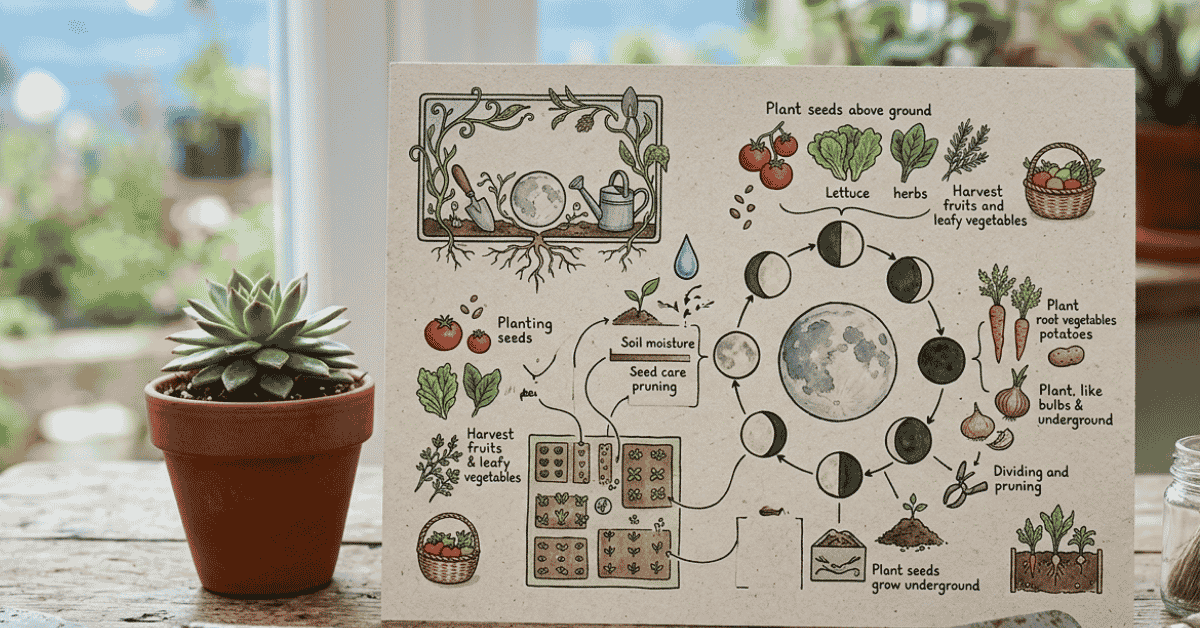
Lunar Gardening Power: Grow More!
I’ve always loved my garden. Seeing those tiny seeds sprout into vibrant life just feels magical. But lately, I’ve been noticing something different.
My harvests are better when I plant with the moon. It sounds a bit out there, I know! But trust me, this ancient practice has made my gardening game so much easier and more rewarding.
Let me show you how.
What is Gardening by the Moon Phases?
It’s simple, really. It’s about paying attention to the moon’s cycles. Each phase seems to nudge plants in different ways.
I use the moon’s position, not just the light it gives off. It’s about understanding which part of the moon’s journey helps roots grow. It’s also about knowing when to focus on leaves and flowers.
I’ve found that syncing my planting with the moon feels natural. It’s like working with nature, not against it. It makes sense.
Plants have big changes happening underground and above, just like the moon does.
The Farmer’s Almanac Wisdom
I first heard about this from my grandpa. He’d always plant his potatoes when the moon was gibbous and waning. He called it “the root digging moon.” He swore his potatoes were bigger and tasted sweeter then.
He learned it from his father, and so on. This isn’t new. For centuries, farmers and gardeners have used the moon’s cycles as a guide.
They noticed patterns. They saw how certain moon phases seemed to bring out certain growth. It’s a wisdom passed down through generations.
It’s about observing and adapting to natural rhythms.
My Personal Experience with Moon Gardening
Honestly, I was skeptical at first. I thought it was just an old wives’ tale. But I decided to try it one spring.
I planted my tomatoes and beans on the recommended days for the waxing moon. I noticed the sprouts seemed stronger. They shot up faster than usual.
Then I tried planting root vegetables like carrots and radishes during the waning moon. I swear, the roots were fuller. They seemed to have more energy.
It’s not like magic. It’s more like giving your plants the best possible kickstart. I’ve saved myself a lot of guesswork too.
No more wondering if today is the right day to sow my seeds. I just check the moon.
The Science Behind It (Sort of!)
While there’s not a ton of hard science explaining exactly how the moon affects plants on a molecular level, there are theories. Water is a big part of it. The moon’s gravitational pull affects tides.
Some believe this pull also affects the water in plants and soil. During the waxing moon, when the moon is growing, plants supposedly draw more water up. This helps with leaf and fruit growth.
During the waning moon, when the moon is shrinking, the energy is thought to be pulled down into the roots. This makes sense for root vegetables. It’s a simple idea but one that feels right when I see my garden respond.
Moon Phases and What They Mean for Your Garden
The moon has four main phases. Each one tells you something different. Knowing these is key to planting by the moon.
The New Moon: Rest and Recharge
The new moon is when the moon isn’t visible. It’s a dark sky. For gardens, this phase is generally for rest.
I use this time for tidying up. It’s good for pruning plants that are dormant. It’s also a good time for soil preparation.
I’ll add compost or give my beds a good loosen. I don’t sow many seeds now. It’s like the earth is taking a deep breath.
Waxing Moon: Growth Above Ground
This is when the moon is growing bigger in the sky. From dark to full. This phase is fantastic for plants that produce above ground.
Think leafy greens, herbs, flowers, and fruits. I plant broccoli, lettuce, basil, and strawberries during this time. The energy is said to be pulling upwards.
So, anything that grows upwards benefits most. I feel a real surge of planting activity when the moon is waxing. It’s the time to get those seeds in the ground for the best leaf and fruit development.
Sowing Seeds for Full Flavor
I swear my lettuce tastes sweeter when I sow it under a waxing moon. Same for my tomatoes. The leaves are greener, and the fruits develop beautifully.
It’s like the plant is just bursting with energy. I find that germination is quicker too. The little seedlings often look stronger right from the start.
The Full Moon: Peak Energy
The full moon is the brightest. It’s a time of peak energy. Many gardeners plant their fruiting crops now.
This includes things like tomatoes, peppers, beans, and melons. It’s seen as a time of high vitality. I tend to plant my main crops for the season around the full moon.
It feels like the plants get an extra boost. I also find it’s a great time for harvesting fruits and vegetables. They seem to be at their ripest and most flavorful.
Waning Moon: Roots Grow Deep
This is when the moon is getting smaller. From full back to dark. This phase is perfect for planting root vegetables.
Think carrots, potatoes, radishes, beets, and onions. The energy is thought to be pulling downwards. So, anything growing underground thrives.
I make sure to plant my root crops when the moon is waning. This is when I get the best, most robust roots. I also find it’s a good time for transplanting.
The roots are settling in well before the new moon’s rest.
Building Stronger Roots
I’ve noticed a real difference in my carrot harvests. When I plant them during the waning moon, they are so much easier to pull up. They are thicker and seem to have a deeper flavor.
It’s like the plant focuses all its energy on building a solid foundation below the soil.
Moon Planting Calendar: What to Plant When
Here’s a general guide but always check a lunar calendar for your specific location.
| Moon Phase | Best For | Examples | My Planting Tips |
|---|---|---|---|
| New Moon | Rest, Soil Prep, Pruning (dormant) | Clearing beds, adding compost, cutting back dead branches | I use this time to clear out old plants and enrich the soil. |
| Waxing Moon | Leafy greens, Herbs, Flowers, Fruits, Sprouts | Lettuce, spinach, basil, parsley, strawberries, beans | Sow seeds for anything that grows above ground. Water well for quick growth. |
| Full Moon | Fruiting plants, Harvesting | Tomatoes, peppers, cucumbers, squash, melons, berries | Plant your main fruiting crops. Harvest fruits and veg at their peak. |
| Waning Moon | Root vegetables, Transplanting | Carrots, potatoes, radishes, onions, garlic, beets | Focus on planting root crops. Transplant seedlings to encourage root growth. |
Practical Moon Gardening Tips
You don’t need to be a master astronomer. It’s quite simple once you get the hang of it.
Get a Lunar Calendar
This is your best friend. You can find these online. Many garden centers sell them too.
They’ll show you the moon phases for your area. Some even give specific planting advice for each day. I keep mine on my fridge.
It’s the first thing I check before I head to the garden shed.
Observe Your Plants
Your plants will tell you a lot. If you plant something during a certain phase and it does exceptionally well, jot it down. Note it in your garden journal.
If it doesn’t do as well, try a different phase next time. My garden has taught me so much over the years. It’s a constant learning process.
Don’t Stress the Exact Day
The moon phases aren’t rigid boundaries. There are a few days around each phase that are generally considered good. For example, the peak of the waxing moon is great, but the few days leading up to it are usually good for planting too.
I usually plant within a 3-day window around the main phase days. It gives me flexibility.
Combine with Other Good Practices
Moon gardening works best when you also practice good gardening habits. This means good soil, proper watering, and pest control. I always make sure my soil is healthy.
I’ve found that using things like coconut fiber for soil and coarse sand for my best soil really boosts plant health. Moon gardening is an extra layer of help.
Moon Gardening for Different Plants
- Leafy Greens: Lettuce, spinach, kale, sow these during the waxing moon for lush growth. I find my kale gets incredibly dense and flavorful then.
- Root Vegetables: Carrots, beets, potatoes, plant these during the waning moon for strong roots. My potatoes have been the best ever since I switched. They are so much easier to harvest too.
- Fruiting Plants: Tomatoes, peppers, squash, these do well around the full moon for maximum fruit production. I swear my tomato yield has doubled!
- Herbs: Many herbs benefit from a waxing moon for vigorous leaf growth. I love having super fragrant basil all summer long.
Sometimes Things Don’t Go as Planned
I’ve had my share of garden mishaps, even with the moon. One year, I planted my corn during the waxing phase, but we had a really dry spell. The plants struggled.
It wasn’t the moon’s fault, really. It was the weather. It just shows that moon gardening is a tool, not a magic wand.
You still need to pay attention to sun, water, and soil. I also found that when I used coconut gardening boost in my soil, it helped my plants be more resilient during tough times.
FAQs
When should I plant root vegetables according to the moon?
Plant root vegetables during the waning moon for strong roots.
Is there a best time to plant flowers using moon phases?
Plant flowers during the waxing moon for best blooming and leaf growth.
What should I do during a new moon in my garden?
Use the new moon for soil preparation and pruning dormant plants.
Does the full moon help fruit production?
Yes, the full moon is ideal for planting and harvesting fruiting plants.
Can I use copper for my garden alongside moon gardening?
Yes, you can combine practices like using copper for your garden for an unexpected edge.