
Sharp Sand for Gardens: Your Soil’s Secret Weapon
Want better drainage and healthier roots for your plants? Sharp sand is the unsung hero your garden beds have been missing. I’ve used it for years to transform my heavy clay soil, and the results speak for themselves.
Let’s dig in.
What Exactly is Gardening Sharp Sand?
This is the big question, right? Sharp sand isn’t some fancy, exotic blend. It’s exactly what it sounds like: sand with sharp, angular grains.
Think of something like builders’ sand, but typically cleaner and more consistent for gardening use. It’s different from play sand or beach sand, which have rounded grains. Those smooth grains can pack together.
Sharp sand, though, creates little pockets. These pockets are key. They let air and water move much more freely through your soil.
I remember when I first got my hands on some. My garden soil was basically sticky clay. After a rain, it felt like walking through mud for days.
My poor plants were constantly waterlogged. Their roots just couldn’t breathe. I’d read about adding sand.
I was skeptical. Would it just turn into concrete? I tried a bag of sharp sand, mixed it into a raised bed, and waited.
The difference? Wow. It was like night and day.
My First Experience with Sharp Sand
It was a dreary Tuesday in April. The kind of day where the sky just hangs low and grey. I’d just finished digging out some sad-looking annuals from a particularly boggy patch near my fence.
Ugh. This soil was awful. It was like trying to dig through wet cement.
I ordered a bag of sharp sand online, not really sure what to expect. When it arrived, it looked… well, sandy. But when I ran some through my fingers, I felt those sharp edges.
It didn’t feel smooth and powdery.
I went to work, turning over the soil and mixing in a good three inches of the sharp sand. It was a bit of a workout, I won’t lie. But as I worked it in, I could already feel the soil breaking up.
It felt lighter, less clingy. I planted some new bulbs, hoping for the best. The next time it rained, I watched with bated breath.
And honestly? The water just seemed to soak away. Within an hour, the surface was drying out.
It was amazing. My little test patch was already performing better. That’s when I knew sharp sand was a game-changer for me.
Why Use Sharp Sand in Your Garden?
It boils down to improving your soil structure. You want soil that drains well but also holds some moisture. You need air for the roots.
Sharp sand creates that perfect balance, especially for certain types of plants and soils. It’s not about making your soil sandy like a desert, but about creating an environment where roots can thrive.
I’ve found it’s incredibly useful for a few specific gardening challenges. If you’ve got heavy clay soil like mine, it’s a rescue mission. Even if you have decent soil, a little sharp sand can boost drainage for particular plants.
Think succulents or anything that hates wet feet in winter. It helps prevent root rot, which is a silent killer for so many garden favorites. Plus, it can help stop your soil from compacting so badly.
That’s a bonus for any gardener.
Boosting Drainage for Water-Loving Plants
Some plants, strangely enough, still need good drainage. Think about many herbs like rosemary or lavender. They love sunshine but absolutely hate sitting in soggy soil.
This is where sharp sand shines. It creates those little air pockets that let excess water escape quickly. It’s like giving their roots a little breathing room.
I’ve put it in my containers too. Especially for plants that can be a bit fussy. It stops the potting mix from becoming waterlogged.
That’s crucial for preventing fungal issues and keeping roots healthy. It’s a cheap insurance policy for your more delicate plants.
Improving Heavy Clay Soil
This is probably the biggest reason I keep sharp sand on hand. Clay soil is notorious for being heavy, sticky, and slow to drain. When it’s dry, it bakes hard.
When it’s wet, it’s a swamp. Adding sharp sand breaks up those dense clay particles. It creates a more open soil structure.
This lets water and air penetrate much deeper. It makes digging easier and helps plant roots spread out more effectively.
I’ve seen my clay soil transform from something I dread working with into something much more manageable. It still holds nutrients well, but now it doesn’t hold onto water like a sponge. It’s a much better home for my plants.
Helping Seedlings Grow Strong
Starting seeds indoors or directly in the garden? Sharp sand can be a real help here too. It provides a stable, well-draining medium for those tiny, fragile roots.
It prevents the soil from becoming too compact around the emerging seedlings. This makes it easier for them to push through the surface.
I often mix a little sharp sand into my seed-starting compost. It helps prevent damping off, a common fungal disease that can wipe out young seedlings. It gives them a bit of a head start without being too harsh.
How to Use Sharp Sand in Your Garden
Using sharp sand is pretty straightforward. The key is to mix it in properly. You don’t want to just dump it on top.
It needs to be worked into the soil. Think about the depth you’re working and how much sand you’re adding.
My rule of thumb is to aim for about a 25-30% sand mix for really heavy clay. For lighter soils, maybe 10-15% is enough. It’s always better to start with less and add more if needed.
You can always add more sand, but it’s harder to take it away!
Mixing Sand into Existing Beds
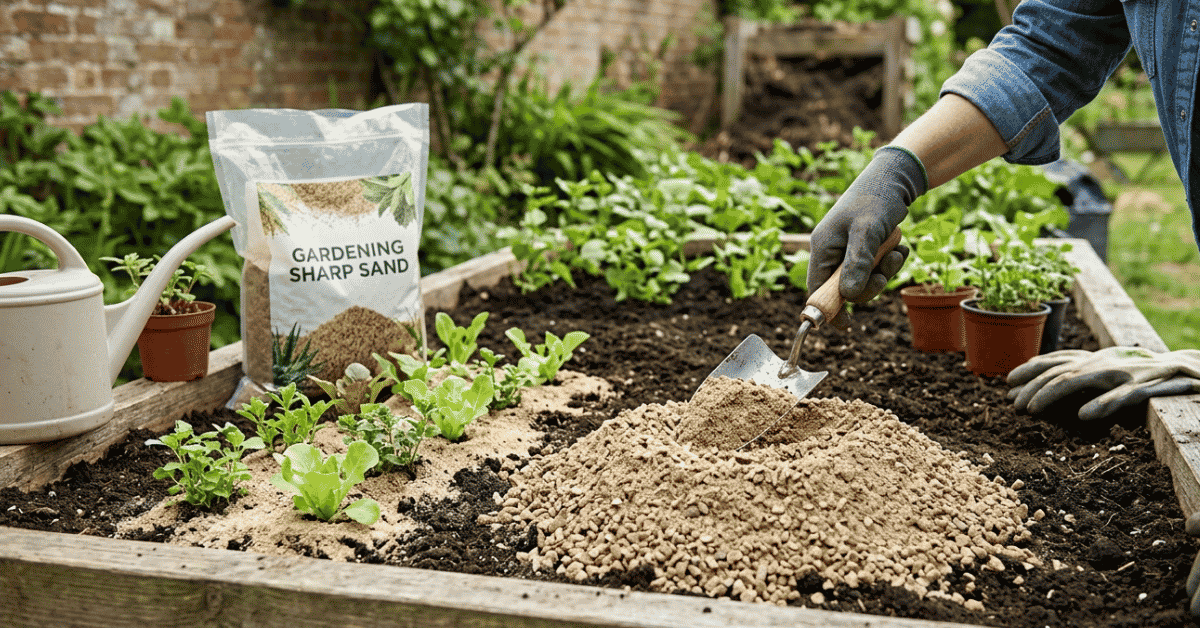
For existing garden beds, I usually dig down about 8-12 inches. Then I spread a layer of sharp sand over the area. Then I work it in thoroughly with a fork or spade.
Make sure you’re getting it mixed all the way through. You don’t want just a sandy layer at the bottom. This process is most effective when done in the fall or early spring.
It gives the soil time to settle and integrate.
I’ve found that a good perennial border benefits enormously from this. Digging out, adding sand, and replanting can seem like a lot of work. But the long-term health of the plants makes it so worth it.
I’ve also seen success using it with coconut coir for soil amendment. Combining materials often gives the best results.
Using Sharp Sand in Containers
For pots and containers, I usually mix it directly into my potting mix. A good ratio is about 1 part sharp sand to 3 or 4 parts potting compost. This provides excellent drainage for container plants.
It stops the soil from becoming dense and compacted. It’s especially useful for terracotta pots. They tend to dry out quickly anyway.
This mixture helps retain some moisture while still allowing excess to escape.
When I’m planting up something like a clematis or a delicate fuchsia, I’ll always add a handful of sharp sand to the bottom of the pot. It helps to ensure the roots don’t sit in water.
Improving Soil for New Plantings
When I’m planting a new tree, shrub, or even a flower bed, I always incorporate sharp sand. I’ll dig a hole much wider and deeper than the root ball. Then I mix a generous amount of sharp sand with the excavated soil.
I usually aim for a ratio of about 1 part sand to 3 parts soil. I then backfill the hole with this improved mixture. This gradually transitions the plant into the surrounding soil.
It prevents the roots from hitting a barrier of dense clay.
This technique is particularly helpful for plants that might struggle in your native soil. It gives them a stronger start. It’s a simple step that makes a big difference in establishment.
I’ve used a similar approach when adding coarse sand for my best soil. It’s all about creating that ideal environment from the ground up.
What NOT to Do with Sharp Sand
It’s not a miracle cure for everything. And there are definitely ways to use it incorrectly. Overdoing it can actually harm your soil.
Overusing Sand in Sandy Soil
If you already have sandy soil, adding more sharp sand is probably a bad idea. Sandy soils drain very quickly. They can also lose nutrients faster.
Adding more sand will just make them drain even faster. They might struggle to hold onto moisture and nutrients. In this case, you’d be better off adding organic matter, like compost or coconut gardening soil.
Organic matter helps sandy soil retain moisture and nutrients.
Using the Wrong Kind of Sand
This is critical. You absolutely must use sharp sand, builder’s sand, or horticultural grit. Do NOT use play sand.
Play sand has rounded grains. These can compact easily. They can actually make drainage problems worse over time.
They can create a solid, concrete-like layer. It defeats the whole purpose. Always check the grain.
Sharp sand feels gritty and abrasive. Play sand feels smooth.
Not Mixing It In Properly
Just dumping sharp sand on top of your soil won’t help. It needs to be incorporated thoroughly into the soil. If you just leave it on the surface, it can create a crust.
This crust can prevent water and air from reaching the roots. It can also wash into pathways. Always dig it in.
Work it into the soil to the depth you are amending.
Expecting Miracles Overnight
While I saw quick improvements, transforming heavy soil takes time. Adding sharp sand is a crucial step. But it works best when combined with other good gardening practices.
Regular application of organic matter, like compost, will continue to improve soil structure over the years. Sharp sand provides the initial structure, and organic matter builds on that. It’s a long-term investment in your garden’s health.
Sharp Sand vs. Other Soil Amendments
There are lots of things you can add to your soil. It’s good to know how sharp sand compares.
| Amendment | Best For | How It Helps | Things to Watch Out For |
|---|---|---|---|
| Sharp Sand | Heavy clay soils, improving drainage, seed starting | Creates air pockets, breaks up clumps, allows water to drain | Can leach nutrients, can make already sandy soil too dry, wrong type can compact |
| Compost | All soil types, general improvement | Adds nutrients, improves soil structure, increases water retention | Can add weed seeds if not properly made, can be slow to break down |
| Coconut Coir | Improving water retention and aeration, seed starting | Holds moisture, improves aeration, is pH neutral, sustainable alternative | Can be dusty if not pre-moistened, doesn’t add much in the way of nutrients |
| Perlite | Lightweight aeration, seed starting, hydroponics | Very lightweight, excellent aeration, doesn’t absorb water | Can float to the surface, doesn’t add nutrients |
| Vermiculite | Improving water and nutrient retention, seed starting | Holds water and nutrients, forms a good seed starting medium | Can compact over time, doesn’t add much to soil structure itself |
I find that using sharp sand isn’t an either/or situation with other amendments. For instance, coconut fiber for plants is fantastic for holding moisture. But for really heavy clay, I still need that sharp sand to physically break up the soil and create drainage channels.
They work together. It’s about understanding what each material does best.
Frequently Asked Questions About Sharp Sand
Is sharp sand good for succulents?
Yes, succulents love sharp sand. It creates the sharp drainage they need to prevent root rot. Learn more about succulent care.
Can I use sharp sand in my vegetable garden?
Absolutely. It improves drainage for root vegetables and prevents waterlogging, leading to healthier crops. Learn more about vegetable gardening.
Does sharp sand add nutrients to the soil?
No, sharp sand itself doesn’t add nutrients. Its primary benefit is improving soil structure and drainage. Learn more about soil nutrients.
How much sharp sand do I need for my garden?
For heavy clay, aim for a 25-30% sand mix. For lighter soils, 10-15% is usually enough. Learn more about soil amendments.
What’s the difference between sharp sand and play sand?
Sharp sand has angular grains for drainage. Play sand has rounded grains that can compact and worsen drainage. Learn more about sand types.