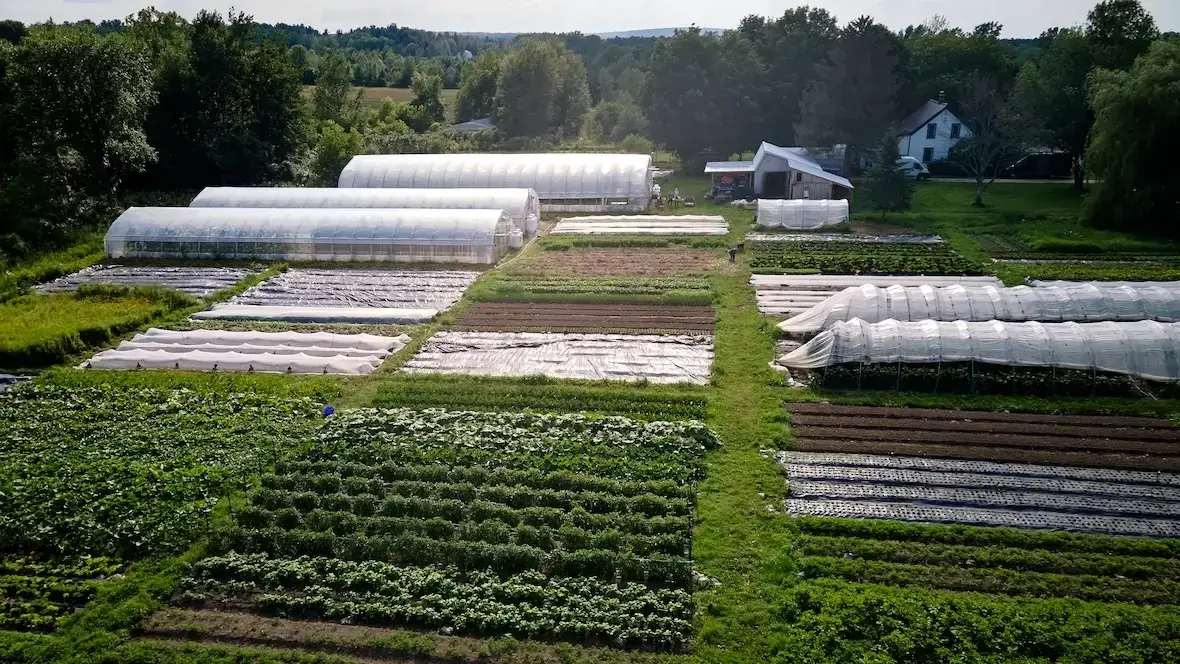
A vegetable garden cover crop is a plant grown to protect and improve garden soil between food crops. Rye, oats, clover, peas, and buckwheat are useful choices, depending on the season, climate, and goal. Most cover crops are cut down before planting the next vegetable crop.
Across the United States, vegetable gardens face many soil problems. Heavy rain can wash away loose soil in the Southeast and Midwest. Hot summers can leave beds dry and bare in the Southwest. Cold winters can limit planting time in the North. A well-chosen cover crop helps protect garden beds during these quiet periods.
Unlike lettuce, beans, or tomatoes, cover crops are grown mainly for the good they do for the soil. Their roots help hold soil in place, and their leaves cover bare ground. Some types add nitrogen, while others make it harder for weeds to take hold. The right choice depends on when your bed is free and what you plan to grow next.
You do not need a large farm or special gear to start. A small raised bed, a few seeds, and a clear planting plan can be enough. This guide explains the best cover crops for home vegetable gardens, when to sow them, how to manage their growth, and how to prepare the bed for your next crop.
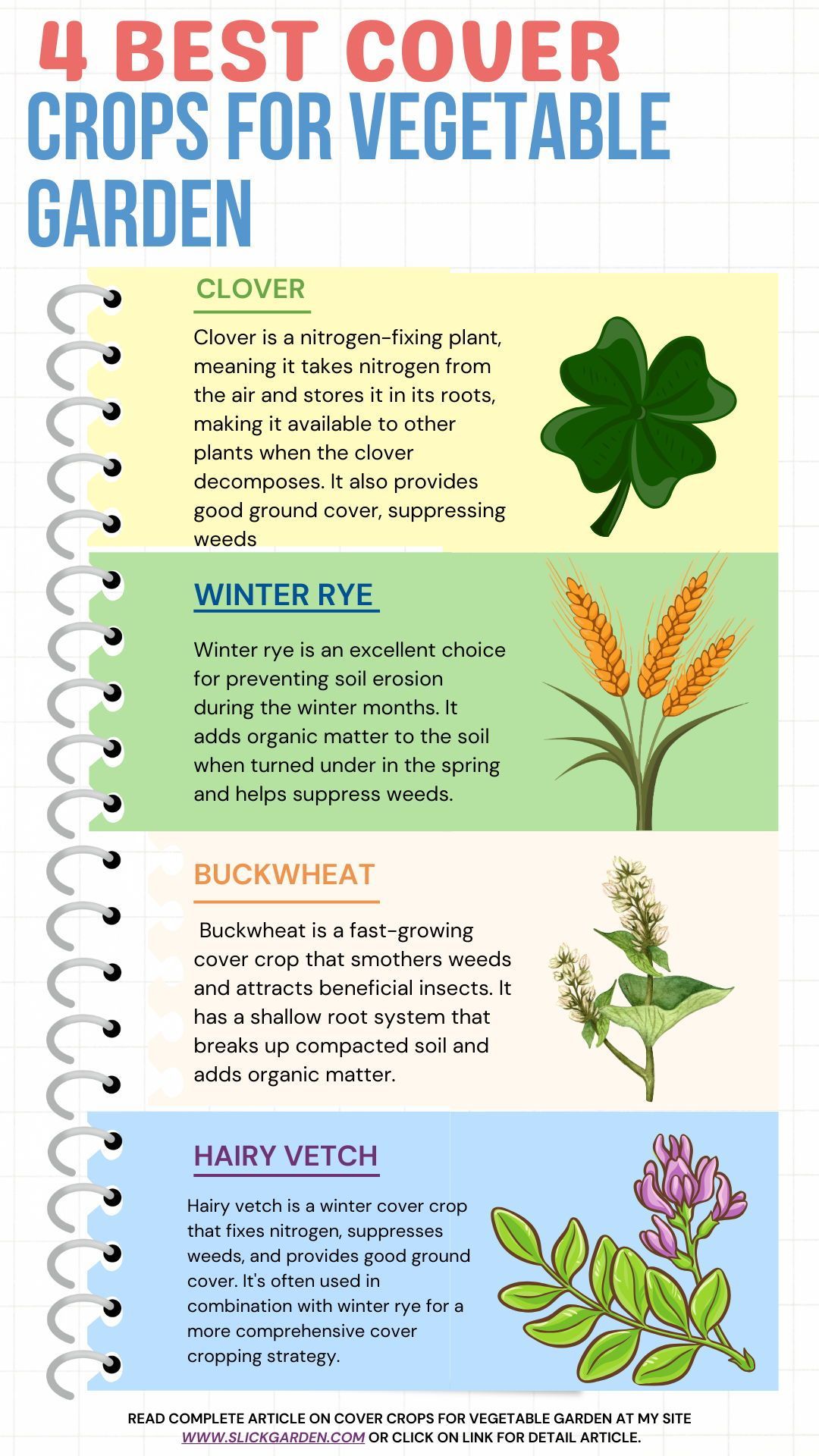
Source: slickgarden.com
What Is a Vegetable Garden Cover Crop?
A cover crop is a plant grown to protect the soil rather than to provide a main food harvest. Gardeners sow these plants when a bed would otherwise sit bare. They may grow during fall, winter, or a gap between spring and summer vegetables. Once the cover crop has done its job, the gardener cuts it down or manages it as a living mulch.
Cover crops can improve soil structure, reduce erosion, add organic matter, and compete with weeds. Some legumes also work with soil bacteria to capture nitrogen from the air. That nitrogen can become available to later crops as plant material breaks down, but the amount depends on the species, growth, and how the residue is managed.
Gardeners may also hear the term green manure. This usually means a crop grown and then returned to the soil to add organic matter and nutrients. A cover crop can serve as green manure, but not every cover crop needs to be dug into the ground. Leaving cut plant material on the surface can protect the soil while it breaks down.
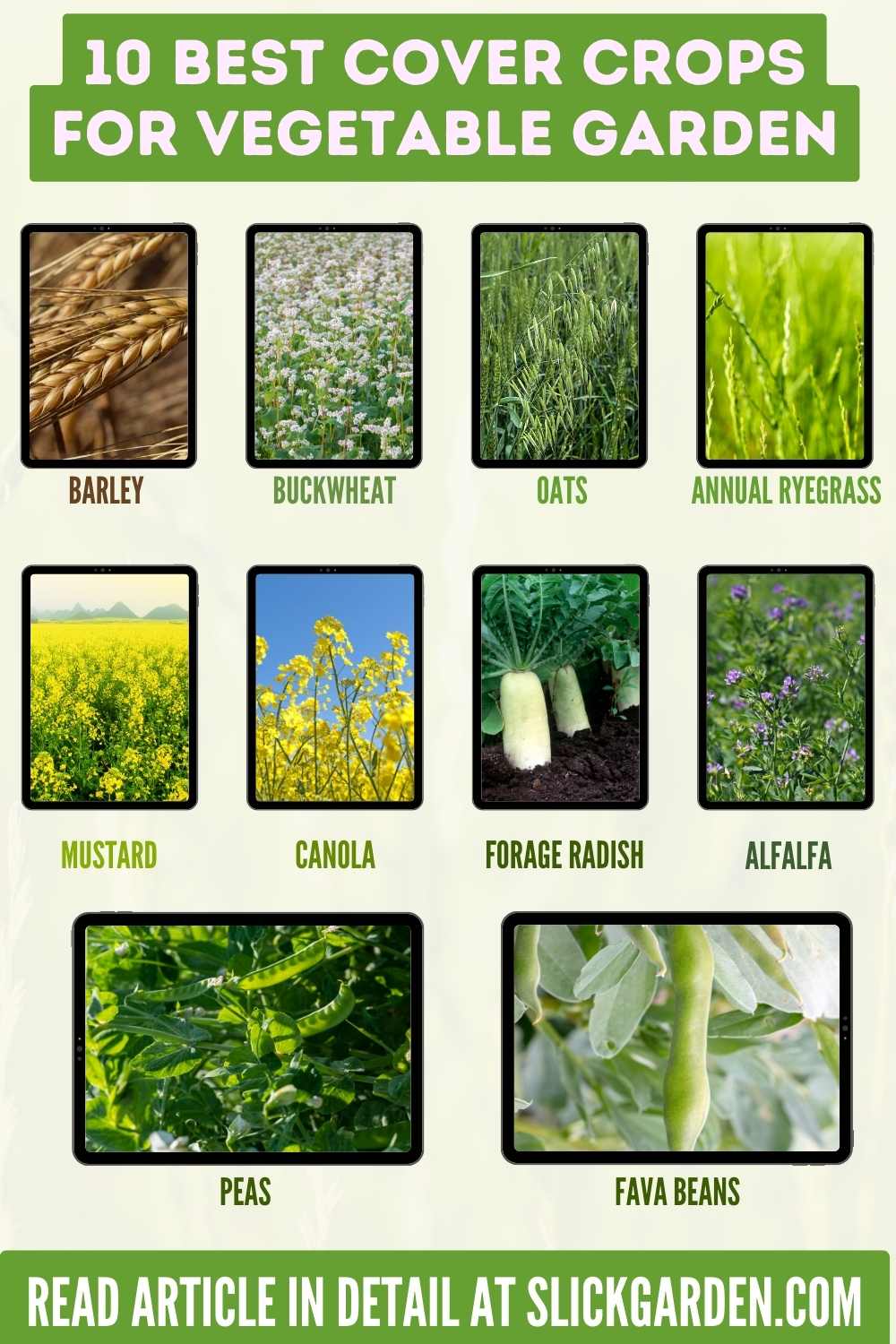
Source: www.pinterest.com
Soil cover
Leaves shield the soil surface from heavy rain, wind, and direct sun.
Root growth
Roots help bind soil particles and may improve soil structure over time.
Organic matter
Plant roots, stems, and leaves add organic material as they break down.
Weed competition
A dense stand can limit the space and light available to many weeds.
Cover Crops Are Not the Same as Food Crops
A food crop is grown mainly for its edible part, while a cover crop is grown for soil care. Some plants can do both jobs. Field peas, for example, may be used as a cover crop even though peas are edible. Still, a cover crop should be chosen for its growth habit, planting window, and effect on the next crop rather than its food value alone.
Best Cover Crops for a Vegetable Garden
The best cover crop depends on what you need most. Cereal grains grow a thick mass of roots and leaves. Legumes can add nitrogen to the garden system. Buckwheat grows fast in warm weather, while oats can suit short fall planting windows. No single plant is best for every region or every bed.
Use the table below as a starting point. Planting dates vary across the United States, so match the crop to your local frost dates and expected weather. Seed suppliers and university extension services can help you confirm suitable varieties and regional sowing windows.
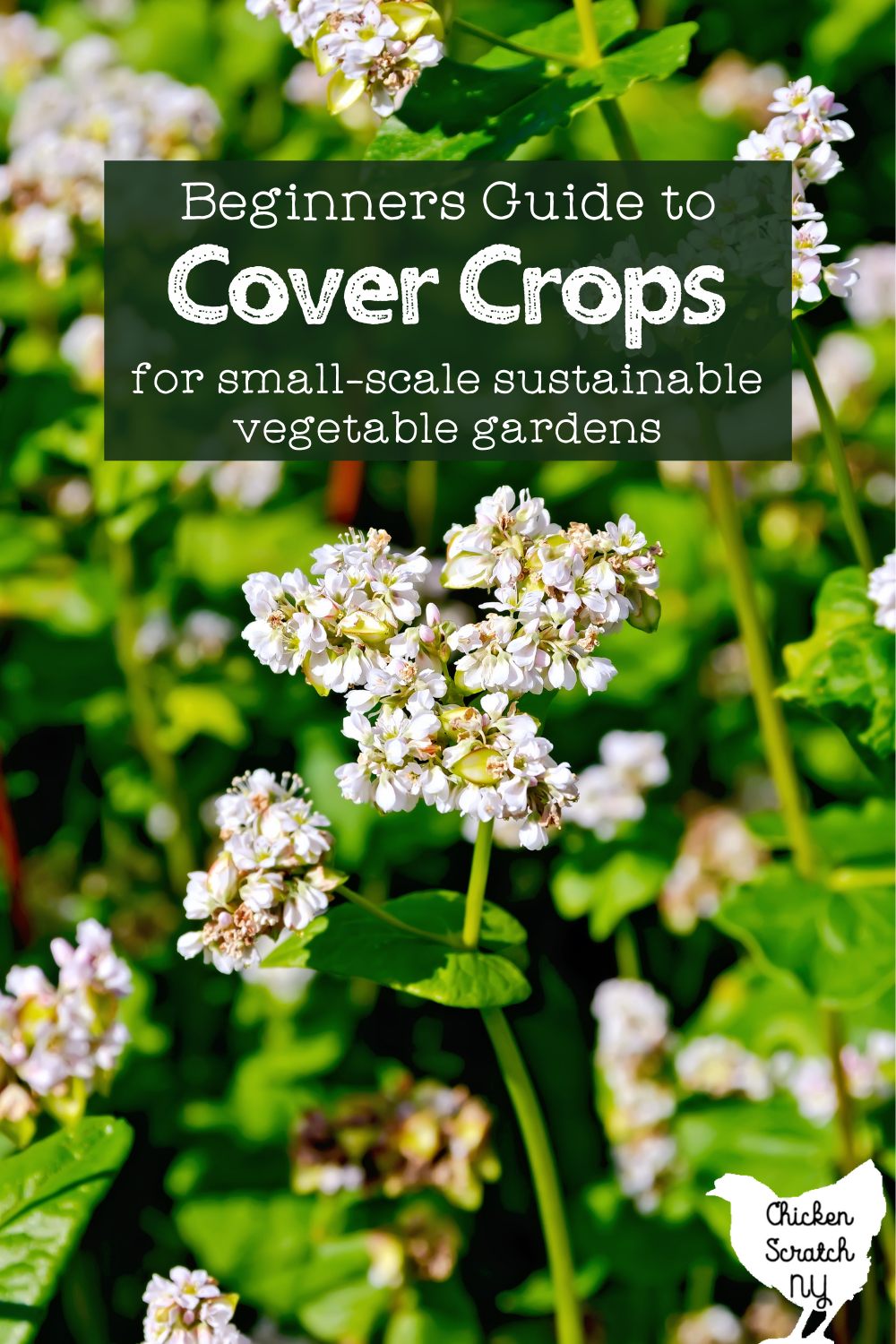
Source: journeywithjill.net
Cereal rye
A strong choice for many fall and winter beds. It can produce abundant roots and leafy growth, but mature rye residue can be slow to break down.
Oats
Useful for quick fall cover in many regions. Oats often die during hard winter freezes, which can make spring bed preparation easier.
Crimson clover
A legume that can provide soil cover and contribute nitrogen when it grows well and forms effective root nodules.
Field peas
A legume option for suitable cool-season windows. Peas may struggle in hot weather and need a suitable variety for the local climate.
Buckwheat
A fast-growing warm-season cover crop that can shade soil and compete with weeds during a short gap between vegetables.
Annual ryegrass
A grass that can produce useful cover and roots, though its growth and winter survival depend on local conditions and variety.
Which Cover Crop Should You Choose?
For a winter bed in a cold northern state, oats may be easier to manage if they winterkill, while cereal rye may suit gardeners who want a crop that survives winter. In milder areas, clover or a suitable pea mix may fit a fall planting plan. For a summer gap in a warm region, buckwheat can be useful when there is enough time to grow and cut it before it sets seed.
Think about the next crop before you buy seed. A large garden bed with several months free can support a longer-growing cover crop. A small raised bed that needs to hold early spring lettuce may need a short-lived crop that is easy to remove. When time is tight, a simple plan is often better than a complex seed mix.
For nitrogen support
Consider a suitable legume, such as field peas or clover, while remembering that nitrogen benefits depend on healthy growth and proper management.
For winter soil cover
Consider cereal rye or another locally adapted winter-hardy crop if you can manage its spring growth.
For a short summer gap
Consider buckwheat where the weather is warm and there is enough time to cut it before seed forms.
For easy spring cleanup
Consider oats in regions where winter freezes reliably kill them, but check local conditions first.
When to Plant Cover Crops in the United States
Plant cover crops when your vegetable bed has a gap long enough for the chosen crop to establish. In many parts of the United States, late summer and early fall are common times to sow winter cover crops. In warmer areas, gardeners may have more options through fall and winter. Summer cover crops can fill gaps after an early vegetable harvest.
The calendar alone is not enough. Local frost dates, soil moisture, day length, and the time needed before the next vegetable planting all affect success. Seeds sown too late may not form enough roots or leaves before cold weather. Seeds sown during a hot, dry spell may fail to sprout without enough water.
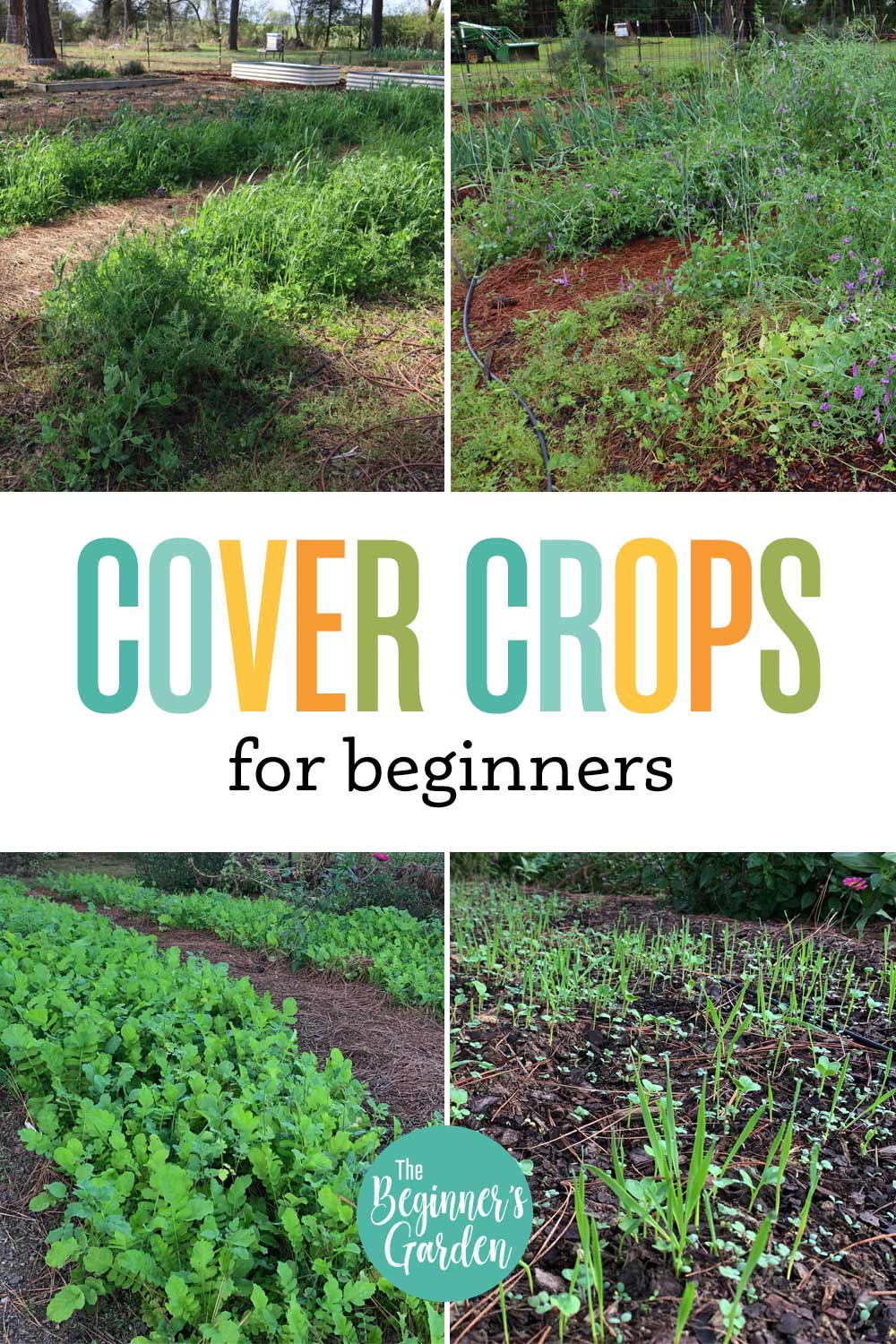
Source: chickenscratchny.com
Spring
Use spring cover crops when a bed will remain unused long enough before warm-season vegetables. Make sure the cover crop will not delay the main planting.
Summer
Use quick-growing crops such as buckwheat during a warm-season gap, provided you can cut them before they set seed.
Late summer and fall
Sow suitable cool-season covers after early vegetables are removed. Leave enough time for roots and leaves to develop before severe cold.
Winter
In mild climates, some cover crops can grow through winter. In cold regions, choose winter-hardy species or crops that die back naturally.
Adjust Planting Time to Your Climate
Gardeners in the Northeast and Upper Midwest often need to sow fall covers earlier than gardeners in warmer parts of the South. The Pacific Northwest may offer mild, wet conditions that favor certain winter covers, while dry parts of the West may need careful water planning. These are broad patterns, not fixed rules for every site.
Check your state university extension service for regional cover crop planting calendars. If you are unsure, choose a crop with a short establishment period and sow it as soon as the vegetable bed becomes free. Water the seedbed if rain is not expected, and keep the soil moist until seedlings emerge.
How to Plant a Vegetable Garden Cover Crop
Planting a cover crop is simple when the bed is ready and the seed matches the season. Start by removing spent vegetable plants and any weeds that have mature seed heads. Check the seed packet for the correct sowing rate and depth because large grains and tiny clover seeds need different treatment.
Most home gardeners can sow small beds by hand. The main goals are even coverage, good seed-to-soil contact, and steady moisture during germination. Avoid burying small seeds too deeply, and do not sow into soil that is so wet that walking on it causes compaction.
Source: dianfarmer.com
Step 1: Clear the bed
Remove spent crops, large weeds, and debris. If plants show signs of disease, dispose of them according to local guidance rather than adding them to a home compost pile without checking.
Step 2: Prepare the surface
Loosen the top layer lightly if needed. Avoid unnecessary deep digging, especially when the soil is wet.
Step 3: Sow the seed
Spread the amount listed on the seed packet as evenly as possible. Divide the seed into two portions and sow in two directions to help cover the bed evenly.
Step 4: Cover and firm
Rake in the seed to the depth recommended for that crop. Press the surface gently so seeds make contact with the soil.
Step 5: Water and monitor
Water gently after sowing. Keep the surface moist until seedlings establish, and check for bare patches that may need reseeding.
How Much Seed Do You Need?
Seed needs depend on the species, seed size, planting method, and packet recommendation. Do not use one universal rate for rye, oats, clover, and buckwheat. A dense cover crop needs enough plants to shade the soil, but excessive seed can waste money and create crowded growth.
For example, if a seed packet gives a rate of 1 pound per 1,000 square feet and your bed measures 100 square feet, you need one-tenth of a pound, or about 1.6 ounces. This is a hypothetical calculation; use the rate printed for your chosen crop and variety.
Measure the bed
Multiply length by width in feet to find the area of a rectangular bed.
Convert the rate
Multiply the packet’s rate per square foot or per 1,000 square feet by your bed area.
Check the method
Use the recommended rate for broadcasting or drilling, since the two methods may require different amounts.
Can You Plant Cover Crops in Raised Beds?
Yes. Raised beds can benefit from cover crops just as in-ground gardens can. Sow the crop after the final vegetable harvest, or use a short break between crops if the timing works. Keep the cover crop trimmed or cut it down before it competes with the next vegetable planting.
Because raised beds often have limited space, choose a crop that is easy to manage and will not delay spring planting. A winter-killed oat cover may be convenient in a suitable climate. In a small bed that needs early spring greens, a thick stand of winter-hardy rye may require more work before planting.
How Cover Crops Improve Garden Soil
Cover crops help soil through living roots, leafy growth, and the plant matter left behind. Their benefits build over time and depend on the species, growing conditions, and how the bed is managed. They are not a quick fix for every soil problem, but they can be a useful part of a long-term garden plan.
Bare soil is exposed to rain impact, wind, and rapid moisture loss. A cover crop shields the surface and slows the movement of water across it. Roots also create channels as they grow and decay. These channels may help water enter the soil, although the result varies with soil texture, compaction, and root growth.
Source: www.pinterest.com
Less erosion
Living leaves and roots help hold soil in place during rain and wind.
More organic matter
Roots and plant residues add organic material that supports soil structure and soil life.
Better water handling
Root channels and added organic matter may improve infiltration and water storage over time.
Weed suppression
A dense canopy can shade the ground and compete with weeds for space, water, and nutrients.
Do Cover Crops Add Nitrogen?
Legume cover crops, such as clover and field peas, can work with compatible bacteria in root nodules to fix nitrogen from the air. This is different from taking nitrogen already present in the soil. When the legume grows well and its plant material breaks down, some of that nitrogen may become available to later crops.
The benefit is not automatic. Poor growth, weak nodulation, early termination, or removal of plant material can limit the nitrogen returned to the bed. Non-legume crops such as rye and oats are useful for soil cover and nutrient capture, but they do not fix nitrogen from the air. They may temporarily tie up some nitrogen as high-carbon residue breaks down.
Choose legumes for nitrogen fixation
Select a suitable legume and check whether its seed needs the correct inoculant for effective nodulation.
Choose grasses for soil cover
Cereal rye and oats can produce substantial roots and residue, though their nitrogen effects differ from legumes.
How to End a Cover Crop Before Planting Vegetables
A cover crop must be stopped before it competes with the next vegetable crop. The right method depends on the species, plant size, time until planting, and whether you want to leave residue on the surface. Cut the crop before it forms mature seed, and plan ahead so the bed is ready when your vegetables need it.
Small home gardens rarely need large farm equipment. Hand shears, a hoe, or a lawn mower set to a suitable height may work, depending on the crop and the bed. Some gardeners cut plants and leave the residue as surface mulch, while others remove it or mix it lightly into the topsoil. Each approach has trade-offs.
Source: theseasonalhomestead.com
Cut and leave on the surface
This method keeps residue as a protective layer. It suits gardeners who want less soil disturbance, but thick residue can slow seedling emergence and may need to be moved aside.
Cut and incorporate
Mixing young plant material into the soil can speed contact with soil organisms, but tilling may disturb soil structure and bring buried weed seeds to the surface.
Use winterkill where suitable
Crops that naturally die during winter freezes may leave residue without a separate killing step. Winterkill is not reliable in every climate.
Allow time for breakdown
Wait long enough for residue to soften before sowing small seeds or transplanting crops that need a fine, open seedbed.
When Should You Cut a Cover Crop?
For many home gardens, cutting the crop before flowering or seed formation makes management easier. Young plants tend to break down faster than mature plants with tough stems. The best stage also depends on your goal, since a legume may need enough growth to build useful biomass before termination.
If the cover crop is still small and your next vegetable planting is near, cut it early rather than risk a delay. If it has become tall and dense, cut it in stages if needed. Do not let a cover crop set seed unless you intend to collect seed and can control unwanted spread.
How Long Should You Wait Before Planting?
There is no single waiting period for every cover crop. Soft, young residue may break down faster than mature rye stems. Cool soil and dry weather can slow decay, while warm, moist conditions often speed it up. A thick layer may also block direct seed contact or make it hard to place transplants.
Check the condition of the residue rather than relying only on a fixed number of days. If you plan to sow tiny seeds, clear a narrow strip of residue and make a fine seedbed. If you plan to transplant larger seedlings, you may be able to plant through or around a surface mulch, provided it does not interfere with root contact or soil moisture.
Common Cover Crop Mistakes to Avoid
Cover crops work best when they fit the garden schedule. Many problems start when gardeners sow too late, choose a crop that grows too large, or wait too long to cut it down. A little planning can prevent a useful soil cover from becoming a hard-to-manage patch of plants.
The most practical approach is to start with one bed and one clear goal. Watch how the crop grows in your soil, then adjust the species and planting time in the next season. Keep notes about sowing dates, rainfall, frost, and when the bed became ready for vegetables.
Source: amazon.ca
Sowing too late
Late sowing can leave too little time for roots and leaves to develop. Choose a faster crop or adjust the planting window when possible.
Choosing the wrong species
A winter-hardy crop may be harder to stop in spring, while a tender crop may fail before winter in a cold area.
Letting plants set seed
Mature seed can spread into later beds and create extra weeding. Cut the crop before viable seed forms.
Planting vegetables too soon
Fresh residue can interfere with seed placement and may temporarily tie up nitrogen as it breaks down. Leave time to prepare the bed.
Ignoring pests and disease
Some cover crops can host pests or diseases that affect related vegetables. Choose species with crop rotation and local disease risks in mind.
Expecting instant soil repair
Cover crops help over time, but they do not replace drainage fixes, soil tests, or other steps needed for serious soil problems.
Can Cover Crops Cause Problems for Vegetables?
Yes, if the wrong crop or timing is used. Some cover crops can host insects, plant diseases, or nematodes that also affect vegetables. Others may regrow after cutting or compete for water when left alive too long. Crop choice matters most when the garden has a known pest or disease problem.
Avoid planting a cover crop from the same plant family as a vegetable that has suffered a serious soilborne disease unless local guidance supports that choice. For example, cover crop decisions should account for the relationship between brassica covers and brassica vegetables. When in doubt, consult your state extension service for crop-specific advice.
Simple Cover Crop Plans for Home Vegetable Gardens
A basic plan is often enough for a home garden. Start by deciding when the bed will be empty and when the next vegetables need to go in. Then select a crop that fits the available time and local weather. Do not choose a cover crop only because it is popular; choose one you can manage before your next planting date.
The following examples show how the plan can change with the season. They are general examples rather than fixed planting calendars. Adjust them for your location, soil moisture, frost dates, and the vegetables you grow.
Source: themarketgardener.com
Plan A: A fall bed in a cold climate
Sow oats early enough to establish before hard freezes if you want a cover that may winterkill. If you need a winter-hardy stand, consider cereal rye and plan for spring termination.
Plan B: A summer gap after early vegetables
Sow buckwheat in warm weather if the bed has enough time before the next crop. Cut it before seed formation and allow residue to settle before replanting.
Plan C: A bed that needs nitrogen support
Consider a suitable clover or field pea cover. Give it enough time to grow, and manage the residue so the next crop can use the nutrients as they become available.
Plan D: A small raised bed
Use a crop that fits the limited space and does not delay the next harvest. A short cover crop or winter-killed option may be easier to manage than a tall, persistent stand.
A Simple Decision Guide
If the main goal is to keep soil covered through winter, choose a crop that can establish before cold weather and survive, or naturally die back, under your local conditions. If the main goal is nitrogen fixation, select a legume suited to the season. If you have only a few warm weeks between vegetables, favor a quick crop that is easy to terminate.
Also consider your tools and available time. A cover crop that needs careful spring management may not suit a gardener who must plant early. A crop that dies back in winter may be easier to handle, but it may provide less living cover late in the season. The best choice balances soil benefits with a realistic garden schedule.
Frequently Asked Questions
Q
What is the easiest cover crop for a beginner?
Oats and buckwheat can be practical starting points when the season suits them. Oats may winterkill in colder regions, which can make spring cleanup easier. Buckwheat grows quickly in warm weather and can fill a short gap between vegetables. Check local sowing dates and choose the crop that fits your next planting.
Q
What is the best cover crop for a vegetable garden in winter?
Cereal rye is a common winter cover crop because it can survive cold conditions in many regions. Oats may be easier to manage where winter freezes kill them. In milder climates, clover or other suitable species may work well. The best option depends on your local winter weather and how soon you need the bed in spring.
Q
Do cover crops need fertilizer?
Not always. The need for fertilizer depends on the crop, soil fertility, and growing conditions. Legumes can fix nitrogen when they form effective root nodules, while non-legume cover crops use nutrients already present in the soil. A soil test can help you decide whether a nutrient amendment is needed.
Q
Can I leave a cover crop on top of the soil?
Yes. You can cut the cover crop and leave the residue on the soil surface as mulch. This helps shield the ground and reduces the need to dig the material in. However, thick residue may block small seeds from reaching the soil, so move it aside where you plan to sow.
Q
Will cover crops eliminate weeds?
No. A dense cover crop can suppress many weeds by shading the soil and competing for space, water, and nutrients. It will not eliminate every weed, especially established perennial weeds. Remove troublesome weeds before sowing and cut the cover crop before it sets seed.
Q
Can I plant tomatoes after a cover crop?
Yes, if you terminate the cover crop and prepare the bed properly. Allow the residue to break down enough for good planting contact, and check soil moisture before transplanting. Avoid planting tomatoes into a living cover that competes for water and nutrients. If the cover crop has a pest or disease link to tomatoes, seek local crop rotation guidance first.
✦ Wrapping Up
Conclusion
A vegetable garden cover crop is a practical way to protect bare soil, add organic matter, and support healthier garden beds over time. Rye, oats, clover, peas, and buckwheat each have strengths, but the right choice depends on your climate, planting window, and soil goals.
Start with one bed and choose a crop you can sow and stop at the right time. Watch how it grows, keep notes, and adjust your plan next season. With a little care, the time between vegetable harvests can become useful growing time for your soil.
💡 Key Takeaway
Measure one empty garden bed, check your local cover crop planting window, and choose a suitable seed based on your main goal. Sow it according to the packet directions, keep it moist while it establishes, and plan its termination before your next vegetables are due.