
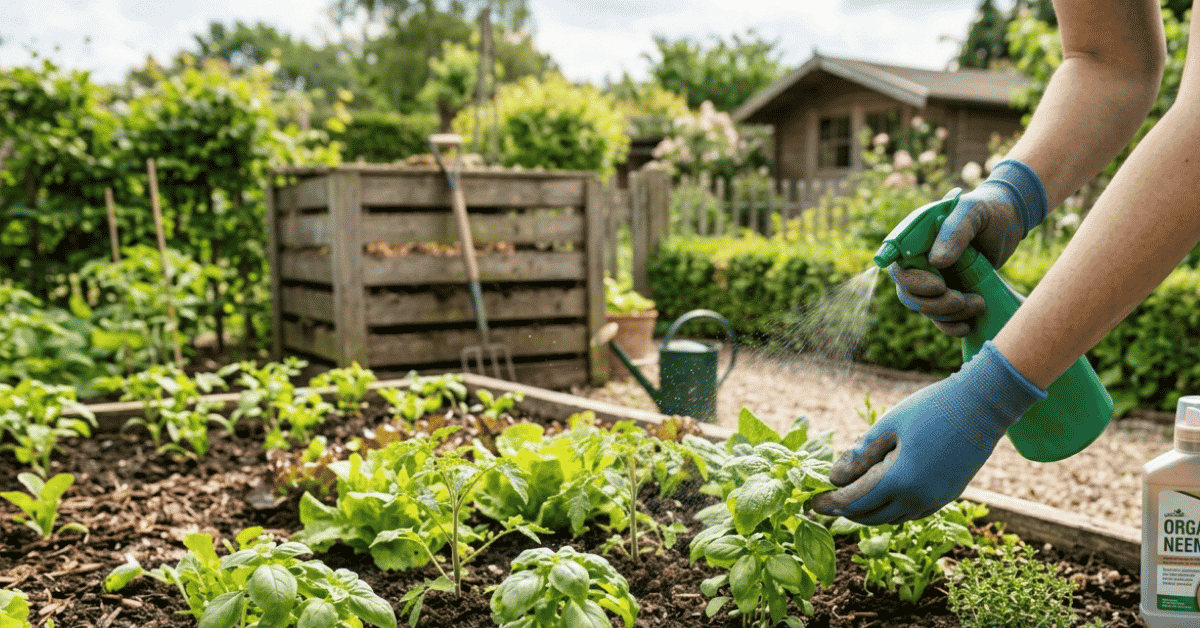
5 Neem Oil Secrets for Organic Gardening Bliss
My garden is my happy place. It’s where I get my hands dirty and watch life unfurl. I’ve tried all sorts of things to keep my plants healthy.
You know, without all those harsh chemicals. One thing I keep coming back to is neem oil. It’s changed my entire approach to organic gardening.
This stuff is a game-changer, truly. It helps with bugs and even some plant diseases. I’ve found it to be a real lifesaver for my delicate seedlings and my prize-winning tomatoes.
It’s not just some random garden hack; it’s a staple in my tool kit.
What is Neem Oil Organic Gardening and Why Trust It?
Honestly, I was skeptical at first. People talk about natural remedies for everything. But neem oil?
It sounded too good to be true. I’d always struggled with aphids on my roses. They’d just reappear no matter what I did.
Then I heard about neem oil. I decided to give it a shot. I mixed up a batch, following the instructions carefully.
I sprayed my roses. Within a day, I saw a huge difference. The aphids were gone.
Not just fewer, but gone. It was amazing. Since then, I’ve used it on my vegetable plants, my fruit trees, and even my potted herbs.
It’s so versatile. I love knowing I’m not spraying poisons all over my food plants. It feels good for my conscience and great for my garden’s health.
How Does Neem Oil Work Its Magic?
It’s pretty wild, actually. Neem oil isn’t a quick-kill poison. It works on multiple levels.
The main active compound is called azadirachtin. This stuff messes with insect hormones. It stops them from growing and molting properly.
So, they can’t reproduce. It also acts as a repellent. Bugs just don’t like the smell or taste.
They tend to avoid plants treated with neem oil. Plus, it can suffocate some smaller insects and mites on contact. It’s like a triple threat.
It disrupts their life cycle, deters them, and can even just smother them. It’s gentle on beneficial insects too, like ladybugs and bees, as long as you apply it when they’re not actively feeding.
The Key Compound: Azadirachtin
This is the star player. Azadirachtin is extracted from the seeds of the neem tree. It’s a natural insecticide.
It’s also anti-fungal. This makes it super useful for a wide range of garden problems. It’s powerful but biodegradable.
That’s a huge plus for organic growing.
Repellent Action
I notice this most with my squash plants. They always get spider mites. A good spray of neem oil, and they back off.
It’s like putting up a “no vacancy” sign for pests. The smell is strong, sort of earthy and garlicky. Most pests can’t stand it.
Suffocating Effect
For tiny things like spider mites or mealybugs, direct contact is key. The oil coats their bodies. It blocks their breathing pores.
It’s a simple but effective method for small, soft-bodied pests.
Practical Uses of Neem Oil in Your Garden
I use neem oil for so many things. It’s my go-to for treating common garden pests. It’s also effective against some common plant diseases.
It’s really about prevention and early treatment. I’ve learned that being proactive is the best strategy.
Pest Control Wonders
Aphids, mealybugs, whiteflies, spider mites, thrips, you name it. If it’s small and munching on my plants, neem oil is my first line of defense. I remember one year my basil was covered in whiteflies.
It looked like it was snowing every time I touched a leaf. One application of neem oil cleared them right up. I was so relieved.
My basil is a staple for my summer caprese salads, and I couldn’t let pests ruin it.
Fighting Fungal Foes
Neem oil also has antifungal properties. It can help manage powdery mildew. That dusty white stuff that appears on leaves?
Yeah, neem oil can help with that. I’ve used it on my zucchini plants. They tend to get powdery mildew pretty early in the season.
Spraying them with neem oil keeps the leaves healthy for longer. This means more zucchini for me! It also helps with black spot on roses.
It’s not a cure-all, but it definitely helps keep these issues in check.
Application Tips for Success
This is crucial. How you mix and apply it matters. Always use cold-pressed neem oil.
This type retains more of the beneficial compounds. Mix it with water. Add a mild soap, like pure castile soap.
This helps the oil and water mix. It acts as an emulsifier. About 1-2 teaspoons of neem oil and 1 teaspoon of soap per quart of water is a good starting point.
Always test on a small part of the plant first. Wait 24 hours to check for any reaction. Spray plants in the early morning or late evening.
Avoid spraying when the sun is strong. This can burn the leaves. Make sure to coat all parts of the plant, especially the undersides of leaves.
Neem Oil vs. Other Organic Pest Solutions
I’ve dabbled in a few different organic pest control methods. Neem oil is one part of my strategy. It’s not the only thing, but it’s a very important one.
Here’s how it stacks up against some other common options.
| Solution | How it Works | Pros | Cons |
|---|---|---|---|
| Neem Oil | Disrupts hormones, repels, suffocates | Broad spectrum, multiple actions, good for fungus, biodegradable | Can burn leaves if applied incorrectly, smell, can affect some beneficials if sprayed directly |
| Insecticidal Soap | Disrupts cell membranes, dehydrates | Fast-acting on contact, readily available, cheap | Only effective on contact, short residual effect, can harm some beneficials |
| Diatomaceous Earth | Sharp particles scratch exoskeleton, causes dehydration | Natural, safe for food, kills many crawling insects | Must be reapplied after rain, can be messy, can harm beneficials flying through it |
| Companion Planting | Using plants to deter pests or attract beneficials | Natural, enhances biodiversity, can improve plant health | Takes time to establish, less direct control, requires knowledge of plant interactions |
My experience is that neem oil is often the most comprehensive. It tackles different types of problems. It doesn’t just kill on contact.
It works with the plant’s biology. I’ve used coconut fiber in my garden beds to improve soil structure. It’s great for drainage.
But for pest and disease control on the leaves, neem oil is hard to beat. I also find that good soil health, like using coconut fiber for healthier plants, is a massive part of preventing problems in the first place.
Potential Downsides and How to Avoid Them
Now, I’m a big fan of neem oil. But like anything, it’s not perfect. There are a few things to watch out for.
Being aware helps you use it effectively and safely.
Sensitive Plants
Some plants are more sensitive than others. Delicate seedlings or plants stressed by drought can react poorly. They might show leaf spotting or yellowing.
That’s why I always do a small test patch. I wait a day. If the plant looks fine, then I proceed with a full spray.
It’s a simple step that has saved me a lot of heartache.
Application Timing
I mentioned this before, but it’s worth repeating. Don’t spray in the heat of the day. The sun can bake the oil onto the leaves.
This causes severe burns. It’s happened to me once. I had to prune back a whole section of my tomato plants.
It was heartbreaking. Now, I’m super careful. Early morning or late evening is best.
Beneficial Insects
Neem oil can harm beneficial insects if sprayed directly on them. This includes bees, ladybugs, and lacewings. They are crucial for a healthy garden.
To avoid this, I only spray when beneficial insects are not active. Usually, this means early morning before they wake up, or after dusk. I also avoid spraying directly on flowers where they might be feeding.
It’s all about targeted application.
When to Reach for Neem Oil
Think of neem oil as a tool in your gardening toolbox. You don’t use a hammer for every job, right? Neem oil is best used when you see specific problems starting.
Or, for some plants, as a preventative measure before problems typically arise.
- Early signs of pests: If you see a few aphids on a leaf, or a small patch of whiteflies, that’s your cue. Don’t wait until they’ve taken over.
- Fungal disease spotted: That first sign of powdery mildew on a zucchini leaf? Time to spray.
- Known pest season: Some pests are predictable. For instance, I know spider mites like to show up on my houseplants in the dry winter months. A preemptive spray can help.
- New plants: When I bring a new plant home, I like to give it a good neem oil spray. It can help knock out any hitchhikers it might have picked up.
I also find that healthy soil makes healthier plants. Using things like coarse sand for better drainage or understanding the benefits of coconut gardening can lay the foundation for a resilient garden. My plants are stronger when they’re well-nourished from the ground up.
Frequently Asked Questions About Neem Oil Organic Gardening
Is neem oil safe for edible plants?
Yes, when used as directed, neem oil is considered safe for edible plants. Its natural properties allow it to break down quickly.
How often should I apply neem oil?
Apply about every 7-14 days as needed. Avoid applications during peak heat or direct sun.
Can I use neem oil during flowering?
It’s best to avoid spraying directly on open flowers. This protects pollinators like bees. Try spraying early morning or late evening.
Will neem oil kill all insects?
No, neem oil is selective. It targets many common pests but is less harmful to beneficial insects. Especially if applied carefully.
Does neem oil have a strong smell?
Yes, neem oil has a distinct, strong, somewhat garlicky or nutty odor. The smell typically dissipates after a few hours.