A grapevine can live for 50 years or more with good care, although fruit production often changes as the vine ages. Some old grapevines survive for more than a century, while neglected or diseased vines may die much sooner.
In the United States, grapevines grow in home gardens, backyard orchards, and large vineyards from California and Oregon to New York and North Carolina. Their lifespan depends on the grape variety, local climate, soil drainage, disease pressure, pruning, and general care. A vine growing in a warm, dry area may face different challenges from one exposed to cold winters and humid summers.
The lifespan of a grape plant also depends on what you mean by a productive vine. A grapevine can stay alive for many decades, but its yield, fruit quality, and ability to grow healthy shoots may change over time. Young vines need time to build strong roots and trunks, while older vines need sound structure and careful pruning to remain productive.
If you are planning to grow grapes at home, the good news is that planting a vine can be a long-term investment. You do not need to replace it every few years. With a suitable site, a strong support system, and steady care, one grapevine may provide fruit for decades.
A grapevine commonly has the potential to live for several decades. Around 50 years is a useful general reference for a long-lived, established vine, but it is not a fixed lifespan or a guarantee. Some vines decline much earlier, while others remain alive well beyond that age.
There is no single lifespan that applies to every grape plant. Table grapes, wine grapes, and muscadine grapes differ in their growth habits and climate needs. The place where a vine grows can matter just as much as its variety. A vine in deep, well-drained soil with suitable weather may outlast one growing in waterlogged ground or facing repeated disease.
It also helps to separate survival from useful fruit production. An old vine may still grow leaves and shoots but produce fewer grapes than it did in its prime. Another old vine may remain productive when its trunk and root system are healthy and its canopy receives proper care.
Source: sonomacounty.com
Short-lived vines
Vines affected by severe root rot, trunk disease, repeated winter injury, or major physical damage may decline well before reaching several decades of age.
Long-lived garden vines
Well-sited vines with healthy roots and sound trunks can remain alive and useful for many decades.
Very old grapevines
Some documented old vines have survived for more than a century. Such examples are exceptional and should not be treated as the normal lifespan for every home garden.
Can a Grapevine Live for 100 Years?
Yes. Some grapevines live for 100 years or longer, especially when their roots and main woody structure remain healthy. Old vines are found in historic vineyards and established gardens. Their age alone does not mean they will produce a large crop every year.
A century-old vine may have a thick trunk and an extensive root system, yet its crop can vary with weather, disease, pruning, and the condition of its fruiting wood. An old vine can also suffer sudden decline if a serious trunk disease or root problem develops.
For a home gardener, a long lifespan is best treated as a possibility rather than a target. Good growing conditions improve the odds of keeping a vine healthy, but no care routine can guarantee that it will survive for a century.
Age is not a health test
A thick trunk does not prove that a vine is healthy. Look at annual shoot growth, leaf condition, crop size, and signs of dead or diseased wood.
Does an Older Grapevine Produce Better Grapes?
Not always. Vine age can affect crop size and the way a plant responds to its environment, but older does not automatically mean better. Fruit quality depends on variety, crop load, sunlight, water, soil, weather, and how well the vine is managed.
In some wine-growing settings, older vines may have lower yields and a growth pattern that growers value. That does not establish that every old vine makes sweeter grapes or better wine. A neglected old vine can produce poor fruit, while a well-managed younger vine can produce a healthy crop.
Judge the whole plant
Use fruit quality, shoot growth, disease symptoms, and crop consistency together instead of relying on the vine’s age alone.
How Long Does It Take a Grapevine to Produce Fruit?
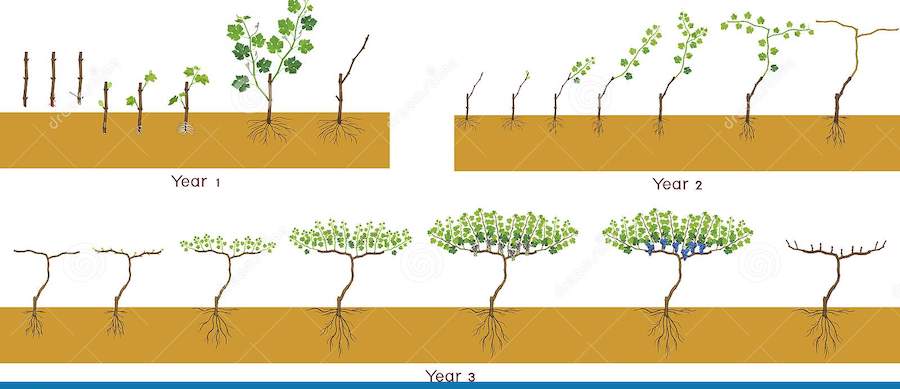
A newly planted grapevine may produce its first small crop within two to three years, although timing varies by variety, planting method, climate, and plant health. Some vines take longer to establish a strong root system and trunk before they can support a useful harvest.
The first season is mainly about establishment. Roots need to settle into the soil, and shoots need to grow into a form that can be trained along a trellis or other strong support. Removing flowers or fruit from a very young vine can help it direct more energy toward building its structure.
During the second and third years, a vine may begin to produce fruit if it has grown well. Full production often takes several years, and the exact timing depends on how the vine was trained and how much healthy fruiting wood it has developed.
A grapevine does not need to reach old age before producing grapes. In fact, its early productive years arrive long before its potential lifespan ends. Good early training helps create a framework that can support fruit production for many seasons.
Source: cropin.com
Year one
Focus on root establishment, healthy shoots, watering during dry spells, and building a sound framework. Avoid allowing a heavy crop to weaken a small vine.
Year two
Train the strongest shoots and begin shaping the trunk and permanent arms according to the chosen training system.
Years three and four
A healthy vine may begin carrying a more useful crop. Prune it according to its variety and training system rather than allowing excess growth to crowd the canopy.
Mature years
Maintain the vine’s structure, renew fruiting wood, and adjust crop load to match the plant’s vigor.
Why Some Grapevines Take Longer to Bear Fruit
Slow fruiting can result from poor sunlight, weak growth, excessive nitrogen, winter damage, or incorrect pruning. A vine grown from seed can also differ from the parent plant and may take longer to reach maturity than a named, vegetatively propagated cultivar.
Pruning matters because grapes form fruit on shoots that grow from buds on suitable one-year-old wood. If pruning removes too much of the right fruiting wood, or leaves an unsuitable structure, the vine may produce little fruit even when it looks healthy.
Before assuming that a young vine is failing, check its age, variety, sun exposure, pruning method, and recent growth. A slow start does not necessarily mean the plant has a short lifespan.
Check the pruning method
Some varieties are better suited to cane pruning, while others respond well to spur pruning. Follow guidance for the specific grape cultivar.
Check the site
Grapes generally need a sunny location and soil that drains well. Shade and persistently wet roots can limit growth and fruiting.
The Main Stages in a Grapevine’s Life
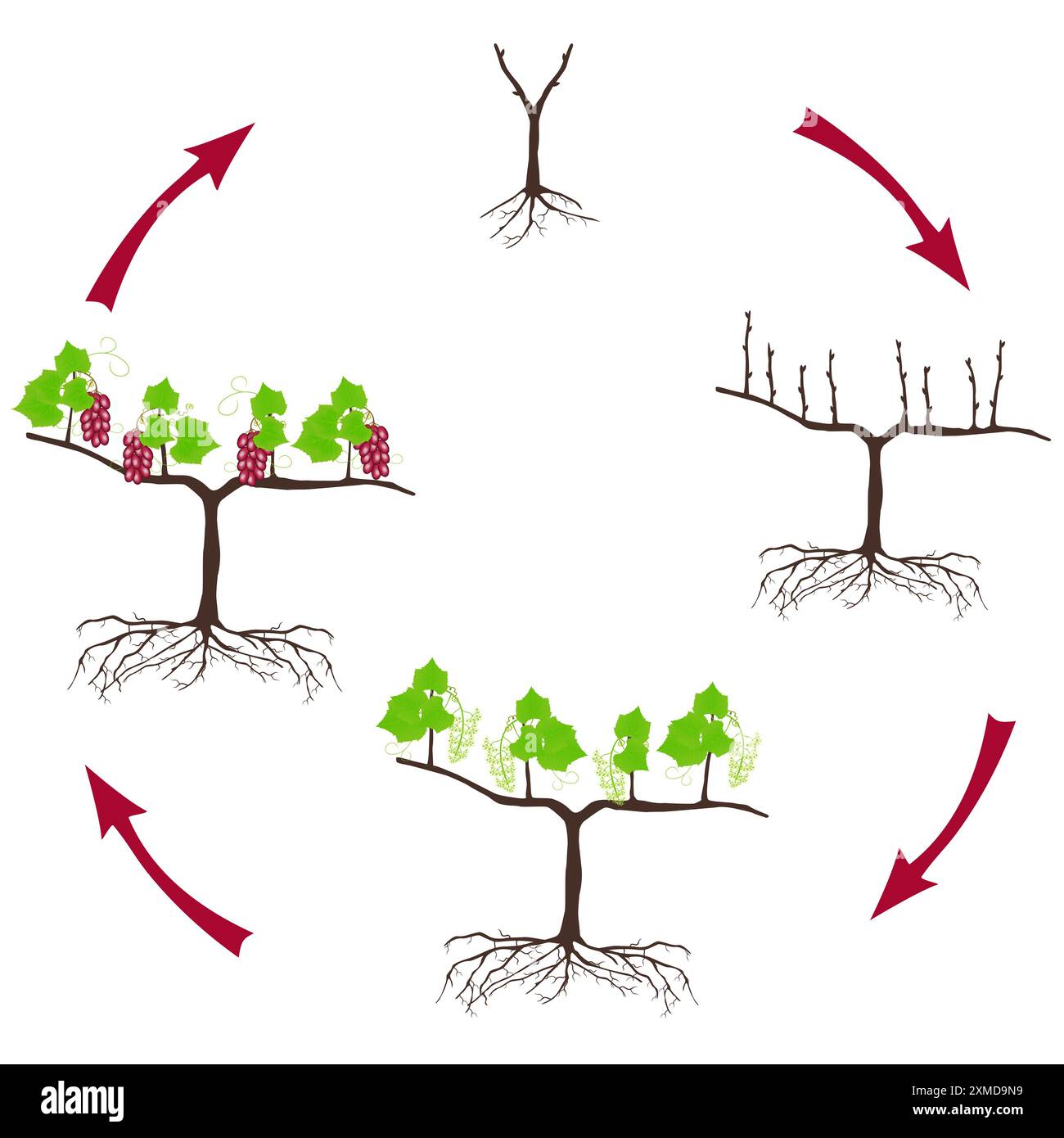
A grapevine moves through several stages, from establishment to mature fruit production and eventual decline. The timing is not exact for every plant, but understanding these stages helps you give a vine the care it needs at each point.
Young vines benefit from careful training and steady establishment. Mature vines need balanced growth and regular pruning. Older vines need closer attention to damaged wood, disease, and changes in crop size.
Source: fity.club
Establishment
The vine builds roots, shoots, and its initial framework. Good planting and careful watering support this stage.
Early fruiting
The vine starts producing small crops while its trunk and permanent arms continue to develop.
Mature production
The established vine can produce regular crops when its variety, climate, and management suit one another.
Older growth
The vine may remain productive for decades, but dead wood, trunk damage, and weaker shoots may require more attention.
Decline
Serious disease, root failure, structural damage, or repeated environmental stress can reduce growth and eventually kill the plant.
Young Grapevines
During the first few years, a grapevine needs time to build roots and a sturdy trunk. A large crop may place too much demand on a small plant, so early fruit production should not be the only measure of success.
Keep weeds from competing near the vine, provide water when the root zone becomes dry, and train the main shoot along the support. Protect the young plant from accidental damage caused by lawn equipment or careless pruning.
Main goal
Build a strong framework that can support future growth and fruit.
Mature Grapevines
A mature grapevine has an established root system and permanent woody structure. Its yearly crop depends on new shoots growing from buds on the previous season’s wood. This is why annual pruning plays such a large role in maintaining useful fruit production.
Mature vines can become tangled or overcrowded if left unpruned. Too much foliage can shade leaves and fruit, reduce airflow, and make disease control more difficult. The aim is not to remove as much growth as possible, but to keep the vine in a manageable, productive shape.
Main goal
Maintain a balanced canopy, healthy fruiting wood, and a stable support structure.
Old Grapevines
Older grapevines may have thick trunks, rough bark, and large permanent arms. These features can be normal signs of age, but cracks, large dead sections, unusual swelling, or a sudden drop in shoot growth deserve attention.
Avoid cutting away large sections of an old vine without a plan. Grapevines can sometimes be renewed through careful pruning, but severe trunk disease or extensive damage may limit recovery. If the plant has special historical or sentimental value, seek advice from a local grape specialist before making major cuts.
Main goal
Preserve healthy structure, assess disease risks, and decide whether renewal pruning or replacement is more practical.
What Affects the Lifespan of a Grapevine?
The lifespan of a grapevine depends on several connected factors. Genetics set part of its growth pattern, but growing conditions and care affect how well it survives over time. A suitable variety in a good location has a better chance of lasting than a poorly matched vine under repeated stress.
You cannot control every risk. Severe storms, unusual freezes, pests, and diseases can damage even a well-managed vine. Still, the right planting site and a sensible care routine can reduce avoidable problems.
Source: etsy.com
Grape variety
Choose a cultivar suited to your climate, intended use, and local disease pressure. A variety that struggles in your region may need more care and still perform poorly.
Climate
Winter cold can injure buds, trunks, and roots in exposed sites. Hot weather can increase water demand, while humid conditions may favor certain fungal diseases.
Soil and drainage
Grapevines generally perform best in soil that drains well. Waterlogged ground can deprive roots of oxygen and raise the risk of root problems.
Sunlight
Most grape varieties need ample direct sun for healthy growth and fruit ripening. Deep shade can weaken growth and reduce crop quality.
Pruning and training
Proper pruning helps maintain a useful framework and encourages fruiting shoots. Poor cuts and neglected structure can create problems that become harder to manage over time.
Pests and disease
Insects, fungal diseases, viruses, and trunk disorders can reduce vine vigor. Early identification helps prevent avoidable damage.
How Climate Changes Grapevine Longevity in the United States
In California and parts of the Pacific Northwest, local growing conditions vary widely. Some sites have dry summers, while others have cool or wet periods that change disease pressure and water needs. Even within one state, a cultivar that thrives in one area may struggle in another.
In the Northeast and Upper Midwest, winter injury can be a major concern for varieties that are not cold-hardy enough. A vine may survive one winter but suffer repeated damage that weakens its trunk or reduces fruiting. Cold-hardy cultivars and suitable site selection can help reduce that risk.
In the Southeast, warm temperatures and high humidity can increase pressure from diseases such as downy mildew and black rot, depending on the region and season. Good airflow, appropriate pruning, and local disease guidance are useful parts of long-term care.
The practical rule is simple: choose grapes for your local climate rather than relying only on a general lifespan estimate. Regional university extension services can help identify suitable cultivars and common local problems.
Before planting
Check local recommendations for winter hardiness, chill requirements where relevant, disease resistance, and expected ripening conditions.
Can Overwatering Shorten a Grapevine’s Life?
Yes, repeated overwatering can contribute to root decline when soil stays saturated. Roots need both moisture and oxygen. If water fills the spaces between soil particles for long periods, roots may struggle and harmful root conditions can develop.
A fixed watering schedule is not ideal for every grapevine. Sandy soil may dry quickly, while heavy clay can remain wet much longer. Rainfall, temperature, plant age, container size, and root depth all affect how often water is needed.
Check the soil before watering. If the root zone is still wet, wait rather than adding more water. If the vine is in a container, make sure excess water can escape through open drainage holes.
Warning signs
Persistently wet soil, weak shoot growth, yellowing leaves, and general decline may point to a root problem, though other causes can produce similar symptoms.
How to Help a Grapevine Live Longer
The best way to extend a grapevine’s useful life is to reduce repeated stress and keep its structure healthy. Begin with a suitable planting site, then focus on drainage, balanced watering, pruning, and early disease checks.
A long-lived vine does not need constant attention every day. It does need regular seasonal care. Small problems are often easier to manage before they affect the trunk, roots, or most of the canopy.
Source: mclarenvalecellars.com
Plant in a suitable site
Choose a location with ample sunlight, enough room for the mature vine, and soil that drains well. Avoid low spots where water tends to collect.
Use a strong support
Install a sturdy trellis or another suitable support before the vine becomes large. A mature grapevine can carry substantial woody growth and a heavy crop.
Water according to conditions
Give young vines closer attention during dry periods. For established vines, check soil moisture and rainfall instead of watering automatically every day.
Prune at the right time
Many established grapevines are pruned during dormancy, but the exact timing depends on climate and the risk of late freezes. Follow a pruning system suited to the variety.
Avoid excess fertilizer
Too much nitrogen can encourage leafy growth at the expense of balanced fruit production and may create a dense canopy. Base fertilizer use on soil conditions and plant needs.
Check for disease
Look for unusual leaf spots, shriveled fruit, dead shoots, damaged bark, and sudden changes in vigor. Identify the likely cause before applying a treatment.
Protect the trunk
Prevent mower, string trimmer, and tool injuries around the base. Open wounds can damage important tissues and may create entry points for disease.
A Simple Seasonal Care Plan
A seasonal routine helps you spot changes before they become serious. Adjust the work to your local weather and the grape variety rather than following dates that may not fit your region.
During dormancy, inspect the trunk and support system, then prune according to the vine’s training method. In spring, watch for bud growth and frost injury. During the growing season, monitor soil moisture, weed competition, leaf health, and the density of the canopy.
As grapes develop, protect the fruit according to local pest and disease guidance. After harvest, review the vine’s growth and note any weak areas. A brief record of crop size, weather damage, and pruning can help you compare the plant’s condition from year to year.
Winter or dormancy
Inspect the woody structure, prune when conditions are suitable, and repair loose wires or damaged supports.
Spring
Check bud break, protect vulnerable growth from local frost risks, and watch for early signs of disease.
Summer
Monitor water needs, manage crowded growth, and check leaves and fruit for pests or disease.
After harvest
Review the vine’s vigor and note damage or poor fruiting that may need attention during the next dormant season.
Why Annual Pruning Matters
Grapevines can produce large amounts of growth, but leaving every shoot in place does not guarantee more grapes. Excess growth may crowd the canopy and shade the buds and fruit. Annual pruning helps keep the vine within its support system and directs growth toward useful shoots.
Pruning must match the variety and training method. Cane-pruned vines retain selected canes from the previous season, while spur-pruned vines retain short sections of one-year-old wood along permanent arms. Choosing the wrong method can reduce fruit production even if the vine remains healthy.
Do not remove large sections of an old trunk simply because they look rough. Some old wood is part of the vine’s permanent framework. If major renewal is needed, identify the healthy shoots and plan the cuts before beginning.
Use clean, sharp tools
Clean pruning tools between vines when disease is suspected, and make deliberate cuts that avoid unnecessary injury to the permanent framework.
Signs That a Grapevine Is Aging or Declining
An old grapevine may show slower shoot growth, lower yields, more dead wood, or less consistent fruit production. These signs can occur with age, but they can also result from drought, root damage, disease, nutrient problems, or poor pruning. Do not assume that age is the cause without checking other possibilities.
Compare the vine with its own past performance rather than judging it by one season. A late frost, unusual heat, or a wet growing season can reduce a crop even when the plant remains healthy. Several years of decline, especially when paired with damaged trunks or weak shoots, deserve a closer look.
Source: shutterstock.com
Less shoot growth
Weak or short shoots can reflect an aging framework, but poor roots, low sunlight, drought, or other stress can produce the same pattern.
More dead wood
Dead canes may be part of normal pruning needs, but large dead sections of permanent arms or the trunk may signal a serious problem.
Smaller or irregular crops
Changes in yield may relate to weather, bud injury, pruning, disease, pollination conditions, or the vine’s general health.
Bark damage or unusual growths
Cracks, cankers, damaged bark, or unusual swelling can indicate injury or disease. These signs need assessment in context.
Repeated leaf discoloration
Yellow, spotted, curled, or scorched leaves can result from several causes. Look at the pattern, timing, soil moisture, and affected parts before choosing a treatment.
When Should You Replace an Old Grapevine?
Replace a grapevine when it has severe, irreversible damage, repeatedly fails to produce a useful crop, or is poorly suited to its site and cannot reasonably be managed. Replacement may also make sense when a major disease problem has damaged the permanent structure.
Before removing an old vine, check whether the problem can be corrected. A weak crop caused by poor pruning or shade may improve after proper management. A vine with a damaged support system may recover once the structure is repaired, provided the plant itself remains healthy.
If the plant has a valuable history or the cause of decline is unclear, seek local extension guidance or advice from a grape-growing specialist. Diagnosis matters because planting a replacement in the same location may not solve persistent drainage or soil-related problems.
Keep the vine
Consider keeping it when the trunk and roots appear sound and the main problems have a practical remedy.
Renew the vine
Consider planned renewal pruning when healthy shoots remain and the permanent structure can support recovery.
Replace the vine
Replacement may be the better option when major disease, extensive trunk damage, or unsuitable growing conditions make recovery unlikely.
Can an Old Grapevine Grow New Shoots?
Yes, an old grapevine can grow new shoots if enough healthy buds and living plant tissue remain. New shoots may emerge from retained canes, spurs, or other living parts of the vine. Whether those shoots can restore a productive structure depends on the damage and the variety.
If a trunk is dead or severely diseased, new growth near the base may sometimes offer a path to renewal, particularly if the plant is growing on its own roots. Grafted vines need extra care because shoots below the graft may belong to the rootstock rather than the desired grape variety.
Do not cut an old vine down to the ground without first checking its structure and graft status. A qualified local adviser can help determine whether a renewal plan is likely to work.
Check where shoots emerge
Identify whether new growth comes from the desired grape variety or from below a graft union before using it to rebuild the vine.
Grapevine Lifespan Compared With Fruit Production
A grapevine’s biological lifespan is not the same as the length of time it produces a useful harvest. The plant may survive for decades after its yield begins to fall. In other cases, a vine may remain productive for a long time when its structure and growing conditions are well suited to it.
The following table gives a general planning guide. These age ranges are approximate, not guaranteed stages. Cultivar, climate, training, and management can change the timing.
Source: alamy.com
Typical Grapevine Age and Development
Use the table to set realistic expectations for a home grapevine. A plant that produces little fruit in its first year is not necessarily failing, and an older plant that produces less fruit is not automatically at the end of its life.
First year
Root establishment and shoot growth are the main priorities.
Years two to three
Some vines begin bearing fruit, depending on their condition and training.
Years three to five and beyond
A healthy vine may develop a more regular crop as its framework matures.
Several decades
The vine may remain alive and productive if its roots, trunk, and growing conditions remain suitable.
Beyond 50 years
Some vines continue to survive, but productivity varies and careful health assessment becomes useful.
Common Mistakes That Can Shorten a Grapevine’s Life
Many grapevine problems start with conditions that can be corrected. A poor planting site, careless pruning, excess water, or repeated damage to the trunk can weaken the plant over time. Avoiding these mistakes can help protect both the vine’s lifespan and its ability to bear fruit.
Source: fity.club
Planting in poorly drained soil
Roots may suffer when water remains around them for long periods. Improve the site or choose a better location before planting.
Choosing a poorly adapted variety
A variety that cannot cope with local winter temperatures or common diseases may need frequent intervention and still decline.
Skipping annual pruning
An overcrowded vine can become difficult to manage, and excess shade may affect fruit development and disease pressure.
Pruning without knowing the fruiting habit
Removing the wrong wood can reduce the next crop. Learn whether the variety is suited to cane pruning or spur pruning.
Overfeeding with nitrogen
Excess nitrogen can encourage lush shoots and dense leaves. Apply fertilizer only when soil conditions and plant needs support its use.
Ignoring early symptoms
A sudden drop in vigor or a spreading disease pattern deserves prompt investigation. Waiting may allow a manageable problem to become severe.
Damaging the trunk
Repeated cuts from mowers or trimmers can injure living tissues. Keep equipment away from the base of the vine.
A Practical Check for a Struggling Grapevine
Start with the simplest checks. Look at the soil moisture, recent weather, sunlight, and the condition of new shoots. Then inspect the trunk and permanent arms for injury, dead sections, or unusual marks.
If the vine is struggling, avoid applying several fertilizers or pesticides without a diagnosis. Similar symptoms can have different causes, and unnecessary treatments may waste money or create new problems. Local university extension services can help identify regional pests and diseases.
Check the soil
Determine whether it is too wet, too dry, compacted, or poorly drained.
Check recent weather
Consider frost, heat, drought, and unusually wet conditions that may explain a sudden change.
Check the structure
Inspect the trunk, permanent arms, support wires, and the previous season’s wood.
Seek a diagnosis
Use a local extension office or qualified grape specialist when the symptoms are severe, spreading, or unclear.
Frequently Asked Questions
Q
What Is the Average Lifespan of a Grapevine?
A grapevine can live for several decades, and around 50 years is a useful general reference for a long-lived vine. Some survive for more than 100 years, while others die much sooner because of disease, root damage, climate stress, or poor growing conditions. There is no single average that applies to every grape variety and region.
Q
How Many Years Will a Grapevine Produce Grapes?
A healthy grapevine may produce grapes for many years and, under suitable conditions, for several decades. Some vines begin bearing small crops within two to three years of planting. Their productive period depends on the variety, pruning, climate, disease pressure, and overall plant health.
Q
Do Grapevines Die After Producing Fruit?
No. Grapevines are perennial plants, which means they can live and grow through many seasons. They usually produce fruit each year when conditions are suitable. After the harvest, the vine continues to store energy, enter dormancy where the climate causes it to do so, and grow again during the next season.
Q
Can I Revive a 20-Year-Old Grapevine?
Possibly. A 20-year-old vine may still have many productive years ahead if its roots and permanent structure are healthy. Check for poor drainage, incorrect pruning, shade, trunk injury, and disease before deciding that the plant is too old. A planned renewal pruning may help in some cases, but severe trunk or root damage can limit recovery.
Q
Does Growing Grapes From Seed Affect Lifespan?
Growing a grapevine from seed can produce a plant with traits that differ from the parent. Seed-grown vines may take longer to fruit, and the resulting grapes may not match the variety you expected. Seed propagation does not by itself determine the plant’s lifespan, which also depends on genetics, climate, soil, disease, and care.
Q
How Can I Tell If My Grapevine Is Dead?
A dead vine may have brittle, dry wood, no living buds, and no new growth when the growing season is underway. However, dormant grapevines can look lifeless during winter, and damaged vines may still have living tissue. Check several areas carefully rather than relying on one branch. Avoid making large cuts until you have a clearer idea of the vine’s condition.
Q
Do Grape Plants Need to Be Replanted Every Few Years?
No. Grapevines are perennial plants and do not normally need to be replanted every few years. A healthy vine can remain in place for decades. Replacement is worth considering when serious disease, major structural damage, poor site conditions, or persistent low performance makes recovery impractical.
✦ Wrapping Up
Conclusion
The lifespan of a grapevine can stretch across several decades. Many vines have the potential to live for 50 years or more, and some survive beyond a century. Still, age alone does not tell you how much fruit a vine will produce or how healthy it remains.
The best way to support a long-lived grapevine is to choose a suitable variety, plant it in a sunny spot with good drainage, water according to soil conditions, and prune it with care. Check the trunk, roots, leaves, and shoots each season so you can spot problems before they become severe.
If your grapevine is old but still grows healthy shoots and produces useful fruit, there may be no reason to replace it. If it is declining, look for correctable causes before blaming its age. A careful assessment can help you decide whether to keep it, renew its structure, or plant a replacement.
💡 Key Takeaway
Inspect your grapevine this season. Check its soil drainage, sunlight, trunk condition, shoot growth, and fruit production. Record any changes, then adjust watering and pruning to suit the variety and your local climate.