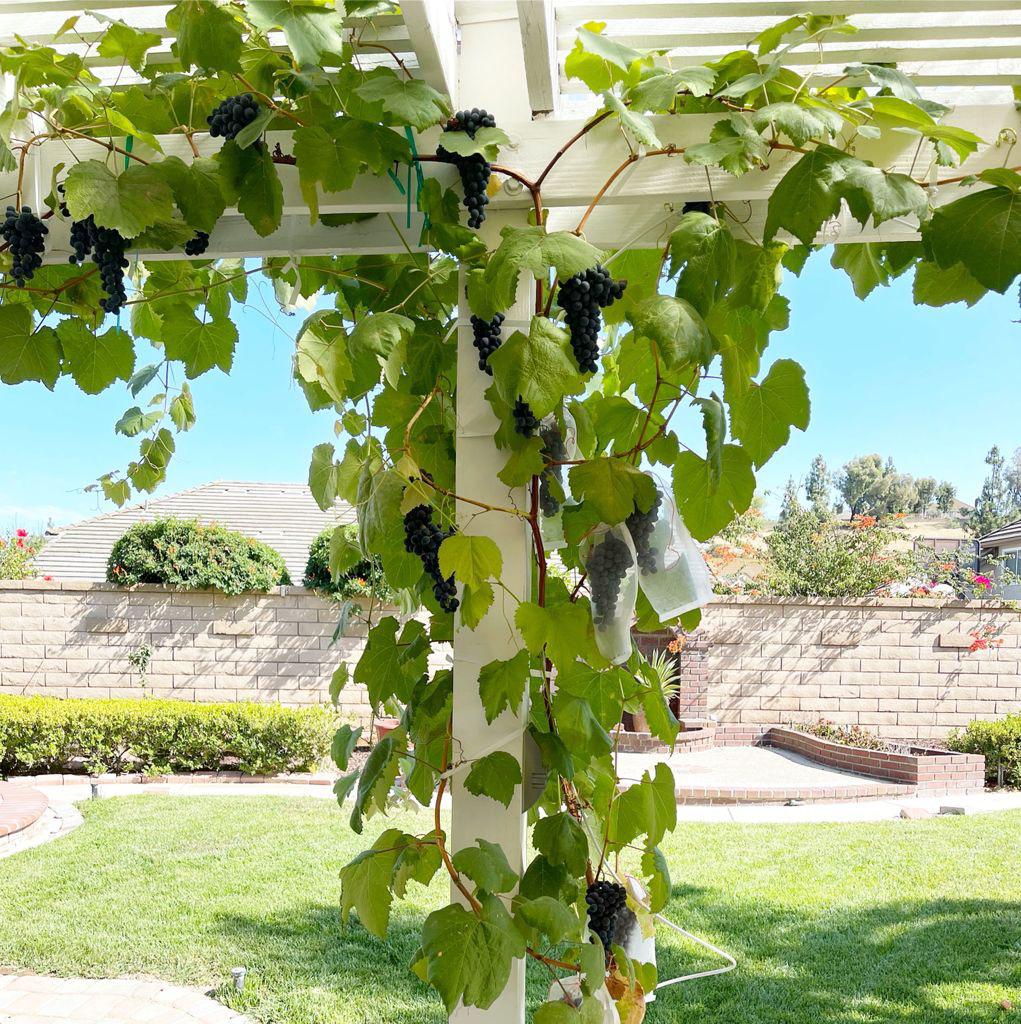
To grow a grapevine, choose a sunny spot, plant a variety suited to your local climate, give the roots well-drained soil, and train the vine on a strong support. Water young vines as needed, prune each year, and keep the leaves open to light and air. Most grapevines need more than one growing season to produce a useful crop.
Growing grapes at home can work well in many parts of the United States, from warm Southern yards to cooler gardens in the Northeast and Midwest. The right grape variety depends on winter cold, summer heat, local disease pressure, and the length of the growing season. A vine that thrives in North Carolina may not be the best fit for Minnesota or Arizona.
The best place to start is with a healthy nursery vine and a clear plan for support. Grapevines can grow for many years, but they need regular pruning and enough room for their long shoots. Good site choice, sound watering habits, and a simple training system make the work easier as the vine grows.
This guide explains how to choose a grapevine, prepare the planting site, train new growth, manage water and soil, and solve common problems. It also covers what to expect in the first few years, since a young vine needs time to build a strong root system and trunk before it can carry a full crop.
The right grape variety is one of the biggest factors in long-term success. Before buying a vine, check its winter hardiness, heat needs, ripening time, and resistance to common diseases in your area. A variety that ripens too late may struggle in a short summer, while one suited to a cool region may not perform well in intense Southern heat.
American, European, and hybrid grapes have different strengths. Many American grapes handle cold or certain local diseases better than some European varieties, while European grapes are widely grown for table grapes and wine in suitable climates. Hybrid varieties may combine traits from different grape species, but no type is free from all growing problems.
Think about how you want to use the fruit. Table grapes are selected for fresh eating, while wine grapes have traits suited to fermentation. Some varieties work for juice, jelly, or more than one use. A local nursery or university extension service can help you match a variety to your region.
Source: i.pinimg.com
For fresh eating
Look for a table grape variety with fruit size, flavor, seed traits, and ripening time that fit your needs.
For juice or jelly
Choose a variety known for suitable flavor and juice quality, including locally adapted American grapes where appropriate.
For wine
Select a wine grape suited to your climate and the style of wine you want to make.
For cold regions
Check the vine’s stated winter hardiness and ask local growers which varieties handle your area’s coldest conditions.
Check Local Growing Conditions Before Buying
USDA plant hardiness zones describe average annual extreme minimum winter temperatures. They can help you screen grape varieties, but they do not tell the whole story. Summer heat, frost dates, soil drainage, wind, and disease pressure also affect success.
In humid areas, choose varieties with suitable disease resistance and leave enough room for air to move through the canopy. In dry Western regions, check local irrigation needs and water rules. In cold areas, consider varieties that ripen before fall frost and can withstand local winter temperatures.
Check ripening time
Choose early, midseason, or late varieties according to how long your area stays warm enough for fruit to ripen.
Ask about disease pressure
Local extension guidance can help identify varieties that cope better with diseases common in your region.
Pick a Sunny Site and Prepare the Soil
Grapevines grow best in a site that receives full sun for much of the day. Sunlight helps shoots grow, supports flower and fruit development, and helps fruit ripen. A shady fence or spot beneath a large tree may keep the vine alive, but it can lead to weak growth and poor fruit quality.
Good drainage matters just as much as sunlight. Grapevines do not perform well when their roots remain in waterlogged soil. Before planting, watch the site after rain. If water stands for a long time, consider a better location or seek local advice about improving drainage.
A deep, well-drained loam can suit grapevines, but soil type varies widely across the United States. Sandy soil often dries quickly, while heavy clay may hold too much water. A soil test can show the soil pH and nutrient levels, helping you avoid adding lime or fertilizer without a clear need.
Source: i.redd.it
Sun
Choose an open site with full sun, ideally about six to eight hours or more each day.
Drainage
Avoid low spots where rainwater collects or the soil stays saturated.
Soil test
Use a local soil testing service to check pH and nutrients before adding soil amendments.
Space
Plan for the mature vine and its support, not just the size of the young plant.
Should You Add Compost or Fertilizer?
Do not fill the planting hole with a large amount of fertilizer or rich compost. A sudden change in soil conditions can affect roots, and excess nutrients can encourage leafy growth at the expense of balanced development. Use a soil test to guide major changes.
If the soil is low in organic matter, a modest amount of mature compost spread over the soil surface may help improve its structure. Keep amendments appropriate for the soil and avoid placing concentrated fertilizer against the roots. The aim is to create a healthy root zone, not an unusually rich planting pocket.
Use measured inputs
Follow soil test recommendations and product labels instead of guessing how much fertilizer the vine needs.
Keep roots healthy
Do not use fresh manure or concentrated fertilizer in direct contact with newly planted roots.
Plant Your Grapevine the Right Way
Planting is easiest when the vine is dormant, often in early spring after the soil can be worked and severe cold has passed. The exact timing depends on your climate and whether the plant is bare-root or container-grown. Follow the nursery’s planting directions if they differ for your plant type.
A bare-root grapevine usually arrives without a pot and may have its roots wrapped to keep them moist. A container-grown vine has a root ball inside a pot. Both need careful handling. Keep the roots moist before planting, but do not leave them soaking in water for long periods.
Install the trellis or main support before planting when possible. This makes it easier to position the vine and avoids damaging roots later. Grapevines become heavy as they mature, especially when wet leaves and fruit hang from the shoots, so the support must be firmly anchored.
Source: watchgardening.com
Step 1: Prepare the site
Remove weeds and grass near the planting spot, then loosen the soil without creating a deep pocket of amended soil.
Step 2: Check the roots
Keep bare roots moist and spread them gently in the planting hole. Avoid bending or crushing them.
Step 3: Set the planting depth
Position the vine according to the nursery’s directions. For many grafted vines, the graft union must remain above the soil.
Step 4: Refill the hole
Use the native soil to cover the roots, then firm it gently to remove large air gaps without packing it hard.
Step 5: Water well
Water slowly to settle the soil around the roots and check that excess water can drain away.
Step 6: Tie the young shoot
Use a soft plant tie to guide a strong shoot toward a stake or the planned trunk support.
How Far Apart Should Grapevines Be Planted?
Spacing depends on grape variety, vigor, training system, soil, and available room. Home garden vines trained on a simple trellis are often spaced several feet apart, while some vigorous vines need more room. Commercial vineyard spacing can differ from home garden spacing.
For a small garden, plan the support first and follow the recommended spacing for the selected variety and training system. Crowded vines are harder to prune and may have poor airflow. Vines placed too far apart may leave more trellis space unused than you need.
Allow room for mature shoots
Estimate the vine’s mature spread and leave access for pruning, tying, harvesting, and cleaning up fallen leaves.
Plan rows around sunlight
Where space allows, arrange rows to provide even light and workable access, taking the local site and slope into account.
Build a Strong Trellis and Train the Vine
A grapevine needs support because its long shoots cannot stay upright on their own. A sturdy trellis also helps spread leaves and fruit across an open area, making it easier for sunlight and air to reach the canopy. Choose a system that fits your available space and the variety’s growth habit.
A simple home setup may use strong end posts, intermediate posts where needed, and one or more tensioned wires. An arbor can also support grapes, but it can be harder to prune and keep open if the vine grows into a dense roof. Set posts firmly and use hardware designed for outdoor loads.
During the first growing season, focus on developing a straight trunk and healthy roots. Several shoots may emerge, but keeping the strongest one as the main leader usually makes training simpler. Tie it loosely to a stake as it grows, and remove unwanted competing shoots when they are small.
Source: cdn.shopify.com
Choose sturdy materials
Use outdoor-rated posts, wire, and fasteners that can hold mature growth and fruit without sagging.
Use soft ties
Secure the shoot without squeezing the stem. Check ties often and loosen them as the trunk thickens.
Keep the canopy open
Spread fruiting shoots along the wires so leaves do not form a thick, tangled mass.
A Simple Training Plan for the First Two Years
In the first year, guide one strong shoot upward and remove competing shoots when needed. The goal is a healthy trunk rather than a large crop. If the shoot reaches the planned height, follow variety-specific guidance for forming the head or cordons, which are the permanent arms that grow along the support.
In the second year, develop the permanent structure and select suitable fruiting wood according to the chosen training system. Some vines may produce a small crop, but a large crop on a weak young vine can slow its growth. Remove fruit clusters if local growing guidance recommends doing so for young plants.
First year
Build roots and a strong trunk. Keep growth tied to the support and remove damaged or poorly placed shoots.
Second year
Form the main arms or fruiting structure and limit the crop if the vine is not strong enough.
Later years
Maintain the framework through annual dormant pruning and regular shoot training.
Water Grapevines Without Soaking the Roots
Newly planted grapevines need steady moisture while their roots become established. Water deeply enough to moisten the root zone, then let the soil begin to dry before watering again. The right interval depends on soil type, rainfall, temperature, wind, and the size of the plant.
There is no single watering schedule that works for every yard. Sandy soil can dry fast, while clay soil may stay moist much longer. Check the soil below the surface rather than judging only by how dry the top looks. A simple finger check works near young roots, while a soil probe can help with larger vines.
Established vines often need less frequent watering than young plants, but they may still need irrigation during long dry spells. Fruit development and hot weather can raise water needs. Avoid frequent shallow watering that wets only the surface, and do not keep the roots saturated.
Source: i.pinimg.com
Water at the base
Apply water to the soil near the root zone rather than spraying the leaves each time.
Check before watering
Feel the soil several inches down and adjust the schedule to its moisture level and recent weather.
Use mulch carefully
A layer of organic mulch can reduce water loss and weeds, but keep it away from direct contact with the trunk.
Reduce waste
Drip irrigation or a soaker hose can deliver water to the root zone with less leaf wetting.
Signs of Too Much or Too Little Water
A vine that lacks water may have drooping leaves, dry soil, or slowed shoot growth. Severe stress can affect fruit size and quality. However, wilt alone does not prove that the plant needs water, because root damage and disease can cause similar signs.
Excess water can leave soil wet for days and may lead to yellowing leaves, weak growth, or root problems. Check drainage and soil moisture before changing the watering routine. If the soil is already wet, adding more water can make the problem worse.
Dry soil and wilt
Check moisture around the roots and water deeply if the root zone is dry.
Wet soil and yellow leaves
Pause irrigation as appropriate, check drainage, and look for other signs of root or leaf disease.
Feed Grapevines Based on Their Needs
Grapevines need nutrients to grow roots, leaves, shoots, and fruit, but more fertilizer does not always mean more grapes. Excess nitrogen can lead to lush leaf growth, dense shade, and fewer well-balanced fruiting shoots. It can also make disease management harder when the canopy becomes crowded.
Start with a soil test and watch the plant’s growth over time. Pale leaves, weak shoots, or poor fruit growth may be linked to a nutrient problem, but they can also result from poor drainage, root injury, disease, or unsuitable soil pH. Avoid diagnosing a nutrient deficiency from one symptom alone.
Apply fertilizer only when the soil test, local recommendations, or clear growth evidence supports it. Follow the product label for rate and timing, and keep fertilizer away from direct contact with the trunk. Mature vines may need different care from newly planted vines, so do not use one rate for every plant.
Source: growinginthegarden.com
Test first
Use soil results to guide pH changes and fertilizer choices.
Watch shoot growth
Very long, lush shoots can point to excess vigor rather than a need for more feed.
Avoid late excess nitrogen
Late-season growth may not harden off well before cold weather in regions with freezing winters.
When Should You Fertilize a Grapevine?
If fertilizer is needed, spring is a common time to apply it as growth begins, but local soil conditions and recommendations should guide the timing. A vine growing well in fertile soil may need little or no added fertilizer. A weak vine may need a soil test before any product is applied.
Do not add fertilizer just because a vine has not produced fruit. Young plants often need time to establish their structure, and lack of fruit can result from shade, pruning errors, poor pollination conditions, frost damage, or the variety’s age.
Use the right diagnosis
Check light, water, drainage, vine age, and pruning before assuming fertilizer will solve poor growth.
Prune Grapevines for Better Growth and Fruit
Annual pruning is one of the main jobs in grapevine care. Grapevines can produce long, tangled shoots if left alone, but a large mass of old wood does not automatically mean a larger harvest. Pruning controls the structure, renews fruiting wood, and helps sunlight reach the leaves and clusters.
Most home grapevines are pruned during dormancy, usually in late winter before spring growth starts. The best timing depends on your climate and the risk of severe cold. In regions with hard winters, wait until the worst cold has passed, while still finishing before buds break if possible.
Grapes usually form fruit on shoots that grow from buds on one-year-old canes. This means that old wood and new growth have different roles. The exact cuts depend on whether the vine is trained with a cane-pruned system or a spur-pruned system, so learn the method used for your variety and trellis.
Source: i.pinimg.com
Remove dead and damaged wood
Cut out dead, diseased, broken, and poorly placed growth with clean, sharp pruning tools.
Keep the chosen structure
Retain the trunk and permanent arms that form the framework of the vine.
Renew fruiting wood
Select suitable healthy canes or spurs based on the training system and local pruning guidance.
Avoid random trimming
Learn which wood should remain for next season’s crop before removing large amounts.
Cane Pruning and Spur Pruning
Cane pruning keeps selected one-year-old canes to provide buds for the next crop. The remaining canes are tied along the support. This method is used for varieties that fruit best from buds farther along a cane.
Spur pruning keeps short sections of one-year-old wood, called spurs, along a permanent arm. Each spur carries buds that produce new shoots. This system suits varieties that crop well from the basal buds near the base of a cane.
These methods are not interchangeable for every grape variety. If the wrong buds are removed, the vine may grow well but produce few clusters. Use the variety’s pruning guidance or ask a local extension service for help identifying the right system.
Cane-pruned vines
Keep selected healthy canes of suitable length and remove older fruiting canes that have completed their role.
Spur-pruned vines
Keep evenly spaced spurs on the permanent arms and renew them as needed.
Should You Prune During Summer?
Light summer training can help keep shoots on the trellis and improve airflow. You can remove broken shoots and carefully manage growth that blocks the fruiting zone. Heavy leaf removal, however, can expose grapes to sunburn, especially during hot weather.
Avoid stripping away large amounts of healthy foliage just to make the vine look tidy. Leaves supply energy for growth and fruit development. In very hot regions, some leaf cover can protect clusters from intense afternoon sun.
Train before shoots tangle
Guide young shoots along the wires while they are flexible.
Keep fruit protected
Remove only enough foliage to improve airflow and light without exposing clusters to harsh sun.
Protect Grapevines From Pests and Diseases
Healthy grapevines still face pests and diseases, and the main problems vary by region. Humid weather can favor fungal diseases, while insects and mites may damage leaves, shoots, or fruit. Regular checks help you spot changes before a small problem spreads through the canopy.
Look at both sides of the leaves, the new shoots, the stems, and the grape clusters. Check for spots, white or gray growth, curled leaves, webbing, damaged fruit, or clusters that turn brown before ripening. These signs can have more than one cause, so identify the likely problem before treating the vine.
Start with sound growing practices. Give vines enough space, avoid keeping foliage wet for long periods, remove fallen diseased material when appropriate, and prune to improve airflow. Resistant varieties can reduce some disease risks, but they still need monitoring and care.
Source: i.ytimg.com
Powdery mildew
Look for pale, powdery growth on leaves, shoots, or fruit. Select suitable varieties and follow local disease management guidance.
Downy mildew
Yellowish leaf spots and growth on leaf undersides can occur in favorable damp conditions. Confirm the diagnosis before treatment.
Black rot
Dark spots and shriveled fruit can be signs of this fungal disease. Remove affected material as advised by local extension guidance.
Insect damage
Inspect leaves and clusters for feeding damage, eggs, webbing, and insects before choosing a control method.
Use Pesticides Only When Needed
Do not spray a grapevine simply because its leaves look imperfect. First confirm the pest or disease, assess the amount of damage, and consider whether the vine can tolerate it. Some insects are harmless, and some beneficial insects help keep pest populations in check.
If a pesticide is needed, use only a product labeled for grapes and the specific pest or disease. Follow all label directions, including protective equipment, application limits, harvest intervals, and restrictions for pollinators. Never assume that a product approved for one crop is safe or legal to use on grapes.
Identify the problem
Compare symptoms with reliable local extension resources or seek a plant diagnostic service if the cause is unclear.
Protect beneficial insects
Avoid unnecessary broad-spectrum treatments and follow label precautions for bees and other pollinators.
Check harvest intervals
Observe the label’s required time between treatment and harvest before picking fruit.
Help Grapes Flower, Set Fruit, and Ripen
A grapevine needs enough light, healthy shoots, and suitable weather to form and ripen fruit. Many common grape varieties have flowers that can pollinate themselves, so a second vine is not always needed. Still, poor weather during flowering, weak growth, frost, or an unsuitable variety can reduce fruit set.
When the vine flowers, avoid unnecessary disturbance and keep the root zone from swinging between very dry and waterlogged. Do not add extra fertilizer in an attempt to force more fruit. A healthy balance of shoots, leaves, and clusters is more useful than uncontrolled growth.
As grapes develop, their color may change before they are fully ripe. Taste, softness, flavor, and variety-specific signs are better guides than color alone. Some grapes become sweeter and less tart as they ripen, while other traits vary by type and intended use.
Source: i.pinimg.com
Give clusters enough light
Maintain an open canopy so leaves and fruit receive suitable light and airflow.
Keep moisture steady
Avoid severe water stress during fruit development, while still allowing the soil to drain.
Protect the fruit
Watch for birds, wasps, rot, and sunburn as clusters approach harvest.
How Long Does a Grapevine Take to Produce Grapes?
A newly planted grapevine may produce a few clusters in its second or third growing season, but a useful crop often takes longer. The timing depends on the variety, plant health, climate, and how well the vine has been trained. Some young vines need fruit removed so they can build a stronger structure.
A vine that has grown leaves and shoots but no grapes may simply be too young. Other causes include heavy shade, incorrect pruning, frost damage, poor pollination conditions, or a variety that does not suit the site. Check those factors before replacing the plant.
First season
Focus on root growth, a healthy trunk, and the main support structure.
Second and third seasons
Develop the permanent arms and allow only a crop that the vine can support.
Established vines
Maintain the framework with annual pruning, suitable watering, and routine pest checks.
Harvest Grapes at the Right Time
Harvest grapes when the fruit has reached the ripeness needed for its intended use. Table grapes should taste pleasant and have the expected texture, while wine grapes are harvested according to a balance of sugar, acidity, flavor, and winemaking goals. A grape’s color alone cannot tell you whether it is ready.
Taste fruit from several parts of the vine because clusters may ripen at different rates. If the fruit is still sharply sour or has not developed its expected flavor, it may need more time. Weather, variety, and growing conditions affect the pace of ripening.
Use clean pruning shears to cut clusters from the vine rather than pulling hard on the stems. Handle ripe grapes gently to avoid crushing the fruit. Pick during dry weather when possible, and remove damaged or rotting berries from clusters before storage.
Source: thumbs.dreamstime.com
Check flavor
Taste representative berries and compare their sweetness, acidity, and texture with the expected traits of the variety.
Use clean tools
Cut clusters with clean shears and avoid tearing the vine or crushing the fruit.
Store promptly
Keep harvested table grapes cool and handle them gently to preserve quality.
Why Are My Grapes Small or Sour?
Small grapes may result from variety traits, poor fruit set, inadequate water, nutrient imbalance, excessive crop load, or unfavorable weather during flowering. Sour grapes may simply be unripe, especially if the variety has a long ripening period. These symptoms do not point to one cause on their own.
Check the vine’s age, sunlight, watering pattern, pruning history, and local ripening window. If a young vine carries many clusters, reducing the crop according to local guidance may help the remaining fruit develop. Avoid adding fertilizer without evidence of a nutrient need.
Review the crop load
A young or weak vine may not be able to support a large number of clusters.
Check sunlight
Heavy shade can limit fruit development and delay ripening.
Confirm variety timing
A late-ripening variety may need a longer, warmer growing season than your site provides.
Grow Grapevines From Cuttings or Buy a Nursery Plant?
Buying a healthy nursery vine is often the simplest route for a new grower. It gives you a named variety and a plant that is ready to establish in the garden. Look for healthy roots, firm stems, and clear variety information from a reliable nursery.
Growing a grapevine from a cutting can cost less if you already have access to a healthy plant. A cutting is a piece of dormant or suitable young stem that can develop roots under the right conditions. Success depends on the type and condition of the cutting, temperature, moisture, and care during rooting.
A cutting taken from an unknown vine may not have the traits you want, and a plant can carry pests or disease. Use healthy source material and follow local plant movement rules. If you want a specific grape variety, a reputable nursery can provide clearer identification than an unlabeled cutting.
Source: watchgardening.com
Nursery vine
Best when you want a known variety and a straightforward start, though the plant costs more than a cutting.
Rooted cutting
Useful for propagation when healthy source material is available, but it requires attention during root development.
Grafted vine
May be used where rootstock traits are needed. Keep the graft union above the soil unless the supplier gives different specific instructions.
Basic Steps for Rooting a Grapevine Cutting
Many grapevines can be propagated from suitable cuttings taken during dormancy. Use clean tools and healthy one-year-old wood, following a propagation guide for the variety and climate. Cuttings need the correct orientation, a suitable rooting environment, and enough moisture without being left in soggy media.
Once roots form and the new plant is growing, allow it to build a healthy root system before moving it outdoors. Harden off a young plant gradually if it has been grown under protected conditions. Keep the growing medium moist but not waterlogged, and protect new growth from extreme heat or cold.
Choose healthy wood
Avoid cuttings from vines with suspicious cankers, unusual growth, or signs of serious disease.
Keep track of orientation
Mark the top and bottom of each cutting so it is planted in the correct direction.
Control moisture
Use a suitable rooting medium and provide moisture without allowing standing water.
Wait for establishment
Transplant only when the cutting has developed enough roots and can tolerate the move.
Common Grapevine Growing Problems and Fixes
When a grapevine struggles, start with the simplest checks: sunlight, soil moisture, drainage, vine age, and pruning. These factors often explain weak growth or poor fruiting better than an immediate need for fertilizer or pesticide. Look for patterns across the plant instead of focusing on one leaf.
A few damaged leaves do not always mean the whole vine is in trouble. The timing and spread of symptoms matter. For example, damage limited to a few leaves may have a different cause from widespread yellowing or a sudden collapse of many shoots.
Source: i.pinimg.com
The vine grows leaves but no fruit
Check the vine’s age, variety, sunlight, pruning method, and whether frost damaged the buds or flowers.
Leaves turn yellow
Check soil moisture, drainage, leaf patterns, and soil test results before applying fertilizer.
Fruit develops brown or shriveled spots
Inspect for disease, insect damage, sunburn, and poor airflow. Remove affected fruit when appropriate and seek local diagnostic help if the problem spreads.
Shoots grow too long and tangled
Review nitrogen inputs, improve shoot training, and carry out the correct dormant pruning method.
The vine wilts despite wet soil
Check drainage and root health. Do not add more water until you understand why the soil remains wet.
When Should You Ask for Local Help?
Seek help from a county extension office, plant clinic, or qualified local grape grower when the vine declines quickly, several plants show the same unusual symptoms, or disease keeps returning despite sound care. A clear diagnosis can prevent wasted effort and inappropriate chemical use.
Take clear photos of the whole vine, affected leaves, fruit, and stem. Note the grape variety if known, when symptoms began, recent rainfall or irrigation, and any products already used. This information can help a plant specialist narrow down the cause.
Bring useful details
Record variety, vine age, location conditions, watering, pruning, and recent treatments.
Avoid guessing with chemicals
Confirm the likely problem and check the label before applying any pest or disease treatment.
A Simple Seasonal Grapevine Care Plan
A seasonal routine makes grapevine care easier because each task has a clear purpose. The timing will vary by region, but the main jobs follow the vine’s growth cycle. In colder parts of the United States, winter dormancy shapes the schedule, while warmer regions may have a different pattern of growth and pruning.
Use this plan as a starting point rather than a fixed calendar. Watch the vine and local weather, and adjust care when spring arrives early, summer heat lasts longer, or rainfall differs from normal.
Source: growinginthegarden.com
Late winter
Prune dormant vines using the correct system, inspect the trellis, and repair loose wires or ties.
Spring
Check bud growth, train new shoots, watch for frost damage, and water newly planted vines as needed.
Early to midsummer
Tie shoots to the support, monitor moisture, check leaves and clusters for pests or disease, and avoid excessive nitrogen.
Late summer
Watch fruit ripening, protect clusters from damage, and keep irrigation suited to weather and soil.
Harvest season
Taste grapes for ripeness, cut clusters with clean shears, and handle fruit gently.
Fall
Remove fallen diseased plant material as appropriate, assess the season’s growth, and prepare for local winter conditions.
How to Tell Whether Your Grapevine Is Healthy
A healthy vine usually has firm shoots, leaves that match the variety’s normal color, and growth that fits the season. As it matures, the trunk and permanent arms should become stronger, while new shoots grow along the planned support. Fruit production should improve as the vine becomes established, provided the variety and growing conditions are suitable.
Healthy does not mean every leaf must look perfect. Minor damage can occur, and growth naturally changes through the season. Look for the overall pattern, including whether new growth continues, whether leaves show spreading symptoms, and whether the vine is developing at a reasonable pace.
Good signs
Steady seasonal growth, a sound trunk, workable shoot placement, and fruit that develops according to variety.
Warning signs
Rapid wilting, spreading leaf spots, damaged roots, severe dieback, or repeated crop failure that cannot be explained by age or weather.
Frequently Asked Questions
Q
Can I grow a grapevine in a small backyard?
Yes. A single grapevine can grow in a small backyard if it has enough sunlight, well-drained soil, and a strong support. Train it along a fence or compact trellis, and prune it each year to keep growth within the available space. Choose a variety suited to your climate and training system.
Q
Can grapevines grow in pots?
Yes, some grapevines can grow in large containers with drainage holes and a sturdy support. Use a suitable potting mix and a container large enough for long-term root growth. Container vines dry out faster than plants in the ground and may need more frequent watering. Winter protection may also be needed in cold regions.
Q
Do I need two grapevines to get fruit?
Many common grape varieties have flowers that can pollinate themselves, so one vine can often produce fruit on its own. A second vine is not automatically required. Check the variety’s growing information if fruit set is poor, and consider weather, vine health, pruning, and frost damage before assuming a pollination problem.
Q
How often should I water a grapevine?
Watering frequency depends on vine age, soil, temperature, rainfall, and drainage. Young vines usually need closer attention while their roots develop. Check moisture below the surface and water deeply when the root zone begins to dry. Avoid leaving the roots in soggy soil or following a rigid schedule during changing weather.
Q
Why is my grapevine growing but not producing grapes?
A young vine may need more time before it can support a crop. Other possible causes include too much shade, incorrect dormant pruning, frost damage, poor fruit set, or a variety that does not suit the climate. Review the vine’s age and training method first, then check light, weather, and local growing guidance.
Q
Can I grow a grapevine from store-bought grapes?
You can try growing grapevines from seeds taken from grapes, but the seedlings may not produce fruit like the parent plant. Many commercial grapes are also seedless. For a more predictable result, buy a named nursery vine or propagate a healthy, correctly identified variety from a suitable cutting.
Q
When is the best time to plant grapevines?
Early spring is a common planting time in many US regions, especially for bare-root vines, once the soil can be worked and severe cold has passed. Container-grown vines may have a wider planting window in suitable weather. Local climate, plant type, and nursery directions should guide the final choice.
✦ Wrapping Up
Conclusion
Growing a grapevine starts with a sunny site, well-drained soil, and a variety suited to your climate. A sturdy trellis gives the vine room to grow, while careful watering helps roots settle in. Regular checks can also catch problems before they spread.
The long-term work is simple but steady. Train new shoots, prune at the right time, keep the canopy open, and watch for pests or disease. Do not rush a young vine into carrying a heavy crop. Give it time to build a strong trunk and root system, and it will have a better chance of producing healthy fruit in later seasons.
💡 Key Takeaway
Start by checking your local grape-growing recommendations, choosing a suitable variety, and preparing a sunny planting site with a strong support. Plant the vine at the recommended depth, water it well, and focus on building a healthy structure during the first season.