
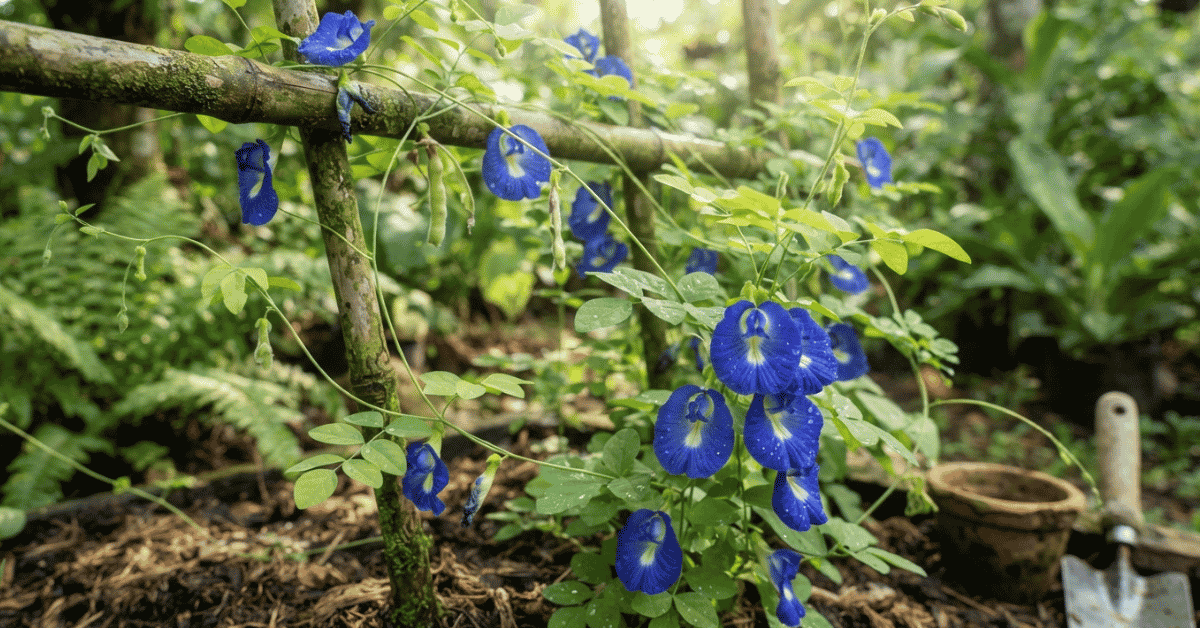
Clitoria Ternatea Plant Care needs warm sun, moist soil, and good drain. Learn easy tips for light, water, soil, trim, pots, blooms, and cold care.
Clitoria ternatea is one of my fun plant finds.
Its blue blooms can stop me mid-step.
The vines look soft, yet grow quite fast.
I love that mix of grace and grit.
Good care is not hard once basics click.
This plant likes heat, sun, water, and room.
Still, too much water can cause root woes.
Cold can also slow it down quite fast.
I use a few plain care rules.
They help keep the vine full and bright.
Let’s look at each one in a clear way.
Is Clitoria Ternatea Plant Care Easy?
I first saw this vine on a warm day.
The blue blooms stood out at once.
They looked like small bits of sky.
I thought the plant might need lots of care.
It turns out the plant is quite tough.
It can grow well in warm, sunny spots.
Still, my first pot did not thrive.
The soil held too much rain near its roots.
The leaves soon lost their fresh green look.
I dug in with one bare hand.
The soil felt cold, wet, and thick.
That was my first big clue.
Butterfly pea likes moist soil, not swamp soil.
Its roots still need air and good drain.
That small line can shape the whole plant.
Now I check soil before each drink.
I also watch the sun and leaf shape.
Maybe that sounds plain, but it works.
Life Before I Found This
Before then, I used one rule for plants.
I gave them water on set days.
That made care feel neat and safe.
This vine soon broke that old rule.
Rain could keep the soil wet for days.
Hot sun could dry it much more fast.
The leaves showed the change quite well.
They felt soft after a long wet spell.
The pot had a cool, damp smell.
Then came a hot, dry week.
The vine looked limp by late noon.
Its leaves hung low near the soil.
I gave it a slow, deep drink.
By dusk, the leaves looked much less sad.
That taught me to watch the plant first.
Now I use touch, sun, and rain as clues.
I do not trust a set date alone.
Why This Matters Right Now
Clitoria ternatea comes from warm parts of Asia.
It grows best in warm, humid spots.
That makes it a great warm-climate vine.
It can also grow well in home pots.
A sunny patio can suit it very well.
A bright room may work in cold zones.
The plant needs enough sun for bloom.
Soft shade can work in the hot noon sun.
Deep shade may cut down bloom count.
Water needs some care as well.
The soil should stay moist through active growth.
Still, the roots should not sit in water.
A trellis can also make a big change.
The vine likes room to climb and spread.
A small frame can keep growth neat.
Cold is the main issue in cool zones.
Frost can harm tender stems and leaves.
A pot makes cold care much more easy.
The First Big Lesson
The first big lesson is about balance.
This vine likes sun and steady moisture.
It does not like a soggy root zone.
I used to link lush growth with more water.
That link can lead to bad plant care.
More water does not mean more growth.
Roots need both air and water.
Dense wet soil can block that air.
That can cause root stress and rot.
I now use loose soil with good drain.
A rich pot mix can work quite well.
Some perlite or grit can help it drain.
Sun also needs a bit of thought.
More sun can boost growth and bloom.
Yet, harsh heat can dry pots fast.
I check the soil on hot days.
I may water more often during peak heat.
Rain can change that plan in a snap.
The plant itself gives me useful clues.
Firm leaves and new shoots look quite good.
Yellow leaves call for a closer soil check.
Small Tactics That Actually Work
I keep my care plan short and plain.
First, I choose a spot with strong sun.
Morning and late day sun work very well.
Next, I set up a firm trellis.
The vine can climb as new shoots grow.
A weak frame may bend under thick growth.
Then I use soil that drains well.
I want soil that holds some moisture.
I do not want thick mud near roots.
I check the top soil with my finger.
If it feels dry, I check more deep.
Then I give a deep drink if needed.
I let extra water run from the pot.
I never let the pot sit in water.
That step helps keep roots in good shape.
Trim can also help shape the vine.
I cut back long, weak, or wild stems.
Clean snips make each cut neat.
I also pinch young tips at times.
That can help side shoots form near cuts.
More side shoots can mean a fuller vine.
A Strange Detail I Noticed
The blue bloom is the odd star here.
Its shape does not look like most blooms.
It has a soft, curved form and bold hue.
I find the bloom fun to watch.
Some flowers look almost painted by hand.
The deep blue can seem unreal at dusk.
The plant also has a neat trick.
Its blooms can shift shade in some light.
Some types have white or pink blooms too.
Then there is the seed pod.
It can form after the bloom fades.
The pod looks plain beside the bright flower.
That contrast always makes me smile.
One part looks bold and rich.
The next part looks like a small green bean.
I guess that is part of its charm.
The plant has more going on than blooms.
Style Comparison & Data
Care can shift based on pot, heat, and sun.
Still, the main needs stay much the same.
| Care Point | Best Aim | Quick Tip |
|---|---|---|
| Light | Full sun | Add shade in harsh heat |
| Soil | Moist, well drained | Avoid dense wet mix |
| Water | Even moisture | Check soil first |
| Support | Firm trellis | Guide new vines early |
Warm weather can speed up growth quite fast.
That means pots may dry more fast.
Rain can slow soil dry time by days.
A fixed water chart may miss these shifts.
I prefer to check the soil each time.
That small habit cuts down most guesswork.
Non-Obvious Gains
Good butterfly pea care brings more than blooms.
The vine can add life to plain spaces.
- A trellis can add height to small yards.
- Blue blooms can bring strong visual charm.
- Fast growth can cover bare spots with ease.
- Seed pods can offer fun for kids.
- Trim can teach good vine care skills.
I like the trellis gain most of all.
A bare wall can feel dull and flat.
A vine can soften that hard line.
The blooms can also draw garden guests.
Bees and other pollinators may visit its blooms.
That adds more life to a warm garden.
The plant can also suit a pot.
That makes it handy in small yards.
You can shift the pot as needs change.
Myths vs. My Reality
I used to think full sun meant no shade.
But then I saw leaf stress in heat.
Now I add shade during harsh noon heat.
I used to think wet soil meant good care.
But then I saw weak growth in soggy soil.
Now I focus on good drain first.
I used to think vines need no trim.
But then my plant grew long and wild.
Now I trim it to guide fresh growth.
I used to think a trellis could wait.
But then stems spread across the floor.
Now I add support while vines stay small.
I used to think cold would not matter.
But then frost hit the soft new tips.
Now I move pots in before cold nights.
Maybe my main lesson is quite plain.
Strong growth still needs some good care.
Essential Principles for Mastery
I use six rules for this blue vine.
They help keep the plant strong and full.
1. Give it enough sun.
Full sun can help boost bloom and growth.
Some shade may help in harsh heat.
2. Keep the soil moist, not soaked.
The roots need water and air.
Fast drain helps keep both in balance.
3. Use a firm support frame.
The vine can grow fast in warm weather.
A trellis keeps that growth neat and safe.
4. Check soil before each drink.
Heat, rain, and pot size all change dry time.
Your finger can give a quick soil check.
5. Trim for shape and new shoots.
Cut weak or wild stems with clean snips.
Pinch tips to help side growth form.
6. Guard the plant from frost.
Cold can harm soft stems and fresh leaves.
Potted plants can move to warm spots.
I also like to watch new growth.
Fresh shoots can show the plant feels good.
Slow growth may point to low light or stress.
I check the leaf color as well.
Green leaves should look firm and fresh.
Yellow leaves can point to root or light stress.
Still, one leaf does not tell the whole tale.
I look at the full plant first.
That keeps me from making rash care moves.
For me, the best plan is quite simple.
Give the vine good basics, then watch it.
The plant will often tell you the rest.
FAQs about Clitoria Ternatea Plant Care
Does Clitoria ternatea need full sun?
Clitoria ternatea grows best with strong light. Full sun can help boost bloom and vine growth. Some shade may help in very hot spots, mainly during harsh noon sun and peak heat.
How often should I water butterfly pea?
Water needs can change with heat, rain, and pot size. Check the soil first. Water once the top starts to dry, then let extra water drain well from the pot.
Can Clitoria ternatea grow in a pot?
Yes, butterfly pea can grow well in pots. Pick a pot with drain holes and loose soil. Add a firm trellis, since the vine can grow long and needs room to climb.
Does butterfly pea need a trellis?
A trellis is not a must, but it helps a lot. The plant is a vine and can spread fast. A firm frame keeps stems off the ground and helps form a neat shape.
Can Clitoria ternatea survive winter?
Cold can harm this warm-climate vine. Frost may kill soft stems and leaves. In cool zones, grow it as a pot plant and move it to a warm spot before frost hits.
My Final Takeaway
Clitoria Ternatea Plant Care feels quite calm to me.
Give it sun, warm air, and good soil.
Keep the soil moist, but let it drain.
Give the vine a firm place to climb.
Watch the leaves, stems, blooms, and soil.
Small signs can guide each care step.
I love the bold blue blooms most.
They make each bit of care feel worth it.