
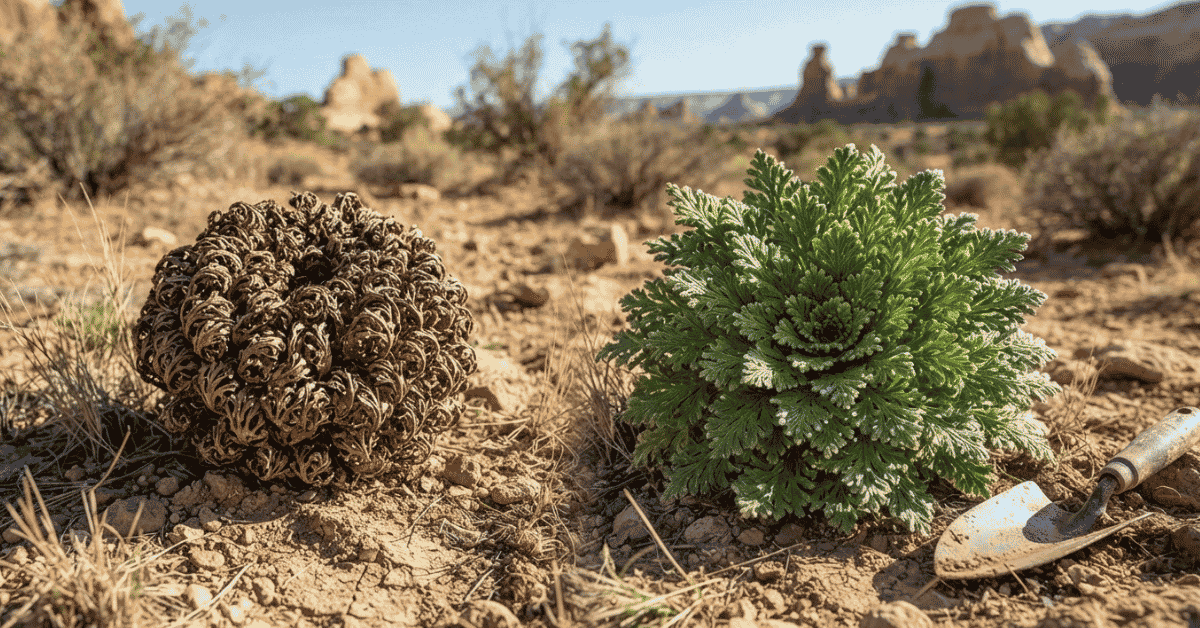
Resurrection Plant Care can seem strange at first. Learn the best light, water, soil, heat, and rest tips for this dry, curl-up plant at home.
Resurrection Plant Care feels a bit like plant magic.
A dry brown ball can seem dead at first.
Then water brings its green fronds back.
I find that change hard to ignore.
It feels slow, calm, and almost odd.
Yet, this plant has a clear care plan.
Good care means less fuss, not more.
Light, water, air, and rest all play parts.
The trick lies in knowing each plant phase.
Let’s break down that care in plain terms.
Is Resurrection Plant Care Really That Easy?
I first saw one as a dry, brown ball.
It felt light as old grass in hand.
I thought it had died long ago.
Then I saw it take in water.
The tight ball began to spread with ease.
Green bits rose from the dry brown mass.
I sat there and watched for quite some time.
The room was still, save for the clock tick.
It felt like a tiny show in slow time.
That sight made me ask a key thing.
Could this plant stay in water all day?
My first guess was yes, but I was wrong.
Resurrection plants need a rest cycle too.
They can curl up in dry spells.
That dry state helps them cope with stress.
So, care is less about daily water.
It is more about the right wet-dry flow.
That shift changed my view of this plant.
Life Before I Found This
Before then, I knew little about this plant.
Most house plants need set care each week.
This one seemed to break that rule.
I first left it dry on my desk.
Its brown fronds felt crisp and light.
Dust sat near its thin stems.
Then I set it in a dish of water.
The dry mass began to spread quite slow.
A fresh green hue came back bit by bit.
The air had a faint, damp soil smell.
The dry stems made a soft rustle too.
I kept checking it every few hours.
That was part of the fun for me.
Still, I soon saw a key care risk.
Too much wet time can harm the plant.
A plant that can dry out still needs air.
That point is easy to miss at first.
Why This Matters Right Now
Resurrection plants suit folks who like odd plants.
They also suit small homes and desk spots.
Their care can take less time than expected.
The plant can rest for long dry spells.
That makes it quite different from most plants.
Still, its needs do not vanish when dormant.
It needs good light during its green phase.
It also needs clean water and fresh air.
Heat can dry it out too fast at times.
Many stores sell dry plants as gift items.
Some are real plants, while some are not.
That makes plant ID a key first step.
Selaginella lepidophylla is the plant most folks mean.
It comes from dry lands in North America.
Its dry form helps it cope with drought.
That odd trait is its main charm.
It can fold up when dry for long spans.
Then it can spread back out with water.
The First Big Lesson
The first big lesson is about wet time.
More water does not mean more plant life.
In fact, too much wet can bring rot.
I used to think the plant should stay wet.
It seemed smart after seeing it revive.
But that plan soon felt less wise.
A true resurrection plant has a dry phase.
That dry phase is part of its life cycle.
It can close up to cope with dry stress.
Once wet, its fronds may open and turn green.
This can take hours or a few days.
The pace can vary by plant and care.
I now see water as a short phase.
I do not treat it like a tank plant.
That one change makes care much less hard.
Use clean water and a clean dish.
Let the plant soak as care needs call.
Then drain it well and let it dry.
Fresh air matters once the wet phase ends.
A stale, wet spot can cause mold or rot.
Small Tactics That Actually Work
I keep my care plan quite short.
First, I use bright light with no harsh heat.
A bright room near a window can work.
Next, I use clean water for the wet phase.
Rain water or plain tap water may work.
Water with a strong salt load is less ideal.
I place the plant in a shallow dish.
The water should reach the plant with care.
I avoid deep water that can trap air.
Then I watch for signs of green growth.
The fronds may open bit by bit.
That slow shift is part of the fun.
Once open, I do not keep it soaked.
I let the plant drain and dry with air.
A dry phase can help keep it safe.
I also keep the plant free from dust.
A soft brush can help with light dust.
I use a light touch on dry fronds.
Heat is another point I keep in mind.
A hot sill can dry the plant too fast.
A cool, bright spot may work much better.
I guess the best care feels quite calm.
Watch the plant, then act with care.
A Strange Detail I Noticed
The oddest part is the change in shape.
The dry plant looks like a small brown nest.
Its fronds curl in close to the center.
Then water starts to wake those curled tips.
They spread out like tiny green arms.
The shift can seem almost too slow to see.
I once watched it near my desk lamp.
The room grew dark as the sun fell.
Yet, the plant kept its slow, soft change.
That made me think about plant time.
We tend to want fast change from plants.
This one asks us to slow down.
There is also a neat dry-state trick.
The plant can look far less alive when dry.
Yet, that look does not tell the full tale.
That is part of its charm, I think.
It makes you look twice at the plant.
Style Comparison & Data
Care can change based on plant type and state.
Still, these broad needs make a useful guide.
| Care Point | Green Phase | Dry Phase |
|---|---|---|
| Water | Short wet cycle | Keep dry |
| Light | Bright, mild light | Bright, mild light |
| Air | Fresh air | Dry air |
| Heat | Avoid high heat | Avoid high heat |
A true dry phase is not plant neglect.
It can be part of its normal life.
Still, each plant may react at its own pace.
Store tags can also lack key care notes.
Plant ID can help set the right plan.
That is worth checking before you change care.
Non-Obvious Gains
Resurrection plant care can teach more than care.
It can also shift how you watch plants.
- It helps you spot plant stress signs.
- It shows the value of wet-dry cycles.
- It can add a calm desk display.
- It gives kids a fun plant lesson.
- It makes dry land plants feel less strange.
I like the kid lesson most of all.
A dry plant can spark a lot of doubt.
Then the wet phase shows a clear change.
That makes plant life feel more real.
It shows that dry does not always mean dead.
Still, that does not mean all dry plants revive.
The plant must have that dry trait.
Plant ID still matters a lot here.
Myths vs. My Reality
I used to think dry meant dead.
But then I saw the fronds spread wide.
That small sight changed my view fast.
I used to think more water meant health.
But then I learned this plant needs rest.
Now I let it dry as part of care.
I used to think sun was always good.
But then heat made dry plants lose too fast.
Now I choose bright light with less heat.
I used to think care must take lots.
But then this plant proved me quite wrong.
Its care can be calm and quite simple.
I used to think all dry balls were plants.
But then I saw fake dry plant gifts.
Now I check the plant name first.
Maybe that is my main take from this.
Good plant care starts with good plant ID.
Essential Principles for Mastery
I use five plain rules for this plant.
They help keep care calm and clear.
1. Know the plant first.
True resurrection plants need the right care plan.
Check the plant name on the tag or pack.
2. Give it bright, mild light.
Bright light can help during its green phase.
Harsh heat can dry the plant too fast.
3. Use a short wet phase.
Clean water can help curled fronds open.
Do not keep the plant wet for long.
4. Let it rest dry.
The dry phase is part of its charm.
Do not treat dry fronds as a crisis.
5. Keep air fresh and heat low.
Stale damp air can bring mold and rot.
Good air can help the plant stay clean.
I also watch the pace of each change.
Fast change is not always the goal here.
Slow growth or slow spread can be normal.
A dry plant may need time to wake.
That does not mean you need more water.
Patience can be part of good plant care.
I think that is the best frame for it.
Give the plant the right cue, then wait.
Do not fix a calm plant too much.
FAQs about Resurrection Plant Care
Does a resurrection plant need soil?
Not always in the way most house plants do.
Many plants sold as resurrection plants are kept as dry specimens.
Their care can focus on water, light, air, and dry rest.
How often should I water a resurrection plant?
Water use depends on the plant type and its state.
A true resurrection plant can have wet and dry phases.
Let the plant drain well after its wet phase.
Can a resurrection plant live indoors?
Yes, many can grow well indoors with care.
Use a bright spot with mild light and air.
Keep it away from harsh heat, cold drafts, and damp air.
Can I leave a resurrection plant in water?
It is best not to keep it soaked all day.
A wet phase can help it open and turn green.
Long wet periods may raise the risk of rot or mold.
Is a dry resurrection plant still alive?
A true resurrection plant can stay dry and dormant.
Its curled brown form may be part of that state.
Still, not every plant sold as a dry ball can revive.
My Final Takeaway
Resurrection plant care taught me to slow down.
This plant does not need a daily fuss.
It needs the right light and water phase.
Then it needs time to rest and dry.
That dry brown form can seem quite odd.
Yet, it holds the best part of the tale.
A small dish and bright spot may suffice.
For me, that makes this plant quite special.