A calendar for vegetable planting helps US gardeners decide when to start seeds indoors, sow seeds outside, transplant young plants, and harvest crops. Build your schedule around your local frost dates, growing zone, soil temperature, and each vegetable’s needs.
Across the United States, vegetable planting dates can vary by several weeks or even months. A gardener in Florida may grow tomatoes outdoors while a gardener in Minnesota waits for the soil to warm. Even nearby towns can have different planting windows because of elevation, shade, and local weather.
The most useful planting calendar combines your area’s expected last spring frost and first fall frost with crop-specific growing advice. These dates give you a starting point, not a promise about the weather. Check your local forecast, watch soil conditions, and adjust your plans before planting.
This guide provides a month-by-month framework, a crop timing chart, and simple steps for making a planting schedule that fits your garden. Use it for raised beds, backyard plots, and container gardens. You can also turn the schedule into a printable checklist and update it each season.
Source: storage.googleapis.com
What Is a Calendar for Vegetable Planting?
A vegetable planting calendar is a schedule that shows when to sow, transplant, grow, and harvest different crops. It turns a long list of seeds into a plan you can follow throughout the year. Some calendars use months, while others count backward or forward from your area’s frost dates.
A good calendar includes more than one planting date for each crop. It may list the indoor seed-starting window, the outdoor sowing period, the transplant date, and the expected harvest range. This helps you avoid planting warm-season crops too early or missing the short window for cool-season vegetables.
For US gardeners, the best schedule is local rather than national. A general chart can help you get started, but your climate, elevation, soil, and weather determine whether a suggested date will work in your yard.
Source: old.sermitsiaq.ag
Seed starting
The period when you sow seeds indoors so young plants are ready for outdoor conditions.
Direct sowing
Planting seeds straight into garden soil instead of raising them indoors first.
Transplanting
Moving healthy seedlings from trays or pots into their final growing place.
Harvest window
The estimated period when a crop may be ready to pick under suitable growing conditions.
Why Planting Dates Differ Across the United States
The United States includes cold northern regions, mild coastal areas, dry western climates, and hot southern growing areas. These places do not share one planting season. A fixed calendar date may suit one region and fail in another.
Local frost dates are especially useful for frost-sensitive crops. Soil temperature also matters because seeds may rot, remain dormant, or grow slowly when the ground is too cold. In hot regions, the challenge may be avoiding summer heat rather than waiting for spring warmth.
Cold climates
Use short-season crops, indoor seed starting, and frost protection when needed.
Mild climates
Take advantage of longer spring and fall windows, while watching for local heat or frost.
Hot climates
Plan fall and winter vegetables around summer heat and the timing of cooler weather.
How to Make Your Own Vegetable Planting Calendar
Start by finding your local frost dates and listing the vegetables you want to grow. Then match each crop to its preferred planting conditions. This approach gives you a useful schedule without forcing every vegetable into the same monthly routine.
You do not need a complex garden app or a large spreadsheet. A notebook, wall calendar, or simple table can work well. The key is to record the dates, conditions, and results so you can improve the plan next season.
Source: ar.inspiredpencil.com
Step 1: Find your local frost dates
Look up the estimated last spring frost and first fall frost for your area. Treat these as planning estimates because actual weather can differ.
Step 2: List your crops
Write down the vegetables you plan to grow, including varieties if you have selected them.
Step 3: Check seed packets
Read the recommended planting conditions, spacing, days to maturity, and indoor seed-starting guidance.
Step 4: Set sowing dates
Work backward from the expected transplant date for crops that need indoor starting. Set outdoor sowing dates for crops that grow best when directly seeded.
Step 5: Add harvest estimates
Record the expected harvest period, then leave room for delays caused by cool weather, heat, pests, or slow growth.
Step 6: Review the schedule
Update your dates when the forecast changes. Record actual sowing, transplanting, and harvest dates as the season progresses.
Use Frost Dates to Count Backward
Suppose your local average last spring frost is April 20. If a seed packet recommends starting a crop indoors six weeks before transplanting, count back six weeks from your planned transplant date. That gives you an initial indoor sowing target, not a guarantee that the plant will be ready on that exact day.
For frost-sensitive crops, wait until the risk of frost has passed and conditions suit the crop. For cool-season crops, outdoor sowing may begin earlier if the soil is workable and the vegetable can tolerate the expected conditions. Always check the crop’s own guidance.
Example calculation
A planned April 20 transplant date minus six weeks gives a target indoor sowing date around March 9. This is a hypothetical example; your variety and local conditions may change the timing.
Choose a Calendar Format You Will Use
A monthly calendar makes it easy to see the year’s main jobs. A frost-date worksheet works better if your spring and fall dates change from year to year. A crop-by-crop table is useful when you grow many kinds of vegetables.
Include a notes column for rain, heat, pests, and harvest results. These records help explain why a crop was early or late and make next year’s plan more accurate.
Best for beginners
Use a monthly checklist with a short list of vegetables and clear sowing dates.
Best for repeat planting
Use a table that tracks each sowing, expected harvest, and actual result.
Vegetable Planting Calendar by Month
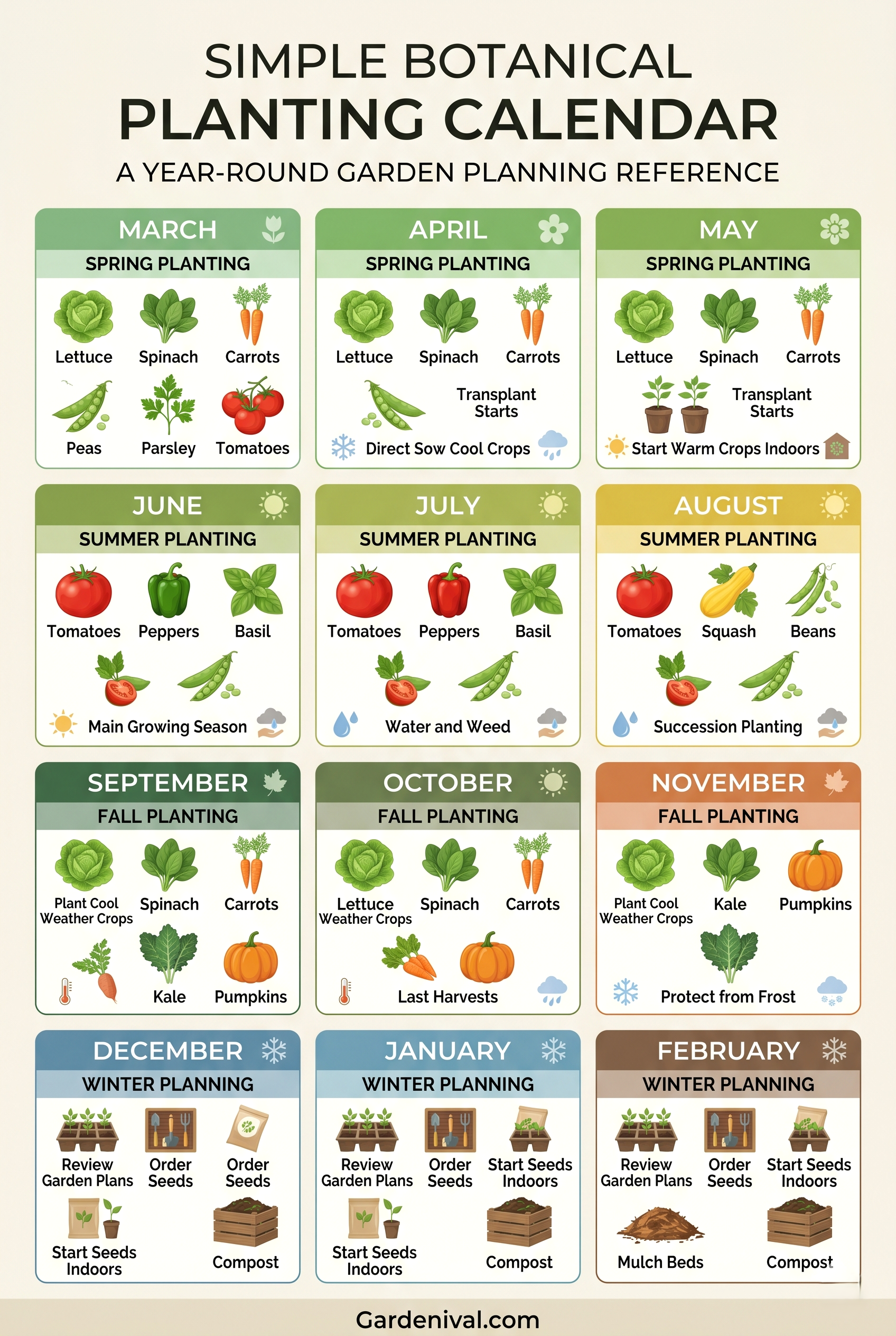
A month-by-month vegetable planting calendar offers a broad view of the gardening year. The dates below are general US planning guidance, not universal planting instructions. In northern states, spring planting may happen later; in warm southern areas, fall and winter may be the main seasons for several vegetables.
Use your local frost dates, seed packet instructions, and current weather to decide when to act. If a month is too cold or too hot for a crop in your area, move the task to a suitable window instead of following the calendar blindly.
Source: values.youthopp.org
January
Review last year’s notes, order seeds, plan beds, and start suitable slow-growing crops indoors if your local schedule calls for it. In warm areas, continue harvesting or sowing vegetables suited to cool weather.
February
Prepare seed trays and check indoor lighting. Some gardeners can start early tomatoes, peppers, or eggplants indoors, while others should wait until closer to their local transplant window.
March
In many cooler regions, begin outdoor sowing of suitable cool-season crops when soil conditions allow. Start warm-season seedlings indoors when the timing fits your local frost date.
April
Plant peas, radishes, lettuce, spinach, and other suitable cool-season crops where conditions permit. Protect tender seedlings if a late frost is forecast.
May
Many regions can begin planting warm-season crops after the local frost risk has passed and the soil is warm enough. Check the weather before moving tomatoes, peppers, cucumbers, and squash outdoors.
June
Maintain summer crops, water as needed, mulch to conserve moisture, and sow suitable quick-growing vegetables for later harvests. In hot areas, protect cool-season crops from heat or wait for a fall planting window.
July
Start planning fall vegetables. In some regions, broccoli, cabbage, and other fall crops need indoor starting now so they can be transplanted when the weather becomes more suitable.
August
Sow or transplant fall crops according to your local climate and days to maturity. Keep new plantings moist, since hot soil and dry air can hinder germination.
September
Plant suitable cool-season crops in regions with a long fall window. In cooler areas, watch the expected first frost and protect crops that can tolerate light cold.
October
Harvest mature crops, clear diseased plant debris, and use frost protection when appropriate. In warmer regions, fall planting may still be active.
November
Harvest remaining crops before damaging cold, add mulch where suitable, and review your garden records. Mild regions may still support cool-season vegetables.
December
Plan crop rotations, review seed supplies, and prepare next year’s calendar. Gardeners in warm climates can continue seasonal planting when local conditions allow.
How to Adapt the Monthly Schedule to Your Region
Gardeners in the Northeast and Upper Midwest often focus on spring and summer crops, with frost dates limiting the outdoor season. The Pacific Northwest can have mild winters but wet soils, so drainage and local rainfall may affect planting more than a simple temperature chart suggests.
Gardeners in the Southeast and Gulf Coast may find that fall and winter are good times for many cool-season vegetables. In parts of the Southwest, extreme summer heat can restrict planting, while higher elevations may have a much shorter season than nearby lowlands.
These are broad regional patterns rather than exact schedules. For reliable dates, check your county Cooperative Extension office or a local university gardening guide.
Short growing seasons
Choose varieties suited to your season length and use indoor seed starting when recommended.
Long growing seasons
Plan more than one crop cycle, while avoiding periods of severe heat or heavy frost.
Dry or hot regions
Include irrigation, shade, and heat-sensitive planting windows in your schedule.
Vegetable Planting Chart by Crop
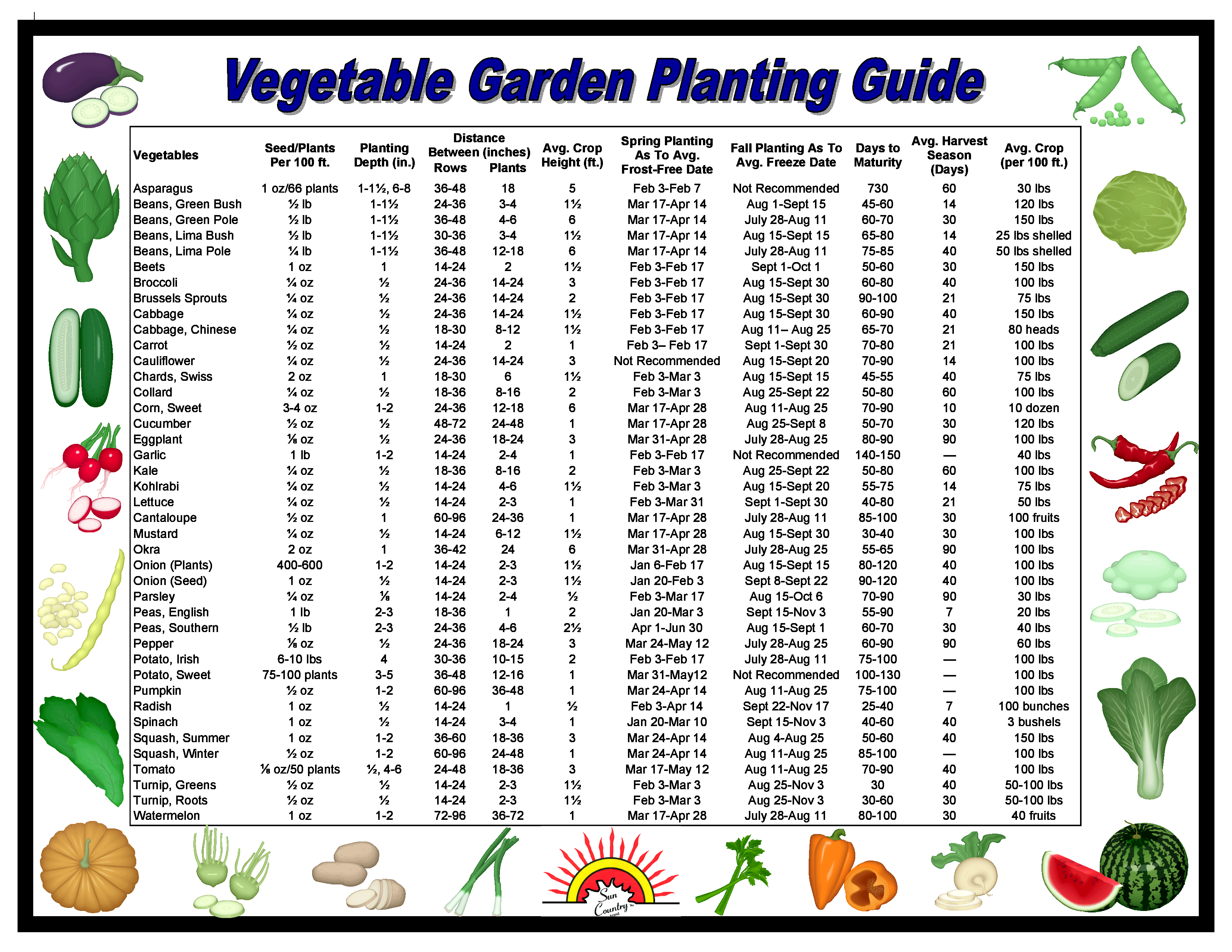
Different vegetables need different conditions, so a crop-based planting chart is often more useful than a month-only list. Cool-season crops generally handle lower temperatures better, while warm-season crops need warmer soil and protection from frost.
The chart below gives general guidance for US gardens. Exact timing depends on your region, variety, and growing method. Check the seed packet for the recommended soil temperature, sowing depth, spacing, and days to maturity before planting.
Source: mx.pinterest.com
Lettuce
Usually grows best in cool weather. Sow outdoors in suitable spring or fall conditions, and consider small repeat sowings for a longer harvest.
Spinach
Prefers cool weather and can be sown when soil is workable and conditions fit the variety. Heat and long days may cause plants to bolt.
Peas
Plant early in spring once soil conditions allow. Many varieties perform poorly in hot weather.
Carrots
Direct sow into loose, stone-free soil. Keep the seedbed evenly moist while seeds germinate.
Radishes
Grow quickly in suitable cool weather. Sow small batches at intervals for repeated harvests.
Tomatoes
Start indoors when recommended and transplant after frost danger has passed and conditions are warm enough.
Peppers
Often need an early indoor start and warm conditions. Do not rush them into cold soil.
Cucumbers
Direct sow or transplant carefully after the soil warms. Avoid disturbing the roots of young seedlings.
Beans
Usually direct sow after frost danger has passed and the soil is warm enough for good germination.
Summer squash
Plant in warm soil after the risk of frost has passed. Allow enough room for the chosen variety.
Broccoli
Often grows best in cool conditions. Plan spring or fall crops according to local heat and frost patterns.
Garlic
Many regions plant garlic in fall for a summer harvest, but suitable planting dates depend on climate and variety.
Cool-Season Vegetables
Cool-season vegetables include lettuce, spinach, peas, radishes, carrots, and many members of the cabbage family. Several can tolerate light frost, though tolerance varies by crop and growth stage. Some, such as spinach and peas, are often planted early in spring or again for fall harvest.
In hot climates, these crops may struggle during summer. A fall calendar should count backward from the expected period of cooler weather and allow enough time for the crop to mature before severe heat or cold returns.
Planting clue
Use workable soil and crop-specific temperature guidance rather than waiting for warm summer weather.
Common problem
Excess heat can make leafy crops taste bitter, bolt, or stop producing well.
Warm-Season Vegetables
Warm-season vegetables include tomatoes, peppers, beans, cucumbers, squash, and many melons. These crops usually need warm soil and cannot safely withstand a hard frost. Planting too early can slow growth even when the days feel pleasant.
Wait for suitable outdoor conditions and harden off indoor-grown seedlings before transplanting. Hardening off means gradually exposing young plants to outdoor sun, wind, and temperature changes over several days.
Planting clue
Check the forecast, soil warmth, and the crop’s recommended planting window.
Common problem
Cold soil or a late frost can damage tender seedlings and delay the harvest.
Understand USDA Growing Zones and Frost Dates
USDA Plant Hardiness Zones describe the average annual extreme minimum winter temperature for a location. They are useful when choosing perennial plants and understanding winter survival, but they do not tell you the exact date to sow annual vegetables.
A vegetable planting calendar needs both climate context and seasonal timing. Two places in the same hardiness zone can have different spring frost dates, summer heat, rainfall, and soil conditions. Use the zone as one piece of information rather than a complete planting guide.
Source: apieceofrainbow.com
Find your hardiness zone
Use the USDA Plant Hardiness Zone Map and enter your location to see the mapped zone.
Find local frost estimates
Check a nearby Cooperative Extension service, local university gardening resource, or reliable weather-based frost tool.
Check the microclimate
A sunny raised bed near a wall may warm sooner than a low, shaded part of the yard, although local frost pockets can still form.
What Is the Difference Between a Growing Zone and a Planting Zone?
The term growing zone often refers to a USDA hardiness zone, which is based on winter low temperatures. A planting calendar, however, also needs the expected spring and fall frost windows, seasonal heat, and crop requirements.
For example, a tomato may survive the winter only in protected conditions or as a perennial in certain warm settings, but most US gardeners grow tomatoes as warm-season annuals. The hardiness zone alone does not establish when a tomato seedling should go outside.
Use hardiness zones for
Comparing average winter minimum temperatures and choosing plants with suitable cold tolerance.
Use frost dates for
Planning the timing of frost-sensitive planting and estimating the length of the outdoor growing season.
Plan Indoor Seed Starting and Outdoor Transplanting
Indoor seed starting gives certain crops more time to grow before the outdoor season begins. Tomatoes, peppers, and eggplants are commonly started indoors, while peas, carrots, beans, and radishes are often sown directly in the garden. The best method depends on the crop and its response to root disturbance.
Read the seed packet before setting a date. If it recommends starting seeds a set number of weeks before the expected transplant date, count backward from a realistic outdoor date rather than choosing an indoor sowing date at random.
Source: artofit.org
Check the seed-starting instructions
Confirm the recommended number of weeks before transplanting, seed depth, germination temperature, and expected time to sprout.
Provide enough light
Place seedlings under suitable grow lights or in a bright location that meets their light needs. Weak, stretched stems often signal inadequate light.
Water with care
Keep the growing mix evenly moist but not waterlogged. Poor drainage can increase the risk of seed and seedling problems.
Harden off seedlings
Gradually expose indoor-grown plants to outdoor conditions before transplanting, avoiding sudden exposure to harsh sun or strong wind.
How to Know When Seedlings Are Ready
A seedling is not ready just because the calendar says it is transplant day. Look for healthy growth, suitable size for the crop, and roots that hold the growing mix together without forming a dense, tangled mass. Check the weather before moving plants outdoors.
If a cold snap is coming, delay transplanting tender crops when practical. If seedlings become crowded or overgrown indoors, provide more light and space, and adjust future sowing dates so plants do not spend too long in their containers.
Healthy signs
Sturdy stems, healthy leaves, steady growth, and roots that are not badly crowded.
Warning signs
Very stretched stems, yellow leaves, waterlogged mix, or roots tightly circling the container.
Use Succession Planting for a Longer Harvest
Succession planting means sowing the same crop in small batches over time or planting a new crop when an earlier one finishes. This method can spread out your harvest and reduce the problem of having too much produce ready at once.
It works especially well for quick crops such as radishes, lettuce, and some bush beans, provided the season and weather suit them. The right interval depends on the crop, variety, and how quickly you use the harvest.
Source: pinterest.co.kr
Start with small batches
Sow only as much as you can use, store, or share. A small bed does not need a large planting all at once.
Leave room in the calendar
Add another sowing date after the first planting, then check whether enough growing time remains for the crop to mature.
Rotate crop families where practical
Avoid growing the same crop family in the same bed year after year when space allows. Rotation can help manage certain pests and soilborne diseases.
A Simple Succession Planting Example
Imagine that you sow radishes in a suitable spring window. You could schedule another small sowing about one or two weeks later, then repeat if the weather remains favorable. This example is a planning idea, not a fixed rule for every variety or region.
Keep an eye on temperature and the number of days left in the season. If warm weather is approaching, later spring sowings of cool-season crops may struggle, so move the next batch to a better fall window instead.
Record each batch
Write down the sowing date and mark the expected harvest period separately for each planting.
Adjust as you learn
Use actual germination and harvest dates to set better intervals next season.
Common Vegetable Planting Calendar Mistakes
A planting calendar is useful only when it reflects the conditions in your garden. The most common mistakes are planting by a fixed date, ignoring soil temperature, starting seeds too early, and forgetting to allow enough time for a fall crop to mature.
When a crop fails, review the conditions before changing the entire plan. Check whether the seeds germinated, whether the soil stayed moist, and whether frost, heat, pests, or disease affected the plants. One missed crop can teach you more than a calendar full of guessed dates.
Source: Pinterest
Following a national calendar too closely
A chart made for another region may not match your frost dates or growing season. Use it as a guide and adjust it locally.
Planting in cold or wet soil
Some seeds germinate poorly in unsuitable conditions. Wait until the soil is workable and meets the crop’s needs.
Starting seedlings too early
Overgrown seedlings may become weak or root-bound before outdoor conditions are suitable. Count backward from a realistic transplant date.
Ignoring summer heat
Cool-season vegetables may bolt or stop growing well when temperatures rise. Shift later sowings to a more suitable window.
Forgetting days to maturity
A fall crop needs enough time to grow before severe frost or other unsuitable weather arrives. Check the seed packet and local season length.
Watering without checking the soil
Seeds need steady moisture, but saturated soil can harm roots and increase disease risk. Check the seedbed before adding more water.
What to Do When Your Planting Schedule Goes Wrong
If seeds fail to sprout, check the seed age, planting depth, soil moisture, and temperature. Some crops take longer to germinate than others. If the seedbed dried out or became waterlogged, correct the cause before sowing again.
If seedlings grow slowly, inspect their light, water, temperature, and root space. If a frost is forecast after planting, cover vulnerable crops with suitable garden fabric or another safe crop cover when appropriate, and remove or vent covers as conditions require. Never let plastic touch tender leaves during freezing weather.
If you miss the planned date, check whether the crop still has enough suitable growing time. You may be able to choose a faster-maturing variety, switch to another crop, or save the planting for the next season.
Check the cause first
Identify the likely problem before adding fertilizer, water, or other treatments.
Protect plants when needed
Use covers, mulch, or shade only when suitable for the crop and current weather.
Record the change
Note what happened and update your calendar to avoid repeating the same timing mistake.
Frequently Asked Questions
Q
What Is the Best Calendar for Vegetable Planting?
The best calendar is one matched to your local frost dates, climate, and chosen crops. A local Cooperative Extension planting guide is a useful starting point, while a personal monthly calendar helps you track actual sowing and harvest dates. Combine both instead of relying on a national chart alone.
Q
When Should I Start Planting Vegetables in the US?
There is no single start date for the entire United States. Many gardeners begin cool-season crops in early spring when soil conditions allow, then plant frost-sensitive warm-season crops after the local frost risk has passed. In hot regions, fall may be a better time for several cool-season vegetables.
Q
Can I Use My USDA Zone to Choose Vegetable Planting Dates?
Use your USDA hardiness zone as background information, not as the only timing tool. It describes average annual extreme minimum winter temperatures and is especially useful for perennial plant choices. Vegetable planting dates also depend on frost estimates, soil temperature, seasonal heat, and crop-specific needs.
Q
Which Vegetables Can I Plant in Both Spring and Fall?
Lettuce, spinach, radishes, peas, carrots, and several cabbage-family crops can often be grown in spring and fall when local conditions suit them. The best window varies by region and variety. In warm areas, fall planting may be easier for crops that struggle in summer heat.
Q
How Do I Make a Printable Vegetable Planting Schedule?
Create a table with the vegetable name, indoor sowing date, outdoor sowing or transplant date, expected harvest, and notes. Add your local frost dates at the top. Print the table, keep it near your seed supplies, and write down actual dates and weather changes during the season.
✦ Wrapping Up
Conclusion
A calendar for vegetable planting makes garden work easier by showing what to sow, when to transplant, and when to expect a harvest. The most reliable plan starts with local frost dates, then adds the needs of each crop, your soil conditions, and the weather you actually get.
Use the month-by-month guide as a starting point, not a strict set of national dates. Check seed packets, plan indoor starting when needed, and leave room for repeat sowings and fall crops. Keep notes as your garden grows, since your own records will help you improve the schedule each year.
💡 Key Takeaway
Find your local last and first frost estimates today. List the vegetables you want to grow, check their seed packets, and create a simple calendar with sowing, transplanting, and harvest dates.