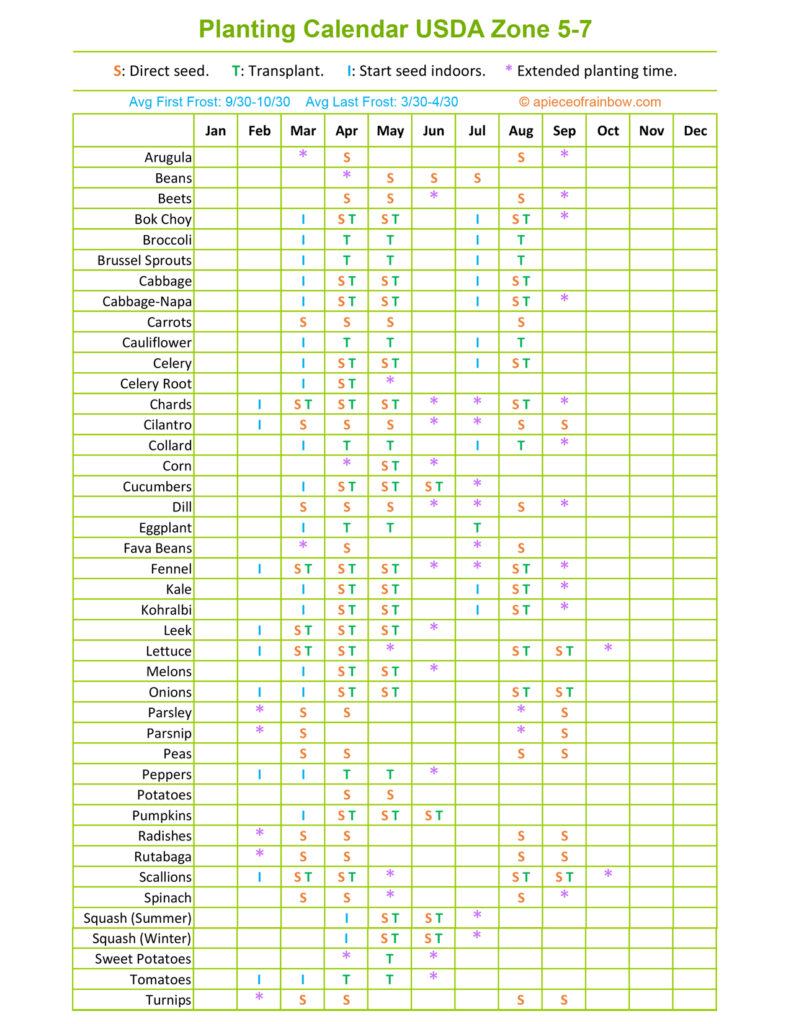
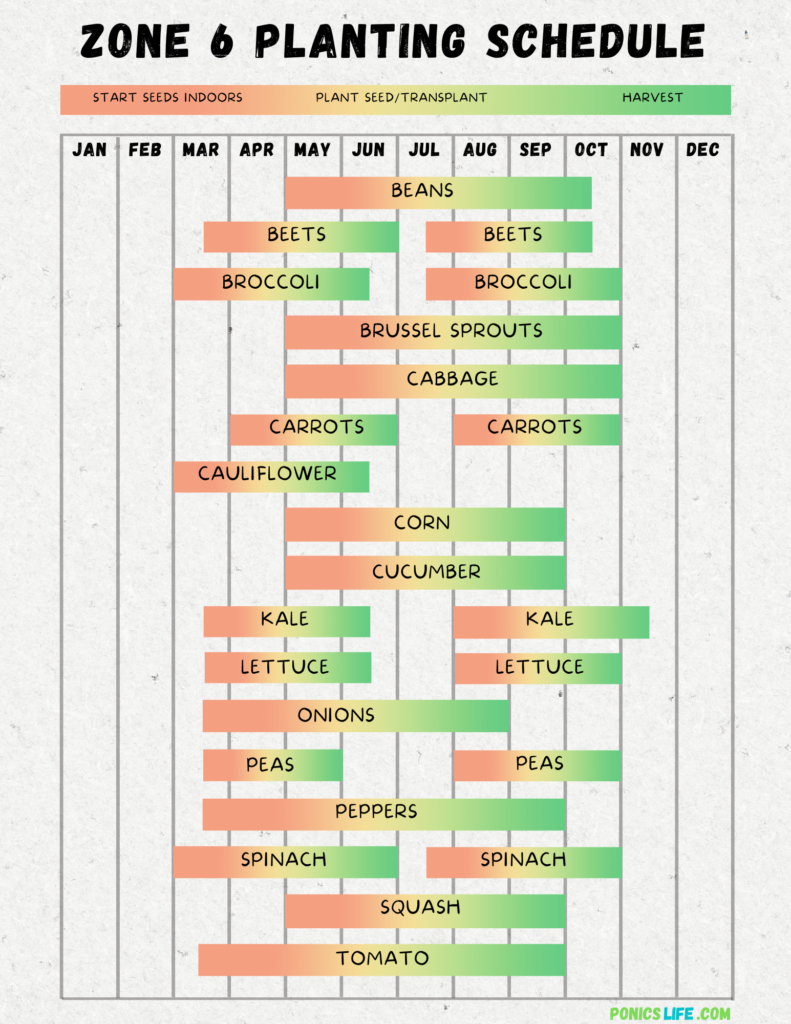
In USDA Zone 6, many gardeners start onion seeds indoors in January or February, cool-season vegetables in February or March, and tomatoes and peppers in March or April. These are rough planning windows, not fixed dates. Count backward from your local last spring frost date and check each seed packet before sowing.
A successful spring garden in the United States starts with good timing. In Zone 6, winter can linger into March, while warm spring days may tempt gardeners to put tender seedlings outdoors too soon. A seed starting calendar helps you plan ahead without filling every windowsill with plants weeks before the garden is ready.
USDA Zone 6 covers parts of many states, including Pennsylvania, Ohio, Illinois, Missouri, Kansas, and areas of the Northeast and Pacific Northwest. The weather can differ a lot across these regions. This guide uses a typical Zone 6 spring as a starting point, then shows you how to adjust the dates for your town, crops, and growing space.
Source: ponicslife.com
What Does Zone 6 Mean for Seed Starting?
USDA Plant Hardiness Zone 6 describes an area’s average annual extreme minimum winter temperature. It is useful when choosing perennial plants that must survive winter, but it does not tell you the exact date to sow vegetable seeds or move seedlings outside.
Seed starting depends on several other factors, including the average last spring frost, current weather, soil temperature, crop type, and the time a seedling needs to grow before transplanting. A gardener in Zone 6a may need a different schedule from someone in Zone 6b, and nearby towns can also have different frost patterns.
For this calendar, use April 25 through May 15 as a broad example of a possible last spring frost window in many Zone 6 locations. Some areas have earlier frost dates, while colder sites may have later ones. Replace this example with a local estimate before using the calendar.
Source: stadiongucker.de
Zone 6a
This part of the zone has colder average winter lows than Zone 6b. Some locations also have later spring frosts, especially in valleys or higher areas.
Zone 6b
This part of the zone has milder average winter lows, but a mild winter does not guarantee an early last frost.
Local conditions
Elevation, nearby lakes, hills, wind exposure, and the position of your garden can change how quickly soil warms and how often frost forms.
Find Your Local Last Frost Date
Check a frost-date tool from a trusted U.S. gardening or climate resource. Enter your ZIP code when the tool allows it, and note whether the date refers to a 50% chance, a 10% chance, or another probability of frost. These estimates describe risk, not a promise about the weather on a particular day.
Your garden may also be colder than the nearby weather station. Low spots can collect cold air, while a sunny, sheltered bed may warm sooner. When a frost would harm your crop, use the more cautious end of the local planting window.
Write down two dates
Record your estimated last spring frost and first fall frost. The first helps set spring sowing dates, while the second helps you plan fall crops.
Check the forecast
Review short-term forecasts before planting tender seedlings outdoors, even when your calendar says the time is right.
Zone 6 Seed Starting Calendar by Month
The month-by-month calendar below gives you a practical starting point for common vegetables and herbs. It assumes a local last spring frost near the beginning of May, but your own dates may fall earlier or later. Use the weeks-before-frost guidance when the calendar and your local conditions do not match.
Indoor sowing dates are not the same as outdoor planting dates. A tomato seedling might begin indoors in March, spend several weeks under lights, and move outside only after frost danger has passed and the weather is warm enough.
Source: athomeonthehomestead.com
January
Plan the garden, order seeds, check old seed packets, and clean trays and pots. Gardeners with a long indoor growing period may start onions or leeks late in the month. Most other home gardeners can wait.
February
Start onions and leeks if needed. Begin slow-growing peppers late in the month if your frost date and seed instructions support an early start. Some gardeners also sow early flowers that need a long growing period.
March
Start tomatoes, peppers, eggplant, broccoli, cabbage, and cauliflower according to their recommended indoor growing times. Sow lettuce or other quick-growing greens indoors if you plan to transplant them.
April
Continue indoor sowing of cucumbers, squash, and melons for an early crop. Direct-sow suitable cool-season crops outdoors when the soil is workable. Begin hardening off cold-tolerant seedlings when conditions allow.
May
Plant tender crops outdoors when frost danger has passed and the soil and night temperatures are suitable. Sow beans, corn, and other warm-season crops directly into warm soil.
June
Plant a second round of quick crops where the growing season allows. Plan fall broccoli, cabbage, and other cool-season crops by counting backward from the expected fall weather.
July and August
Start or sow fall crops based on their days to maturity and the first expected fall frost. Keep soil moist during hot weather, and protect new seedlings from intense sun when needed.
September and October
Harvest remaining crops, sow suitable late greens where enough growing time remains, and prepare beds for winter. Local frost dates and crop hardiness determine which plants can keep growing.
A Simple Calendar for a May 5 Last Frost
Here is a sample schedule using May 5 as the assumed average last spring frost. These dates are examples, not universal Zone 6 recommendations. If your frost date is May 15, move the suggested indoor sowing dates about 10 days later when the crop’s growing period is unchanged.
Count backward from the date when you expect to transplant each crop. For example, a tomato that needs six to eight weeks indoors could be sown between March 10 and March 24 for a May 5 transplant date. That calculation is only a starting point; the seed packet may call for a different growing period.
January to early February
Plan the garden and consider early onion or leek sowing.
Mid-February to early March
Start early peppers and long-season crops if their recommended indoor period calls for it.
March
Start tomatoes and many brassicas, such as broccoli and cabbage, using the crop’s indoor growing window.
Late March to April
Start quick-growing cucurbits in small batches, and prepare outdoor beds for cool-season crops.
Late April to May
Harden off seedlings and plant outdoors when frost, soil temperature, and weather conditions are suitable.
Indoor Seed Starting Chart for Zone 6
The best time to sow seeds indoors depends on how long the crop needs to grow before it can move outside. Slow-growing crops often need an early start, while fast-growing crops can become too large if they sit in pots for too long.
Use the chart as a broad guide for spring transplants. Count backward from your intended outdoor planting date, and check the seed packet for variety-specific instructions. Some crops grow well from direct sowing and do not need an indoor start at all.
Source: ataglance.randstad.com
Onions and leeks
Often start indoors about 8 to 10 weeks before outdoor planting. Check the variety and whether the packet recommends seeds, sets, or transplants.
Broccoli, cabbage, and cauliflower
Often start indoors about 4 to 6 weeks before transplanting. These cool-season crops can usually move outdoors before tender summer crops, after suitable hardening off.
Tomatoes
Often start indoors about 5 to 8 weeks before transplanting. Strong light helps prevent tall, weak stems.
Peppers and eggplant
Often need about 8 to 10 weeks indoors, depending on the variety and growing conditions. Warm conditions support germination and early growth.
Cucumbers and summer squash
Usually need only about 2 to 4 weeks indoors if you choose to start them inside. Sow them in containers that limit root disturbance.
Melons and pumpkins
Often need about 2 to 4 weeks indoors. Direct sowing may also work well when the soil is warm and the season is long enough.
Lettuce
Can be started indoors about 3 to 5 weeks before transplanting, or sown directly outdoors when conditions are cool enough.
Basil
Can be started indoors a few weeks before outdoor planting. Wait for frost danger to pass because basil is sensitive to cold.
How to Calculate Your Own Sowing Date
The simplest method is to work backward from the planned transplant date. If a crop needs six weeks indoors and you plan to plant it outside on May 10, count back 42 days. The approximate sowing date is March 29.
For crops with a range, use the shorter end when seedlings tend to grow quickly in your setup, and the longer end when the seed packet or your local extension guide recommends it. Do not add extra weeks just because an earlier sowing date feels safer. Older seedlings can become crowded, root-bound, and difficult to manage.
Step 1
Find the expected outdoor transplant date for your crop.
Step 2
Check the seed packet for the recommended number of weeks indoors.
Step 3
Count backward from the transplant date to find the sowing window.
Step 4
Allow time for hardening off, then adjust if the forecast or plant growth changes.
Which Seeds Should You Start Indoors or Outdoors?
Not every vegetable needs a head start indoors. Some crops dislike root disturbance, while others grow quickly in garden soil once the weather warms. Choosing the right method can save space, time, and effort.
Cool-season crops tolerate lower temperatures than warm-season crops, although each crop has its own limits. Peas and spinach can often be sown outdoors early, while tomatoes, peppers, and basil need protection from frost.
Source: fity.club
Good candidates for indoor sowing
Tomatoes, peppers, eggplant, broccoli, cabbage, cauliflower, onions, and some annual flowers are commonly started indoors.
Good candidates for direct sowing
Peas, carrots, radishes, spinach, beets, beans, and corn are often sown directly in the garden, with timing based on the crop and weather.
Crops that can use either method
Lettuce, cucumbers, summer squash, pumpkins, and melons may be direct-sown or started indoors. The best method depends on the crop, the available season, and how well roots tolerate transplanting.
Cool-Season Vegetables
Peas, spinach, radishes, carrots, and some leafy greens can go into the ground before many summer crops. Plant when the soil can be worked without becoming compacted and when the crop’s temperature needs are met.
Broccoli, cabbage, and cauliflower are often started indoors and transplanted while spring weather remains cool. They can struggle if they sit through prolonged heat, so do not delay them without a reason.
Peas
Sow outdoors early in spring when the soil is workable. Use a trellis for climbing types if the variety needs support.
Carrots
Sow directly into loose soil. Avoid transplanting seedlings unless you have a method suited to young carrot roots.
Spinach
Sow during cool weather. Warm conditions can cause plants to bolt, which means they shift toward flowering and seed production.
Warm-Season Vegetables
Tomatoes, peppers, eggplant, cucumbers, beans, squash, and melons need warmer conditions than most spring greens. Tender crops can be damaged by frost, and cold soil may slow germination or root growth.
Indoor-grown tomatoes and peppers should not be rushed outside just because the calendar has reached May. Check the forecast, the soil, and overnight temperatures. Beans and corn are usually direct-sown after the soil has warmed enough for steady growth.
Tomatoes and peppers
Start indoors when the calendar and seed instructions call for it, then transplant after frost danger has passed and conditions are warm enough.
Beans and corn
Direct-sow into warm soil. Planting too early in cold, wet soil can lead to slow or poor emergence.
Cucumbers and squash
Start indoors only a short time before transplanting, or direct-sow after frost danger has passed. Handle roots gently if transplanting.
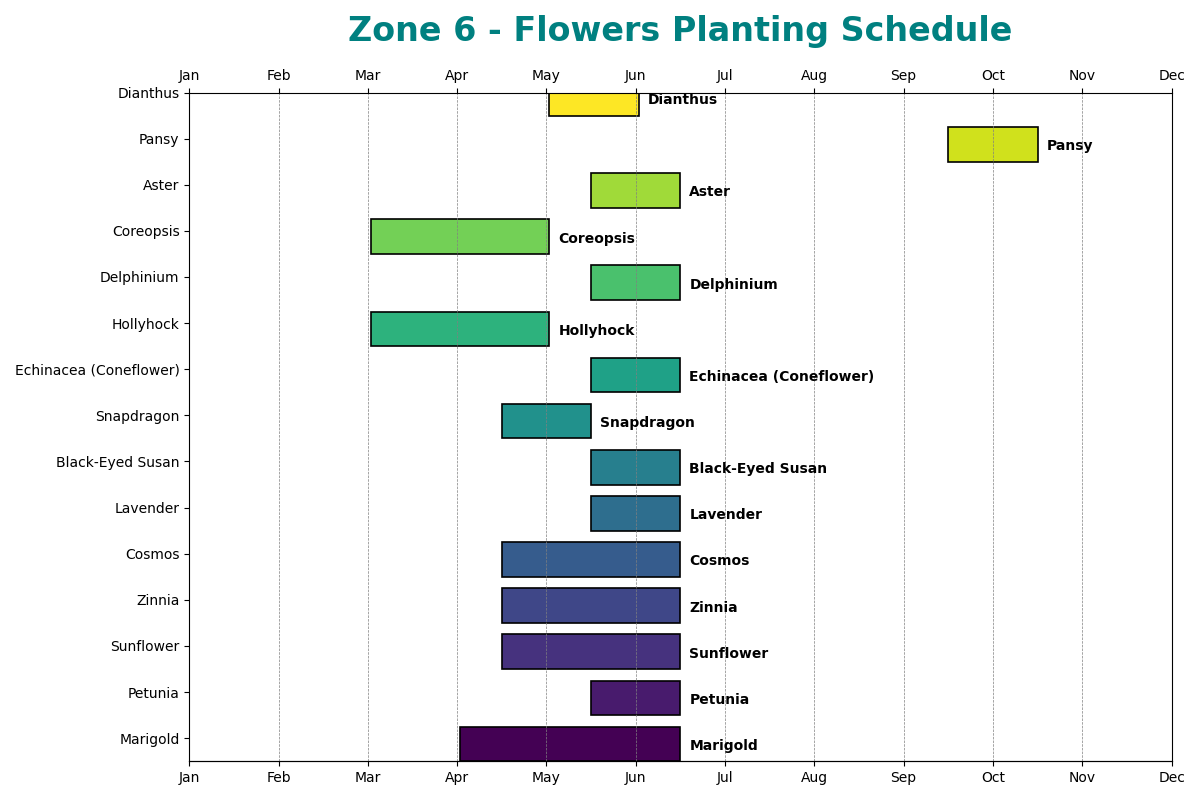
A Zone 6 Flower Seed Starting Calendar
Annual flowers follow many of the same rules as vegetables, but their indoor growing periods vary widely. Some flowers grow quickly from seed, while others need several months before they are ready to bloom. Check the packet for whether the plant should be started indoors or sown directly outdoors.
For a spring display, many gardeners start petunias, snapdragons, and certain other flowers indoors. Marigolds and zinnias generally need less time, and many varieties can be sown indoors closer to the last frost or directly into warm soil after frost danger passes.
Source: etsy.com
January and February
Plan early flowers that require a long indoor growing period. Provide adequate light and avoid sowing tiny seeds too deeply.
March
Start flowers such as petunias or snapdragons when the packet recommends an early indoor start. Give seedlings enough room as they grow.
April
Start faster-growing annual flowers, including many marigolds, if you plan to transplant them. Direct sow cold-tolerant flowers when soil and weather suit them.
May
After frost danger has passed, sow suitable warm-season flowers such as zinnias and cosmos outdoors, or transplant hardened-off seedlings.
Flowers That Need an Earlier Start
Petunias and some other slow-growing flowers may need a long period indoors. Small seeds often need light or only a very thin covering, so follow the packet rather than burying every seed at the same depth.
Snapdragons are commonly grown for cool-season color and may be started indoors before spring. Their preferred timing can vary by variety and local climate, so use a regional flower guide when bloom timing matters.
Use fine seed mix
A clean, fine-textured seed-starting mix helps tiny seeds make contact with moisture and supports young roots.
Label every tray
Write the flower name and sowing date on each label. Seedlings can look very similar during their first weeks.
Flowers That Can Be Sown Later
Zinnias, cosmos, and many marigolds grow fast enough that an early winter sowing is usually unnecessary. Start them near the recommended transplant window or sow them directly outdoors after the soil warms.
Direct sowing can be simpler when the plant dislikes root disturbance or grows quickly. Keep the soil moist while seeds germinate, then thin seedlings according to the spacing on the packet.
Zinnias
Sow outdoors after frost danger passes, or start indoors a few weeks earlier for transplants.
Cosmos
Direct-sow into a suitable sunny spot after cold weather has passed, following the variety’s spacing guidance.
Marigolds
Start indoors for an earlier display or sow outdoors once conditions are warm enough.
How to Start Seeds Indoors Successfully
Seeds need moisture, air, suitable warmth, and the right growing conditions to germinate. Once seedlings emerge, strong light becomes essential. A sunny window may help, but it often gives young plants less light than they need, especially in late winter.
Use clean containers with drainage holes and a fresh seed-starting mix. Garden soil can be too dense for small pots and may carry organisms that harm young seedlings. Wash reused trays before planting, and do not let pots sit in standing water.
Source: marketplace.ultimatemotorcycling.com
Prepare the containers
Fill clean trays or small pots with moistened seed-starting mix. Leave enough room to water without washing seeds out.
Sow at the right depth
Follow the seed packet. Some seeds need darkness, while others need light or only a light dusting of mix.
Keep the mix evenly moist
Water gently and let excess water drain. The mix should not stay soaked, since waterlogged conditions reduce air around roots.
Use suitable warmth
Different crops germinate best at different temperatures. A warm spot may help tomatoes and peppers, while cool-season crops may need less heat.
Provide strong light
Place seedlings under suitable grow lights or in a bright growing area. Keep lights at the distance recommended by the light maker and adjust as plants grow.
Thin and pot up when needed
When seedlings become crowded, keep the strongest plants and move them into larger containers if their roots need more space.
How to Tell If Seedlings Are Healthy
Healthy seedlings usually have firm stems, leaves with normal color for the crop, and new growth that appears over time. Growth rates differ, so compare plants with the instructions for that variety rather than expecting every seedling to look the same.
Tall, thin stems often point to inadequate light, excessive warmth, or overcrowding. Pale leaves may have several causes, including poor light, unsuitable moisture, or a nutrient issue. Check the growing conditions before adding fertilizer, because young seedlings can be harmed by excess feed.
Long, weak stems
Move the light closer within its safe operating range, improve light duration, and avoid excessive heat after germination.
Mold on the mix
Improve airflow, reduce excess moisture, and clean affected equipment. Do not let the seed tray remain waterlogged.
No germination
Check seed age, sowing depth, moisture, and temperature. Some seeds take longer to sprout than others.
When to Move Seedlings Outdoors
Move seedlings outdoors only when the crop is ready and local conditions are suitable. Passing the average last frost date is a useful guide, but it does not rule out a late cold snap. Tender plants such as tomatoes, peppers, and basil need more protection from cold than hardened-off broccoli or cabbage.
Before transplanting, harden off indoor-grown seedlings over about one to two weeks. This process slowly introduces plants to outdoor sunlight, wind, and changing temperatures. Seedlings raised indoors can suffer leaf scorch or wilt if moved straight into full sun.
Source: etsy.com
Start in a sheltered spot
Place seedlings outside in shade or filtered light for a short period on a mild day. Protect them from strong wind.
Increase outdoor time gradually
Over the next several days, extend their time outside and introduce more sun as the plants tolerate it.
Watch the forecast
Bring seedlings back inside or provide suitable protection when frost, cold wind, heavy rain, or extreme heat threatens them.
Water before transplanting
Moisten the root ball so it holds together. Avoid transplanting wilted plants if you can first restore their moisture.
Plant at the right depth
Follow crop-specific planting instructions. Tomatoes can often be planted deeper than many other vegetables, while most seedlings should stay near their original growing depth.
Check Soil Temperature for Warm-Season Crops
Air temperature alone does not tell you whether the soil is warm enough. Beans, corn, cucumbers, squash, and melons can germinate slowly in cold soil. A soil thermometer can help you check conditions at the depth recommended for sowing.
Wait for the temperature range listed on the seed packet or a trusted regional growing guide. If the soil is cold and wet, delaying sowing can be better than putting seeds in the ground early and hoping for warm weather.
Measure near the seed depth
Take a reading in the part of the bed where you plan to sow, rather than relying on the temperature of the air.
Check more than once
Soil can warm during the day and cool overnight. Repeat readings when weather changes or the bed remains damp.
Plan a Fall Garden in Zone 6
A Zone 6 seed starting calendar can also help you plan a fall harvest. Many cool-season crops grow well as summer heat eases, but they must have enough time to mature before hard freezes arrive. Your local first fall frost date and the crop’s days to maturity are the key details.
For a fall crop, work backward from the expected harvest window. Check whether the seed packet counts days to maturity from sowing or from transplanting. Add extra time when hot weather, short days, or slow germination could delay growth.
Source: phpmyadmin.muycomputerpro.com
June
Plan fall crops and start transplants for varieties that need a long growing period. Keep an eye on the number of days remaining before the first expected fall frost.
July
Sow suitable crops such as carrots, beets, and some beans based on their maturity times and local conditions. Start fall brassica transplants if the variety and schedule call for it.
August
Plant suitable greens and other cool-season crops where enough time remains. Shade and steady moisture can help new seedlings establish during hot weather.
September
Continue short-season crops when the local forecast and first frost estimate allow. Use row covers or other suitable protection when appropriate, but do not assume they can prevent all frost damage.
Calculate the Last Safe Sowing Window
Start with the first expected fall frost, then subtract the crop’s listed days to maturity. If a crop needs 55 days and you want to harvest before an October 10 frost, a simple calculation points to about August 16. This is a planning example, not a guarantee of a harvest date.
Add time for germination and slower growth when the seed packet’s maturity figure does not include those stages. Crops may also need more time as days get shorter and temperatures fall. A few days of buffer can reduce the risk of a crop maturing too late.
Choose short-season varieties
Look for varieties with maturity times that fit your remaining growing season.
Keep seedbeds moist
Summer soil can dry quickly. Water gently and often enough to keep the seed zone moist while seeds germinate.
Protect young plants from heat
Temporary shade can reduce stress during hot afternoons. Remove or adjust it as conditions improve so seedlings receive suitable light.
Common Zone 6 Seed Starting Mistakes
The most common planning problem is treating a general calendar as a rule for every garden. Zone 6 covers many climates, and even one yard can have warm and cold spots. A flexible schedule gives you a better chance of raising sturdy plants than sowing every crop on the same weekend each year.
The other common problem is starting seeds too early. Indoor seedlings need enough light, room, and time to develop before transplanting. If they grow too large before outdoor conditions are ready, they may become weak or root-bound.
Source: etsy.com
Using the hardiness zone as a frost date
Zone 6 describes winter minimum temperatures, not the date when spring frost ends. Use local frost estimates to plan planting.
Sowing every crop in February
Different plants need different indoor growing periods. Follow the seed packet and count backward from the intended transplant date.
Putting seedlings outside without hardening off
Sudden exposure to direct sun and wind can damage indoor-grown plants. Increase outdoor exposure gradually.
Overwatering seed trays
Wet soil can lack the air that roots need. Use containers with drainage holes and water according to the mix’s moisture level.
Ignoring soil temperature
Warm-season seeds can struggle in cold ground even after the last frost date. Check the temperature needs of the crop.
Planting too many seeds at once
Large batches can overwhelm the space and light available. Sow manageable amounts and use a second sowing for crops that mature quickly.
What to Do When Seedlings Fall Behind
If seeds sprout slowly, check temperature and moisture first. Some seeds take longer to germinate, and a cold growing area can slow the process. Avoid digging up every seed to check it, since this can damage seeds that are still developing.
If seedlings are small but healthy, give them suitable light, moisture, and time. If they are tall and weak, improve the light and avoid keeping them too warm. When the outdoor planting window arrives, transplant only the plants that are healthy enough to handle the move.
If seeds have not sprouted
Check the packet’s expected germination time, sowing depth, temperature range, and seed age before starting a replacement batch.
If seedlings are crowded
Thin them carefully or pot them up when they are large enough to handle. Crowding reduces airflow and makes it harder to provide even light.
If cold weather returns
Delay transplanting tender crops or move containers to a protected place. Use suitable covers where appropriate, and remove them when conditions require it.
Make a Seed Starting Calendar That Fits Your Garden
The most useful seed starting calendar is one you can update each year. Keep a short record of sowing dates, germination, transplanting, and harvest. Those notes help you see which crops need an earlier start and which ones do better when sown later.
A paper calendar, spreadsheet, or garden notebook can all work. Add the crop name, variety, packet instructions, indoor sowing date, expected transplant date, and any weather changes that affect the plan. Leave room to note what happened rather than treating each date as fixed.
Source: ataglance.randstad.com
Record the local frost dates
Write down the local average last spring frost and first fall frost. Add a note that actual weather may differ.
Add crop-specific instructions
Record weeks indoors, sowing depth, germination temperature, spacing, and whether the crop is better direct-sown.
Track each sowing
Note the date you planted, when the seeds sprouted, and when the seedlings moved into larger pots or the garden.
Review the season
At the end of the year, note which dates worked and which crops struggled. Use those observations to adjust next year’s calendar.
A Short Weekly Routine
Once seeds are growing, a few short checks each week can prevent many problems. Check soil moisture, inspect the leaves and stems, and make sure plants receive enough light. Look at the weather forecast before setting out seedlings or sowing tender crops.
You do not need to grow every vegetable from seed. Buying a few healthy transplants can make sense for crops that need a long indoor period or when space and light are limited. Start the seeds that fit your schedule and grow the rest in a way that suits your garden.
Early in the week
Review upcoming sowing dates and check the forecast for sudden cold or heat.
During the week
Check moisture, light, airflow, and seedling growth. Thin or pot up plants when needed.
Before the weekend
Prepare beds, label new sowings, and decide whether outdoor conditions are suitable for planting.
Frequently Asked Questions
Q
When should I start seeds indoors in Zone 6?
Many Zone 6 gardeners start onions in January or February, cool-season transplants in February or March, and tomatoes in March or April. Peppers may need an earlier start than tomatoes, while cucumbers and squash usually need only a short time indoors. Count backward from your local transplant date and follow the seed packet.
Q
What is the average last frost date for Zone 6?
There is no single last frost date for all of Zone 6. A broad spring planning window in many locations falls from late April into mid-May, but some areas have earlier or later frosts. Check a local frost-date resource using your ZIP code and keep an eye on the forecast.
Q
Can I plant vegetables outside in March in Zone 6?
Some cool-season crops, including peas, spinach, and radishes, may be direct-sown in March if the soil is workable and the crop’s conditions are suitable. Tender vegetables such as tomatoes, peppers, and beans generally need warmer conditions. The right date depends on your location, soil, and current weather.
Q
Is Zone 6a different from Zone 6b for seed starting?
Zone 6a has colder average annual extreme minimum temperatures than Zone 6b. That difference can affect winter survival for perennial plants, but it does not automatically set a specific seed starting date. Local frost dates and spring conditions are more useful for planning annual vegetables.
Q
How many weeks before the last frost should I start tomato seeds?
Tomato seeds are often started about 5 to 8 weeks before the planned outdoor transplant date. For example, if you plan to transplant on May 5, count backward by the recommended number of weeks to find the sowing window. Adjust for the variety, your indoor light, and the seed packet’s instructions.
Q
Do I need a grow light for Zone 6 seedlings?
A grow light is often helpful because winter and early spring window light may not provide enough intensity for sturdy seedlings. A bright window can work in some settings, but watch for long, thin stems that lean toward the light. Use a suitable light and follow its safe distance and timing instructions.
Q
When should I start seeds for a fall garden in Zone 6?
Plan fall crops by counting backward from your expected harvest window or first fall frost. Many leafy greens and root crops can be sown in summer, while broccoli and cabbage may need an earlier start indoors. Check days to maturity and allow extra time for germination and slower growth as autumn approaches.
✦ Wrapping Up
Conclusion
A Zone 6 seed starting calendar gives you a clear plan for the growing season, but your local frost dates should guide the final timing. Start slow-growing crops early enough, save quick-growing crops for later, and direct-sow vegetables that prefer growing in place. Keep an eye on soil temperature and weather before moving seedlings outdoors.
The best schedule is flexible. Record when you sow each crop, how the seedlings grow, and when they reach the garden. Those notes will help you make better choices next spring and avoid starting seeds weeks before you have room or suitable weather for them.
💡 Key Takeaway
Find your local average last spring frost date, choose the crops you want to grow, and count backward using each seed packet’s indoor growing time. Put those dates on your calendar, then adjust them to match the weather and your seedlings’ growth.