
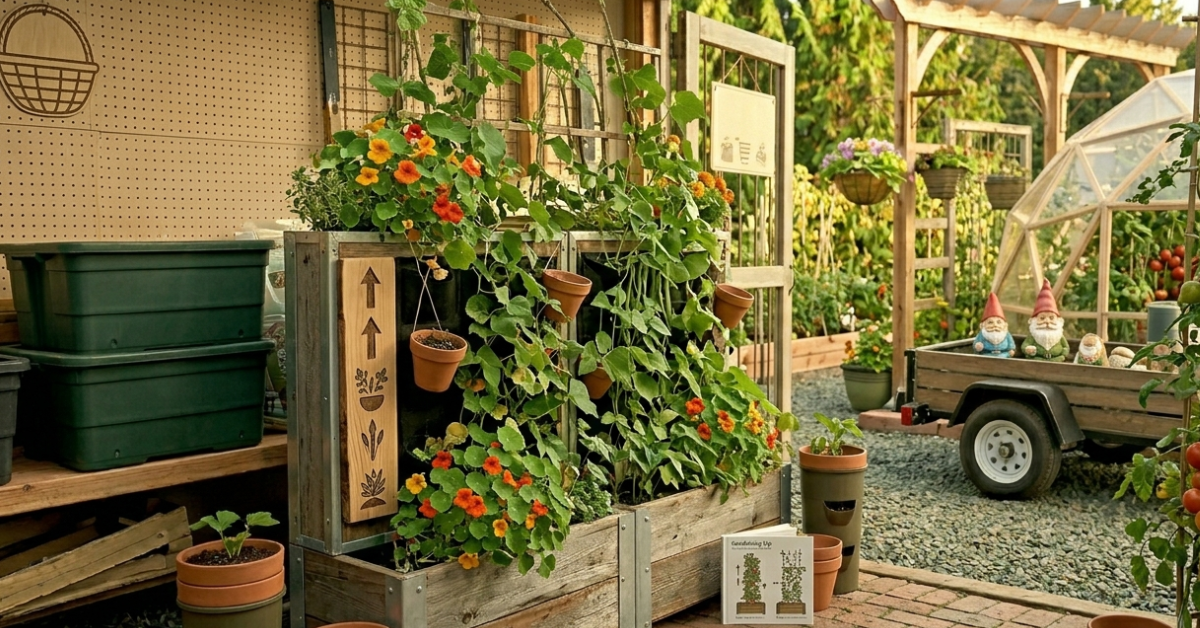
Gardening Up Your Life!
Want a thriving garden without the back strain? Discover how “gardening up” can transform your space into a green oasis. Read on for simple, space-saving tips!
What Exactly Is “Gardening Up”?
Okay, so when I first heard the term “gardening up,” I was a little confused too. It’s not some fancy new gardening technique with a made-up name. It’s really simple: it means growing things upwards.
Think vertical gardening, but for literally everything you can grow. Instead of spreading out flat on the ground, you’re using walls, trellises, and hanging containers to make your plants grow tall. I’ve been doing this for years in my small yard.
It makes such a huge difference.
Why Grow Up Instead of Out?
I’ve found that pushing your garden upwards is a total game-changer for a few reasons. It’s not just about saving space, though that’s a big one for me. It often makes caring for your plants way easier too.
-
Space Saver: This is the most obvious one. If you have a tiny yard, a small balcony, or even just a patio, you can still grow a ton of stuff. Instead of just a few pots on the ground, you can use a whole wall. My neighbor has a postage stamp of a yard, and honestly, her vertical garden looks amazing.
-
Easier Access: I’m not getting any younger, and bending down all the time to weed or water can be a pain. Growing things “up” means more plants are at waist height or even higher. This is great for my back, and I can see what’s going on with my plants much better.
-
Better Airflow: Plants that are crowded together on the ground can sometimes get mold or disease because there isn’t enough air circulation. When you space them out vertically, they get more light and air, which usually means healthier plants.
-
Pest Deterrent: It’s harder for slugs and snails to reach plants that are off the ground. I’ve noticed a big drop in nibbled leaves since I started growing more things vertically. It’s not a perfect solution, but it definitely helps keep those slimy guys away.
-
Aesthetic Appeal: Let’s be honest, a well-designed vertical garden looks fantastic. It adds a lush, green dimension to your home. It really can make a dull wall or fence come alive. I love the look of cascading flowers and vines.
Types of “Gardening Up”
There are so many ways to get your garden growing in a vertical direction. It really depends on your space, budget, and what you want to grow.
Wall-Mounted Systems
These are great for using flat walls. You can buy ready-made modules or build your own. I’ve seen everything from simple shelves to elaborate pocket systems.
-
Pocket Planters: These are fabric or plastic pouches that hang on a wall. You fill them with soil and plant directly into each pocket. They’re perfect for herbs, strawberries, and small flowers. I use some on my shed wall for mint and basil. It’s so handy to just reach out and grab what I need for cooking.
-
Shelving Units: Simple shelves screwed into a wall or fence can hold pots and containers. Make sure they are strong enough for the weight of plants and soil, especially when wet. I have a few sturdy wooden shelves on my back fence. They hold terracotta pots filled with succulents and small flowering plants.
-
Trellises and Arbors: These are classic for a reason. You can use them for climbing plants like tomatoes, beans, cucumbers, and vining flowers. They create a beautiful green screen and allow the plants to grow naturally upwards. My clematis looks spectacular climbing up a trellis.
Freestanding Vertical Garden Structures
If you don’t have a suitable wall, these are your best bet. They can be moved around too.
-
Tiered Planters: These are like vertical stacks of pots. They take up a small footprint but offer multiple levels for planting. I have a tiered planter on my patio that I fill with petunias and trailing lobelia. It looks like a cascading waterfall of color.
-
A-Frame Gardens: These structures look like an upside-down “A” with planting spaces on each side. They are great for things like lettuce, spinach, and herbs. They get good light on both sides.
-
Living Walls (Modular Systems): These are more elaborate systems, often found on commercial buildings, but you can get smaller versions for home. They involve a framework with planting modules. They are quite an investment but look stunning when filled.
Hanging Gardens
You can’t get much higher than hanging! This is perfect for small spaces and adds a beautiful, flowing look.
-
Hanging Baskets: A classic for a reason. Fill them with trailing flowers, strawberries, or even small vine tomatoes. Make sure the hooks are strong! I have a few hanging baskets from my porch roof. They’re currently overflowing with fuchsias.
-
Repurposed Items: Get creative! Old colanders, watering cans with holes, even upside-down wine bottles can be adapted for hanging planters. The key is drainage. I once saw someone use an old colander for herbs, and it looked so cool.
What Can You Grow “Gardening Up”?
Honestly, a lot more than you might think! It’s brilliant for many of your favorite edibles and ornamentals.
Edibles
This is where “gardening up” really shines for me. Getting fresh herbs and veggies right outside my door is fantastic.
-
Vining Vegetables: Tomatoes, cucumbers, peas, beans, and even melons (with some support) are naturals for vertical growing. They love to climb! My beefsteak tomatoes get huge on my DIY A-frame support.
-
Leafy Greens: Lettuce, spinach, arugula, kale, and Swiss chard can be grown in pockets or containers on upright systems. They grow quickly and are easy to harvest. I love having a constant supply of fresh salad greens.
-
Herbs: Basil, mint, parsley, chives, thyme, and rosemary are perfect for pocket planters or small pots on shelves. They stay manageable and are always within easy reach. Having fresh basil for my pasta is a game-changer.
-
Strawberries: These berry plants do exceptionally well in vertical gardens. They can cascade down from hanging baskets or pocket planters, and the fruit is easier to spot and pick.
Ornamentals
It’s not just about food! Flowers can look amazing growing upwards.
-
Flowering Vines: Clematis, honeysuckle, jasmine, and morning glories love to climb and can create a stunning display. Their flowers can be eye-catching.
-
Trailers and Cascaders: Petunias, fuchsias, lobelia, and nasturtiums are perfect for hanging baskets or the edges of tiered planters. They create a beautiful, flowing effect.
-
Small Flowering Plants: Many smaller plants like pansies, violas, and impatiens can thrive in pocket planters or small pots on shelves, adding color at different levels.
Setting Up Your Vertical Garden
Planning is key to success. Think about where you want to put it and what you want to grow.
Location, Location, Location
Just like any garden, light is super important. Most vegetables and many flowers need at least 6-8 hours of direct sunlight per day. Herbs can often tolerate a bit less.
Also, consider wind and potential water sources.
Choosing Your System
This is where you match your needs to what’s available. Do you want something you build yourself or buy? What’s your budget?
Do you have a wall, or do you need a freestanding unit? I’ve tried a few different systems, and my favorite is a combination of wire trellises for my vining plants and some sturdy wall-mounted shelves for herbs.
Soil and Watering
Vertical gardens can dry out faster than ground-level ones. You need a good quality, lightweight potting mix. Using a self-watering system can be a lifesaver, especially if you travel or forget to water.
Otherwise, you’ll need to water more frequently, perhaps even daily in hot weather. I use a good potting mix and check the moisture level every day.
Plant Selection
Pick plants that are suited to your system and climate. Dwarf varieties of vegetables often do better in smaller containers. For climbing plants, make sure you have sturdy support.
For herbs and smaller plants, choose varieties that don’t get too large.
Maintenance for a Thriving Upward Garden
Once it’s set up, you still need to give it some love.
- Watering: As I mentioned, this is crucial. Check the soil moisture regularly.
- Feeding: Plants in containers can deplete nutrients faster. Use a balanced liquid fertilizer every few weeks during the growing season.
- Pruning and Support: Trim back plants to keep them from getting overgrown or to encourage more growth. Ensure climbing plants are tied to their supports as they grow.
- Pest and Disease Watch: Keep an eye out for any signs of trouble. Because plants are closer together, problems can spread quickly. Early detection is key.
I find that checking my vertical garden daily is the best way to catch any issues and just enjoy watching it grow. It’s a living artwork that changes every day. It makes my whole yard feel so much more vibrant.
Honestly, it’s one of the most rewarding gardening projects I’ve ever undertaken. Seriously, give “gardening up” a try. You might be surprised at how much you can grow and how much easier it makes things!
Comparison: Vertical Garden Systems
| Feature | Pocket Planters | Freestanding Tiered Planter | Hanging Baskets | Trellises |
|---|---|---|---|---|
| Best For | Herbs, small flowers, strawberries | Mixed plants, herbs, flowers | Trailing flowers, strawberries, small edibles | Vining vegetables, climbing flowers |
| Space Required | Wall space | Small footprint | Hanging space | Wall or freestanding |
| Installation | Easy to hang | Assemble | Hang with strong hooks | Mount or stake |
| Watering Frequency | Moderate to High | Moderate | High | Moderate |
| Cost | Low to Medium | Medium | Low to Medium | Low to Medium |
| Mobility | Fixed | Can be moved | Can be moved | Can be moved (if not fixed) |
FAQs
Can I really grow vegetables this way?
Yes! Many vegetables like tomatoes, beans, and cucumbers are perfect for vertical gardening. They love to climb!
Is it hard to water a vertical garden?
It can dry out faster, so regular checking is needed. Self-watering systems help a lot. Learn more about watering techniques for small spaces.
What are the best plants for a beginner to grow upwards?
Herbs like mint and basil, fast-growing greens like lettuce, and simple flowers like petunias are great choices. Start with my guide to gardening for beginners.
How much sun do vertical gardens need?
Most edible plants and many flowers need at least 6-8 hours of sun daily, just like ground gardens.
Can I use any container for gardening up?
You can use many things, but ensure they have good drainage and are sturdy enough for soil and plants. Read my review on smart gardening tools.