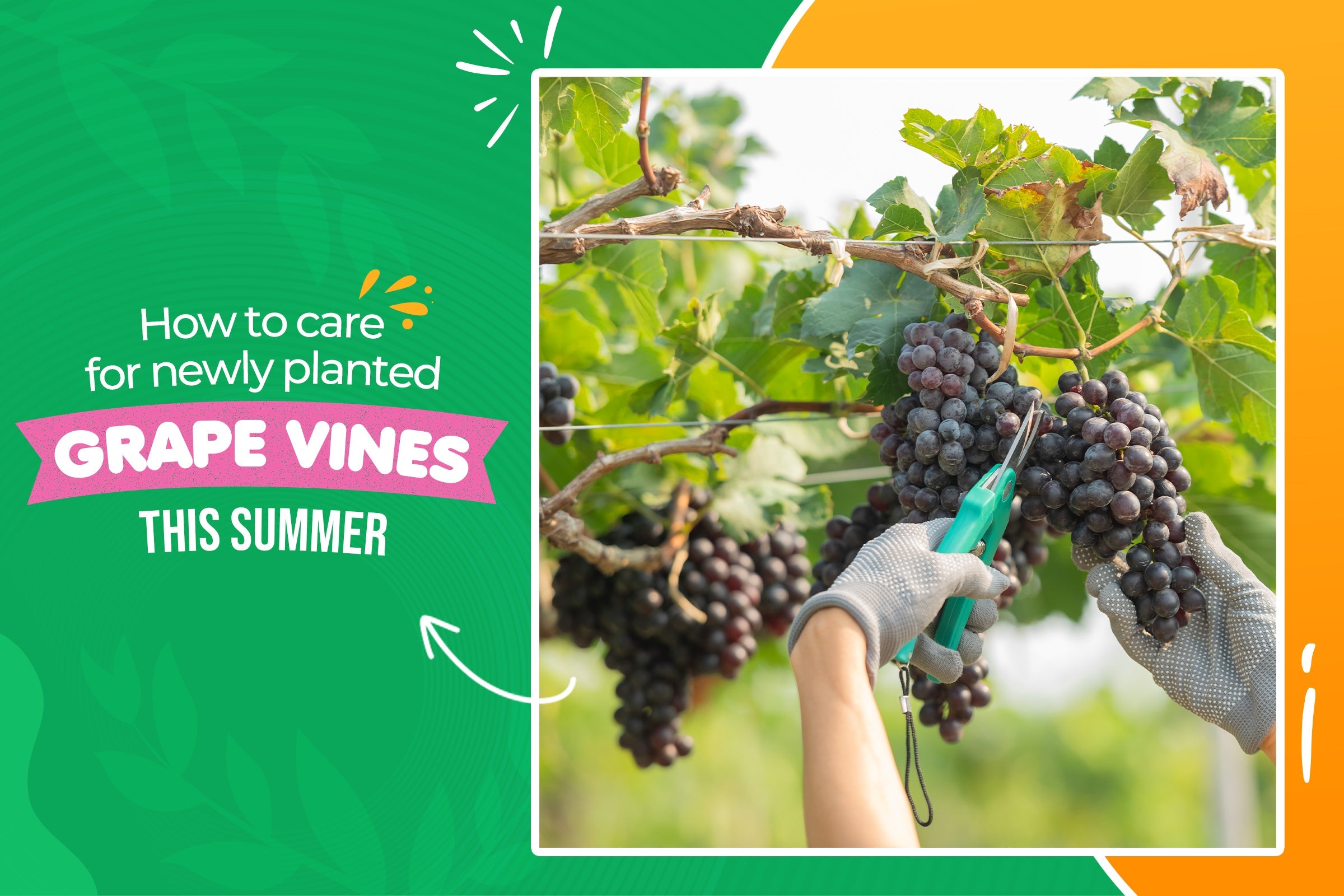
Take care of grapevines by giving them full sun, well-drained soil, steady water while they establish, strong support, yearly pruning, and good airflow. Choose a grape variety suited to your local climate, and adjust care as the vine grows.
Grapevines can grow well in many parts of the United States, from home gardens in the Midwest to sunny yards in California and the Southeast. Still, the right care depends on your local weather, soil, and grape variety. A vine that thrives in a dry California summer may need a different watering plan in a humid Florida garden.
The main jobs are simple once you know what to watch for. Give the vine a sunny spot, guide its shoots along a sturdy trellis, and prune it each year to control growth and support fruit production. Young vines need time to build strong roots and trunks before they can carry a full crop.
This guide explains how to water, feed, prune, train, and protect grapevines through the growing season. It also covers common problems, including yellow leaves, poor fruit set, and fungal disease. You can use these steps for many backyard grapevines, but check the needs of your chosen variety before making major changes.
The best place for a grapevine receives plenty of sun, has good drainage, and leaves room for the plant to spread. Grapevines are vigorous plants. Their shoots can grow several feet in one season under favorable conditions, so a cramped planting spot can lead to tangled growth and poor airflow.
Most grape varieties perform best with at least six to eight hours of direct sunlight daily. Morning sun is helpful because it dries dew from the leaves. Good airflow also helps foliage dry after rain, which can reduce the conditions that favor many fungal diseases.
Check your soil before planting. Grapevines can grow in several soil types, but roots need access to both air and water. Heavy clay that stays wet for long periods can cause root problems. Very sandy soil may drain quickly and need more frequent watering and added organic matter.
A soil test can help you decide whether the site needs changes. Your local Cooperative Extension office may offer soil testing or guidance on choosing a suitable service. Avoid adding lime, sulfur, or large amounts of fertilizer without a clear reason from the test or local recommendations.
Source: ar.inspiredpencil.com
Sunlight
Choose an open location that receives direct sun for most of the day. Shade from buildings or trees can reduce fruiting and slow fruit ripening.
Drainage
Avoid low areas where rainwater collects. If drainage is poor, consider another site or get local advice before planting.
Airflow
Leave enough room between vines and nearby plants to let air move through the foliage.
Climate
Choose a variety suited to local winter temperatures, summer heat, humidity, and disease pressure. Local extension guidance can help narrow the options.
How Much Space Does a Grapevine Need?
Spacing depends on the grape variety, the training system, and the vigor of the soil. Some backyard vines can be grown several feet apart on a suitable trellis, while commercial-style rows often need more space. Follow the spacing guidance for the variety and support system you plan to use.
Do not place vines so close together that mature leaves form a dense wall. Crowded plants are harder to prune, inspect, and spray when treatment is needed. A little planning at planting time can save a lot of work later.
Measure the support first
Plan the trellis or arbor layout before digging the planting holes, allowing enough room to reach both sides of the vine.
Check nearby plants
Keep vines away from large trees that compete for sunlight, water, and root space.
Plant Grapevines the Right Way
Plant grapevines when conditions favor root growth and the ground is workable. In many parts of the United States, early spring is a common time to plant dormant bare-root vines. Container-grown vines can offer more flexibility, but extreme heat and frozen soil are poor planting conditions.
Before planting, inspect the roots of a bare-root vine and remove only roots that are dead, broken, or badly damaged. Keep the roots from drying out while you work. For container-grown vines, ease the plant from its pot and gently loosen tightly circling roots if needed.
Dig a hole wide enough to spread the roots without bending them sharply. Set the vine at the planting depth recommended by the nursery or variety supplier. Backfill with the soil you removed, then water to settle the soil around the roots. Avoid packing the soil down hard.
Do not put a large amount of concentrated fertilizer or fresh manure directly against the roots. These materials can damage tender roots or create an imbalance in the planting hole. A healthy root system and good soil contact matter more at planting than a heavy dose of plant food.
Source: linkedin.com
Step 1: Prepare the planting spot
Remove weeds and grass around the planting area. Check drainage and install the planned support system if the site is ready.
Step 2: Set the roots
Spread bare roots naturally in the hole. Keep the main stem upright and follow the planting depth supplied for your vine.
Step 3: Backfill and water
Return the soil to the hole, firm it gently, and water slowly so the soil settles around the roots.
Step 4: Select the main shoot
As new growth develops, choose a strong shoot to form the trunk and remove competing shoots as needed.
Should You Grow Grapevines in Pots?
Yes, some grapevines can grow in large containers, provided the variety, root space, sunlight, and support are suitable. A container needs drainage holes and enough room for roots to develop. Small pots dry out quickly and can limit long-term growth.
Container vines usually need closer attention to watering than vines planted in the ground. In hot weather, check the potting mix often rather than following a fixed schedule. Use a sturdy trellis or another safe support, and protect the container from harsh winter conditions if the variety needs it.
Use a large container
Choose a durable pot with drainage holes and enough volume for the mature plant. Check the variety’s guidance for suitable container size.
Use a suitable potting mix
Choose a free-draining mix intended for containers instead of heavy garden soil.
Water Grapevines Based on Soil and Weather
Grapevines need enough water to establish roots and support healthy shoots, leaves, and fruit. The right amount changes with plant age, soil type, temperature, rainfall, and container size. There is no single watering schedule that works for every grapevine.
Newly planted vines need close attention because their roots have not spread far into the soil. Check the root zone often and water when the soil begins to dry. Water slowly enough to reach the roots rather than wetting only the top layer.
Established vines can often use water from a larger area of soil, but they still need attention during dry spells. Sandy soil may dry quickly, while clay soil holds water longer. Rainfall can reduce the need for irrigation, so check the soil before adding more water.
Deep watering is usually more useful than frequent, shallow splashes. Apply water around the root zone and let it soak in. Avoid keeping the soil constantly saturated, since roots need oxygen and prolonged wet conditions can cause damage.
Source: www.pinterest.com
Check before watering
Feel the soil several inches below the surface near the root zone. If it is still moist, wait and check again rather than watering by habit.
Water at the base
Use a watering can, hose, or drip line to direct water toward the soil. Wet foliage can stay damp longer in humid weather.
Watch container vines closely
Pots lose moisture faster than garden soil. Check them more often during hot, dry, or windy weather.
Adjust for rain
Reduce irrigation after useful rainfall, but confirm that water has reached the root zone.
Signs of Too Little or Too Much Water
Wilting leaves can mean a vine needs water, but wilting alone does not prove the soil is dry. Roots damaged by excess water may also fail to supply enough moisture to the leaves. Check the soil first before deciding what to do.
Dry soil, drooping shoots, and leaf edges that turn brown can point to water stress. Soil that stays wet for days, weak growth, or yellow leaves may indicate poor drainage or overwatering. These signs overlap with other problems, so inspect the roots and growing conditions if the symptoms continue.
If the soil is dry
Water the root zone slowly, then recheck the soil to see whether the water reached the needed depth.
If the soil is soggy
Pause irrigation, check drainage, and keep mulch away from direct contact with the trunk.
Feed Grapevines Without Overdoing Fertilizer
Grapevines need nutrients, but extra fertilizer does not always mean better growth or more grapes. Too much nitrogen can produce long, leafy shoots that shade the fruit and make the canopy harder to manage. Start with soil conditions and the vine’s growth instead of applying fertilizer on a fixed schedule.
A soil test is the best starting point when you are unsure about nutrient levels or soil pH. The results can help show whether a nutrient is low and whether a soil amendment is needed. Follow local guidance because grape varieties and soils differ across the country.
If fertilizer is needed, use a product suitable for fruit vines and follow its label. Apply it at the recommended rate and time. Keep granular fertilizer away from direct contact with the trunk, and water it in when the label calls for it.
A young vine may need different care from a mature, fruiting vine. Newly planted grapes should focus on establishing roots and a strong trunk. A mature vine with weak growth may need a soil test before you add nutrients, since poor growth can also come from shade, water stress, root damage, or disease.
Source: gardenerspath.com
Look at shoot growth
Weak growth can have several causes. Check light, soil moisture, weeds, and root health before assuming fertilizer is the answer.
Avoid excess nitrogen
Very vigorous leafy growth may signal too much nitrogen or other favorable growing conditions. Do not add more nitrogen without a clear need.
Follow the label
Use the stated application rate and timing. More fertilizer can injure roots or upset the nutrient balance.
Does Compost Help Grapevines?
Mature compost can help improve soil structure and add organic matter. Its nutrient content varies, however, so compost is not a precise substitute for a soil test. Use a modest amount when appropriate and avoid piling it against the trunk.
A layer of organic mulch can also help reduce weeds and slow moisture loss. Keep the mulch a few inches away from the trunk so the bark does not remain damp. In areas with rodents, check beneath mulch for signs of damage.
Choose finished compost
Use compost that has broken down well rather than fresh manure or undecomposed plant waste.
Keep the trunk clear
Leave an open ring around the base of the vine to reduce persistent moisture against the bark.
Train Grapevines on a Strong Support
A trellis gives grapevines a clear structure for growth and makes pruning, harvesting, and disease checks easier. Grapevines are climbers, but they do not hold themselves upright like trees. Their tendrils grip wires and other supports as new shoots grow.
Choose a support system before the vine becomes large. A fence may work for a small planting if it is strong enough, while a wire trellis offers better control over the fruiting wood and leafy canopy. An arbor can provide shade and a decorative feature, but dense growth may be harder to manage.
Install posts and wires so they can carry the weight of mature vines, wet leaves, and fruit. Check that posts are stable and that wires are properly secured. Do not rely on a light garden stake to support a mature vine.
During the first growing season, guide the strongest suitable shoot upward to form the trunk. Tie it loosely to the support with soft plant ties. Avoid wire or thin string that can cut into the stem as it thickens.
Once the trunk reaches the desired height, the training plan depends on the support system and variety. Some vines are trained with permanent horizontal arms, while others use a different layout. Follow a suitable pruning and training guide for your chosen system instead of mixing methods at random.
Source: dirtgreen.com
Guide new shoots
Direct the chosen trunk shoot toward the support and remove competing growth when needed.
Use soft ties
Secure shoots without squeezing the stem. Check ties through the growing season and loosen them as needed.
Spread fruiting growth
Keep shoots arranged so sunlight and air can reach the leaves and grape clusters.
Check support strength
Inspect posts, wires, and fasteners before the vine carries a heavy crop.
What If a Grapevine Grows Too Fast?
Long shoots are common when grapevines grow in warm weather, receive ample water, or have high nitrogen levels. Fast growth is not automatically a problem, but an unmanaged canopy can become tangled and shade the fruit.
Guide useful shoots along the support and remove unwanted growth where it blocks airflow or makes the vine difficult to manage. Avoid removing large amounts of healthy foliage at once, especially during hot weather. Major structural pruning should follow the training system and season.
Guide before shoots tangle
Check the vine during active growth and secure suitable shoots while they are flexible.
Keep fruit visible
Arrange growth so you can inspect grape clusters and spot damaged or diseased fruit.
Prune Grapevines at the Right Time
Pruning is one of the most important parts of grapevine care because it controls growth and helps maintain a useful balance between leaves and fruit. Most common cultivated grapevines produce fruit on shoots that grow from one-year-old wood. This means the vine needs suitable new growth each year, not just a large mass of old branches.
The main structural pruning is usually done while the vine is dormant, often in late winter. In many US growing regions, this falls before spring growth begins. Timing needs care in places with very cold winters because exposed cuts and early growth can be affected by frost. Local grape-growing guidance can help determine the best window.
Two common methods are cane pruning and spur pruning. Cane pruning keeps selected long sections of one-year-old wood, while spur pruning leaves short sections with several buds along permanent arms. The right method depends on the grape variety and its fruitfulness at different bud positions.
Do not cut a mature grapevine by guesswork if you are unsure how it was trained. First identify the trunk, permanent arms, and previous year’s growth. Then follow a pruning guide suited to that vine. For an overgrown plant, spreading corrective work over more than one season may be easier than removing large amounts of wood at once.
Source: www.pinterest.com
Prune during dormancy
Choose a suitable late-winter period before strong spring growth begins, adjusting the timing for your region and variety.
Keep suitable one-year-old wood
Select healthy canes or spurs according to the pruning system. These provide the buds that can produce fruiting shoots.
Remove damaged wood
Cut out dead, broken, and clearly diseased wood with clean tools. Disinfect tools when disease transmission is a concern.
Avoid random heavy cuts
Learn the vine’s training system before making major cuts, especially on older vines.
How Should You Prune a Young Grapevine?
A young grapevine needs a strong trunk and root system before it can support a full crop. During the first year, many training plans focus on growing one main shoot and removing competing shoots. The exact approach depends on the support system and local growing guidance.
In later dormant seasons, the vine can be trained into its permanent structure. Some growers remove early flower clusters from young vines so the plant can focus on establishment. Do not expect a newly planted grapevine to produce a full harvest right away.
First year
Select a strong trunk shoot and tie it to the support. Remove competing growth when appropriate for the training plan.
Second year and beyond
Build the permanent arms or cordons and begin using the suitable cane- or spur-pruning method.
What Tools Do You Need for Pruning?
Hand pruners are useful for most thin grape canes. Older or thicker wood may need a suitable lopper or pruning saw. Use sharp tools that make clean cuts, and wear gloves and eye protection when working around tangled shoots or overhead growth.
Clean tools after working on diseased vines, and follow appropriate sanitation guidance if a serious disease is suspected. Do not use a tool that is too small for the branch, since forcing a cut can damage both the tool and the plant.
Hand pruners
Use these for small shoots and canes that fit within the tool’s cutting capacity.
Loppers or a pruning saw
Use a suitable tool for thicker wood rather than forcing hand pruners beyond their rated capacity.
Protective gear
Wear sturdy gloves and eye protection when cutting tangled or overhead growth.
Help Grapevines Flower and Set Fruit
Good fruit production depends on the variety, vine maturity, weather, sunlight, and care during the growing season. A healthy vine may still produce few grapes if it is too young, heavily shaded, poorly pruned, or exposed to weather that interferes with flowering.
Many common grape varieties are self-fertile, meaning their flowers can produce fruit without a separate pollinizer variety nearby. However, fruit set can still suffer under poor flowering conditions. Before planting several varieties for pollination, check whether your chosen grape actually needs a compatible partner.
Do not judge a vine only by its first crop. Young plants often need time to build a permanent structure, and the first few harvests may be small. Strong roots, a sound trunk, and a balanced canopy provide a better foundation for long-term fruit production than trying to force an early heavy crop.
Once grapes begin to develop, keep the root zone watered as needed and avoid excessive nitrogen. Manage the canopy so leaves receive light and air can move around the clusters. Follow local recommendations for crop thinning, since the right approach differs by variety and growing system.
Source: ownanapavineyard.com
Allow time to mature
Do not expect a young vine to produce the same crop as an established plant.
Protect sunlight
Keep the canopy from becoming so dense that developing clusters sit in deep shade.
Avoid excess feeding
Too much nitrogen may encourage leafy growth that competes with balanced fruit development.
Check flowering conditions
Cold, wet, or otherwise unfavorable weather during bloom may affect fruit set. Compare symptoms with local growing guidance before changing care.
Why Does a Grapevine Have Leaves but No Grapes?
A grapevine with lots of leaves and little fruit may be too young, shaded, overfed, or pruned in a way that removes the wood needed for fruiting. Weather during flowering and the variety’s natural growth pattern can also affect the crop.
Start by checking the plant’s age, sunlight, and pruning history. Look for vigorous, dark green shoots that may point to excess nitrogen, but do not use leaf color alone as proof. If the vine is mature and the problem repeats, seek variety-specific advice from a local extension service or experienced grape grower.
Check the pruning method
Some varieties fruit best from buds in particular positions on one-year-old wood. Incorrect pruning can remove many fruiting buds.
Review light and fertilizer
Reduce shade where practical and avoid adding fertilizer without evidence of a nutrient need.
Prevent Common Grapevine Pests and Diseases
Grapevines can face insect pests, mites, fungal diseases, and damage from birds or mammals. The best first step is regular inspection. Look at the upper and lower leaf surfaces, young shoots, fruit clusters, and the trunk so you can catch changes before they spread.
Warm, humid weather can favor several grape diseases, including powdery mildew, downy mildew, and black rot. Symptoms differ, and more than one problem can look similar at first. A white coating, dark leaf spots, or rotting fruit should prompt a closer inspection rather than an automatic pesticide treatment.
Good airflow, suitable spacing, careful pruning, and removal of infected plant material can reduce some disease risks. Watering the soil rather than repeatedly wetting the leaves may also help foliage dry sooner. These steps do not prevent every disease, especially during prolonged wet weather, but they support a healthier growing environment.
Insects such as Japanese beetles, grape berry moths, and certain leafhoppers may damage leaves or fruit in some regions. Pest pressure varies across the United States. Identify the insect before choosing a treatment, since beneficial insects also visit grapevines and broad treatments may harm them.
If a pesticide is needed, use only a product labeled for grapes and the target pest or disease. Follow the full label, including protective equipment, application limits, harvest intervals, and restrictions on use around people, pets, and pollinators. Do not assume a product approved for another fruit is suitable for grapes.
Source: pixiesgardens.com
Inspect weekly during active growth
Check leaves, shoots, and clusters for spots, holes, webbing, discoloration, or signs of rot.
Remove affected material carefully
Prune clearly diseased parts when appropriate and dispose of them according to local guidance. Avoid spreading contaminated plant material through the garden.
Improve airflow
Manage crowded shoots and weeds around the vine so foliage can dry after rain.
Identify the cause first
Compare symptoms with reliable extension resources before applying any pesticide or fungicide.
How to Recognize Common Grapevine Problems
White powdery patches on leaves or shoots may indicate powdery mildew. Yellow or brown areas, dark spots, damaged leaf edges, and fruit that shrivels or rots can have several causes. The pattern of symptoms, weather, and the affected plant parts all help narrow the possibilities.
Leaf yellowing is not always a disease. It can result from poor drainage, drought, nutrient problems, root injury, or normal seasonal change. Check soil moisture, drainage, and the pattern of damage before deciding on treatment. If symptoms spread quickly or the vine repeatedly loses fruit, seek a diagnosis from a local Cooperative Extension office.
White leaf coating
Inspect for powdery mildew and compare the signs with a trusted grape disease guide before treatment.
Spots and rotting clusters
Check for fungal disease, weather damage, and insect injury. Remove affected fruit when appropriate and improve airflow.
Yellow leaves
Check soil moisture, drainage, root health, and nutrient status. Avoid adding fertilizer until the cause is clearer.
Chewed leaves
Look for insects or other animals and assess the amount of damage before deciding whether control is needed.
When Should You Ask for Help?
Ask a local grape specialist or Cooperative Extension office for help when symptoms are severe, spread across the vine, or return every season. A clear photo of both sides of the leaf, the whole vine, and the affected fruit can help with an initial assessment. Include your location, grape variety if known, recent weather, and any treatment already used.
Do not eat grapes treated with a pesticide until the product’s label requirements have been met. If you are uncertain about the product, the diagnosis, or the harvest interval, stop and seek reliable local guidance.
Record the symptoms
Note when the damage began, which plant parts are affected, and whether it has spread.
Keep treatment records
Write down any fertilizer or pesticide used, the date, and the amount applied.
Care for Grapevines Through the Seasons
Grapevine care changes through the year. Dormant vines need structural pruning, growing vines need support and water checks, and fruiting vines need monitoring for pests, disease, and ripening. A seasonal plan makes it easier to do the right task at the right time.
Local climate matters more than a fixed calendar date. Spring growth may begin early in warmer regions and much later in colder areas. Use the vine’s growth stage and local weather to guide your work, especially when frost is possible.
Source: www.pinterest.com
Late winter
Prune the dormant vine using the correct training method. Check trellis posts, wires, ties, and tools before spring growth begins.
Spring
Watch for new shoots, guide the trunk and arms, check soil moisture, and inspect emerging leaves for damage.
Early summer
Tie shoots to the support, manage crowded growth, and check for pests and disease. Water according to soil conditions.
Mid to late summer
Monitor developing grapes, maintain airflow, and avoid unnecessary fertilizer. Keep checking soil moisture during dry periods.
Harvest time
Harvest when the grapes have reached the variety’s expected ripeness and flavor. Do not rely on color alone.
Fall
Remove fallen or diseased fruit where practical, manage weeds, and plan any needed changes to support or drainage.
How Do You Know When Grapes Are Ready to Harvest?
Grapes are ready when their color, taste, texture, and other signs match the variety’s expected ripeness. A change in color alone does not prove that the fruit is ripe. Some grapes change color before they develop their full sweetness and flavor.
Taste a few grapes from different parts of the vine and consider the variety’s normal harvest period. Grapes do not continue ripening in the same way after harvest as some fruits do, so picking too early can leave them less sweet than expected. Use local growing guidance if you are unsure about the variety’s usual ripening time.
Check the fruit
Look at color, firmness, flavor, and the condition of the cluster rather than relying on one sign.
Harvest in suitable weather
Pick dry clusters when possible and handle them gently to reduce crushing and spoilage.
Common Grapevine Care Mistakes to Avoid
Many grapevine problems start with a few avoidable mistakes. A vine may receive plenty of attention but still struggle if it grows in shade, sits in wet soil, or is pruned without regard to its variety. The goal is not to do more work every week. It is to give the plant what it needs and check for changes before they become serious.
Use the vine’s growth, the soil, and the weather as guides. If a plant looks weak, inspect the whole growing setup before buying fertilizer or spraying a treatment. One symptom can have several causes, and treating the wrong problem may waste time or make conditions worse.
Source: gardenerspath.com
Watering on a rigid schedule
A fixed daily schedule may leave roots too wet in cool weather or too dry during a heat wave. Check the soil and adjust.
Skipping yearly pruning
An unpruned vine can develop a dense canopy, tangled growth, and an awkward structure. Learn the correct method and prune at the right stage.
Using too much fertilizer
Excess nutrients can promote leafy shoots without solving the cause of poor growth or fruiting.
Ignoring the trellis
Weak posts and loose wires may fail under the weight of mature growth. Check the support before the vine becomes heavy.
Planting an unsuitable variety
A grape that struggles with local winter temperatures or disease pressure may need more care than a better-adapted variety.
Treating every leaf spot with a spray
Leaf symptoms can result from insects, disease, water stress, or nutrient issues. Identify the likely cause and read the product label before treatment.
A Simple Monthly Grapevine Check
During the growing season, take a few minutes to check the vine on a regular basis. Look at the soil, the main trunk, support ties, new shoots, and fruit clusters. This routine can help you spot a broken tie, dry root zone, or early disease symptoms before they spread.
After heavy rain or strong wind, inspect the support and look for broken shoots. During dry spells, check soil moisture more often. In winter, focus on the structure, dormant pruning, and plans for the next season.
Soil
Check moisture and look for standing water or heavy weed growth around the root zone.
Trunk and ties
Look for rubbing, cracks, loose ties, and signs of damage from animals or garden tools.
Leaves and fruit
Check for discoloration, holes, spots, powdery growth, shriveled berries, or rot.
Support
Make sure the trellis remains firm and that shoots are not pulling wires or bending weak posts.
Frequently Asked Questions
Q
How often should you water grapevines?
Watering frequency depends on vine age, soil type, rainfall, temperature, and whether the plant grows in a pot or in the ground. Young vines need frequent checks while their roots establish. Water when the root zone begins to dry, and apply water slowly enough to reach the roots. Do not keep the soil constantly wet.
Q
Do grapevines need full sun?
Most grapevines grow and fruit best with at least six to eight hours of direct sunlight each day. A sunny site supports growth and fruit ripening, while shade can reduce fruit production and keep the canopy damp for longer. The best site also has good drainage and enough airflow.
Q
When is the best time to prune grapevines?
Late winter, while the vine is dormant, is a common time for main structural pruning. The exact timing depends on local winter conditions, the risk of frost, the grape variety, and the training system. Cane-pruned and spur-pruned vines need different cuts, so identify the method before pruning.
Q
Why is my grapevine growing but not producing grapes?
A grapevine may grow leaves without producing much fruit because it is young, shaded, overfed with nitrogen, or pruned incorrectly. Poor weather during flowering and variety-specific needs can also affect fruit set. Check the vine’s age, sunlight, pruning history, and growth pattern before changing fertilizer or applying treatments.
Q
Can grapevines grow in pots?
Yes, suitable grape varieties can grow in large containers with drainage holes, a free-draining potting mix, plenty of sun, and a sturdy support. Container vines need closer checks because pots dry out faster than garden soil. Choose a variety suited to container growth and protect the pot from harsh winter conditions when needed.
Q
How long does it take for a grapevine to produce fruit?
Grapevines often need more than one growing season to establish a strong root system and trunk before producing a useful crop. The time to the first harvest varies with the variety, planting stock, climate, and care. Allow the vine to develop a sound structure rather than pushing it to carry a heavy crop while young.
Q
Should you remove yellow leaves from grapevines?
Remove leaves that are dead, badly diseased, or damaged when doing so will not expose fruit to sudden harsh sun or remove too much healthy foliage. First check why the leaves are yellow. Poor drainage, drought, nutrient problems, root injury, and normal seasonal changes can all cause yellowing, so leaf removal alone may not solve the problem.
✦ Wrapping Up
Conclusion
Taking care of grapevines comes down to steady, well-timed care. Give your vine a sunny place, well-drained soil, suitable water, and a strong support system. Prune it during dormancy using the method that fits the variety, and keep an eye on leaves, shoots, and fruit throughout the growing season.
The best care plan also fits your local climate. A grapevine in a humid southern garden may face different disease risks from one growing in a dry western region. Check your soil before adding fertilizer, adjust watering to actual conditions, and use local Cooperative Extension guidance when a problem is hard to identify.
💡 Key Takeaway
Start with three checks today: make sure the vine gets enough sun, feel the soil near its roots, and inspect its trellis and shoots. Then plan the next pruning session around your grape variety and local growing season.