In most parts of the United States, plant potatoes in early spring when the soil is workable and has warmed to about 45 to 50 degrees F. This is often two to four weeks before the last expected spring frost, but local weather and soil conditions matter more than a fixed date.
Across the United States, the best time to plant potatoes depends on your state, local climate, and the type of potato you want to grow. Gardeners in the South can often plant in late winter, while those in northern states may need to wait until spring is well underway. Potatoes grow best in cool weather, so getting the timing right can help you avoid heat stress and poor tuber growth.
Start by checking your local last frost date and the temperature of your garden soil. Aim for loose, well-drained soil that is warm enough for seed potatoes to sprout but not so warm that the plants struggle later. A little planning now can help you get healthy green shoots and a useful harvest before summer heat arrives.
The best time to plant potatoes is usually early spring, once the soil has drained and warmed enough for steady growth. In many US gardens, this falls between February and May. The exact month changes with your location, elevation, and spring weather.
Potatoes are cool-season crops. They can grow in fairly cool weather, but seed pieces may rot if they sit in cold, wet ground for too long. Warm soil helps them sprout, while cool conditions during tuber growth support a better crop.
A calendar date is only a guide. A warm February in coastal Georgia may allow planting, while a cold February in Minnesota is far too early for an outdoor bed. Use your local frost date and soil temperature together.
Source: foodprepguide.com
Early spring
This is the usual planting period across much of the country. Plant when the soil is workable and close to 45 to 50 degrees F or warmer.
Mid to late spring
This is often the better choice in colder regions where snow, frozen ground, or heavy spring rain delays garden work.
Late summer or fall
A second crop may work in mild climates if the variety and local planting calendar allow enough time before heat, frost, or prolonged wet weather.
Should You Plant Potatoes Before the Last Frost?
Yes, potatoes can often be planted before the average last spring frost. The seed pieces are underground, where the soil offers some protection. The new shoots above the soil are more vulnerable to freezing weather.
An early planting can save time, but do not rush into cold, soggy soil. If a hard freeze is forecast after shoots emerge, use a suitable row cover or mound loose soil over the young growth. Remove or adjust covers as needed so plants do not overheat.
Check the forecast
Look beyond the average frost date and check the coming week’s forecast before planting or protecting new shoots.
Avoid waterlogged ground
Wait if the bed is muddy and compacted. Cold, wet soil can delay emergence and increase the chance of seed-piece decay.
When to Plant Potatoes by US Region
Your region gives you a useful starting point for choosing a planting date. These broad windows describe common home-garden timing, not fixed rules for every town or growing zone. A cold spring, high elevation, or wet yard can shift the right date by several weeks.
Use the table to narrow your starting window, then confirm local conditions with your county extension service or state university gardening guide. Local recommendations are especially helpful in places with strong differences between coastal, inland, and mountain climates.
Source: spice.alibaba.com
Southern states
Parts of Texas, Louisiana, Mississippi, Alabama, Georgia, and the Carolinas often plant from late winter into early spring. The warmest areas may need an earlier crop to avoid summer heat.
Mid-Atlantic and central states
Many gardeners in this region plant from March through April, with later dates in colder inland areas.
Northern states and higher elevations
Planting often takes place in April or May after the ground thaws, drains, and warms. Some locations need to wait longer.
Pacific Coast and California
Planting dates vary widely. Cool coastal areas and hot inland valleys can have different planting windows, including possible fall crops in suitable locations.
A Simple Regional Planting Guide
The table below offers approximate starting windows for planning a home garden. It is not a substitute for local planting advice, and unusual weather may shift these dates.
Deep South and Gulf Coast
Late January through March may suit many areas, depending on local temperatures and soil drainage.
Southeast and lower Mid-Atlantic
February through April is a common broad window, with earlier planting near the coast and later planting inland.
Central and Midwest states
March through April is common in warmer areas. Colder locations may plant in late April or May.
Northeast and northern states
April through May is often a practical starting point, depending on frost, soil thaw, and spring rain.
Mountain and high-elevation areas
Late spring may be best when the ground warms. Check the local frost pattern rather than relying on a statewide date.
California and the Pacific Coast
Late winter or spring planting is common in many places, but coastal, inland, and desert climates differ enough to require local guidance.
How USDA Plant Hardiness Zones Affect Potato Planting
USDA Plant Hardiness Zones describe average annual extreme winter temperatures. They are useful for choosing many perennial plants, but they do not tell you the exact date to plant potatoes.
For potatoes, spring frost dates, soil temperature, summer heat, and the length of your growing season are more useful than the zone number alone. Two gardens in the same zone can have different planting dates because of elevation, shade, soil drainage, and local weather.
It helps describe your broad climate but should not be the only factor in your planting plan.
Check local frost dates
Use an area-specific frost calendar to estimate when spring planting may be safe.
Allow for summer heat
Choose a planting date that gives the crop time to grow before long spells of hot weather slow tuber formation.
What Soil Temperature Is Best for Planting Potatoes?
Potatoes are best planted when the soil is cool but no longer too cold and wet. A soil temperature around 45 to 50 degrees F is a useful range for home gardeners, and many extension guides use about 50 degrees F as a practical target.
You can check the temperature with a soil thermometer. Measure several inches below the surface, near the depth where the seed pieces will sit. Take readings in the morning for a more cautious picture of how cool the soil gets, and repeat them over a few days.
Do not use one warm afternoon as your only signal. The surface may heat up while the deeper soil remains cold. If the bed stays soggy or the temperature keeps falling, waiting a few days may be safer than planting at once.
Source: nakedgrapefruit.com
Below about 40 degrees F
The soil is generally too cold for reliable, prompt growth. Cold and wet conditions can leave seed pieces vulnerable to decay.
Around 45 to 50 degrees F
This is a common planting range for home gardens when the soil drains well and severe weather is not expected.
Above 60 degrees F
Planting may still be possible, but check the remaining cool growing period and the variety’s maturity time.
Very warm soil
As soil temperatures rise toward 80 degrees F, tuber development can suffer. Plant early enough to avoid prolonged heat where possible.
How to Check Soil Temperature
Push a soil thermometer into the bed at the depth where you plan to plant. Follow the tool’s directions and wait for a stable reading. Test more than one spot if part of the bed gets shade or drains more slowly.
If you do not own a soil thermometer, local extension reports may provide soil-temperature information. This is less precise than testing your own garden, so also check whether the soil is workable and whether heavy rain or freezing weather is expected.
Test the actual bed
A raised bed may warm faster than a low patch of heavy soil, so use a reading from the place where the potatoes will grow.
Check drainage
Soil should crumble rather than smear into wet clumps when handled. Avoid digging or planting when the ground is saturated.
How to Choose the Right Potato Planting Date
A good planting date gives your potatoes enough time to mature while avoiding the worst cold and heat. Before you put seed potatoes in the ground, consider the local frost calendar, soil conditions, variety, and expected summer temperatures.
Early, midseason, and late varieties differ in how long they take to mature. The number of days listed on a seed packet or supplier’s description is a guide, not a promise. Weather, soil, water, and plant health can all change the actual harvest date.
Source: www.pinterest.com
Early varieties
These are useful when you want a quicker crop or have a shorter cool growing season. Check the stated maturity time before buying.
Midseason varieties
These offer a middle option for gardens with a moderate growing window and enough time before sustained heat.
Late varieties
These need more time and may suit regions with long, cool growing seasons. Check whether your local climate leaves enough time for them to mature.
Count Back from the End of Your Growing Window
Start with the variety’s stated days to maturity and count back from the time when severe heat, frost, or persistently wet weather is likely to end your useful growing period. Leave extra time for the plants to mature and for the skins of storage potatoes to set before harvest.
For example, if a variety lists about 90 days to maturity, a hypothetical planting on April 1 points toward late June or early July as a rough planning target. That estimate does not account for slower growth in cold soil, disease, or other delays, so treat it as a guide rather than a harvest guarantee.
Read the variety details
Check the expected maturity period and whether the variety is suited to your local growing conditions.
Allow a harvest buffer
Do not plan for the very last possible day of your growing season. Late crops can face cold, rain, or early frost before they are ready.
Match the crop to the climate
A short-season variety may be more practical than a late variety where summer heat arrives early.
Should You Plant Potatoes in Spring or Fall?
Spring is the main planting season for potatoes in much of the United States. It gives plants a chance to grow through cool weather before summer temperatures become too high.
Fall planting can work in some mild-winter areas, including parts of California and the South, but the timing is more specific to local conditions. The crop needs enough time to grow before frost, and seed potatoes must not sit in hot, dry soil without suitable moisture.
If your area has very hot summers, ask your county extension office whether a fall crop is practical. A local planting calendar is more reliable than simply counting backward from the first frost.
Choose spring for a first crop
It is the simpler option for most new potato gardeners and fits the usual cool-season growing pattern.
Consider fall only with local guidance
Use a region-specific planting window and a suitable variety rather than applying spring dates to autumn.
How to Plant Potatoes at the Right Time
Once your soil and weather are ready, planting potatoes is fairly simple. Start with healthy seed potatoes, prepare a sunny bed, and leave enough space for the plants and their underground tubers.
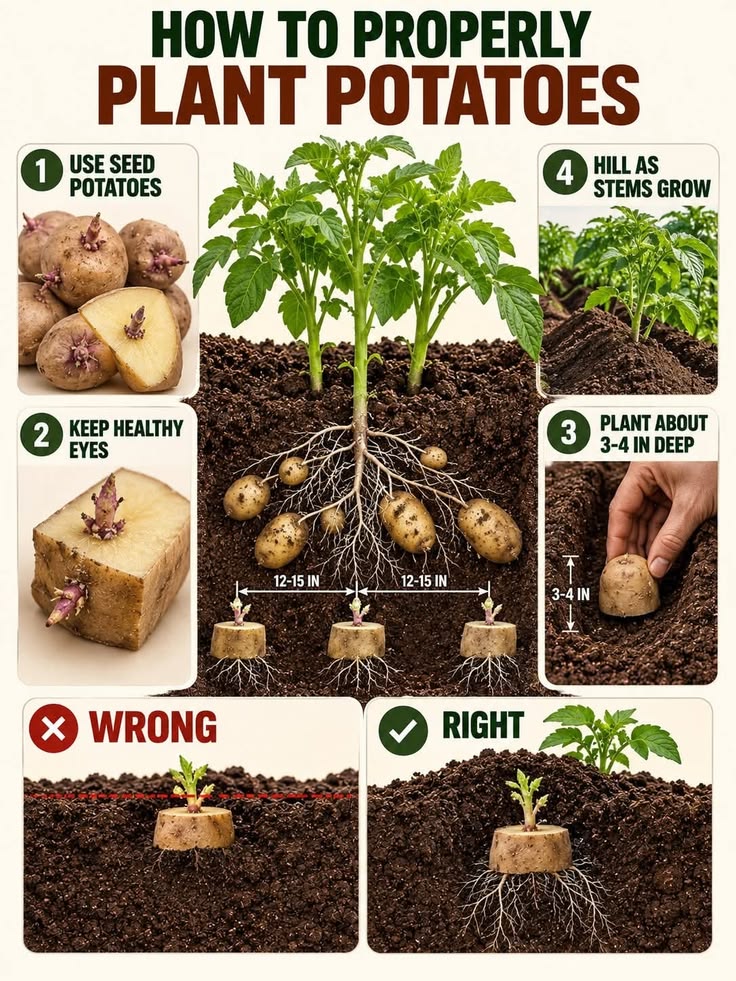
Potatoes are normally grown from seed potatoes, which are small tubers or cut pieces of tubers. They are not the same as true botanical seeds. Each seed piece needs at least one healthy eye, the small bud from which a new shoot can grow.
Source: whattogrow.co.uk
Step 1: Buy seed potatoes
Choose certified seed potatoes from a reputable garden supplier. They are grown for planting and help lower the risk of bringing disease into your garden.
Step 2: Prepare the soil
Pick a sunny spot with loose, fertile, well-drained soil. Remove weeds and large stones, and add mature compost if the soil needs organic matter.
Step 3: Cut large seed potatoes
If a tuber is too large to plant whole, cut it into pieces with at least one healthy eye each. Let freshly cut pieces dry in a cool, well-ventilated place for a day or two, following local extension advice.
Step 4: Plant the pieces
Place the seed pieces in furrows about 3 to 5 inches deep, with the eyes facing up when practical. Follow the variety or local extension instructions if they recommend a different depth.
Step 5: Space the plants
A common home-garden starting point is 8 to 12 inches between seed pieces and 30 to 36 inches between rows. Wider spacing can give plants more room and may support larger tubers.
Step 6: Cover and water
Cover the seed pieces with soil and water enough to settle the bed without leaving it waterlogged. Keep the soil evenly moist as shoots emerge and tubers develop.
Should You Plant Sprouted Potatoes?
Short, sturdy sprouts can be normal on seed potatoes and do not automatically mean the tubers are unusable. Handle them gently because broken sprouts may delay emergence. Firm seed potatoes with healthy eyes are usually a better starting point than shriveled or rotting ones.
Avoid planting tubers that are soft, badly damaged, or showing signs of decay. Ordinary grocery store potatoes are not the best choice because some have been treated to slow sprouting, and they may carry diseases.
Use firm tubers
Choose seed potatoes without soft, wet, or rotten patches.
Protect the sprouts
Set sprouted pieces into the soil carefully to avoid snapping the new growth.
Keep seed stock separate
Do not use diseased potatoes for planting, and clean tools after cutting questionable tubers.
How Much Sun and Water Do Potatoes Need?
Choose a spot that gets at least six hours of direct sun each day, with more sun generally helpful where summer heat is not excessive. Leaves use sunlight to make the energy that supports tuber growth.
Water when rain does not keep the soil evenly moist. Potatoes need steady moisture while tubers form, but waterlogged soil can cause rot. Raised beds may drain well, though they can dry out faster than in-ground beds.
Watch soil moisture
Water when the root zone begins to dry, rather than following a rigid schedule that ignores rain and soil type.
Avoid wet feet
Improve drainage or use a raised bed if water tends to stand around the seed pieces.
Protect developing tubers
Add soil around the base of the plants as they grow so potatoes remain covered and do not turn green in sunlight.
Common Potato Planting Mistakes to Avoid
Most planting problems begin with poor timing, unsuitable soil, or unhealthy seed pieces. A few simple checks can prevent many of these issues before they affect your crop.
Do not assume that an early planting date always leads to an earlier harvest. Seed pieces that sit in cold, wet soil may decay, while plants that grow into prolonged heat may form fewer or smaller tubers. Aim for conditions that support steady growth rather than the earliest date on the calendar.
Source: tinygardenhabit.com
Planting in cold, wet soil
Wait until the soil drains and reaches a suitable temperature. Cold, saturated ground can slow sprouting and raise the risk of decay.
Planting too late in a hot region
Late spring planting may leave too little cool weather for tuber growth. Choose a suitable early planting window or a locally recommended alternative season.
Using grocery store potatoes
They may sprout poorly or introduce disease. Certified seed potatoes are a more dependable option for a home garden.
Planting too close together
Crowded plants compete for light, water, and nutrients. Follow spacing guidance for your variety and growing method.
Letting tubers see the sun
Exposed potatoes can turn green. Hill soil around the stems or use a suitable mulch to keep tubers covered.
Growing potatoes in the same spot each year
Rotate crops where possible to help reduce the buildup of pests and diseases in the soil. Avoid following potatoes with tomatoes, peppers, or eggplants when planning a rotation.
What If You Planted Too Early?
If the seed pieces are still underground and the soil is only a little cooler than expected, check drainage and the upcoming weather before taking action. Do not dig them up without a clear reason, because unnecessary handling can damage the pieces and emerging shoots.
If young shoots emerge before a frost, cover them with a suitable row cover or gently mound loose soil over the exposed growth when conditions call for it. Plants may recover from light frost damage, but severe freezing can cause greater harm. Watch for new growth and avoid adding excess water to cold soil.
Check for healthy new shoots
Green growth after a cold spell is a useful sign of recovery. Remove only dead or damaged material when you can clearly identify it.
Improve drainage
If the soil remains saturated, address the drainage problem before adding more water.
What If You Planted Too Late?
Late planting may still work if your area has enough cool weather left. Check the maturity time of the variety and estimate how much time remains before sustained heat or frost becomes a problem.
Choose an early-maturing variety if local conditions permit another crop. If hot weather is already established, starting potatoes may give a poor result, so it can be wiser to wait for a locally suitable fall planting window.
Check the remaining growing window
Compare the variety’s expected maturity time with the likely end of favorable weather.
Ask for local advice
Your county extension office can help determine whether a late crop is realistic for your area.
How to Know When Your Potatoes Are Ready to Harvest
The planting date gives you an estimate, but the plant itself provides useful clues about harvest time. Early potatoes can be harvested as new potatoes while the plants are still green, whereas potatoes intended for longer storage need more time to mature.
For a main crop, watch for the foliage to yellow and die back naturally. Once the tops have died, many gardeners leave the potatoes in the ground for a short period in suitable soil conditions so the skins can firm up. Do not leave them in waterlogged ground or risk losing them to frost just to extend that period.
Source: spice.alibaba.com
New potatoes
These are small, tender tubers that can be harvested before the plant fully dies back. Dig gently and take only what you need.
Mature potatoes
For storage, wait until the foliage has died and the skins are firmer. The expected maturity period can help you plan when to start checking.
Dig with care
Use a garden fork or hand tool to loosen the soil away from the plant. Work carefully to avoid piercing or bruising the tubers.
How to Store Your Harvest
After harvesting mature potatoes, brush off loose soil without washing them for storage. Keep damaged or cut tubers separate and use them first if they are still sound.
Cure mature potatoes in a dark, well-ventilated place under suitable cool conditions before long-term storage. The exact curing period depends on the potato type and storage guidance. After curing, store them in darkness with good airflow and avoid warm, damp conditions.
Keep them dark
Light can cause green patches to form, so do not store potatoes in a sunny spot.
Sort damaged tubers
Use cut or bruised potatoes first rather than mixing them with sound potatoes for long storage.
Check them from time to time
Remove potatoes that rot or become badly damaged so problems do not spread to nearby tubers.
Frequently Asked Questions
Q
What month should I plant potatoes in the United States?
March and April are common planting months in many parts of the United States, but the right month depends on local weather. Some Southern areas plant in January or February, while colder northern areas may wait until April or May. Check your local frost date, soil temperature, and drainage before planting.
Q
Can I plant potatoes in summer?
Summer planting is possible in some places, but it is often difficult where the soil and air become very hot. High soil temperatures can reduce tuber development, and young plants may struggle with heat and dry soil. In suitable mild climates, a later crop may work if enough favorable growing time remains.
Q
How long after planting do potatoes grow?
Potato shoots may take a few weeks to appear, depending on soil temperature, moisture, seed condition, and variety. Harvest time varies too. Some early varieties can produce new potatoes in roughly 60 to 80 days, while many main-crop types need around 90 to 120 days or longer. Check the information supplied with your variety.
Q
Can I plant potatoes after the last frost date?
Yes. Planting after the last frost is often a sensible option, especially in colder regions. The key is to leave enough cool growing time before summer heat or the end of the growing season. In warm areas, waiting until after the last frost may mean losing part of the best planting window.
Q
What is the lowest soil temperature for planting potatoes?
Some gardeners plant when soil reaches about 45 degrees F, but many growing guides recommend waiting until it is around 50 degrees F. Cold, wet soil can delay growth and increase the chance of seed-piece decay. Use the higher end of this range when conditions are damp or the forecast is unsettled.
Q
Can I grow potatoes in containers?
Yes. Use a container with drainage holes, enough depth for root and tuber growth, and a suitable potting mix. Containers can warm and dry out faster than garden beds, so monitor moisture closely. Planting dates still depend on local temperatures, and the container should not be left in extreme heat.
Q
Do potatoes need full sun?
Potatoes grow best in a sunny location, with about six or more hours of direct sunlight a useful target. Less light can lead to weaker growth and may reduce the crop. In very hot areas, afternoon shade may reduce heat stress, but it does not replace the need for good light and suitable soil temperatures.
✦ Wrapping Up
Conclusion
The best time to plant a potato is usually early spring, once the soil is workable and has warmed to about 45 to 50 degrees F. The exact date changes across the United States, so use your local frost calendar and soil conditions instead of relying on a single month.
Choose healthy seed potatoes, give them loose and well-drained soil, and plant early enough for the tubers to grow before prolonged summer heat. If you hope to grow a fall crop, check local guidance first because planting windows vary by region.
💡 Key Takeaway
Before planting, check three things: your local last frost date, the soil temperature at planting depth, and the expected maturity time of your potato variety. When the soil is workable, near 45 to 50 degrees F, and drains well, you are much closer to the right planting time.