
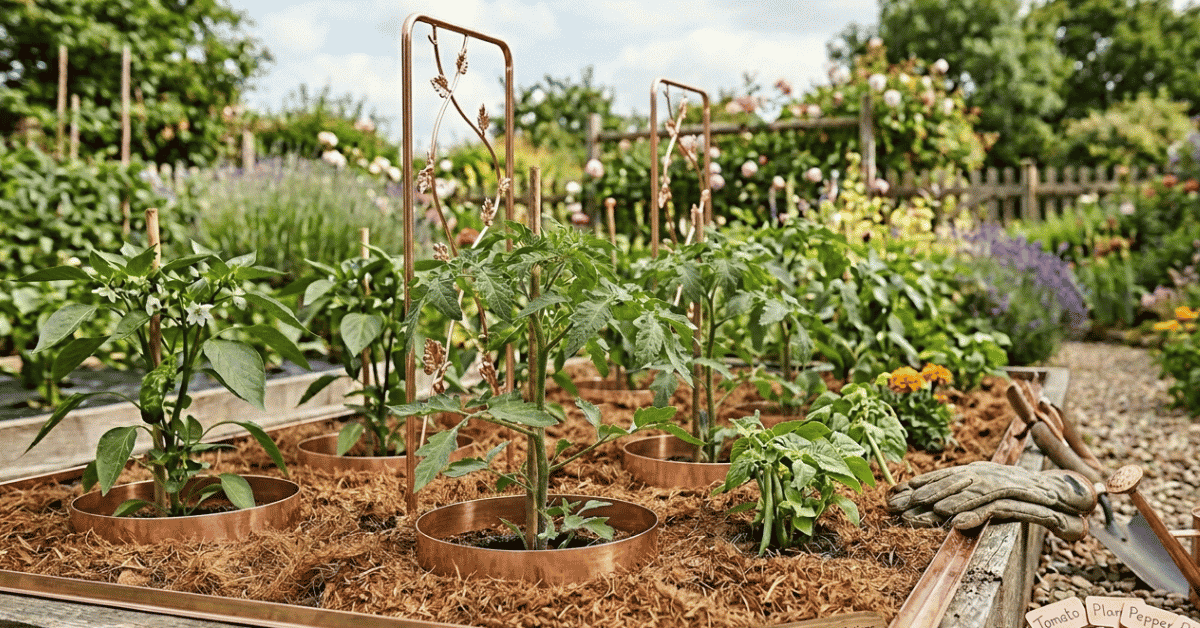
Copper for gardening can help protect plants, deter pests, and support healthy growth. Learn smart ways to use it in your garden.
I first became curious about copper for gardening after battling slugs in a rainy season. My lettuce looked like a buffet. I tried several fixes. Some worked for a few days. Then I tested copper tape around my raised beds. The results surprised me. Since then, I have used copper in different ways and learned both its strengths and limits.
Is Copper for Gardening Worth It?
Yes. In many cases, copper for gardening can be a useful garden tool.
I do not see it as a miracle fix. Still, it has helped me solve a few common garden problems.
Some benefits include:
- Slug deterrence
- Plant disease management
- Long-lasting durability
- Attractive garden design
- Low maintenance
The key is knowing how and when to use it.
What Is Copper for Gardening?
Many gardeners think only of copper pipes.
In gardening, copper can serve several purposes.
Common Forms of Copper
Gardeners often use:
- Copper tape
- Copper mesh
- Copper fungicides
- Copper edging
- Copper plant labels
Each type serves a different purpose.
I use copper tape most often because it is easy to install.
Why Copper Is Popular
Copper lasts a long time outdoors.
It also develops a natural aged look over time.
Many gardeners enjoy:
- Durability
- Functionality
- Appearance
A single purchase can often last for years.
Benefits of Copper for Gardening
Copper offers several practical advantages.
Helps Deter Slugs and Snails
This was my first reason for trying it.
When slugs touch copper, many avoid crossing it.
I wrapped copper tape around raised beds and containers.
The result:
- Less slug damage
- Cleaner leaves
- Better harvests
While it was not perfect, it reduced problems noticeably.
Supports Disease Control
Copper-based products are often used to help manage certain plant diseases.
These products may help with:
- Fungal issues
- Leaf spots
- Blights
I have used copper sprays on tomatoes during damp seasons.
Following label directions is always important.
Long Lifespan
Unlike some garden materials, copper lasts a long time.
Benefits include:
- Weather resistance
- Minimal upkeep
- Strong durability
My oldest copper tape installation is still working years later.
Adds Visual Appeal
Copper develops a rich color as it ages.
Many gardeners enjoy its appearance.
It can enhance:
- Raised beds
- Garden borders
- Decorative features
Function and beauty often go hand in hand.
Types of Copper for Gardening
Different forms serve different needs.
Copper Tape
This is one of the most popular options.
Pros:
- Easy to install
- Effective slug barrier
- Affordable
Cons:
- May need replacement after years of use
I recommend it for beginners.
Copper Mesh
Copper mesh creates a physical barrier.
Pros:
- Durable
- Flexible
- Multi-purpose
Cons:
- Higher cost
It works well around vulnerable plants.
Copper Fungicide
This product helps manage some plant diseases.
Pros:
- Widely available
- Useful for disease prevention
Cons:
- Must be used carefully
Always follow product instructions.
Copper Garden Edging
Some gardeners use copper for decorative borders.
Pros:
- Attractive appearance
- Long lifespan
Cons:
- More expensive
It creates a polished garden look.
How to Use Copper for Gardening
Good results depend on proper use.
Install Copper Tape Correctly
Clean surfaces first.
Then:
- Measure the area.
- Apply tape smoothly.
- Avoid gaps.
- Check regularly.
Slugs may find ways around poorly installed barriers.
Use Copper Fungicides Carefully
I always read instructions fully.
Important tips include:
- Follow label directions
- Avoid overuse
- Apply at proper times
Responsible use helps protect plants and soil.
Protect Raised Beds
Copper barriers work well around raised beds.
I have used them on:
- Lettuce beds
- Herb gardens
- Strawberry containers
The protection can be quite helpful.
Combine With Other Methods
Copper works best as part of a larger strategy.
I also use:
- Good sanitation
- Healthy soil
- Proper spacing
Multiple approaches often work better than one.
Copper for Gardening vs Other Garden Solutions
Different tools solve different problems.
Here is a simple comparison.
| Feature | Copper Tape | Slug Pellets | Physical Barriers |
|---|---|---|---|
| Reusable | Yes | No | Yes |
| Maintenance | Low | Medium | Medium |
| Appearance | Attractive | Basic | Basic |
| Cost Over Time | Low | Higher | Medium |
| Easy Setup | High | High | Medium |
| Longevity | Excellent | Low | Good |
I often prefer copper because of its long lifespan.
Best Uses for Copper in the Garden
Some situations benefit more than others.
Vegetable Gardens
Vegetables often attract pests.
Copper can help protect:
- Lettuce
- Cabbage
- Spinach
- Strawberries
These crops often suffer from slug damage.
Raised Beds
Raised beds are ideal for copper tape.
The tape is easy to apply along the edges.
Maintenance stays simple.
Container Gardens
Containers are another great match.
A narrow strip of copper tape often provides useful protection.
Disease-Prone Areas
Damp gardens sometimes face fungal problems.
Copper-based treatments may help manage certain issues when used correctly.
Common Mistakes to Avoid
I made a few mistakes when I first started.
Learning from them saved time later.
Expecting Instant Perfection
Copper helps, but it is not magic.
Some pests may still appear.
Use realistic expectations.
Installing Tape on Dirty Surfaces
Dirty surfaces reduce adhesion.
Clean and dry surfaces first.
The tape will last longer.
Overusing Copper Sprays
More is not always better.
Excessive use can create problems.
Follow directions carefully.
Ignoring Garden Maintenance
Copper works best in a healthy garden.
Continue to:
- Remove debris
- Control weeds
- Monitor pests
Good habits remain important.
Practical Tips From My Garden
Years of use taught me a few useful lessons.
Check Copper Barriers Often
Weather can loosen tape over time.
A quick inspection helps maintain effectiveness.
Pair Copper With Hand-Picking
For severe slug issues, I combine methods.
This approach improves results.
Focus on High-Risk Areas
I do not place copper everywhere.
Instead, I protect the plants most likely to suffer damage.
Keep Records
I note:
- Pest levels
- Weather patterns
- Plant health
Simple notes help me improve each season.
When Copper for Gardening May Not Be the Best Choice
Copper has limits.
I do not use it for every problem.
It may not be ideal when:
- Pest pressure is extremely high
- Soil issues are the main concern
- Alternative solutions work better
Every garden is unique.
The best results come from matching the tool to the problem.
FAQs
What is copper for gardening used for?
Copper for gardening is often used for slug barriers, disease management, and decorative garden features. It can provide long-term value. Learn more about garden protection.
Does copper for gardening stop slugs completely?
Copper for gardening may help deter many slugs, but it does not guarantee complete control. Combining methods often works best. Learn more about slug management.
Can copper for gardening help with plant diseases?
Some copper-based products may help manage certain fungal and bacterial plant diseases when used correctly. Learn more about disease prevention.
How long does copper tape last in a garden?
Copper tape can last for years when installed properly and maintained well. Weather conditions may affect its lifespan. Learn more about garden maintenance.
Is copper for gardening safe for vegetable gardens?
Copper for gardening is commonly used around vegetables. Always follow product directions when using copper-based treatments. Learn more about safe garden practices.