
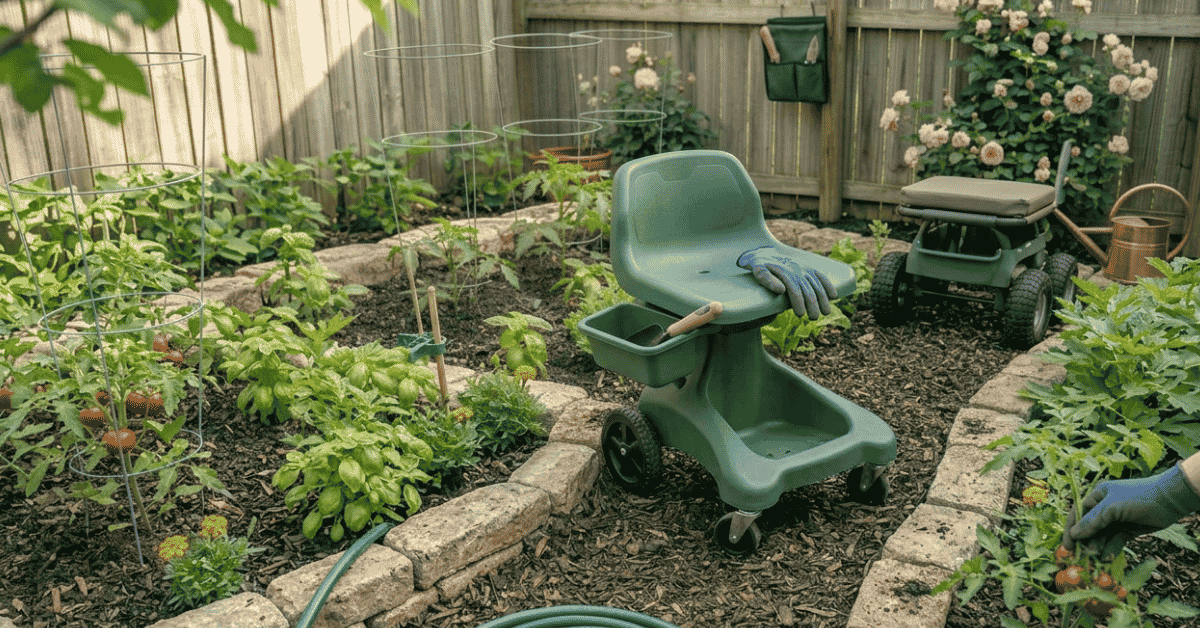
My back acts up just thinking about kneeling for too long. That’s why I adore my gardening cart with a seat. It lets me tend my beloved flower beds without the usual aches.
It’s like having a little mobile command center for my garden. You can find one that fits your needs, too.
Why a Gardening Cart With Seat is a Smart Tool
I used to dread big planting days. My knees would throb, and my lower back would scream. Then, a friend told me about gardening carts with seats.
I was skeptical at first. Could a little cart really make a difference? Oh, it absolutely does.
It transformed how I approach my garden chores. No more painful kneeling or standing for hours. It’s my favorite garden companion now.
Making Garden Tasks Easier
This cart is a game-changer. It brings my tools right to me. I can move from one spot to the next with ease.
No more walking back and forth for a different tool. It’s all there, within reach. This saves so much time and energy.
My garden work feels less like a chore and more like a relaxing hobby. Your garden will thank you, and your body will too.
I remember one particularly hot summer day. I needed to weed a large section of my vegetable garden. Usually, that’s a task I’d put off.
But with my cart, I just hopped on, grabbed my trowel, and got to work. I could easily swivel around to reach different plants. I finished the whole area in record time.
I felt great afterward, not exhausted.
Comfort During Long Projects
Longer gardening projects become much more manageable. Planting a whole border of new flowers? No problem.
Pruning multiple shrubs? That’s fine too. The seat is surprisingly comfortable.
It’s padded, and the height is just right for most tasks. I can sit and work for extended periods. My old way involved constant breaks.
Now, I can get more done. That’s a big win for me.
Think about planting bulbs. You might have hundreds to put in. That’s a lot of bending.
With a gardening cart with a seat, you can sit down. You just roll to the next spot, plop the bulb in, cover it with dirt, and roll on. It’s way less tiring.
This little innovation truly makes a difference for anyone who loves spending time outdoors.
Carrying Tools and Supplies
Beyond the seat, these carts are fantastic for hauling things. They have storage compartments or baskets. I keep my trowel, hand fork, gloves, and even a small watering can in mine.
Sometimes, I’ll put a bag of soil or compost on it too. It’s like a little workhorse. It means fewer trips to the shed or the garage.
This is especially helpful if your garden is spread out.
I recently needed to transplant some small perennials. I loaded my cart with the new plants, a bag of potting soil, and my trowel. I rolled it right over to the spot where they were going.
I could scoop soil, place the plant, firm it in, and water it, all without getting up. It made the whole process smooth and efficient. It frees you up to focus on the gardening, not the logistics.
Check out these 9 surprising gardening tool benefits for more ideas on useful gear.
Improving Accessibility for All
Gardening carts with seats are not just for older folks or those with physical issues. They are for anyone who wants to garden more comfortably. However, they are especially valuable for people with knee pain, back problems, or limited mobility.
They open up the joy of gardening to those who might otherwise find it too difficult. It’s about making gardening accessible. This is a cause I truly believe in.
My neighbor, who has a bad hip, used to watch me garden wistfully. Now, she has one too. She says it’s given her back her passion.
She spends hours in her small patio garden. She can prune her roses and repot her herbs without any trouble. It’s more than just a garden tool; it’s a tool for well-being.
It lets people stay connected to nature.
Types of Gardening Carts With Seats
Not all gardening carts with seats are created equal. They come in various designs. Some are simple pull-along models.
Others are more like wheelbarrows with seats. The storage options also vary. I’ve seen carts with deep baskets, shallow trays, and even specialized holders for tools.
Knowing the different types can help you pick the best one for your garden.
Simple Garden Scooters
These are often the most basic. They typically have four wheels and a comfortable seat. Storage might be a small tray underneath or a simple basket.
They are lightweight and easy to maneuver. I find these great for smaller gardens or tasks that don’t require carrying a lot of supplies. They are usually the most affordable option too.
My first garden seat was a simple scooter. It was blue and had a little compartment for my hand tools. I loved it for weeding my flower beds around the house.
I could just push it along with my feet. It was a significant upgrade from crouching on the ground.
Garden Carts with Larger Storage
Many gardening carts offer more substantial storage. These might have larger bins or multiple compartments. Some even come with attachment points for larger items.
These are ideal if you need to carry bags of soil, multiple plants, or more extensive tool sets. They are often a bit bulkier but offer more functionality. You might even find ones that can convert to a upright cart.
When I moved to a bigger house with a larger yard, I upgraded. My new cart had a big, sturdy bin in the front. It was perfect for carrying that big bag of mulch I needed for my new tree.
I could also fit a decent amount of plants in there. This was a real time-saver.
Heavy-Duty Garden Wagons
Some of the most robust options are garden wagons. These usually have larger, air-filled tires. This makes them excellent for navigating rougher terrain or soft soil.
They often have a higher weight capacity. These are best for larger properties or if you’re moving heavy items like large bags of soil, rocks, or even bags of compost. They often have a tow-handle and a sturdy frame.
My uncle uses a heavy-duty garden wagon. His property is quite large and has some uneven areas. He hauls big bags of leaves and garden debris with it in the fall.
The big tires really make a difference on his lawn. He also attaches it to his small riding mower sometimes to move tougher things.
Here’s a quick look at some common features:
| Feature | Simple Scooter | Larger Storage Cart | Heavy-Duty Wagon |
|---|---|---|---|
| Seat Comfort | Basic Padding | Good Padding | Often Padded |
| Storage Space | Small Tray | Medium to Large Bin | Large Bed |
| Maneuverability | High | Moderate | Moderate |
| Terrain Handling | Smooth Paths | Mostly Smooth | Varied Terrain |
| Weight Capacity | Low | Medium | High |
| Price Range | Low | Medium | Medium to High |
Feature Checklist: What to Look For
When you’re shopping, keep a few things in mind. It’s important to find a cart that suits your specific garden and needs. I always tell people to think about what they’ll be doing most often.
- Seat Height and Comfort: Make sure the seat is at a comfortable height for you. Some are adjustable. Check the padding.
- Wheel Type and Size: Big wheels are better for bumpy ground. Smaller wheels work fine on smooth patios.
- Storage Capacity: How much stuff do you need to carry? Look for enough space.
- Durability and Material: Will it hold up to the elements? Steel frames are strong.
- Weight Capacity: Make sure it can handle the weight of soil bags or heavy pots.
- Ease of Steering: Can you easily push or pull it where you want it to go?
Getting the Most Out of Your Gardening Cart
Once you have your gardening cart with a seat, you’ll wonder how you ever gardened without one. I’ve learned a few tricks to maximize its usefulness. It’s all about using it smart.
Treating it well ensures it lasts for years.
Maintenance Tips
Just like any tool, your cart needs a little care. After using it, it’s good to wipe down the seat and any storage areas. If it’s a metal frame, a quick spray of rust inhibitor now and then can help.
Keep the wheels clean from mud and debris. If it has air-filled tires, check the pressure periodically. This simple care makes a big difference in longevity.
I try to store mine in the shed or under a covered porch. This protects it from rain and harsh sun. It keeps the seat from getting faded and the metal from rusting.
It’s a small step that keeps it looking and working its best.
Organizing Your Cart
A little organization goes a long way. Think about what tools you use most often. Keep them in an easily accessible spot.
Smaller items can go in a designated tray or a small container. This prevents things from getting lost. It also means you won’t have to dig around to find what you need.
A tidy cart means a more efficient gardening session.
I keep my trowel, hand cultivator, and small pruners in the main compartment. I have a separate small waterproof bag for my phone or gardening gloves. Sometimes, I loop my hose onto the handle for quick watering.
It’s about having a system that works for you. Consider how you use your tools to set up your cart’s layout. Want to know more about useful gardening equipment?
Check out these black gardening tools for yard work magic.
Using It for Different Tasks
Don’t limit your cart to just weeding or planting. It can be useful for so many garden tasks. Need to spread mulch?
Load it up. Hauling small bags of fertilizer? Easy.
Collecting fallen branches or leaves? Your cart is ready. You can even use it for watering by carrying a full watering can.
It’s a versatile helper.
I’ve used mine to carry supplies when I was building a small raised bed. It’s handy for moving pots from one place to another. It even comes in handy when I’m bringing in my harvest.
It reduces the number of trips you need to make, no matter what the task. It truly simplifies garden work.
Frequently Asked Questions
How do I clean a garden cart with a seat?
Wipe surfaces with mild soap and water. Dry thoroughly. Check manufacturer’s instructions.
Learn more about maintaining your tools.
Can these carts handle weight?
Most have a weight limit, often 100-300 lbs. Check the product details. Make sure it suits your needs.
Learn more about gardening tool benefits.
Are garden carts with seats good for hilly terrain?
Larger, wider wheels help on slopes. Some carts offer better stability. Test it before committing to heavy loads.
Learn more about garden innovations.
What is the average cost of a gardening cart with a seat?
Prices range from $50 to $200+. Cost depends on features, size, and brand. Quality often reflects price.
Learn more about smart gardening hacks.
Can I leave my garden cart outside?
It’s best to store it protected from weather. This preserves its material and function. A shed or cover is ideal.
Learn more about durable gardening plastics.