
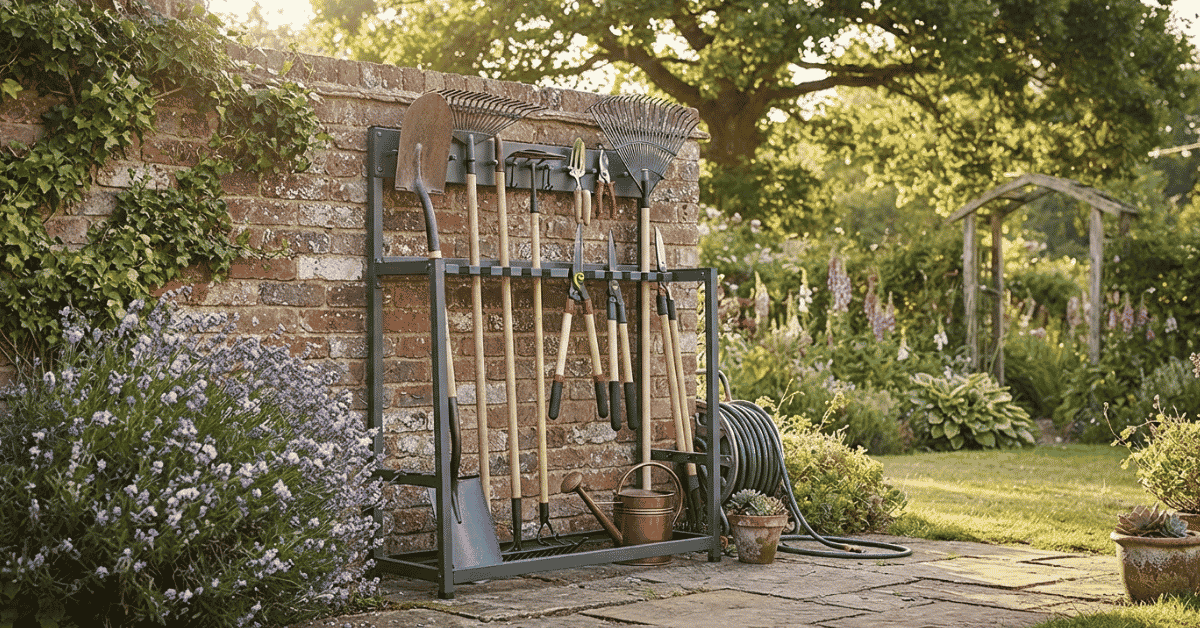
Garden Tool Storage Rack can tame shed mess, save space, and keep tools close. Learn smart rack tips, key types, safe setup, and easy ways to keep tools neat.
A Garden Tool Storage Rack can change a messy shed fast. I learned this after one long day in spring. My rake lay flat near the shed door. A hoe leaned on an old plant pot. Then my hand trowel went missing again.
That small mess got on my nerves. I guess I had grown used to it. A good rack can fix much of that mess. It can save floor room and make each tool easy to spot. Let’s look at the best ways to use one.
Can a Garden Tool Storage Rack Help?
I once kept all my yard tools in one bin. It seemed like a good plan at first. The bin held most tools with no fuss. Yet each task soon led to a small hunt.
I had to pull out a rake for one job. Then a hoe came out with it. Dirt fell from both tool heads. The bin got grit in each nook and seam.
One day, I heard a loud metal clank. My spade had slid onto the floor. I had left it near the bin edge. That sound made me stop and think.
A rack felt like a small fix then. I did not need more floor space. I just needed each tool to have one spot.
The first rack I used felt odd at first. The wall looked too bare with tools on it. Yet the more I used it, the more I liked it.
Life Before I Found This
My shed once felt like a box full of gear. Tools sat on the floor in loose rows. Pots took up one side near the door. A hose lay in a soft heap by my boots.
The air had that wet soil smell. Dust hung on old tool grips. Dry grit sat near the shed wall. Each step made a faint crunch underfoot.
I often moved three tools for one task. That small act did not seem like much. Yet it made yard work feel slow.
I also had a fear of sharp tools. A rake tine can hurt a bare foot. A spade edge can catch skin with ease.
A rack gave each tool one clear home. That made the whole shed feel less wild.
Why This Matters Right Now
Many yards now make good use of small spaces. A shed may hold far more than tools. Pots, soil, gloves, hose gear, and bins all need room.
Floor space can vanish fast in a small shed. A wall rack puts unused wall space to work. That can free room near the floor.
Good tool storage can also cut trip risks. Loose tools can sit in paths or near doors. A rack keeps them off the ground.
There is also a time gain that feels quite nice. I can spot the right tool in one glance. I no longer dig through a pile for one rake.
That may sound like a small gain. Yet small gains can add up each week.
The First Big Lesson
The best rack is not always the biggest rack. It is the rack that fits your tools.
Long tools need more space than hand tools. A rake may need a wide slot or hook. A hoe needs room for its broad head. A hand fork needs much less space.
I now sort my tools before I buy racks. Long tools form one group. Small hand tools form a second group. Heavy tools get strong hooks or slots.
Wall type also plays a key part here. Wood studs can give firm support. Drywall needs the right anchor for each load. Brick walls need the right bit and screw.
I also check the rack’s load limit first. A rack with ten hooks is not ten heavy tools. Hook count does not tell the full story.
One weak hook can spoil a good setup. I like to test each mount by hand. The rack should feel firm, not loose or bent.
Small Tactics That Actually Work
I use a few simple rules with my rack. These rules help more than fancy gear.
First, I keep my most used tools near the door. That cuts steps each time I work. My rake, hoe, and spade stay close.
Next, I group tools by size and use. Long tools stay in one row. Hand tools sit in a small side rack.
I leave a bit of space between each tool. Tight rows make tools hard to grab. A small gap lets my hand fit with ease.
I also wipe tools before I hang them. Wet soil can cling to tool heads. That damp grit may lead to rust on some metal parts.
Each tool gets one set spot. That rule makes clean-up quite fast. I know the spot for each tool.
I also keep two spare spots free. New tools tend to join my set each year. Spare room keeps the rack from feeling packed.
A Strange Detail I Noticed
I found one odd gain after using a rack. My tools seemed to stay much less grimy.
At first, I thought this was just luck. Then I saw the same thing week after week. Tools on the wall had less dust near their heads.
Floor tools picked up grit with each move. Some tool heads also sat near damp soil. That made clean-up a bit more hard.
The wall rack kept tool heads off the floor. Air could move round them with less fuss. That helped wet tools dry more fast.
I also found lost tools more often. A small hand saw had sat behind pots. The rack made such hiding spots less common.
My wall had become a tool map. Each tool had a clear shape and place.
Style Comparison & Data
Different rack types suit different tool sets. Some racks use hooks, slots, rails, or pegs. The right type depends on tool size and weight.
| Rack Type | Best Use | Main Plus |
|---|---|---|
| Hook Rack | Rakes and hoes | Easy grab |
| Slot Rack | Long tools | Neat rows |
| Rail Rack | Mixed tools | Easy shift |
| Peg Rack | Small tools | Low cost |
I tend to like rail racks for mixed sets. I can move hooks as my tool set grows.
Slot racks can look very neat as well. They work best for long tools with slim shafts.
Non-Obvious Gains
A good Garden Tool Storage Rack does more than save room.
- It can help tools dry after wet yard work.
- It can keep sharp heads off shed floors.
- It can make lost tools less common.
- It can make shed clean-up feel much less hard.
- It can free floor space for pots and bins.
- It can help spot worn grips at a glance.
- It can make tool care feel more like habit.
- It can help keep paths clear near doors.
One gain stands out to me most. A clear wall makes tool flaws easy to spot.
A cracked grip may hide in a dark bin. A bent tine can hide beneath other tools. A wall rack puts each tool in plain sight.
That can help you fix small faults sooner.
Myths vs. My Reality
I used to think a rack had to look sleek. I cared more about looks than fit. But then my first rack got full quite fast.
I learned that fit beats style in real use. A plain rack can work very well. A sleek rack can fail with poor hook space.
I also used to think more hooks meant more value. But then I saw spare hooks sit unused. Too many spots can make a wall feel busy.
I used to think one rack could hold all tools. But then my tool set grew. Now I split tools by size and task.
I also thought tool racks needed deep shelves. But then loose tools began to slide. Hooks and slots felt safer for long tools.
Maybe the best rack is quite simple. It should suit the way you work each day.
Essential Principles for Mastery
A good rack plan starts with your tool set. Lay each tool out before you shop. Group tools by size, weight, and use.
Next, check the wall space with care. Look for studs, pipes, wires, and doors. Keep the rack clear of door swing paths.
Then check the rack load limit. Heavy tools need firm hooks and screws. Do not trust weak anchors for heavy loads.
Keep sharp tool heads away from walk paths. Avoid spots that may catch arms or feet. Place grips at a safe, easy reach.
Think about tool shape too. A rake needs more room than shears. A spade may need a wide hook. A hand trowel can fit on a small peg.
Leave some room for new tools. I like keeping two or three spots free. That gives me space for new yard gear.
Check the rack once each month. Test screws, hooks, and wall mounts. Wipe dust from the rack and tools.
Most of all, use the rack each day. Put each tool back after each task. That small habit keeps the whole system in shape.
FAQs about Garden Tool Storage Rack
Is a Garden Tool Storage Rack worth it?
Yes, a rack can save floor space and time. It can also keep tools off damp floors. The best rack is one that fits your tool size and wall type.
Can a garden tool rack hold heavy tools?
Yes, if the rack and wall mount suit the load. Heavy tools need strong hooks, screws, and anchors. Always check the maker’s load rating before you hang them.
Can I mount a rack on drywall?
Yes, but the right anchor matters a lot. Studs offer strong support for heavy loads. Drywall alone may need rated anchors for the rack and tool weight.
Should long garden tools hang upright?
Yes, upright storage can work very well. It keeps long shafts off the floor. Make sure tool heads stay secure and do not face a walk path.
How many tools can one rack hold?
The safe count depends on rack size and load. Hook count alone does not set the safe load. Heavy tools need more space than light hand tools.
My Final Takeaway
A Garden Tool Storage Rack can make shed life much easier. It does not need to be grand or costly. It just needs to fit your tools and work style.
I like the calm feel of a clean tool wall. Each rake has its spot. Each spade has a home. No tool pile waits by my feet.
Start with the tools you use most. Pick a rack with room to grow. Then make one rule: each tool goes back home. That small habit can change the whole shed.