
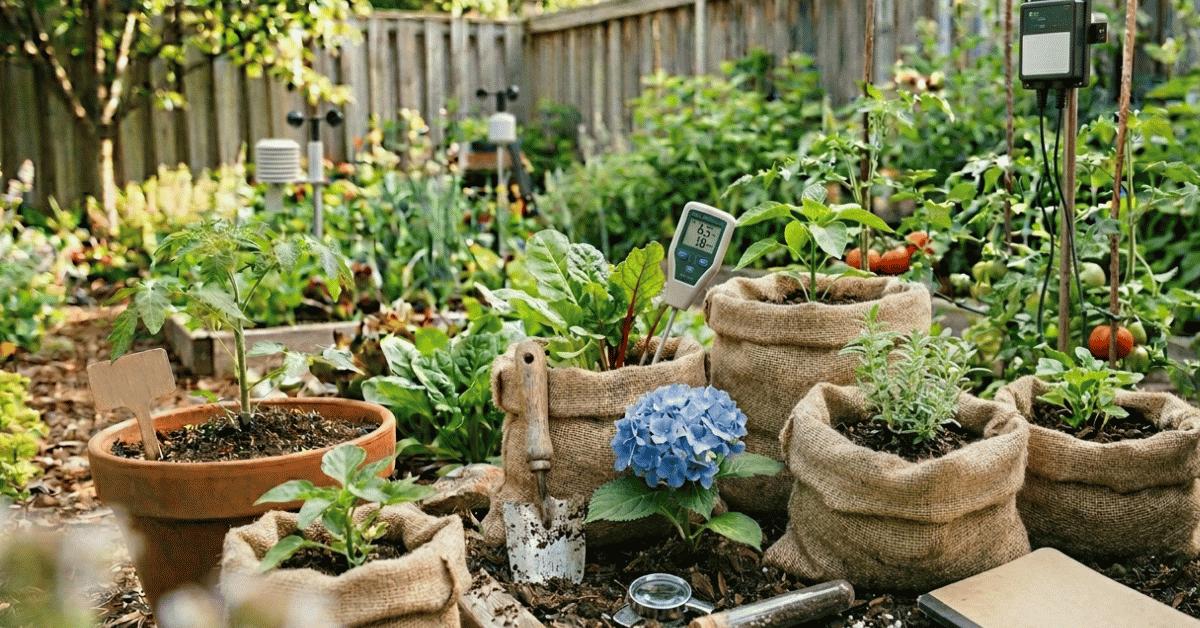
Gardening’s Data-Driven Edge
My garden, once a chaotic jumble of hopes and wilting leaves, is now a thriving, almost predictable, slice of green. This transformation didn’t happen by chance. It came from embracing something I call “scientific gardening.” This approach uses facts and careful testing to grow better plants.
I’ll show you how to make your garden produce more with less guesswork.
What Exactly is Scientific Gardening?
Scientific gardening is all about treating your garden like a living lab. Instead of just guessing what your plants need, you measure, test, and observe. It’s like being a detective for your plants.
You look for clues like soil health, light patterns, and water needs. Then, you use that information to make smarter choices. This means your plants get exactly what they thrive on.
My journey into this started when I faced a persistent problem with blight on my tomatoes. I was doing everything I thought was “right,” but nothing worked. Frustrated, I started reading up on soil pH and nutrient deficiencies.
It turned out my soil was too acidic. Adjusting it, with scientific precision, saved my tomato crop that year. It was a game-changer.
The Foundation: Understanding Your Soil
Soil is everything for a gardener. It’s more than just dirt. It’s a complex mix of minerals, air, water, and living things.
Scientific gardening starts with truly understanding this foundation.
Soil Testing: Your First Step
You wouldn’t build a house without checking the ground, right? Your garden soil needs the same attention. I always grab a soil test kit before I plant anything new in a big area.
You can get these from garden centers or send a sample to a lab. They tell you about:
- pH: This shows if your soil is acidic, neutral, or alkaline. Different plants like different pH levels. For example, blueberries need acidic soil. Many veggies prefer neutral soil.
- Nutrients: This tells you if your soil is lacking key nutrients like nitrogen, phosphorus, or potassium. It also checks for micronutrients.
- Organic Matter: This is vital for soil structure and water retention.
I remember testing a patch where nothing grew well. The pH was way off, and it was packed with clay. The test results gave me a clear action plan.
It wasn’t just a hunch anymore.
Improving Soil Structure
Good soil drains well but also holds moisture. It has air pockets for roots.
- Compost: This is king. Adding compost boosts organic matter. It feeds beneficial microbes and improves both clay and sandy soils. I make my own compost. It’s a slow process, but the results are incredible.
- Aeration: For heavy clay soil, digging in coarse sand can help. It creates better drainage and breaks up compaction. I used coarse sand for my garden soil once in a very dense patch, and the difference was amazing. Roots could finally breathe.
- Coconut Coir: This is another great amendment. It helps retain moisture and aeration. It’s a sustainable option that I’ve found really boosts plant health. You can learn more about coconut coir for healthier plants. It’s a fantastic way to get a sustainable garden boost. I find it’s the smartest switch for improving soil structure.
Light and Water: The Essentials
Plants need light for energy and water to live. Scientific gardening means giving them the right amount of each, precisely.
Mapping Sunlight Patterns
Don’t just guess where the sun hits. Observe your garden throughout the day and year.
- Morning Sun: Gentler, good for young plants.
- Afternoon Sun: Hotter, best for heat-loving plants like tomatoes or peppers.
- Shade: Dappled shade is different from deep shade. Some plants tolerate shade, others wilt.
I used to plant herbs in a spot that got full sun. They looked leggy and stressed. I moved them to a spot with dappled shade, and they exploded with flavor.
It was all about that light observation.
Precision Watering
Overwatering or underwatering kills plants faster than almost anything.
- Feel the Soil: Stick your finger about two inches down. If it’s dry, water. If it’s moist, wait.
- Water Deeply: Encourage deep root growth by watering less often but more thoroughly.
- Morning is Best: Watering in the morning allows leaves to dry before night, reducing disease risk.
- Consider Drip Irrigation: This delivers water directly to the roots, reducing waste and leaf wetness.
I once forgot about watering my newly planted seedlings for a few days. They looked terrible. I watered them deeply and watched them perk up.
It taught me a valuable lesson about consistency and checking soil moisture regularly.
Pest and Disease Management: A Proactive Approach
Instead of spraying chemicals at the first sign of trouble, scientific gardening focuses on prevention and early detection.
Identifying the Culprits
Know your enemy. What pest or disease are you fighting?
- Look for Signs: Yellowing leaves, spots, holes in leaves, wilting stems. Each is a clue.
- Examine Closely: Use a magnifying glass if needed. Are there tiny bugs? Fungal spores?
- Research: Once you identify the problem, research specific solutions.
I once found tiny white spots on my squash leaves. I thought it was spider mites. A quick zoom with my phone camera showed they were actually powdery mildew spores.
This changed my entire approach to treating it.
Organic and Integrated Solutions
There are many ways to manage pests and diseases without harsh chemicals.
- Companion Planting: Some plants deter pests from others. Marigolds, for instance, can deter nematodes.
- Beneficial Insects: Attract ladybugs, lacewings, and predatory wasps that eat garden pests.
- Hand-picking: For larger pests like tomato hornworms, just pick them off.
- Copper Spray: For fungal diseases, a diluted copper spray can be effective. It’s something I’ve used with success, giving my garden an unexpected edge.
My neighbor’s garden was always plagued by aphids. I suggested she plant dill and cilantro nearby, which attract beneficial insects. Within weeks, her aphid problem vanished.
It was a simple, scientific application of nature’s own pest control.
Beyond the Basics: Advanced Scientific Gardening
Once you’ve got the fundamentals down, you can explore more advanced techniques.
Companion Planting Chart
| Plant Group | Benefits | Avoid Planting With |
|---|---|---|
| Tomatoes | Repels some pests, improves growth | Broccoli, Corn, Fennel |
| Carrots | Loosens soil, attracts beneficials | Parsnip, Dill |
| Beans | Fix nitrogen in soil | Onions, Garlic, Leeks |
| Basil | Repels flies and mosquitoes, improves flavor | Rue, Sage |
| Marigolds | Deters nematodes, some insects | Beans, Cabbage |
Crop Rotation for Soil Health
Don’t plant the same thing in the same spot year after year. This depletes specific nutrients and can build up soil-borne diseases.
- Family Groups: Rotate plants from different plant families (e.g., leafy greens, root vegetables, legumes, fruiting plants).
- Four-Year Plan: Ideally, a specific spot shouldn’t see the same plant family for at least four years.
I got tired of my lettuce always getting flimsy and weird towards the end of the season. I started rotating where I planted it. Now, it stays strong and crisp much longer.
It’s a simple change with big rewards.
Seed Starting and Propagation
Understanding germination rates and optimal conditions for starting seeds is a scientific endeavor.
- Temperature: Different seeds need different soil temperatures to sprout.
- Depth: Planting seeds too deep or too shallow can prevent germination.
- Moisture: Consistent moisture is key, but not waterlogged.
I once had a terrible time germinating peppers. They needed warmer soil than I was providing. Once I put my seed trays on a heat mat, I went from a 30% success rate to nearly 95%.
Science, plain and simple.
The Ongoing Journey
Scientific gardening isn’t a destination; it’s a process. It’s about continuous learning and adaptation. Every season, I try something new, observe the results, and adjust for the next year.
My garden rewards this approach with abundance. It’s incredibly satisfying to know that my success isn’t luck, but a result of smart, informed choices.
Do you need the right soil conditions for scientific gardening?
Testing and amending your soil is the crucial first step. Understanding pH and nutrient levels ensures your plants have the best foundation. Learn more about improving your soil with amendments.
Is light assessment vital for successful gardening?
Absolutely. Mapping sunlight helps you choose plants suited to each spot, preventing stress and maximizing growth. Discover how to analyze your garden’s light patterns.
How can I prevent garden pests scientifically?
Focus on prevention through healthy soil and biodiversity. Identify pests early to use targeted, often organic, solutions. Explore integrated pest management techniques.
What is crop rotation and why is it important?
Rotating crops prevents nutrient depletion and disease buildup by avoiding planting the same plant family repeatedly. Learn about effective crop rotation strategies.
Should I use a soil test kit or send samples to a lab?
Both have merits. Home kits offer quick insights, while lab tests provide more detailed analysis for precise amendment recommendations. Find out which soil testing method is best for you.