
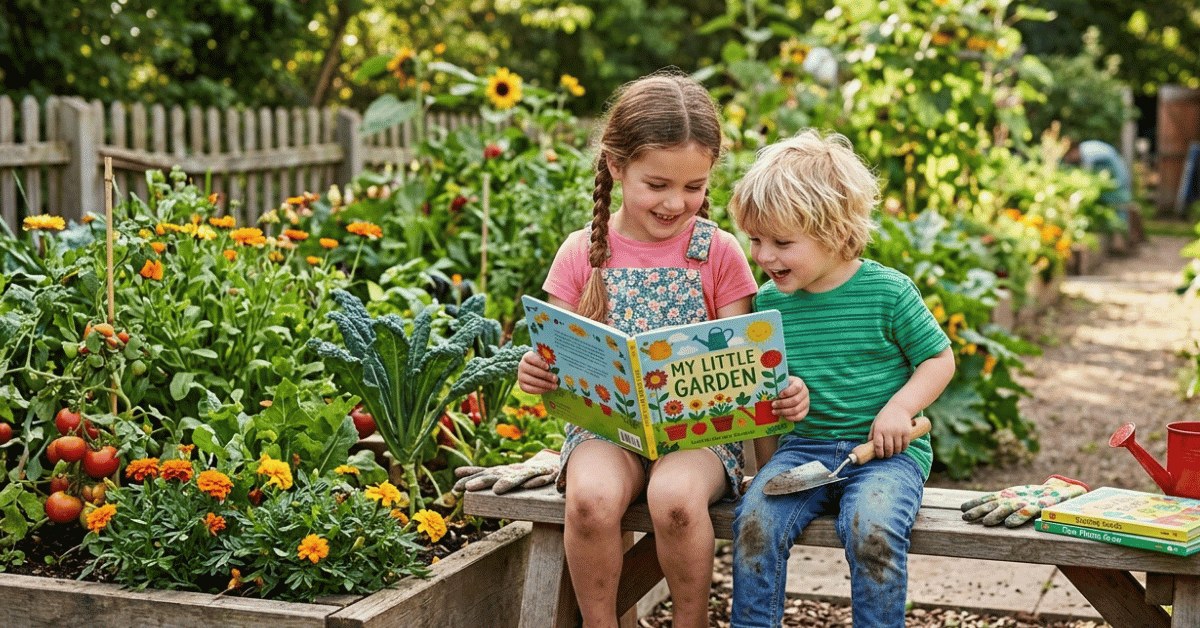
Discovering the magic of growing things is a joy. These books make it easy for little hands and curious minds. They’re packed with colorful pictures and simple steps.
Your child will learn about seeds, soil, and sunshine. They’ll see how plants grow big and strong. It’s an adventure right in your backyard.
We’ve picked the best ones to get your garden started.
Why Should Kids Read About Gardening?
As a gardener myself, I know a good book can spark a lifelong passion. My own kids first learned about growing tomatoes from a worn-out library book. That book showed them where their food came from.
It taught them patience. It got them excited about digging in the dirt. These books are more than just stories.
They are gateways to understanding nature. They build important life skills.
Watching Seeds Sprout
I remember the first time I held a tiny seed. It looked like nothing special. Then, with water and sun, it burst to life!
Children’s gardening books capture that wonder. They show a seed splitting open. A little root pushes down.
A tiny green shoot reaches up. It’s a miracle in slow motion. Books like “The Tiny Seed” by Eric Carle paint this picture beautifully.
They make the process exciting. Kids watch their own seeds with new eyes. They anticipate that first little sprout.
Understanding Where Food Comes From
Many kids think food just appears in the grocery store. Gardening books change that. They follow a plant from seed to harvest.
A child learns a strawberry doesn’t grow on a shelf. It grows on a plant. It needs care.
These books often include simple recipes using garden produce. This makes the connection strong. My daughter loved making salsa after we grew our own bell peppers.
It tasted so much better! Learning about vegetable gardening has never been easier with resources like my raw guide to vegetable gardening.
Developing Patience and Responsibility
Gardening isn’t instant. Seeds don’t grow overnight. Plants need to be watered.
Weeds have to be pulled. This teaches children patience. It also teaches responsibility.
They learn a plant depends on them. They need to check on it. They must remember to water it.
This builds a sense of accomplishment. Seeing their efforts bloom is incredibly rewarding. It’s a gentle way to learn about commitment.
Top Children’s Books About Gardening
I’ve spent years reading these books with my nieces and nephews. Some are great for beginners. Others dive a little deeper.
Here are some that always get a thumbs-up.
Picture Books for Little Sprouts (Ages 0-5)
These books are all about bright colors and simple concepts. They introduce the idea of growing.
- “The Little Gardener” by Ruth Thomson: This book follows a child as they prepare a small garden patch. It’s sweet and simple. Great for toddlers.
- “Planting a Rainbow” by Lois Ehlert: This is a classic for a reason. It shows how planting different flower seeds creates a garden full of color. The illustrations are bold and engaging.
- “Busy Puddles: A Little Garden” by Benjamin Chaud: This book has lift-the-flaps. Kids can discover what’s happening underground. It shows planting, watering, and the first signs of growth.
Engaging Reads for Young Gardeners (Ages 5-9)
These books offer a bit more detail. They might explore different types of plants or garden activities.
- “Gardening for Kids: Awesome Projects for Budding Gardeners” by R.J. Reames: This book is packed with step-by-step projects. It covers everything from starting seeds to making compost. It feels like a mini gardening guide.
- “Miss Mary Mack and the Garden Helpers” by Mary Ann Cappiello: This story focuses on the teamwork involved in gardening. It highlights various tasks and the people who help them happen.
- “The Curious Garden” by Peter Brown: This is a beautiful story about a boy who discovers a neglected urban garden. He brings it back to life. It’s a heartwarming tale of transformation.
Books for Budding Botanists (Ages 9-12)
Older kids might enjoy books with more science facts or complex projects.
- “Edible Schoolyard 2.0: A Blueprint for Cultivating School and Community Gardens” by Alice Waters: While not strictly for kids, this book has sections that are accessible. It shows the bigger picture of food and community. Looking into gardening for beginners successfully can provide a good base.
- “DK Eyewitness Books: Gardening”: These books are rich with facts and real photos. They show different types of plants, tools, and garden history. Great for kids who love details.
- “The Gardener” by Sarah Stewart: This story is about a girl named Lydia who transforms her grumpy Uncle Jim’s city into a beautiful garden. It’s a gentle narrative with lovely illustrations.
What Makes a Good Gardening Book for Kids?
I’ve flipped through so many books. Some are brilliant. Others fall flat.
Here’s what I look for.
Clear, Simple Instructions
If the book suggests an activity, it needs to be easy to follow. Kids need visual cues. Step-by-step pictures are a huge help.
Short sentences are key. Complex gardening terms can be confusing. I love when books use simple language.
They should explain why we do something. Not just what to do.
Engaging Illustrations and Photos
A garden is a visual feast. The books should reflect that. Bright, cheerful pictures draw kids in.
Photos can show real plants. They can show what a healthy plant looks like. This helps kids know what to expect.
I’ve seen illustrations that are too abstract. They don’t help a child visualize the task.
Hands-On Activity Ideas
The best books don’t just talk about gardening. They inspire kids to do it. I look for books with actual projects.
Stuff they can try at home or school. Planting seeds in cups. Building a mini greenhouse.
Making a bug hotel. These ideas make the book come alive. My best all-new gardening book review touches on some great activity-focused books.
Age-Appropriateness
What works for a five-year-old won’t work for a ten-year-old. Younger kids need simpler stories. Brighter pictures.
Older kids can handle more scientific terms. They can understand more complex projects. It’s important the book speaks their language.
Comparing Top Choices
Here’s a quick look at how some popular types of gardening books stack up.
| Feature | Picture Books for Little Sprouts | Engaging Reads for Young Gardeners | Books for Budding Botanists |
|---|---|---|---|
| Key Focus | Simple concepts, wonder | Basic skills, story-driven | Facts, science, projects |
| Illustrations | Bold, colorful, friendly | Engaging, often realistic | Photos, diagrams, detailed |
| Activities | Very few, basic ideas | Some simple projects | Detailed projects, experiments |
| Language | Very simple, short sentences | Clear, easy to understand | More detailed, can include terms |
| Ideal Age | 0-5 | 5-9 | 9-12 |
Growing Their Garden Smarts
Reading about gardening is just the start. The real magic happens when kids get their hands dirty. These books are excellent springboards.
They can inspire a whole garden adventure. Don’t be afraid to experiment! My own journey has shown me that square foot gardening success secrets can often be found through trial and error.
And for a comprehensive look, check out my honest encyclopedia of gardening review. Sometimes, the best way to learn is by doing and exploring different gardening approaches. For even more in-depth resources, consider my ultimate encyclopedia of gardening review.
FAQs
Are the books good for indoor gardening too?
Yes, many books offer tips for indoor plants and window boxes. Learn more about…
Do these books teach about specific plants?
Some focus on general gardening, others highlight specific fruits or flowers. Learn more about…
Can I use these books to grow food with my child?
Absolutely, many books guide you through growing edible plants. Learn more about…
What if we live in a city apartment?
Several books provide ideas for container gardening and small spaces. Learn more about…
Are there books for very young children who can’t read yet?
Yes, books with strong illustrations and simple concepts are perfect for preschoolers. Learn more about…