
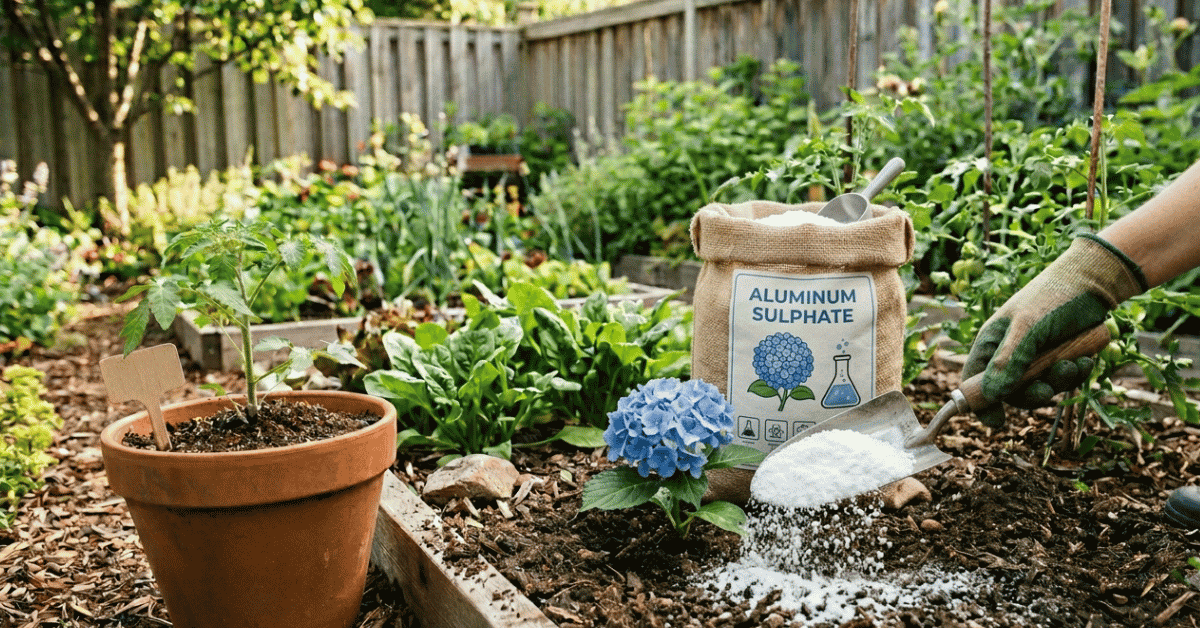
Have you been wondering about aluminum sulfate for your garden? I’ve used it to change my soil’s pH. It’s a simple way to help plants that need different conditions.
Let’s dive into how this common garden helper can make a big difference for you.
What Exactly Is Aluminum Sulfate for Gardening?
Sure, it sounds a bit technical, right? But aluminum sulfate is really just a salt. Gardeners mainly use it to lower the soil’s pH.
That means making the soil more acidic. Most plants like slightly acidic soil. But some, like hydrangeas or azaleas, really crave it.
They won’t bloom well otherwise. I remember my first year with a struggling azalea. It looked sad.
I learned I needed to adjust the soil. Aluminum sulfate was the answer. It’s a white, crystalline powder.
You mix it with water or apply it directly.
Why Lower Soil pH?
Plenty of plants thrive in acidic conditions. Think of your blueberries. They need that lower pH to absorb nutrients.
If your soil is too alkaline, these plants will struggle. They might turn yellow. Their leaves won’t grow well.
They just won’t be happy. By lowering the pH, you unlock nutrients. This lets the plants take them up easily.
It’s like giving them a super-charged meal.
How Does it Make Soil Acidic?
When aluminum sulfate hits wet soil, it breaks down. It releases aluminum ions. These ions react with the soil.
They push out hydrogen ions. More hydrogen ions in the soil water mean a lower pH. It’s chemistry, but simply put, it’s about balance.
It shifts the soil from one state to another. This change is key for certain plants to flourish.
Using Aluminum Sulfate Safely
It’s not just about dumping it. You need to use your aluminum sulfate wisely. Doing it wrong can harm your plants.
Or it might not work at all for you. Safety is key, both for you and your garden buddy.
Test Your Soil First!
This is super important, truly. Don’t guess. Get a soil test kit.
You can buy them at garden centers. Or you can send a sample to a lab. The test tells you your current pH.
It also shows you nutrient levels. Knowing your starting point is crucial. If your soil is already pretty acidic, adding more aluminum sulfate is a bad idea.
You might just burn up your plants. My neighbor once skipped testing. He ended up with a scorched patch of lawn.
He learned his lesson the hard way. Always test. It saves time and plants.
Application Methods
There are two main ways to apply it. You can dissolve it in water. Then you water your plants with this solution.
Or you can spread the dry granules directly on the soil. Many gardeners prefer the liquid method. It helps mix it in evenly.
It also gives you more control. Spreading dry crystals can be tricky. They might clump up.
Uneven application means uneven pH change.
How Much to Use?
This depends on your soil type and test results. Clay soils need more than sandy soils. Different plants also have different needs.
A good rule of thumb is to start small. For a general pH adjustment, maybe 1-2 pounds per 100 square feet. If you’re using it for specific plants like hydrangeas, follow their recommendations.
Often, it’s a few tablespoons dissolved in water. Always read the product label. It’s your best guide.
Example Application for Soil Adjustment:
My garden soil was closer to a 7.5, which is alkaline. My hydrangeas were turning blue instead of pink. I wanted that lovely pink hue.
I prepared a solution. I took about 1 ounce of aluminum sulfate per gallon of water. I poured about half a gallon around the base of each hydrangea.
I did this once a month during the growing season. It took a few applications to see a big change. But slowly, surely, the blooms started turning pink.
What Happens When You Apply It?
The magic happens when that aluminum sulfate meets water. It’s a chemical reaction. It changes the soil environment.
This change is what helps certain plants. And it can make nutrients more available for others.
The pH Shift Explained
As I mentioned, aluminum sulfate makes the soil more acidic. That means lowering the pH. A pH of 7 is neutral.
Anything below 7 is acidic. Anything above 7 is alkaline. Many flowers and vegetables do best between 6.0 and 7.0.
But plants like blueberries, rhododendrons, and azaleas prefer it even lower, sometimes down to 4.5 or 5.5. Aluminum sulfate helps you get there. It’s a tool to fine-tune your garden’s environment.
Nutrient Availability
This is a big one. Soil pH affects how well plants can take up nutrients. In alkaline soils, some essential nutrients get locked up.
They are still in the soil, but plants can’t access them. Iron is a common example. Plants might develop iron deficiency in alkaline soil, even if there’s plenty of iron present.
Lowering the pH with aluminum sulfate releases these nutrients. This can lead to healthier, more vibrant plants. You’ll see greener leaves and better growth.
Effects on Different Plants
Not all plants appreciate a sudden drop in pH. Some prefer neutral to slightly alkaline soil. For these plants, aluminum sulfate can be harmful.
It can actually damage their roots. It can also cause nutrient imbalances. That’s why soil testing is so vital.
You need to know what your plants like. A general-purpose fertilizer won’t work for every plant. Soil pH adjustment is the same.
It’s plant-specific.
Aluminum Sulfate vs. Other Soil Amendments
You’ve got other ways to change your soil. Aluminum sulfate isn’t the only player. It’s good to know the differences.
This helps you pick the right tool for your job.
Sulfur’s Role
Elemental sulfur is another common way to acidify soil. It works more slowly than aluminum sulfate. Sulfur is converted by soil microbes into sulfuric acid.
This gradual change is sometimes preferred. It’s less likely to shock plants. However, it can take months to see the full effect.
Aluminum sulfate works much faster. If you need quick results, aluminum sulfate is your friend. For a slow, steady change, sulfur might be better.
I’ve used both. For blooming hydrangeas, aluminum sulfate is faster. For a general long-term soil improvement, I sometimes opt for sulfur.
Organic Matter’s Impact
Adding compost and other organic matter is fantastic for soil. It improves drainage. It helps soil hold moisture.
It also provides nutrients. Organic matter can slightly buffer soil pH. It tends to move pH towards neutral.
So, compost is great. But it won’t drastically lower pH for plants that need very acidic conditions. Aluminum sulfate is a direct pH adjuster.
Organic matter is a soil conditioner. They do different things. You can use them together.
Good compost can really help plants that also need acidic soil. Check out coconut fiber for healthier plants for another great conditioner.
Comparison Table: Acidifiers
| Amendment | Primary Purpose | Speed of Action | pH Change Effect | Best For |
|---|---|---|---|---|
| Aluminum Sulfate | Rapid pH Lowering | Fast | Significant, quick drop | Hydrangeas, Azaleas, Rhododendrons |
| Elemental Sulfur | Gradual pH Lowering | Slow | Gradual, sustained drop | Long-term soil acidity management |
| Organic Matter | Soil Conditioning | Long-term | Slight buffering toward neutral | Overall soil health, moisture retention |
Choosing the Right Amendment
If you need to quickly turn your hydrangeas a deeper pink, aluminum sulfate is your go-to. If you’re aiming to create a long-term blueberry patch from scratch and your soil is very alkaline, elemental sulfur might be a good choice for a gradual adjustment. And always, always keep adding compost.
It benefits all your plants. It’s like the foundation of a great garden. You might also find coarse sand for your soil helpful for drainage, which also impacts plant health.
Potential Downsides and Precautions
Nothing in gardening is perfect. Aluminum sulfate has its drawbacks. Knowing them helps you use it smart.
Over-Application Risks
This is the biggest concern. Too much aluminum sulfate can burn plant roots. It can also damage soil microbes.
These tiny helpers are vital for healthy soil. Over-application can lead to nutrient lockouts. This means plants can’t get the nutrients they need, paradoxically.
You might even see yellowing leaves, which is the opposite of what you wanted. Always measure carefully. Stick to the recommended amounts.
My friend learned this after trying to “supercharge” his azaleas. He ended up having to replace them.
Impact on Soil Microbes
While aluminum sulfate is primarily for pH, it can affect soil life. High concentrations may disrupt beneficial bacteria and fungi. These organisms are essential for nutrient cycling.
They break down organic matter. They help plants access nutrients. It’s a delicate balance.
Using aluminum sulfate sparingly and following directions helps protect this ecosystem.
Environmental Concerns
While generally safe when used as directed, massive overuse could pose a risk. Aluminum itself can be toxic to some aquatic life if it leaches into waterways. Responsible application is good for your garden and the wider environment.
I try to water excess solution away from storm drains. It’s a small step, but important.
When NOT to Use It
Don’t use aluminum sulfate if your soil pH is already in the desired range. It will do more harm than good. Plants that prefer neutral or alkaline soil will also suffer.
These include common garden favorites like lilacs or lavender. Always know your plants’ needs. A quick search for “[plant name] soil pH” will tell you a lot.
Frequently Asked Questions
Is aluminum sulfate safe for all garden plants?
No, it’s mainly for acid-loving plants like hydrangeas and blueberries. Using it on others can cause harm. Learn more about specific plant needs.
How often can I apply aluminum sulfate?
Apply it sparingly, typically once a month during the growing season. Over-application harms plants and soil. Always follow product instructions.
Will aluminum sulfate change my soil color?
Generally no, but excessive use could lead to soil imbalances causing discoloration. Focus on proper soil testing and balanced application.
Can I use aluminum sulfate with other fertilizers?
Yes, but apply them at different times. Avoid mixing directly. Test your soil to ensure no nutrient conflicts arise.
What’s a good alternative to aluminum sulfate?
Elemental sulfur offers a slower, more gradual pH adjustment over time. Organic matter also helps condition soil.