
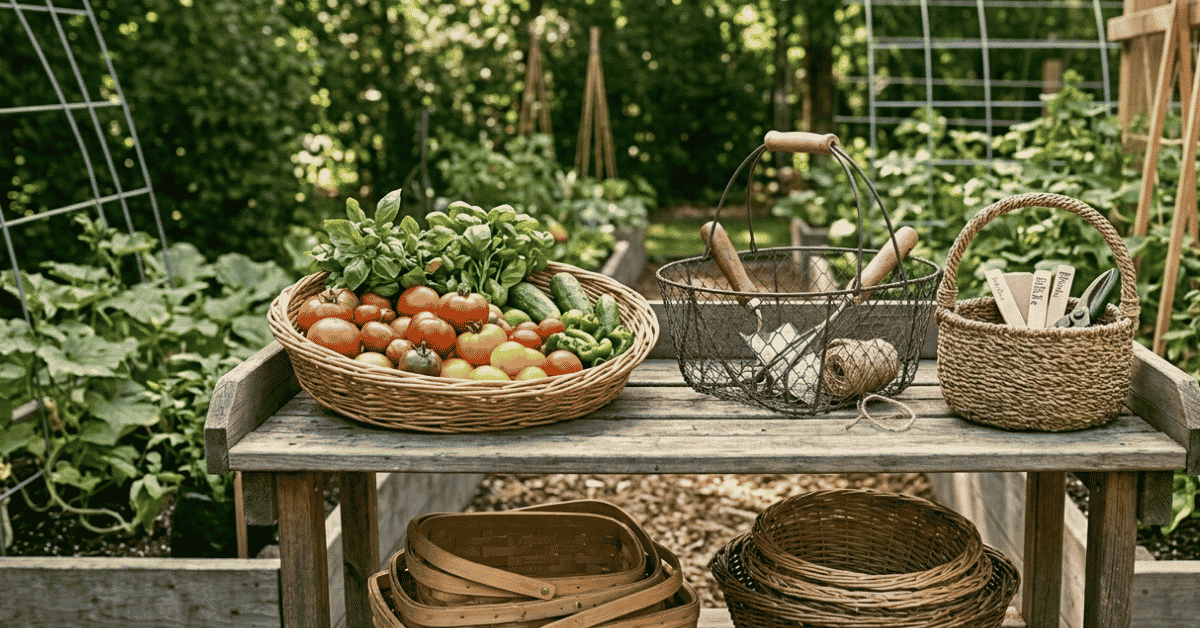
A sturdy gardening basket is your loyal companion for every harvest. Mine carries ripe tomatoes and fragrant herbs with ease. This guide helps you find the perfect one.
Why Do I Need a Gardening Basket?
Honestly, I used to just pile my veggies into my arms. It was a mess! I’d drop half the beans before I got back to the kitchen.
Then I got my first proper gardening basket. It changed everything.
It’s not just for carrying, though. It keeps your produce safe. No more bruised peaches or crushed cucumbers.
A good basket protects your hard work. Plus, it makes trips to and from the garden so much faster. You can grab more in one trip.
It’s a real time-saver, especially when the harvest is heavy. It feels good to have everything organized. My gardening baskets are some of my most used tools.
Picking the Perfect Gardening Basket
Choosing the right gardening basket depends on what you grow and how you garden. There are so many types out there. I’ve tried a few, and they all have their own good points.
It’s like finding the right tool for a specific job.
Material Matters
The material your basket is made from affects its durability, weight, and look. Some materials are better for certain tasks than others.
- Wicker or Willow: These are classic for a reason. They look beautiful and are quite sturdy. They have a lovely natural feel. The open weave lets air circulate, which is great for delicate items like berries. However, they can snag on sharp tools. Also, they don’t do well in constant wet conditions and can rot over time. My first willow basket started to fray after a couple of wet seasons.
- Metal Wire Baskets: These are super durable and easy to clean. They let dirt fall through, which is handy. They can rust if not coated properly, though. Some can be a bit heavy when empty. They look very utilitarian, which I don’t always love for my garden, but they are practical.
- Canvas or Fabric Baskets: These are usually lightweight and flexible. They fold up nicely for storage. Many have reinforced bottoms and sturdy handles. They can get dirty and may not hold their shape as well when full of heavy items. I find these great for collecting leaves or lighter harvests.
- Plastic Baskets: These are very common. They are waterproof, easy to clean, and often stackable. Some can feel a bit cheap and might crack if dropped. They don’t always offer great ventilation for produce. But for a quick haul of soil or a big load of potatoes, they are hard to beat.
Size and Shape
Think about what you typically harvest. Do you grow lots of leafy greens? Or are you harvesting big pumpkins?
- Deep Baskets: These are good for bulky items. They can hold a lot of root vegetables like carrots or potatoes. They also work well for larger fruits like squash. However, they can be awkward to carry if they’re very deep, and things at the bottom can get a bit squashed.
- Shallow Baskets: These are excellent for fragile produce. Delicate berries, soft tomatoes, or freshly picked herbs fit perfectly. They make it easy to see everything you’ve gathered. A shallow basket is also easier to manage when you’re walking.
- Wide Baskets: A wider basket is great for bulk harvesting. You can collect a lot of beans or peas quickly. It spreads the load, so nothing gets crushed.
Handle Strength and Comfort
This is super important. A weak handle can mean disaster. You want handles that are strong and comfortable to grip, especially when the basket is full.
- Wooden Handles: Often found on wicker baskets, these look nice. Make sure they are smooth and well-attached.
- Rope Handles: These can be very comfortable and strong on canvas bags or some plastic tubs. They distribute weight well.
- Metal Handles: Common on wire baskets, these are usually very durable. They can sometimes dig into your hand if they’re thin.
Special Features
Some baskets have clever extras that make them even better.
- Stackable Designs: These save a ton of space in your shed or garage.
- Removable Liners: Great for keeping delicate items clean or for easier washing.
- Colanders or Drains: Some baskets have holes built-in. This is a lifesaver for washing your harvest right in the basket.
My Go-To Gardening Basket Setups
I’ve learned to have a few different baskets for different jobs. It’s not about having too many; it’s about having the right one for the moment.
The “Quick Pick” Basket
This is usually a smaller, lighter basket. Think a shallow wicker basket or a sturdy canvas tote. I use this for those little trips when I just need a few herbs for dinner or a couple of ripe tomatoes.
It’s easy to grab and doesn’t feel like a chore. I like that I can see everything at a glance. This one reminds me of the simplicity needed for a quick harvest, like grabbing just enough for a salad.
The “Bulk Harvest” Hauler
For this job, I need something robust and deep. A large, sturdy plastic tub or a strong wire basket with thick handles is perfect. When my zucchini plants go crazy, or I’m picking corn, this is the one I reach for.
It can handle the weight and volume without complaining. It makes those big harvest days feel less overwhelming. I’ve definitely saved my back with a good, solid bulk basket.
The “Delicate Delight” Carrier
This is for my berries, my delicate flowers, or those first tender greens. A shallower, perhaps woven basket with a smooth interior is ideal. Sometimes, I’ll even line a soft fabric bag with a clean tea towel.
The goal here is protection. I want my raspberries to arrive home looking as perfect as they did on the vine. This is where the joy of picking really shines, without the fear of crushing.
How I Use My Gardening Baskets for Maximum Efficiency
It’s not just about having a basket; it’s about using it smart. I’ve developed a few habits that make my garden harvests much smoother.
Prepping Your Basket
Before I even head out, I often give my basket a quick look-over. Are the handles secure? Is it clean inside?
If I’m using a fabric one, I might check for any small holes that could let my precious harvest tumble out. For really delicate items, I might line the basket with a clean towel or some newspaper. This acts as padding.
Strategic Harvesting Order
This is a small thing, but it makes a big difference. I usually pick my bulkier, heavier items first. Things like potatoes or root vegetables go into the bottom of my deeper baskets.
Then, I’ll add my fruits and more delicate vegetables on top. This way, nothing gets crushed under the weight of the harvest.
The “One-Stop” Carry
My goal is to make as few trips as possible. By using a basket that’s the right size for the job, I can often carry everything I need in one go. If I’m picking a variety of things, I might use different baskets or organize them within one large basket.
I once found a clever trick for organizing them, preventing items from shifting around too much.
Cleaning Up Right
After I’ve brought my harvest inside, the basket needs attention too. I don’t want soil or old bits of leaves hanging around for the next use. For my plastic or metal baskets, a quick rinse under the tap does the trick.
Wicker baskets need a bit more care, usually a brush to get dirt out and then letting them dry thoroughly away from direct sun, which can make them brittle. A clean basket is a happy basket, ready for its next adventure.
Extending Basket Life
To make my baskets last longer, I store them properly. Wicker and willow baskets should be kept in a dry place, out of the rain and direct sun. Plastic ones can be stacked, but I’m careful not to overload the stacks.
Metal ones might benefit from a quick wipe with oil if they look like they’re starting to rust. Treat them well, and they’ll be reliable garden partners for years.
Common Gardening Basket Problems and Solutions
Even the best baskets can have issues. I’ve faced my share, and learned how to fix them.
Splintered Wicker
If your wicker basket gets splintered, it can be painful. You can carefully sand down the rough spots. Sometimes, a thin coat of wood sealant can help smooth it out and protect it.
For minor splinters, I’ve found a bit of careful trimming with small scissors works.
Bent Wire Baskets
If a wire basket gets bent, especially around the rim, it can be hard to use. Sometimes, you can gently bend it back into shape with pliers. Be careful not to put too much stress on the welds.
It might not look perfect, but it can still be functional.
Stiff Handles
If fabric or rope handles get stiff from being wet, try washing them. For woven handles that are just old, sometimes a bit of natural oil, like linseed oil, can help soften them up.
Musty Smells
Fabric baskets can sometimes develop a musty smell if not dried properly. Washing them with a mild detergent and then drying them completely in fresh air should do the trick. Baking soda can also help absorb odors.
Comparing Popular Gardening Basket Styles
Here’s a quick look at how different basket types stack up for common gardening needs.
| Feature | Wicker/Willow Baskets | Wire Mesh Baskets | Canvas/Fabric Bags | Plastic Tubs |
|---|---|---|---|---|
| Durability | Good | Excellent | Fair | Good to Excellent |
| Weight | Light | Medium | Very Light | Medium to Heavy |
| Ventilation | Excellent | Excellent | Good | Poor |
| Ease of Cleaning | Fair | Excellent | Fair | Excellent |
| Aesthetics | High | Low | Medium | Low |
| Best For | Delicate items, herbs | All-round, heavy duty | Light harvests, leaves | Bulk loading, soil |
Frequently Asked Questions About Gardening Baskets
What is the best material for a gardening basket?
The best material depends on your needs; wicker is lovely, wire is durable, and canvas is light. Explore options based on what you grow.
Learn more about gardening baskets.
How large should my gardening basket be?
Consider what you harvest most; a shallow basket is good for berries, while a deep one carries root vegetables.
Can I wash my gardening basket?
Yes, most baskets can be washed; plastic and wire are easy to rinse, while wicker needs gentle cleaning and thorough drying.
How do I prevent my harvest from getting damaged in a basket?
Use shallow baskets for delicate items, line your basket with cloth, and harvest heavier items first.
Where should I store my gardening baskets when not in use?
Store them in a dry, sheltered spot to prevent damage from weather and sun.