
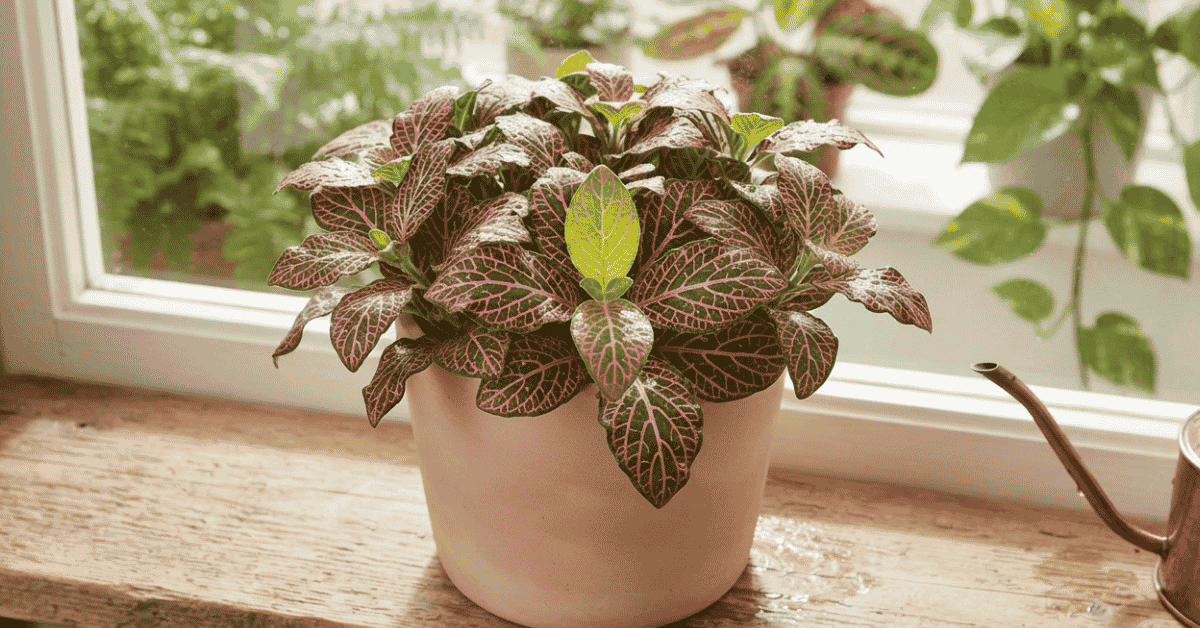
Primetime Fittonia Plant Care needs soft light, moist soil, and warm air. Learn key tips for water, pots, soil, trim, and leaf care in this guide.
Primetime Fittonia Plant Care may seem hard at first.
I found the plant much less fussy than expected.
Its small leaves can show stress quite fast.
That makes each care clue easy to spot.
The leaves also have fine, bright vein lines.
I love the soft look they add indoors.
Still, this plant needs the right care mix.
Here are the small tips that help me most.
Is Primetime Fittonia Plant Care Really Easy?
I once kept a fittonia near a bright window.
The room felt warm and calm that day.
Its leaves looked fresh and full at first.
Then the leaf tips began to curl.
I checked the soil with one quick touch.
It felt dry near the top and base.
That was my first big clue.
Fittonia does not like long dry spells.
Its leaves can wilt fast once soil dries.
The good news is quite simple here.
A drink can bring back wilted leaves fast.
Still, I avoid letting this happen often.
Fittonia likes moist soil, not wet soil.
That small gap can shape the whole care plan.
Good drain still matters, even for moisture lovers.
I also learned to watch the light.
Bright light is good, but harsh sun is not.
Soft light helps keep the leaves fresh.
Life Before I Found This
Before then, I used one care plan.
I gave each plant a drink each week.
That rule felt neat and easy to use.
Fittonia soon taught me a new lesson.
Its soil dried much faster than I thought.
The leaves drooped like tiny green flags.
I could feel the dry pot soil.
It had a warm, dusty feel beneath my hand.
The room air felt dry as well.
I gave the plant a slow drink.
Within a short time, the leaves rose again.
That small change felt almost like magic.
Still, I did not want repeat wilt.
I moved the plant to a softer spot.
I also began to check soil more often.
That made care feel less like guesswork.
Now I watch the plant, not the clock.
Why This Matters Right Now
Fittonia is a tropical plant by nature.
It likes warmth, moisture, and soft light.
That makes it great for many indoor rooms.
Yet home air can get quite dry.
Fans, vents, and heat can dry leaf tips.
Cold glass can also stress the plant.
A warm room with soft light works well.
A spot near a sheer blind can help.
Keep it away from harsh noon sun.
Fittonia also likes moist air near its leaves.
A small humid spot can help in dry homes.
A humidifier can work better than daily mist.
Still, air moisture does not fix poor soil.
Roots need water, but they need air too.
That is why good soil mix still counts.
I think the main goal is balance.
Keep the plant moist, warm, and out of harsh light.
The First Big Lesson
The first big lesson is leaf care.
Fittonia leaves can show stress quite fast.
That may seem bad, but I find it useful.
Wilted leaves often point to dry soil.
Brown tips may point to dry air.
Pale leaves may hint at poor light.
Still, one sign can have many causes.
I never act on leaf color alone.
I check soil, light, air, and pot first.
Fittonia roots need steady access to air.
So, wet soil can be a real risk.
A pot must let extra water drain well.
I like a loose, rich soil mix.
A houseplant mix with added perlite can work.
That mix can hold moisture and drain well.
I also check the top soil by touch.
If it feels dry, I check more deep.
Then I water slow until the soil is moist.
I let the pot drain with each drink.
That keeps the roots from sitting in stale water.
Small Tactics That Actually Work
I use a short list for fittonia care.
First, I pick bright light with no harsh glare.
A sheer blind can soften strong sun well.
Next, I keep the plant warm and snug.
I avoid cold drafts from doors and vents.
Fittonia does best with a steady room temp.
Then I check soil every few days.
I press one finger into the top layer.
Dry soil means the plant may need water.
I water the soil, not just the leaf tops.
Then I let all extra water drain out.
I never leave the pot in standing water.
Trim also helps keep fittonia neat and full.
I pinch long stems just above leaf pairs.
New side shoots can form near those cuts.
Clean snips help keep each cut neat.
I also remove old or weak leaves.
That keeps the plant fresh and tidy.
A Strange Detail I Noticed
The strange part is how fast fittonia speaks.
Its leaves can droop in a short time.
At first, that can feel quite scary.
I once saw a plant droop by noon.
Its leaves hung low like wet cloth.
The pot felt dry in my hand.
I gave it a slow drink.
By the next day, the leaves stood up.
That quick shift still amazes me.
It seems like the plant has a mood.
Dry soil makes it look sad and limp.
Good care can bring back its bright look.
The leaf veins add another fun trait.
They can look like tiny lines on glass.
Red, white, and pink types can look quite bold.
I guess that is the quirky charm.
The plant tells you more than most plants do.
Style Comparison & Data
Different indoor spots can suit fittonia well.
The key is soft light and steady moisture.
| Care Point | Best Aim | Quick Tip |
|---|---|---|
| Light | Bright, soft light | Block harsh sun |
| Soil | Moist, loose mix | Add some perlite |
| Water | Even moisture | Check soil first |
| Air | Warm, humid air | Keep from dry vents |
Fittonia does not need a strict care chart.
Room heat can change its water needs.
Pot size can also change soil dry time.
A small pot may dry more fast.
A large pot may hold wet soil longer.
That is why touch beats a set date.
Non-Obvious Gains
Good fittonia care can bring some hidden perks.
The plant can teach you close plant care.
- Wilt can show up before major harm.
- Leaf veins add rich color to dull rooms.
- Trim can help create a full shape.
- Small pots fit well on desks or shelves.
- Humid air can suit many tropical plants.
I like the first point most of all.
Fittonia makes it easy to spot stress.
That can help new plant fans learn fast.
The plant also adds a soft touch indoors.
Its leaves have a fresh, cool feel.
Its small size makes it easy to place.
I find it great for a desk nook.
A small pot can fill a bare shelf.
Just keep it near good light.
Myths vs. My Reality
I used to think fittonia liked strong sun.
But then I saw leaf scorch near glass.
Now I use bright, soft light instead.
I used to think mist was always best.
But then I saw dry air return fast.
Now I favor room humidity over quick mist.
I used to think wet soil meant good care.
But then I saw roots need air too.
Now I keep soil moist, not soaked.
I used to think wilt meant the plant was lost.
But then I saw leaves rise after water.
Now I check soil before I panic.
I used to think trim was not needed.
But then I saw long stems grow thin.
Now I pinch tips to keep growth full.
Maybe fittonia taught me to watch more.
Small signs can help guide each care step.
Essential Principles for Mastery
I use six simple rules for fittonia care.
They help keep the plant lush and calm.
1. Pick soft, bright light.
Fittonia likes light, but harsh rays can burn.
Use a sheer blind near a sunny pane.
2. Keep soil moist with good drain.
The mix should hold some water.
It must still let extra water flow out.
3. Check soil by touch.
Do not use a fixed water day.
Room heat can shift the dry rate.
4. Keep air warm and moist.
Dry vents can harm leaf tips over time.
A room humidifier can help in dry air.
5. Trim long stems with care.
Pinch just above a leaf pair.
That can help new side shoots form.
6. Watch each leaf for clues.
Wilt, curl, spots, and brown tips all matter.
Still, check more than one sign first.
I also rotate the pot each week.
That can help the plant get even light.
It may also keep growth from leaning hard.
I turn the pot a small amount each time.
There is no need for a big spin.
Slow, small changes work just fine.
A clean pot also helps keep care neat.
Dust can build up on broad leaf tops.
A soft, damp cloth can clean them well.
I avoid harsh soap on the leaves.
Plain water is often enough for light dust.
That keeps the leaf feel soft and fresh.
FAQs about Primetime Fittonia Plant Care
Does Primetime Fittonia need bright light?
Fittonia does best in bright, soft light. Strong sun can burn its thin leaves. A spot near a sheer blind can work well. Low light may slow growth and fade leaf color.
How often should I water fittonia?
Fittonia likes soil that stays a bit moist. Check the soil often with your finger. Water once the top starts to dry, then let extra water drain from the pot.
Can fittonia grow in low light?
Fittonia can cope with less light for a time. Yet, very low light may slow growth. Leaf color may also fade. Bright, soft light is a better long-term choice.
Does fittonia need high humidity?
Fittonia tends to like moist air due to its tropical roots. A humid room can help keep leaves fresh. A room humidifier may work well in dry homes with heat or air flow.
How do I make fittonia grow bushy?
Pinch long stems just above a leaf pair. New shoots can grow near the cut point. Trim small bits at a time, and use clean snips for each cut.
My Final Takeaway
Primetime Fittonia Plant Care is quite calm.
Give it soft light, warm air, and moist soil.
Let excess water drain from the pot.
Watch the leaves for small signs of stress.
I love how fast this plant can respond.
A dry plant can look sad quite soon.
Yet, good care can bring back its charm.
Maybe that is its best gift to me.
It makes me slow down and look.