The best perennial shade garden design plans combine plants that thrive in low light, layer them by height, and group them by soil moisture. Use hostas, ferns, coral bells, and woodland flowers to build a garden with lasting color, rich leaf texture, and less yearly planting.
Across the United States, many backyards have shady spots beneath trees, along fences, beside garages, or near the north side of a house. These areas can seem hard to plant, especially when grass grows thin or summer flowers fail to bloom. A well-planned shade garden can turn those spots into calm, leafy spaces with color from spring through fall.
The key is to match each plant to the light, soil, and climate in your yard. Shade does not mean the same thing everywhere. A bed beneath a large oak in Virginia may have dry soil and strong root competition, while a shady yard in Oregon may stay cool and moist for much of the year. Your design should account for those differences before you buy plants.
This guide covers practical perennial shade garden design plans for small yards, woodland beds, narrow borders, and larger backyard spaces. You will learn how to measure light, arrange plants by height, choose suitable species, and avoid common planting mistakes. The sample layouts are starting points, so adjust plant choices to your USDA hardiness zone and local growing conditions.
A successful shade garden does not need dozens of plant types. A few well-matched perennials, repeated in groups, often create a more natural and pleasing look than a bed filled with one of everything. Start with a clear layout, leave room for mature growth, and build the garden one section at a time.
Source: i.pinimg.com
1. Understand Your Shade Before Drawing a Garden Plan
The first step in designing a perennial shade garden is to learn how much light the site receives. Plants sold as shade plants can still need some sun, and a few hours of gentle morning light may help them flower. The wrong light level can lead to weak growth, faded leaves, or few blooms.
Watch the site at different times of day before you settle on a layout. Check it in the morning, around midday, and in the afternoon. Trees may cast a smaller shadow in early spring before their leaves open, so consider how the light will change through the growing season.
Also check what happens after rain. Some shady areas remain damp, while others become dry because mature trees pull water from the soil. This difference matters as much as sunlight when you choose perennials.
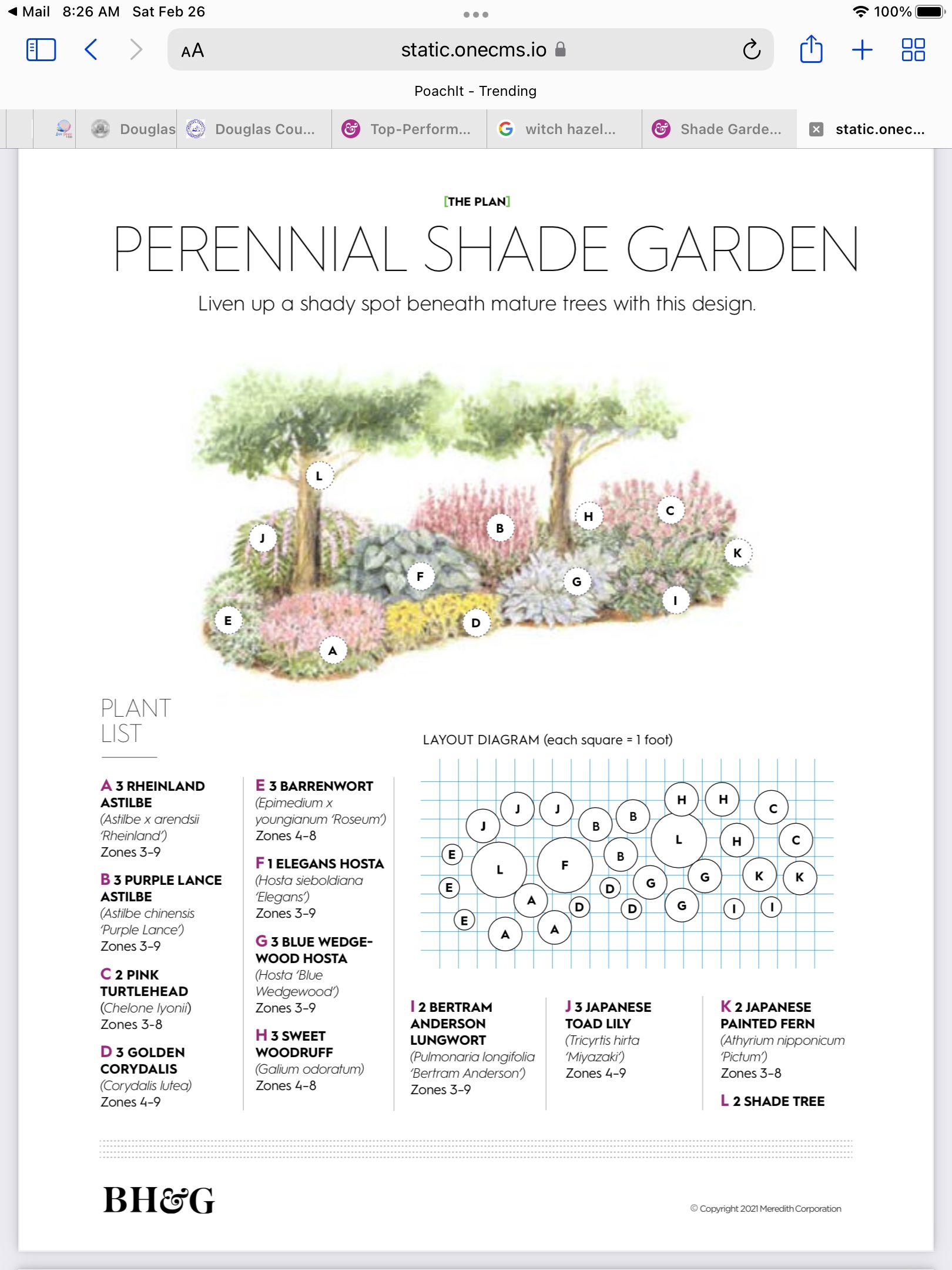
Source: bhg.com
Full shade
The site receives little direct sun, though it may have bright reflected light. Choose plants known to grow well in low light, and check whether the soil is dry or moist.
Partial shade
The bed receives some direct sun or filtered light during the day. Many hostas, coral bells, woodland flowers, and ferns can work here, depending on the cultivar and local climate.
Dappled shade
Sunlight passes through an open tree canopy and creates shifting patches of light. This setting can suit woodland-style gardens with layered foliage and seasonal flowers.
Dry shade
The area has limited sun but little available water, often because of tree roots or the shelter of a building. Select plants that tolerate these conditions instead of relying on moisture-loving species.
Test Soil and Tree Root Conditions
Check whether the soil is sandy, loamy, or heavy with clay. Sandy soil often drains quickly, while clay may hold water for longer. A simple soil test can also help you learn the pH and whether the bed needs specific nutrients.
When planting below mature trees, avoid cutting large roots or raising the soil level around trunks. Both actions can harm a tree. Plant small perennials between visible roots, use hand tools, and stop if you meet a large root.
For dry soil
Use mulch to reduce moisture loss and choose plants suited to dry shade. Water new plants as needed while their roots become established.
For damp soil
Select moisture-tolerant species and check drainage before planting. Constantly wet soil can damage plants that need air around their roots.
2. Choose a Shade Garden Layout That Fits Your Yard
A useful garden plan starts with the shape of the space and the way people move through it. A narrow strip beside a house needs a different design from a wide bed beneath mature trees. Measure the area, mark fixed features, and draw a simple outline before buying plants.
Include tree trunks, fences, walls, paths, steps, drains, and outdoor seating in the drawing. Mark the spots that need clear access for maintenance. Then decide where you want the main view to fall, such as from a kitchen window, patio, or garden path.
For most home gardens, a small number of repeated plant groups is easier to manage than a long list of unrelated species. Repetition helps the bed look planned, while changes in leaf size and height keep it from looking flat.
Source: i.pinimg.com
Curved woodland bed
Use a soft, curved edge around trees or along a fence. Place ferns and larger hostas toward the back, then add lower plants along the curve.
Narrow foundation border
Arrange plants in shallow layers rather than making a deep bed. Keep mature plant sizes in mind so foliage does not block windows, vents, or access points.
Small courtyard garden
Choose a compact palette of three to five plant types, with a clear path or open center. Use containers where ground planting is limited.
Island bed under trees
Create loose groups around tree roots, leaving space near trunks. Use plants with compatible moisture needs and avoid covering the root flare with extra soil.
Simple Plant Spacing for a Balanced Design
Use the mature width on the plant label to estimate spacing. If a plant is expected to spread about 24 inches, spacing plants roughly 24 inches apart is a useful starting point when you want them to fill the bed without immediate crowding. The exact spacing depends on the species and the look you want.
Draw each plant as a circle based on its expected mature width. This helps you spot overlaps before planting. Small plants can look lost when spaced too far apart, but close planting may cause crowding, poor airflow, and extra pruning later.
For a quick ground cover
Use the closer end of the recommended spacing range, provided the plants can tolerate it and you can maintain them.
For a natural woodland look
Leave open pockets between plant groups and use leaf litter or mulch to cover bare soil while plants grow.
3. Select Perennials That Thrive in Shade
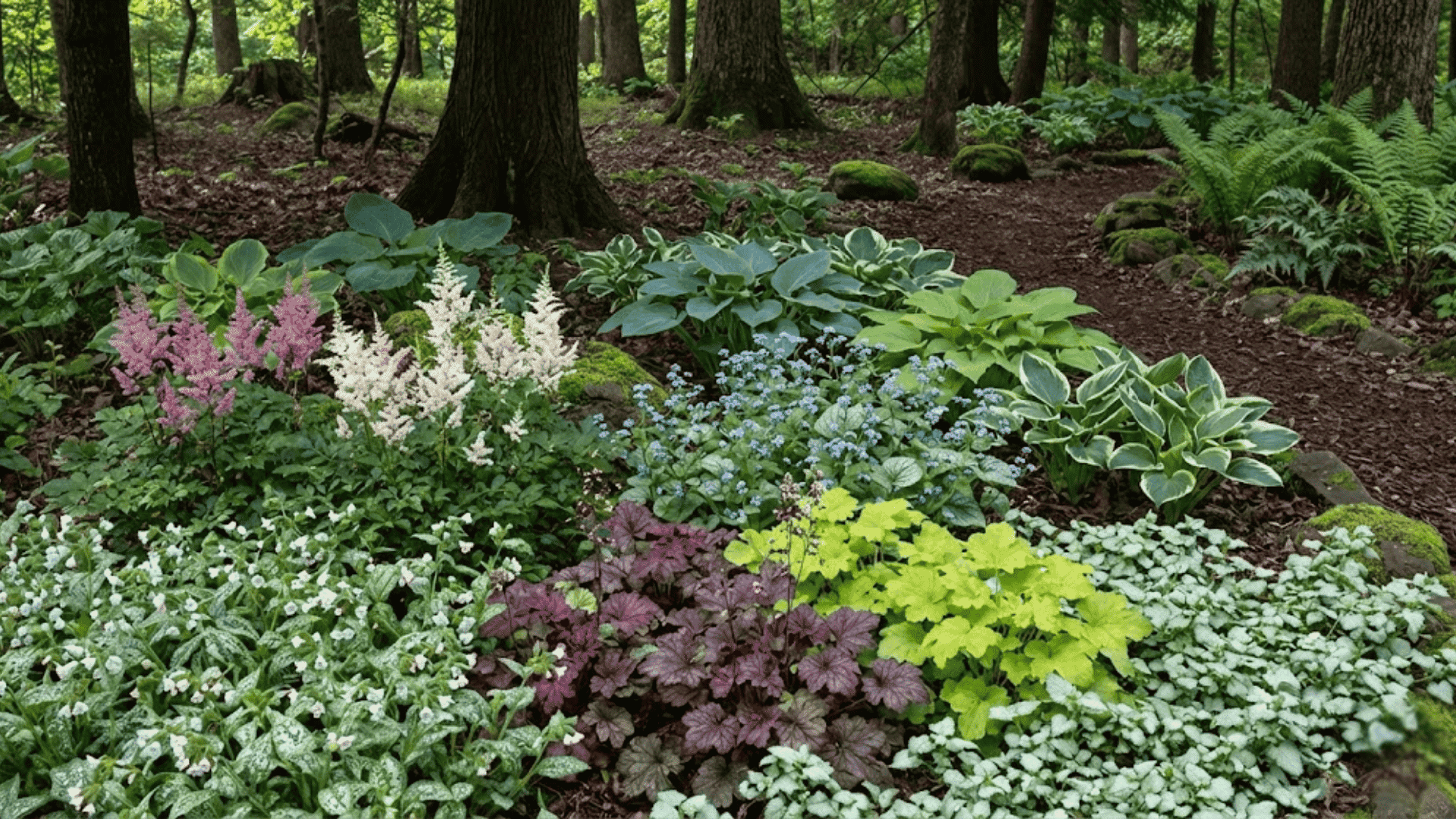
The best shade perennials are those that match your site’s light, water, soil, and winter conditions. Leaf shape can be just as useful as flower color in a shady bed. Large leaves create bold forms, fine fern fronds soften the edges, and colorful foliage adds interest when few plants are blooming.
Hostas and ferns are common choices because they offer strong leaf texture. Coral bells bring a range of leaf colors, while woodland flowers can add short bursts of spring color. None of these plants suits every site, so confirm the needs of the exact species or cultivar before planting.
Choose plants for their full growing season, not just the look they have in a nursery pot. A perennial may flower for only a few weeks, but its leaves can shape the garden for months. A mix of foliage types, bloom times, and plant heights helps the bed stay attractive after flowers fade.
Source: i.pinimg.com
Hostas
Hostas provide broad leaves in green, blue-green, gold, and variegated patterns. Many prefer rich, moist but well-drained soil and shade or partial shade. Slugs and deer may damage them.
Ferns
Ferns add fine texture and a woodland feel. Many grow best in shade with steady moisture, though some species tolerate drier sites. Choose a species suited to your region.
Coral bells
Heuchera, often called coral bells, offers leaves in shades of green, purple, bronze, and silver. Light needs vary by cultivar, and many plants benefit from well-drained soil.
Astilbe
Astilbe produces soft flower plumes in suitable conditions. It generally needs moist soil and may struggle in dry shade without regular water.
Hellebores
Hellebores can provide flowers in late winter or spring in suitable climates. Their evergreen or semi-evergreen leaves may add structure, but site needs vary by species.
Bleeding heart
Bleeding heart offers arching stems and heart-shaped flowers. Some types go dormant during summer heat, so leave room for nearby plants to cover gaps without crowding.
Foamflower
Foamflower can serve as a low woodland plant with textured leaves and small flower spikes. It often suits humus-rich soil with consistent moisture.
Lungwort
Lungwort has spotted or patterned foliage and spring flowers. It can brighten a shaded border, but check local suitability and allow enough space for its spread.
Use Native Plants Where They Fit
Native plants can help a garden support local wildlife when the species match the site. Native woodland flowers and ferns may also suit local rainfall and seasonal conditions. The right choices depend on the region, since a plant native to the Northeast may not be native to the Southeast or Pacific Northwest.
Check regional native plant lists from a local botanical garden, university extension office, or native plant society. Ask about plants that fit the actual light and soil conditions, not just those labeled for your state. Avoid collecting wild plants from natural areas unless collection is clearly permitted and ecologically appropriate.
Eastern United States
Depending on the site, woodland phlox, foamflower, and native ferns may be worth considering.
Pacific Northwest
Look into locally suitable woodland plants that tolerate the region’s seasonal rainfall pattern and your yard’s summer moisture levels.
Southern United States
Choose plants that can handle local heat and humidity. Dry shade beneath trees may need a different palette from a damp, shaded garden.
4. Three Practical Perennial Shade Garden Design Plans
A sample layout makes plant selection easier because each plant has a clear role. The three plans below suit different spaces and can be adjusted to fit your yard. They are illustrative designs, not universal planting prescriptions, so check mature sizes, local hardiness, and soil needs before using them.
For each design, place the tallest plants toward the rear or center where they will not hide shorter plants. Repeat the same plants in groups instead of placing every specimen in a separate spot. Leave a few open areas for growth and easy access.
For a compact bed of about 4 by 6 feet, use one medium hosta as the main feature, two or three coral bells near the front, and a small group of foamflowers or another suitable low perennial. Add a narrow mulch edge and leave room for the plants to spread.
Plan B: Woodland Garden
For a wider bed beneath trees, group ferns toward the back and sides, place hostas in uneven clusters, and add woodland flowers in small drifts near the front. Keep the tree trunk clear and avoid disturbing large roots.
Plan C: Shade Border Along a Fence
Place taller ferns at the rear, medium hostas and hellebores through the middle, and low ground-covering perennials along the front. Use a repeating pattern to connect the full border.
Plan A: A Compact 4-by-6-Foot Bed
A small shade garden works best when each plant has a clear purpose. Start with one focal plant near the back third of the bed, then build a low border in front. A large hosta can serve as the main feature where the soil and light suit it.
Place two or three coral bells toward the front corners and add a small group of foamflowers or another compact woodland perennial between them. If the bed is dry, replace moisture-loving plants with species suited to dry shade. Avoid filling every inch at the start because young perennials need room to mature.
Main feature
One hosta or a similarly sized shade perennial.
Middle layer
Two or three medium perennials with contrasting leaf color.
Front edge
A small group of low plants suited to the site’s moisture level.
Plan B: A Natural Woodland Bed
A woodland design looks best when plants form loose drifts instead of straight rows. Use several fern clumps to create a soft background, then repeat hostas or other broad-leaf plants through the middle. Add spring woodland flowers near the front, where their blooms can be seen.
Keep some open ground between groups so the bed does not become a solid mass of foliage. Fallen leaves can add organic matter as they break down, but remove diseased leaves and thick layers that smother small plants. Do not mound soil or mulch against tree trunks.
Background
Three or more fern clumps, spaced according to the mature size of the selected species.
Middle
Repeating groups of hostas or other broad-leaf perennials.
Front
Small groups of woodland flowers that bloom at different times.
Plan C: A Layered Fence Border
A border along a fence benefits from a clear front-to-back arrangement. Place the tallest plants nearest the fence, medium plants in the middle, and lower plants along the lawn or path. This arrangement keeps the bed readable from the main viewing point.
If the border is narrow, use fewer rows and select compact cultivars. Leave enough room to clean the fence, reach outdoor fixtures, and trim nearby shrubs. If the fence casts deep shade and the soil is dry, select plants that can cope with both limits.
Rear row
Tall ferns or other shade-tolerant perennials that fit the mature height available.
Center row
Hostas, hellebores, or other medium-height plants chosen for the local conditions.
Front row
Low perennials or ground covers that will not spill across a path.
5. Arrange Plants by Height, Texture, and Bloom Time
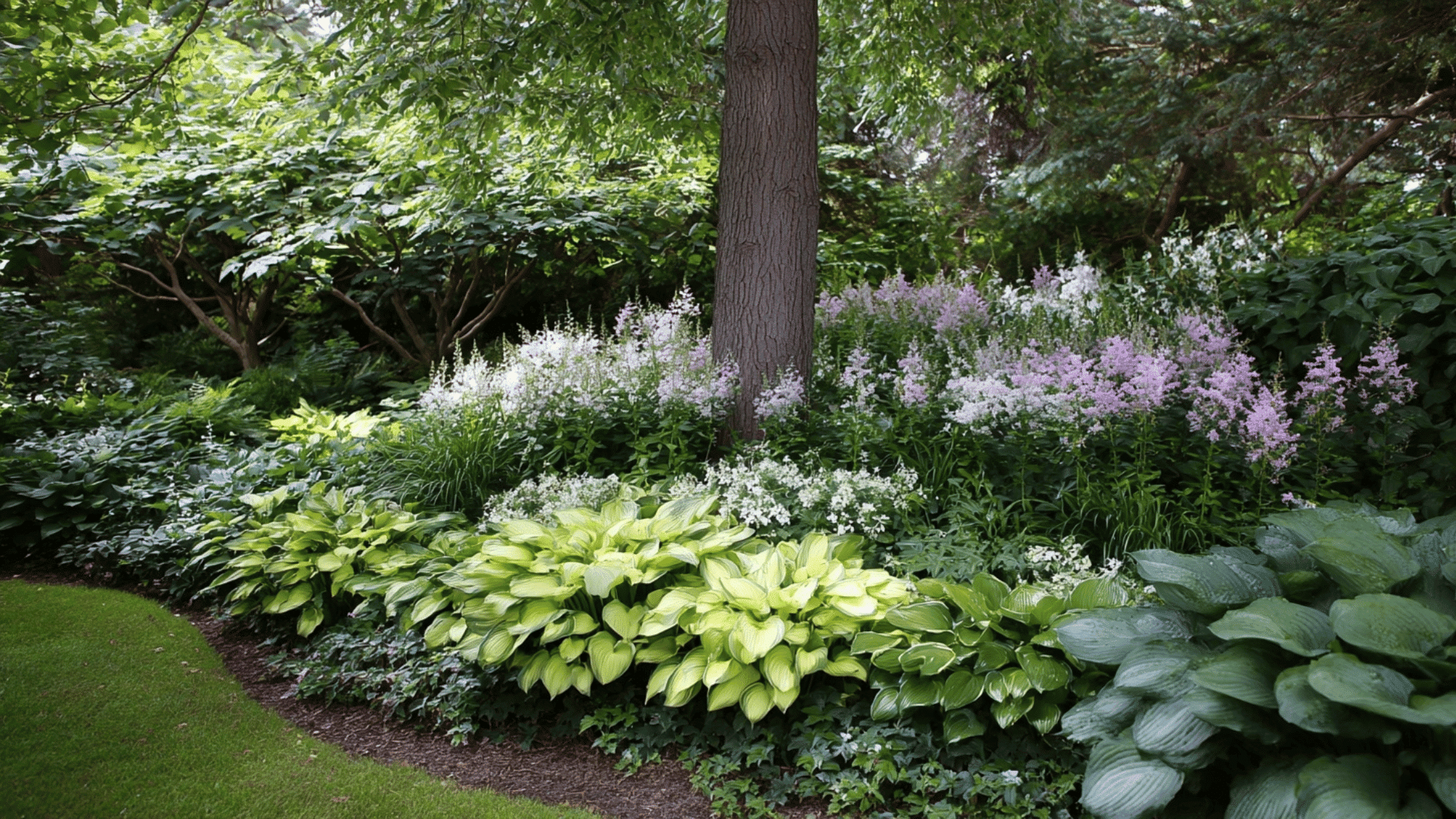
A layered shade garden gives each plant room to be seen. Tall foliage forms the background, medium plants fill the center, and low plants soften the front edge. For a central island bed, arrange taller plants near the middle and shorter ones around the outside.
Texture helps a shady bed feel full even when few flowers are open. Broad hosta leaves contrast with the fine fronds of ferns, while small patterned leaves add detail close to the path. Repeat a few leaf colors and shapes so the design feels linked rather than crowded.
Plan for several seasons of interest. Spring bulbs and woodland flowers can start the display, while foliage plants carry much of the garden through summer. Late-season flowers and attractive seed heads may extend the display, depending on the plants and local climate.
Source: i.pinimg.com
Tall layer
Use large ferns or taller shade perennials at the rear of a border. Confirm their mature height so they do not block windows or smother smaller plants.
Middle layer
Use hostas, hellebores, and medium-sized foliage plants to form the main body of the bed.
Low layer
Choose compact woodland plants or suitable ground covers for the front edge and small gaps.
Seasonal accents
Add a few plants with different bloom periods to bring short bursts of color through the growing season.
Build Color With Leaves, Not Just Flowers
Green is not one single shade. Blue-green hostas, bright gold leaves, deep purple coral bells, and silver-marked foliage can create contrast in a garden with limited sunlight. Pale flowers and light leaves may also stand out against a dark fence or evergreen backdrop.
Keep the color scheme simple at first. Choose two or three main foliage colors and repeat them across the bed. Add flower color as an accent, rather than relying on blooms alone to carry the design.
Cool woodland palette
Combine blue-green foliage, deep green ferns, and white or pale flowers where the plants suit the site.
Bright shade palette
Use gold or chartreuse leaves with dark green plants to lift a dim corner.
Rich foliage palette
Mix purple or bronze coral bells with green hostas and fine-textured ferns.
6. Prepare the Soil and Plant the Garden
Healthy soil helps perennials establish roots and handle changes in weather. Before planting, remove weeds and test the soil if you do not know its pH or nutrient levels. Add organic matter where it is appropriate, but avoid major soil changes around established trees.
Choose a planting time that gives roots a chance to settle before severe heat or deep winter. In many parts of the United States, spring and fall are useful planting periods, but the best window depends on local climate, frost dates, and the plant species. Avoid planting when the ground is frozen or waterlogged.
Water each plant well after planting and check the root zone during the first growing season. New plants need closer attention than established perennials, especially in hot weather or under thirsty trees. A layer of organic mulch can help conserve moisture, but it should not cover crowns or rest against tree trunks.
Use stakes, string, or a garden hose to outline the bed. Place empty pots on the soil to check the arrangement before digging.
Step 2: Remove weeds
Clear weeds and unwanted grass carefully. Work around tree roots rather than cutting through large roots to make room.
Step 3: Improve the soil as needed
Use soil-test results to guide amendments. A modest layer of suitable compost may help some beds, but do not assume every soil needs the same treatment.
Step 4: Set plants at the right depth
Plant each perennial at the depth it grew in its nursery pot unless the plant’s instructions say otherwise. Keep the crown at the proper level.
Step 5: Water and mulch
Water the root zone thoroughly, then apply a suitable mulch layer while keeping plant crowns clear.
How to Tell if New Plants Need More Water
Check the soil near the root ball rather than judging only by the surface. The top layer may look dry while the root zone remains damp, or the surface may be moist while water drains quickly below it. Use your finger or a small hand trowel to check the soil at root depth.
Wilting can mean a plant needs water, but it can also happen when wet soil prevents roots from taking up enough oxygen. Check soil moisture before watering again. If the bed stays saturated, address drainage and choose plants suited to the conditions.
Dry root zone
Water slowly so moisture reaches the root ball and surrounding soil.
Wet, sour-smelling soil
Pause routine watering and check drainage. Repeatedly adding water can worsen root stress.
7. Maintain a Shade Garden With Less Work
A well-planned shade garden can reduce routine work, but it will not care for itself. Weed control, watering, seasonal cleanup, and occasional division help keep the plants healthy. The amount of work depends on the species, climate, and how quickly the bed fills in.
During the first year, check new plants often and remove weeds before they spread. Once perennials are established, adjust watering to rainfall and soil moisture. Do not water on a fixed schedule if the soil is already wet.
Mulch can help limit weeds and slow water loss. Keep it away from plant crowns and tree trunks, and renew it only when needed. Too much mulch can trap excess moisture or bury low-growing plants.
Source: cdn.opplehouse.com
Spring
Remove damaged leaves, check for winter injury, pull weeds, and add mulch where the soil needs coverage. Wait until emerging shoots are visible before clearing areas where small plants may be growing.
Summer
Check moisture during dry spells, remove weeds, and watch for slug damage or signs of stress. Water at the soil level when possible.
Fall
Plant suitable new perennials early enough for root growth, remove diseased plant material, and leave healthy foliage or seed heads when they provide useful shelter or winter interest.
Winter
Avoid walking on frozen or saturated beds when possible. Review the layout and make notes about gaps, crowded plants, and areas that stay too wet.
When Should You Divide Perennials?
Some perennials form dense clumps that can be divided when they become crowded or lose vigor in the center. The best time depends on the plant. Many spring- or summer-flowering perennials can be divided during a suitable spring or fall period, while some species need a different schedule.
Check the needs of the plant before digging it up. Divide only when there is a clear reason, and water the replanted sections well. Do not divide a plant during severe heat or drought unless a specific need makes it unavoidable.
Signs a plant may need division
The clump has outgrown its space, the center has thinned, or flowering has declined under otherwise suitable growing conditions.
When to wait
Leave plants alone if they are healthy, have enough space, and show normal seasonal growth.
8. Common Shade Garden Design Mistakes to Avoid
Most shade garden problems begin with a mismatch between the plant and the site. A plant may be labeled for shade but still need moist soil, some filtered light, or protection from extreme heat. Review the growing needs of each plant before adding it to your plan.
Crowding is another common issue. Small nursery plants can look far apart on planting day, yet grow into large clumps over time. Follow mature spacing guidance and plan for access so you do not need to move half the bed a year later.
Tree roots also limit what you can plant and how you prepare the soil. Do not solve every bare patch by piling on soil or digging a deep bed around a mature tree. Work with the existing conditions, choose suitable small plants, and accept that some areas may be best left as mulch or leaf litter.
Source: bhg.com
Mistake: Treating all shade as the same
Correction: Record light and moisture separately. Choose plants that suit both, not just the shade label.
Mistake: Planting too many species
Correction: Start with a short plant list and repeat groups. Add new species only when they serve a clear purpose.
Mistake: Using moisture-loving plants in dry shade
Correction: Select dry-shade plants or plan for careful watering during establishment.
Mistake: Ignoring mature plant size
Correction: Draw plants at their expected mature width and allow room for airflow and maintenance.
Mistake: Burying tree trunks with soil or mulch
Correction: Keep the root flare visible and avoid raising the soil grade around established trees.
Mistake: Expecting flowers all season
Correction: Use foliage contrast as the main design feature and combine plants with different bloom periods.
What to Do When a Shade Garden Plant Struggles
Start by checking the root zone, light, and plant label. Yellow leaves can result from several causes, including excess water, drought, nutrient problems, or seasonal changes. Do not add fertilizer or water until you have a better idea of what is wrong.
If the plant is in the wrong place, move it during a suitable planting period when possible. For repeated failures, revise the plan rather than replacing the same plant again. A site with deep dry shade may need a simpler layout than a cool, moist woodland bed.
Leaves wilt despite wet soil
Check drainage and root health before adding more water.
Plants stretch or lean toward light
Review the actual light level and choose species better suited to the site.
Plants fail during summer
Check moisture beneath the surface and consider competition from nearby tree roots.
9. A Simple Checklist Before You Buy Plants
A short checklist can prevent costly changes after planting. Confirm the growing conditions first, then match the design to the available space and your maintenance routine. Keep the plan flexible because actual plant growth may differ from the size shown on a nursery label.
Use the checklist below before visiting a garden center or ordering plants. Take a copy of your layout and note the expected mature width, light needs, and moisture needs for every species. This makes it easier to compare suitable choices instead of buying plants based on flower color alone.
Source: i.pinimg.com
Measure the bed
Record length, width, fixed features, and the amount of room available for mature plants.
Record daily light
Note direct sun, filtered light, and seasonal changes in the tree canopy.
Check the soil
Assess drainage and texture, and use a soil test if pH or nutrient levels are uncertain.
Confirm plant suitability
Check local hardiness, mature height, mature width, moisture needs, and any pest concerns.
Plan the plant groups
Use a few repeated species and place them in layers that suit the viewing angle.
Set a maintenance plan
Decide how you will water, mulch, weed, and reach the bed for seasonal care.
How to Keep the Plan Within Budget
Start with the main structure rather than buying every plant at once. Purchase the key foliage plants first, then fill open areas over time with suitable perennials. Smaller plants may cost less at the start, though they can take longer to cover the ground.
Compare the total number of plants needed at the recommended spacing. A low-cost plant is not always the least costly choice if it needs more water, frequent replacement, or constant control. Choose plants that fit the site to reduce avoidable work and losses.
Buy in stages
Plant the back or central layer first, then add the front edge in a later season.
Repeat reliable plants
Use a few well-suited species in several places instead of buying many one-off plants.
Avoid impulse purchases
Check each plant against the light, soil, size, and maintenance needs in your written plan.
10. Make Your Shade Garden Look Good All Year
A shade garden can offer year-round structure when you combine perennials with suitable evergreen plants, lasting foliage, and a few hardscape features. In colder parts of the United States, many herbaceous perennials die back in winter. Evergreen ferns or other locally suitable evergreen plants can help fill some of those gaps.
Use paths, stepping stones, natural rocks, or a simple bench to give the garden shape when flowers are not in bloom. These features also help people reach plants without stepping on wet soil. Place them where they support the layout rather than filling every open area.
Plan the garden around the seasons your region experiences. A bed in the Northeast may need winter-hardy plants and spring interest, while a garden in the South may face long periods of summer heat. Local plant guidance is more useful than a single national list for deciding what will last.
Source: i.pinimg.com
Spring interest
Use suitable woodland flowers and early bloomers to add color before the canopy becomes dense.
Summer structure
Rely on broad leaves, fern fronds, and contrasting foliage to keep the bed full after spring flowers fade.
Fall texture
Keep selected seed heads or changing foliage where they look attractive and do not create a disease or pest problem.
Winter form
Use locally hardy evergreen plants, stones, paths, or visible branches to maintain a clear garden shape.
Use Containers in Very Difficult Shade
Containers can help when tree roots leave little room for planting or when a narrow patio has poor soil. Choose pots with drainage holes and use a suitable potting mix. Container soil can dry faster than garden soil, even in shade, so check moisture more often during warm weather.
Place pots where they receive the light needed by the chosen plants. Use a few containers of different heights if you want more depth, but keep paths clear. In cold regions, confirm whether the plants and pots can tolerate winter conditions outdoors.
Best use
Containers work well for small patios, paved courtyards, and spots where digging could damage roots.
Main limit
Pots need closer watering and may require winter protection that in-ground plants do not.
Frequently Asked Questions
Q
What are the best perennials for a shady garden?
Hostas, ferns, coral bells, hellebores, astilbe, foamflower, and bleeding heart can work well in suitable shade gardens. The best choice depends on sunlight, soil moisture, climate, and mature plant size. For dry shade beneath trees, choose plants that tolerate limited water rather than assuming all shade plants need damp soil.
Q
How do I design a small perennial shade garden?
Measure the space, choose a few plants, and repeat them in simple groups. Place a larger plant toward the back or center, medium plants around it, and low plants along the front edge. Leave room for mature growth and use containers if tree roots or paving limit the available soil.
Q
Can flowers grow in a full shade garden?
Yes, some perennials flower in full shade, although bloom may be lighter than in brighter conditions. Hellebores and certain woodland flowers can provide seasonal color in suitable climates. A mix of leaf shapes and colors is useful because foliage often provides interest for longer than flowers.
Q
How far apart should shade perennials be planted?
Use the mature width and spacing guidance for each species or cultivar. Plants expected to spread about 24 inches may be spaced around that distance apart as a starting point, but their growth habit and the desired look can change the best spacing. Wider spacing reduces early crowding, while closer spacing can fill a bed sooner if the plants tolerate it.
Q
How do I grow plants in dry shade under trees?
Choose plants that tolerate dry shade, improve soil only where it is safe to do so, and water new plants as they establish. Avoid cutting major roots or piling soil against tree trunks. A simple design with fewer plants may work better than a dense bed that needs constant water.
Q
When is the best time to plant a shade garden?
Spring and fall are often useful planting times in many parts of the United States because temperatures may be less stressful than in midsummer. The best period depends on local frost dates, soil conditions, and the plants you select. Avoid planting into frozen, waterlogged, or severely dry soil.
Q
How can I make a shade garden look good without many flowers?
Use contrasting foliage colors, leaf shapes, and plant heights. Combine broad hosta leaves with fine fern fronds and patterned coral bells, then repeat those plants across the bed. Paths, stones, and suitable evergreen plants can add structure when herbaceous perennials die back for winter.
✦ Wrapping Up
Conclusion
Good perennial shade garden design plans begin with the conditions you have, not the plants you wish would grow there. Check light, soil moisture, drainage, and mature tree roots before choosing a layout. Then build the bed with a few suitable perennials arranged in layers.
Hostas, ferns, coral bells, and woodland flowers can create a rich mix of textures and seasonal color when their needs match the site. Small beds benefit from simple groups, while wider woodland gardens can use loose drifts and gentle curves. Keep enough space for plants to mature, and let foliage carry the design between bloom periods.
The best plan is one you can maintain without constant work. Start with a measured sketch, choose plants suited to your region, and plant in stages if needed. Review the bed after each growing season and adjust the layout as you learn how the space responds.
💡 Key Takeaway
Measure one shady area in your yard today. Record its sunlight and soil moisture, sketch three plant layers, and choose a small group of locally suitable perennials before buying anything.