
Gardening Grid Magic!
Want to grow more food in less space? A square foot gardening template is your secret weapon. I’ve used these for years, and they truly change how you garden.
This guide shows you how to use a simple template to plan your best garden ever. Let’s dig in!
Why Do I Need a Square Foot Gardening Template?
Honestly, before I started using a template, my garden was a bit of a jungle. Plants were too close. Some didn’t get enough sun.
Others just took over everything! A square foot gardening template fixes all that mess. It’s like a blueprint for your plants.
You map out where everything goes. This means every plant gets its own perfect spot. You maximize your space and get way more veggies.
I found I was harvesting so much more. It felt amazing!
Understanding the Grid
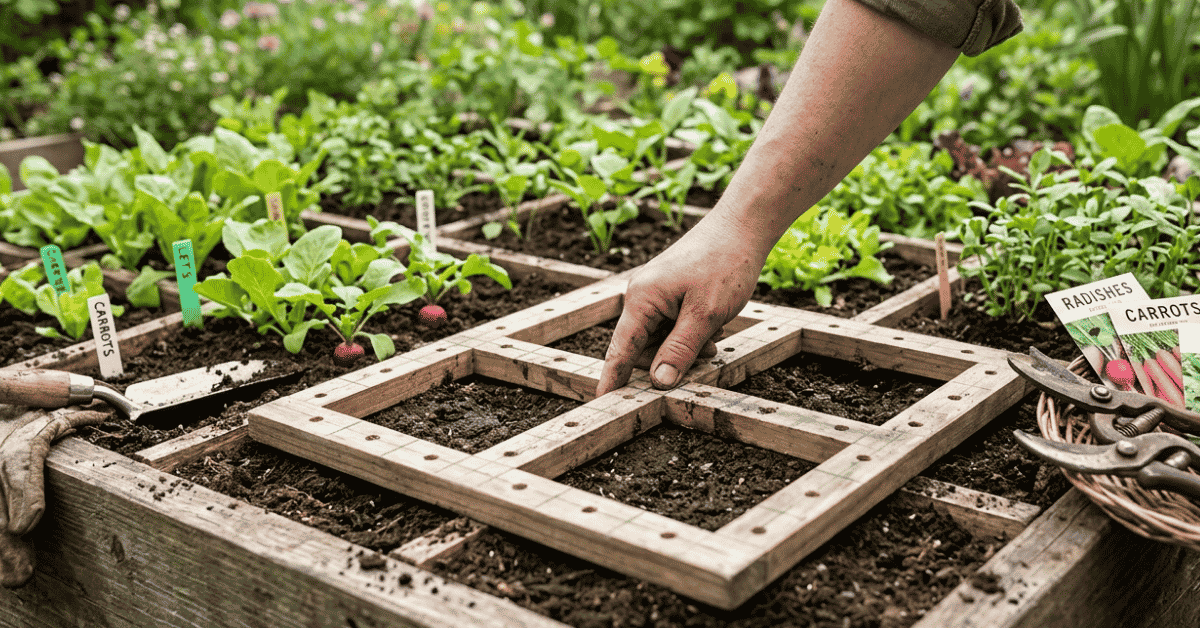
The whole idea is simple. You divide your garden bed into one-foot squares. Each square gets a specific plant or a few small ones.
No more guesswork. No more wasted space. It’s efficient and effective.
It works for raised beds too. You just make the bed the right size. My first raised bed was 4×4 feet.
That’s 16 squares total. It sounds small, but I was blown away by the yield.
My Personal “Aha!” Moment
I remember one season. I hadn’t used a template. My tomatoes sprawled everywhere.
My carrots were tiny. My basil was choked out. It was a disaster.
The next year, I made a simple grid on paper. I planned where each plant would go. I stuck to the plan.
The change was unbelievable. Lush plants, healthy growth, and a harvest I couldn’t believe. That’s when I knew the template was key.
It’s not just about saving space. It’s about giving each plant what it needs to thrive.
Building Your Square Foot Gardening Template
So, how do you actually get one? You can buy them. You can print them.
Or, my favorite, you can make your own. It’s super easy.
DIY Template: The Simplest Way
Grab some paper and a ruler. Or even just a pencil and some paper. You can draw your grid right on a piece of paper.
For my garden beds, I just draw out the dimensions. If I have a 4×8 foot bed, I draw a rectangle. Then I draw lines every inch to make it into 1-foot squares.
That gives me 32 squares. I have one for each of my beds.
You can use graph paper too. It makes drawing the squares even easier. Just make sure the scale matches your garden bed.
If your bed is 4 feet wide, your drawing should be 4 inches wide, with lines every inch.
What Goes Into Your Template Drawing?
Once your grid is ready, it’s time to plan. I like to use different colored pencils. This helps me see things clearly.
- Draw the Bed: First, draw the outline of your garden bed. Mark the dimensions.
- Draw the Grid: Then, draw the one-foot squares inside.
- Assign Plants: Start filling in the squares. I assign one square to a plant if it needs a lot of space, like a tomato or cucumber.
- Group Small Plants: For smaller plants, like lettuce or radishes, I group them. A whole square can hold about 16 radishes or 9 big lettuce plants. You can mark this in the square.
- Consider Spacing: This is where the template shines. It forces you to think about how much space each plant really needs. You won’t accidentally plant ten beans in a square that should only have four.
- Sunlight: Think about where the sun hits your garden. Taller plants like tomatoes can shade shorter ones if you’re not careful. I usually put the tall plants on the north side of the bed. This way, they don’t block the sun from everything else.
- Crop Rotation: If you’re planning for the next season, mark down what you grew. This helps you rotate crops. This is super important for soil health. You don’t want to plant the same thing in the same spot year after year.
Digital Templates
If you’re techy, there are apps and software that can help. Some gardening websites offer printable templates too. Just search “square foot gardening template printable.” You can often download a PDF and print it out.
Then, just fill in your plant choices. It’s a quick way to get started if you don’t want to draw it yourself. I’ve tried a few different ones.
They are handy. But I still like my paper and pencil best. It feels more hands-on.
| Plant Type | Number Per Square Foot | Notes |
|---|---|---|
| **Leafy Greens (Lettuce, Spinach)** | 9 - 16 | Can be planted close. Harvest outer leaves for continuous supply. |
| **Root Vegetables (Carrots, Radishes, Beets)** | 16 (radishes) - 4 (beets) | Ensure soil is loose and free of rocks. |
| **Bush Beans** | 9 | Good vertical growth potential. |
| **Peas** | 8 | Benefit from a small trellis within the square. |
| **Tomatoes (Indeterminate)** | 1 | Need staking or caging. Best on north side. |
| **Tomatoes (Determinate/Bush)** | 1-2 | More compact growth. |
| **Cucumbers** | 1-2 | Need support to climb. |
| **Peppers** | 4 | Good space for airflow. |
| **Onions/Garlic** | 4 - 16 | Depends on bulb size. |
| **Herbs (Basil, Parsley, Cilantro)** | 4 - 16 | Varies by herb size. |
Benefits of Using a Template
Using a template is more than just drawing squares. It unlocks a lot of gardening potential. I’ve seen it firsthand.
Maximizing Space
This is the big one, right? You fit more plants into your garden. For my small backyard, this was a game-changer.
I was able to grow enough vegetables for my family. Before, I barely had enough for a salad. With the template, every square inch counts.
It’s efficient. You get more bang for your buck. And more delicious food!
It’s perfect for gardening for beginners successfully.
Better Plant Health
When plants have enough space, they are happier. They get better air circulation. This means fewer diseases.
They also get enough sunlight. And they aren’t fighting over nutrients in the soil. My plants grew taller and stronger.
They produced more fruit. This was a revelation. It made my gardening life so much easier.
I spent less time worrying about problems.
Easier Planning and Planting
No more wondering what goes where. Your template tells you. It simplifies the whole process.
You know exactly how many seeds or seedlings to buy. You know where to put them. It takes the guesswork out of planting day.
I used to dread planting day. Now, I just follow my map. It’s organized and straightforward.
My mind feels clearer.
Reduced Weeding
Happy, healthy plants grow faster. They fill in their spaces quickly. This leaves less room for weeds to pop up.
It’s not total weed elimination, of course. But it’s a noticeable difference. I found myself spending way less time on my hands and knees pulling weeds.
That’s a win in my book! My square foot gardening success secrets all started with good planning.
Versatility
The template isn’t just for veggies. You can use it for herbs. You can use it for flowers too.
Mix and match. Dedicate a few squares to your favorite herbs. Plant some pollinator-attracting flowers in another section.
It makes your garden beautiful and productive. I love having fresh basil right next to my tomatoes.
Common Template Mistakes to Avoid
Even with a template, you can make little slips. I’ve done it. Here are a few things to watch out for.
Overcrowding
Even with a template, it’s tempting to cram just one more plant in. Don’t do it. Stick to the recommended numbers.
More isn’t always better. Especially with plants that get big. A tomato plant needs its whole square.
Trying to fit two in there will just lead to problems.
Ignoring Sunlight
Remember that sun map! Putting a tall, sprawling squash plant on the south side of your bed means your lettuce and spinach on the north side will be in the shade all day. Plan accordingly.
Tallest plants to the north. Shorter ones to the south.
Not Considering Soil Needs
Some plants are heavy feeders. Others don’t need much. Your template can help you group plants with similar needs.
Or, at least, plan for amendments. You might add extra compost to squares where you plant things like corn or tomatoes. For my first true vegetable gardening attempts, I learned this the hard way.
Forgetting Trellising Needs
If you’re planting vining plants like cucumbers or pole beans, make sure you plan for their support. You don’t want to realize after planting that there’s no room for a trellis. Some designs even have a little ‘T’ drawn in the square to indicate where a stake will go.
Putting Your Template to Work for You
Once your template is done, the real fun begins. It’s planting time!
The Planting Process
Lay out your template (or seed packets!) next to your garden bed. Start filling in your squares. For seeds, poke holes at the correct spacing within the square.
For seedlings, plant them in the center of their designated square. Make sure you’re planting at the right depth for each seed.
Watering and Care
Water everything gently after planting. The template helps with watering too. You know which squares have delicate seedlings and which ones have established plants.
Adjust your watering as needed. Check your soil moisture regularly. It’s usually every day in hot weather.
Observing and Adapting
Gardening is always a learning process. Even with a perfect template, things can happen. A pest might show up.
A plant might not take. Don’t be afraid to adapt. Move a plant if it’s struggling.
Replace a failed seedling. Your template is a guide, not a rigid rulebook. Your organic gardening review shows how adaptation is key.
Seasonal Planning
Use your template to plan for the next season. What worked well? What didn’t?
What do you want to grow more of? You can sketch out a new template. This is how you improve your garden year after year.
It’s a cycle of planning, planting, harvesting, and then planning again. It’s a continuous journey. The ultimate gardening review shows how this cycle is essential.
Frequently Asked Questions about Square Foot Gardening Templates
How large should my squares be?
Squares are ideally one foot by one foot. This standard size makes planning easy. Learn more about…
Can I use a template for any garden size?
Yes, templates adapt to any size. Just scale your grid and squares. Learn more about…
What if I want to grow vining plants?
Plant them in a square and add a trellis. Plan space for support early. Learn more about…
Should I replant the same thing every year?
No, rotate crops in your squares. This keeps soil healthy. Learn more about…
Is a template necessary for square foot gardening?
It’s highly recommended. It ensures efficient spacing and planning. Learn more about…