
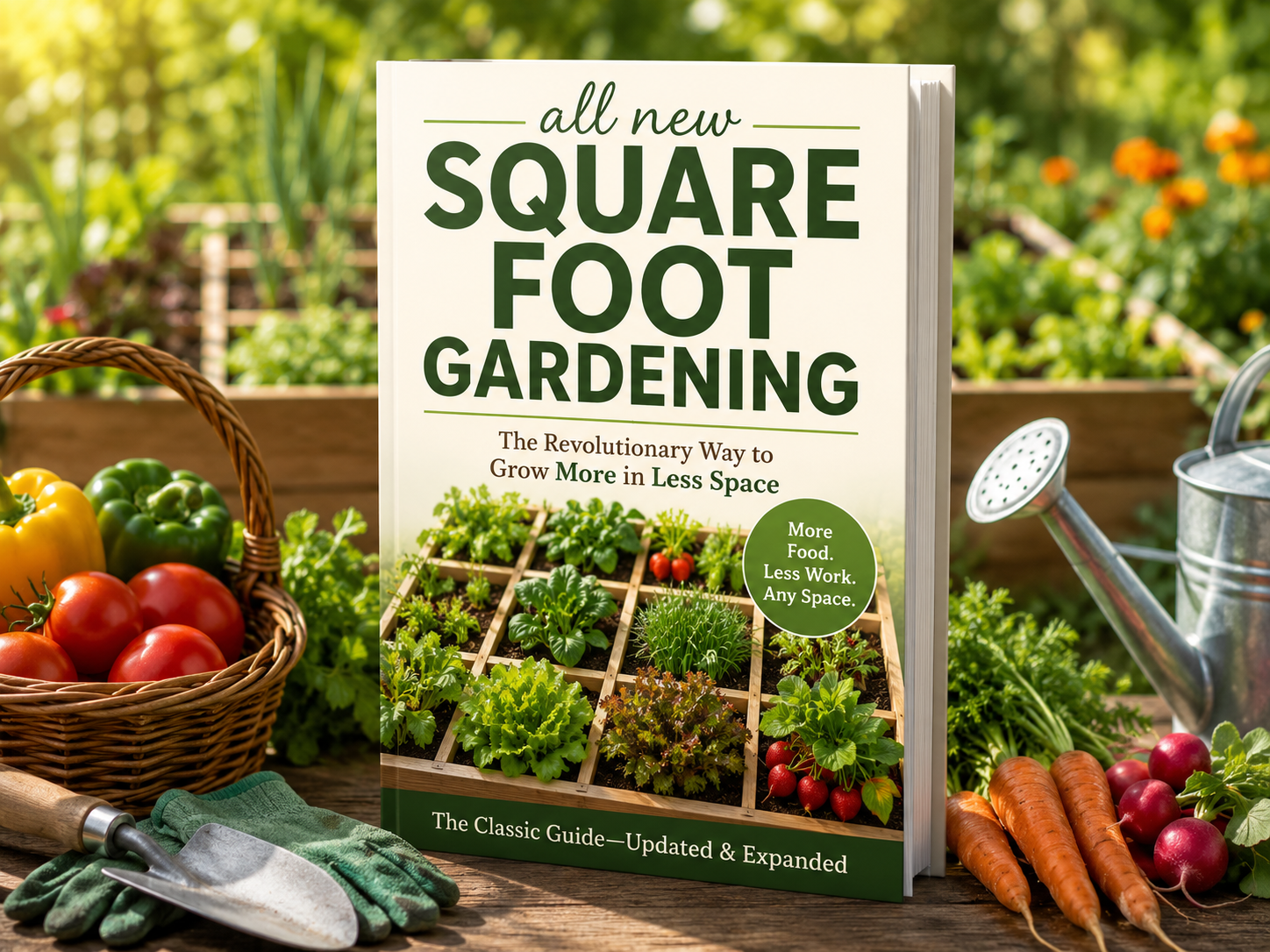
Get my honest thoughts on the all new square foot gardening book. Learn the top grid secrets to grow a stress-free backyard harvest now!
Last winter, my garden was a sad mess of weeds and hard clay. I sat by my warm fire, ready to quit for good. Then, a friend handed me a worn copy of Mel Bartholomew’s classic guide. That simple paperback changed the way I look at backyard dirt forever.
Why Read the All New Square Foot Gardening Book?
This amazing guide is the ultimate blueprint for growing massive amounts of fresh food in tiny spaces. It simplifies your layout so you skip the heavy farm chores entirely.
When I first opened the book, I laughed at the ideas. The author told me to throw away my heavy iron shovel. He said long garden rows were a giant waste of space and time. As someone who grew up digging deep ditches, I was highly unsure. But I followed his clear steps anyway. Now, my small plot produces double the food with less than half the daily work.
Unlocking the Main Grid Secrets
The core of the book teaches you to build a smart box and divide it into clear squares. This clean design completely removes the guesswork from your planting schedule.
Building Your Very First Box Frame
The guide walks you through making a basic four-by-four foot wooden frame. I used cheap wood boards from my local yard on a sunny Saturday morning. The book stresses that you only need a box that is six inches deep. I thought that sounded way too shallow for big plant roots. However, the special soil blend makes up for the lack of deep space.
The Power of the Physical Grid
You must place a real, solid grid on top of your box frame. I used thin wood lath strips and small metal screws to make my grid lines. The book warns you never to just skip this simple step. The clear lines keep your mind focused on single feet of space. It helps you see exactly where to drop each seed without wasting an inch.
The Famous Soil Recipe That Saves Your Back
You can completely forget about digging up your heavy yard dirt. The book shares a magic three-part mix that keeps your soil perfectly loose for years.
Mixing the Three Perfect Ingredients
The author blends equal parts of peat moss, coarse vermiculite, and rich compost.
https://03ivnx6famgyjy4bgvemk84v57455e0thv3a8tpmel0nr98w0s-h929177950.scf.usercontent.goog/gemini-code-immersive/shim.html?origin=https%3A%2F%2Fgemini.google.com&cache=1
Was this visual helpful?YesNo
Peat moss acts like a giant sponge to soak up rain water. Coarse vermiculite creates tiny air pockets so the soil stays fluffy. For the compost, I mix chicken manure, leaf mold, and worm dirt together. This diverse blend gives my crops a rich, full diet all season long.
No Tilling Means No Pain
Standard gardens require you to run a heavy loud machine to tilt the earth. The book explains why tilling actually hurts your soil and wakes up old weed seeds. With this fluffy mix, I can slide my bare hand right down to the bottom of the box. I have not felt back pain from weeding or digging in over two full years.
Easy Vegetable Spacing Rules to Follow
The book features a brilliant chart system for spacing your crops. It shows you how many seeds can fit into a single one-foot square area.
Large Plants That Need Extra Space
Some large crops are total space hogs in your grid box. The guide tells you to plant just one tomato, pepper, or broccoli plant in a square. Two summers ago, I ignored this rule and packed three pepper plants into one foot of space. They fought for sunlight, stayed tiny, and barely grew a single pepper. Trust the book’s layout numbers.
Small Veggies You Can Pack Tight
You can fit a shocking amount of small root crops into a tiny space. The book splits a square into smaller grids for tiny seeds like carrots and radishes.
| Vegetable Variety | Plants Per One Square Foot | Planting Depth | Sunlight Needed |
|---|---|---|---|
| Peppers | 1 plant | 0.25 inches | 8 hours |
| Leaf Lettuce | 4 plants | 0.25 inches | 6 hours |
| Spinach | 9 plants | 0.5 inches | 5 hours |
| Radishes | 16 plants | 0.5 inches | 6 hours |
Placing sixteen radish seeds into one single square sounds totally wild until you see them grow. They pop up in a neat block and shield the soil from the hot sun.
The True Pros and Cons of This Book
Every gardening guide has its bright spots and its weak points. It is best to look at both sides before you buy your own copy.
The Wonderful Benefits of the Guide
The book is written in a very warm, friendly voice that feels like a chat with a neighbor. It includes beautiful pictures, clear drawings, and simple lists that anyone can follow. It is perfect for children, older folks, or anyone with a very small backyard space. You will save tons of cash on wasted seeds and heavy tools.
The Downside of the Method
The biggest downside is the initial cost of the special soil mix ingredients. Vermiculite can be quite hard to find and expensive at small local shops. Also, if you want to grow rows of huge field corn or giant pumpkins, this book is not for you. It focuses tightly on intensive backyard vegetables rather than sprawling farm crops.
FAQs
Does the book cover how to grow fresh herbs in the grids? Yes, the book has an entire section on herbs like basil, parsley, and chives. It shows exact grid counts for each herb type. Learn more about herb spacing.
Can I use old compost from my yard for the soil mix? Yes, but the book states you should blend it with other types of compost. A rich mix provides a better diet for plants. Learn more about compost quality.
Is this paperback guide good for total garden beginners? This is the absolute best book for a beginner because it uses zero complex jargon. The steps are simple to follow out in the yard. Learn more about beginner guides.
How does the book suggest you handle tall climbing plants? The author teaches you to build cheap vertical pipe trellises on the north side of boxes. This lets peas climb high without shading smaller crops. Learn more about vertical frames.
Does the book help with cold winter weather planning? Yes, it includes clever designs for simple plastic dome covers to protect winter greens. This extends your fresh harvest season by many weeks. Learn more about winter protection.