
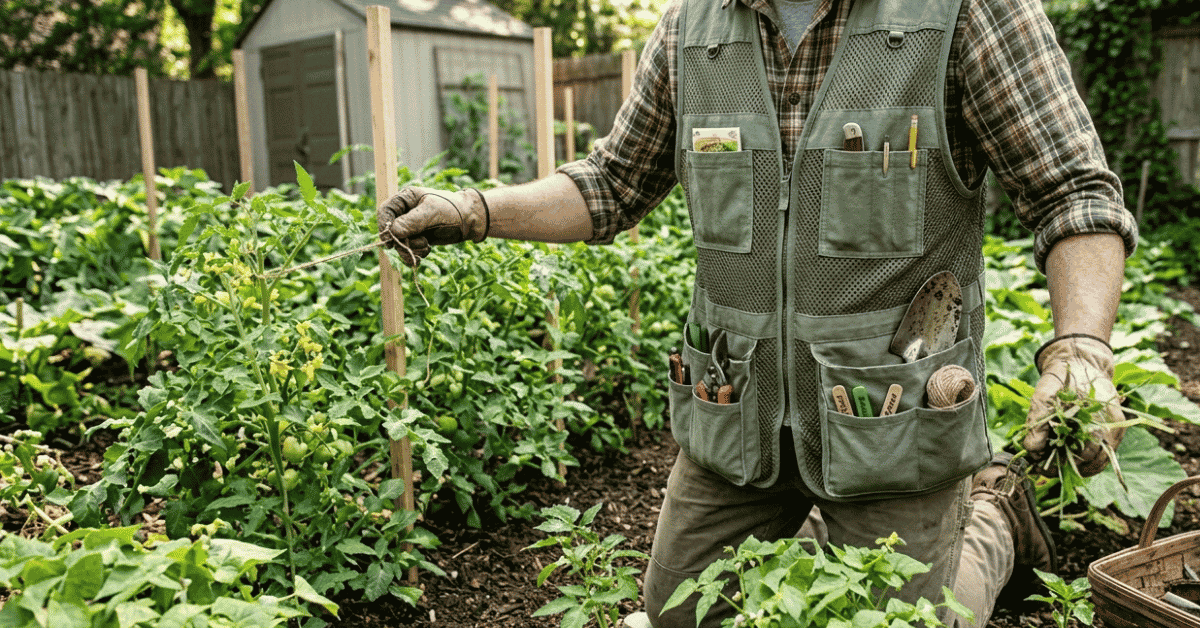
Tougher Garden Tasks? One Vest!
My garden often feels like a joyful mess. I love getting my hands dirty, but sometimes juggling trowels, seed packets, and a phone can be a real pain. That’s why I invested in a gardening vest.
It’s a game-changer for keeping essentials close. This article breaks down why a gardening vest might be your next favorite garden companion.
Why Should I Own a Gardening Vest?
Honestly, before I got my first gardening vest, I thought it was a bit frilly. I pictured something a bit extra that I didn’t really need. But then, one sunny afternoon, while I was planting a whole row of marigolds, it hit me.
My pockets were stuffed. Seeds spilled out. My small hand trowel kept trying to escape.
I was constantly bending down or digging through my pockets. That’s when I finally understood the quiet genius of a good gardening vest. It’s not about looking fancy; it’s about pure, unadulterated garden practicality.
Think about a typical gardening session. You’ve got small hand tools. You’ve got plant tags.
You might have a small notepad or even your phone to snap a pic of a new bloom. Where do these things go? In your pockets?
If you’re wearing shorts, that’s impossible. Even with jeans, pockets get overstuffed quickly. A gardening vest gives you dedicated spots.
It’s like having a small, well-organized workbench right on your torso.
Keeping Your Hands Free (and Your Tools Too)
This is the big one for me. When you’re planting tiny seeds or carefully pruning a delicate rose bush, your hands need to be free. You can’t be fumbling for a trowel or a pair of snips.
A gardening vest has pockets designed for these tools. My favorite vest has loops and pouches that perfectly fit my hand fork and my secateurs. They’re snug but easy to grab.
This means I can focus on the task at hand, not on where my tools have wandered off to. It feels so much more efficient when I’m not dropping things.
My first vest was a bit of an impulse buy after struggling with a particularly fiddly planting job. I was trying to transplant some tiny herb seedlings. I needed my small trowel, my dibber, and a spray bottle for misting.
My pockets were full of seed packets and plant labels. It was a disaster. I kept having to put tools down on the soil, which got them muddy.
Then I’d forget which tool I’d put down. Finally, I ended up with a gardening vest. The difference was night and day.
I had a place for everything. The small hand trowel slid right into a side pocket. My dibber rested in a long, narrow slot.
The seed packets could go into a chest pocket. It made the whole process so smooth.
More Than Just Pockets: Specific Design Wins
Gardening vests aren’t just plain old vests with holes cut in them. They’re thought out. Many have reinforced pockets to handle sharp tools.
Some have special loops for attaching things like small spray bottles or even twine. The fabric is often durable and sometimes water-resistant, which is a huge plus when the dew is heavy or you’ve got a leaky watering can nearby. I’ve seen vests with padded sections, too.
This is great if you’re kneeling a lot; you can kind of use it as a makeshift cushion. It’s these little details that make a real difference in comfort and usability.
One time, I was working on a very hot day. I’d filled a couple of pockets with small water bottles to keep hydrated. The vest held them well.
It wasn’t pulling down on my shoulders or feeling unbalanced. I also appreciated how the pockets were placed. They were easy to reach without me having to contort my body.
This is a big deal for long days in the garden.
The Organization Advantage: Less Stress, More Green Time
Let’s be honest, a tidy garden space often leads to a tidier mind. When your tools and supplies are organized, your gardening sessions become more enjoyable. You’re not wasting time searching.
You’re not frustrated by clutter. This is especially true for intricate tasks. For instance, when I’m starting seeds indoors, I have my seed trays, my potting mix, my dibber, and my labels.
My gardening vest keeps my favorite dibber and a couple of small seed packets right on me. It saves me from constantly running back and forth to my potting bench. It streamlines the whole process.
I remember setting up a new planter box once. I had soil amendments, small trowels, and little baggies of plant food. Usually, I’d end up with bags and tools scattered everywhere.
With my gardening vest, I had the perfect nook for each baggie of plant food. A small trowel went in a side pocket. A handy hand brush for sweeping off stray soil found its way into an inner pocket.
It felt so organised. I could just focus on filling the planter and getting the plants in. It was a small thing, but it made the job so much less chaotic.
Protecting You (and Your Clothing)
While not their primary function, gardening vests offer a bit of protection. The sturdy fabric can shield your clothes from dirt and scrapes. If you’re working with rougher materials or in prickly areas, the vest adds a good layer.
Some vests even have pockets designed to hold a small kneeling pad or gloves, keeping them clean and accessible. It’s a simple way to prolong the life of your everyday shirts and trousers. I’ve definitely saved my favorite t-shirt from a few errant splashes of mud thanks to my vest.
What to Look for in a Gardening Vest
So, you’re convinced and want to snag one. Great! But what should you keep an eye out for?
Every gardener has slightly different needs. Think about the types of gardening you do the most.
Pocket Power: Size and Placement
This is probably the most crucial feature.
- Variety: Do you need deep pockets for hand tools like trowels and cultivators? Or shallow ones for seed packets and labels? A good vest will have a mix.
- Depth: Ensure the pockets are deep enough so tools don’t easily fall out when you bend over.
- Accessibility: Can you easily reach into the pockets without a struggle? Test this out if you can.
Durability and Material Matter
You want a vest that can handle the rigors of garden life.
- Fabric: Look for tough, breathable fabrics like canvas or heavy-duty cotton blends. Ripstop materials are a bonus.
- Stitching: Check that the seams and pocket stitching are strong. Reinforced stitching in high-stress areas is a good sign.
- Water Resistance: A lightly water-resistant finish can be helpful for those damp mornings.
Comfort and Fit are Key
You’ll be wearing this for hours, so comfort is non-negotiable.
- Weight: A vest that’s too heavy can be a burden on a warm day.
- Breathability: Look for vests with mesh panels or breathable fabrics to keep you cool.
- Adjustability: Straps or side adjusters can help you get the perfect fit, preventing chafing.
Special Features to Consider
Some vests go the extra mile.
- Tool Loops: These are great for keeping specific items like snips or a small spray bottle securely attached.
- Padded Sections: Useful for comfort if you kneel a lot.
- ID/Phone Pockets: A clear plastic pocket for your phone can be handy for quick checks.
- D-rings: For clipping on extra items.
Comparing Top Gardening Vest Styles
There are a few types of gardening vests out there. They range from simple utility vests to more specialized designs. Here’s a quick look:
| Vest Type | Key Features | Best For |
|---|---|---|
| Utility Vest | Multiple pockets, tool loops, durable fabric | General gardening, propagating, detailed tasks |
| Pouch Vest | Larger, deeper pouches, often with drawstrings | Carrying bulkier items, larger tools, quick access to supplies |
| Apron Vest (Hybrid) | Combines vest pockets with an apron-like front | Protecting clothes, carrying tools and supplies, versatile use |
My personal favorite is the utility vest. It strikes a great balance between tool carrying and general item storage. I’ve seen some amazing gardening apron vests turn up too.
They offer great front protection. It really boils down to what you prioritize.
Real-Life Garden Vest Experiences: What My Friends Say
I’m not the only one who’s sung the praises of a gardening vest. I chatted with some fellow garden enthusiasts to get their take.
Sarah, who has a huge vegetable patch, told me, “My gardening vest is indispensable. I grow a lot of tomatoes, and I always have my pruning shears and garden twine right there. No more digging through my tool bag for those little things.”
Mark, a keen flower grower, added, “I love the one I have for seed starting. It has so many small pockets. I can keep different seed packets organized, my dibber, and even a small spray bottle for misting.
It makes the whole process so much smoother. It links back to why having the right tools, like a good one simple black gardening tool can make a huge difference too.”
Even my neighbor, who gardens mostly on her balcony, finds hers useful. “I don’t have a lot of space,” she said, “so being able to keep my small hand scissors, some water-saving crystals, and my phone all in one place is a lifesaver. It means I’m not losing things on my balcony.”
Using Your Vest for Smart Gardening Hacks
A gardening vest can be more than just a storage solution. You can use it to enhance your gardening habits. For example, I often use a small, zippered pocket to keep my phone safe and clean.
This way, I can easily access my gardening app or snap a quick photo without worrying about dirt.
Another hack is to dedicate specific pockets for certain tasks. I have one pocket that’s my “seed starting” zone. It holds all my small seed packets and my dibber.
Another pocket is my “pruning station” with my snips and a small sharpening stone. This saves me time thinking about what I need to grab. It’s like prepping your tools in advance.
You can even learn how to use your gardening vest to help with things like 9 surprising classes of small gardening tool benefits.
Maintaining Your Gardening Vest
To get the most out of your gardening vest, a little care goes a long way. After a muddy session, I usually brush off the dry dirt before wiping it down with a damp cloth. If it’s really grubby, I give it a gentle hand wash and hang it to dry.
Avoid putting it in the washing machine too often, as it can wear out the fabric and stitching faster. Checking the pockets for forgotten trowels or sharp objects before washing is also a good idea. Keeping it clean ensures it lasts longer and is always ready for your next gardening adventure.
This also helps maintain materials like black gardening gloves for maximum yard work magic.
When a Vest Might Not Be Your Best Friend
Now, I wouldn’t want to mislead you. A gardening vest isn’t for absolutely everyone or every situation. If you’re doing a very quick watering session, it might be overkill.
If you are just moving a 5-gallon bucket of soil, you probably don’t need a vest. Heavy-duty tasks or very hot weather might make you prefer a simple tool belt or just your pockets.
Also, some simpler garden vests might not offer enough protection if you’re dealing with very thorny plants regularly. In those cases, you might want to invest in thicker gloves or protective sleeves in addition to, or instead of, a vest. For some, the added warmth of a vest in already hot climates could be a drawback, though many are designed to be lightweight.
Consider if you are prioritizing the best 7 hidden wins of gardening plastic and if a vest aligns with that.
Final Thoughts on Vest-ing Your Garden Life
For me, a gardening vest has transformed my garden work. It’s about efficiency, comfort, and a general sense of being prepared. It’s a small investment that pays huge dividends in enjoyment and productivity.
If you find yourself constantly searching for your tools or struggling to keep your essentials organized, give a gardening vest a try. You might be surprised at how much easier and more pleasant your time in the garden becomes.
Should I choose a vest with lots of small pockets or a few larger ones?
It depends on your needs. Small pockets are great for seeds and labels. Larger ones are better for hand tools.
Many vests offer a mix for versatility. Learn more about…
Is a gardening vest comfortable in hot weather?
Many gardening vests are made from breathable fabrics like cotton or canvas. Look for lighter colors and mesh panels for better airflow. Learn more about…
How do I clean my gardening vest?
Brush off dry dirt and wipe with a damp cloth. For heavy dirt, hand wash gently and air dry. Avoid harsh machine washing to preserve fabric.
Learn more about…
Can a gardening vest protect me from thorns?
A gardening vest offers some protection from light scrapes. For very thorny plants, additional gloves or sleeves are recommended. Learn more about…
Are gardening vests only for women?
Absolutely not! Gardening vests come in many styles and sizes for all gardeners. Functionality is key, not gender.
Learn more about…