
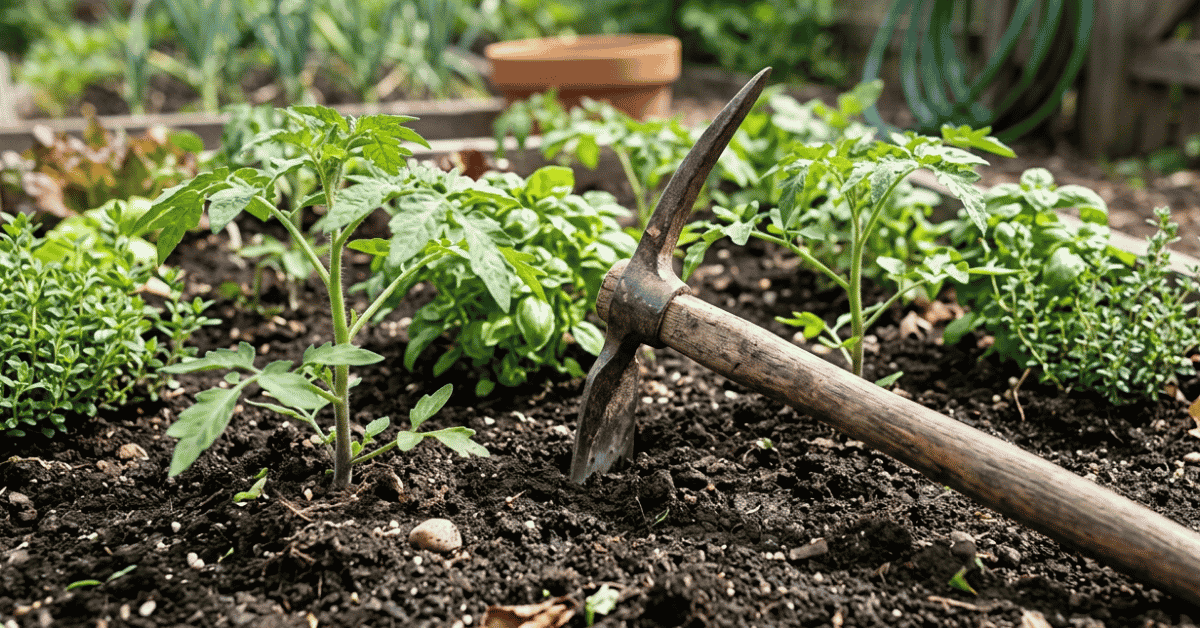
I love getting my hands dirty in the garden. There’s a special kind of satisfaction when you dig into the soil. But sometimes, the ground fights back.
It’s hard, packed, and full of stubborn roots. That’s when my trusty gardening pick becomes my best friend. I’ve relied on one for years, and it’s made all the difference.
This tool is a game-changer for tough jobs.
Why Am I Using a Gardening Pick?
When I first started gardening seriously, I thought a shovel was enough. Boy, was I wrong! I’d spend ages trying to break up rocky soil or pry out thick roots.
It was back-breaking work, and honestly, quite frustrating. Then, a seasoned gardener saw me struggling and showed me his pickaxe. He explained how this simple tool could save so much effort.
I was skeptical, but I tried it. What a revelation! It cut my work time in half and saved my back.
It’s perfect for those moments when a shovel just won’t cut it. It’s not just about brute force; it’s about leverage and focused power.
Digging into the Gardening Pick
A gardening pick is a wonderful tool. It’s designed for breaking up hard ground. Think of it like a heavy-duty hammer with two pointed ends.
Or sometimes, one end is pointed, and the other is a small, flat blade. The pointed end can pierce tough soil. It can break apart rocks and dislodge stubborn roots.
The blade end, if it has one, acts like a small hoe. It can chop through smaller roots or scrape away soil.
I remember one particularly hot summer day. My new garden plot was basically a rock quarry. I’d been trying to dig a trench with a spade for an hour.
Sweat was pouring, and I’d barely made any progress. My pickaxe made quick work of it. I’d drive the point into the ground, then twist and lift.
The rocks and hard clay just crumbled. It felt so efficient. It made me actually enjoy the tough part.
Types of Gardening Picks
There aren’t a ton of fancy types, but they generally fall into a few categories.
-
Standard Pickaxe: This is the classic. It has a pointed pick on one side and a chisel or adze (a flat blade) on the other. The pointed side is for piercing and breaking. The chisel side can cut through roots or break up clods of soil. I find this one to be the most versatile for most gardening tasks.
-
Mattock: This is very similar to a pickaxe, but often the adze blade is wider and flatter. It’s excellent for chopping roots and breaking up compacted soil. Some gardeners use them interchangeably with pickaxes. It really depends on the heft and balance you prefer.
-
Earth-Breaking Pick: Some heavier-duty picks are made for commercial use. They’re often longer and heavier. For typical home gardening, a standard pickaxe is more than enough. Don’t go for something too heavy; you need control.
Materials and Construction
Most good picks have a strong steel head. This is crucial for durability. The handle is usually wood, fiberglass, or steel.
-
Wood Handles: These are traditional and can offer a good grip. However, they can break if you’re too rough or if they get wet and dry out repeatedly. My first pick had a wood handle, and it served me well for years until it eventually snapped.
-
Fiberglass Handles: These are lighter and more durable than wood. They absorb shock well, which is nice after a long day of digging. Many modern picks use them, and I’ve found them to be very reliable.
-
Steel Handles: These are the strongest. They’re less common for gardening picks and more for heavier demolition tools. They can be a bit jarring on your hands due to vibration.
The head should be securely attached to the handle. You don’t want it wobbling when you swing. A good pick feels balanced in your hands.
That balance helps with control and reduces fatigue.
When Is a Gardening Pick Your Best Tool?
There are specific scenarios where a gardening pick truly shines. It’s not an everyday tool for every task, but it’s indispensable when you need it.
Breaking Hard-Packed Clay Soil
Clay soil can be a nightmare. When it’s dry, it’s like concrete. A shovel will just bounce off.
A pickaxe can easily break it up. I once had to dig a foundation for a small garden shed in really dense clay. It was summer, and the soil was baked solid.
My pickaxe made it manageable. I’d swing, break a chunk, and then clear it away with a shovel.
Removing Stubborn Roots
Tree roots, old shrub roots, or even tough perennial roots can be difficult. Shovels often cut them, but they can also bend or break your shovel blade if you hit something too thick. The pointed end of a pickaxe can pierce through even thick roots.
You can then use the blade end to chop them. This is vital when you’re clearing an area for a new garden bed or removing an old plant. I’ve had to tackle some serious ivy roots that were like ropes.
The pick made short work of them. This is like the magic a black gardening tool can offer for tough jobs.
Digging in Rocky Ground
If your garden is full of stones, a pickaxe is your ally. You can use the pick to dislodge rocks. You can also use it to break apart smaller rocks that are embedded in the soil.
It’s much more effective than trying to pry out every single stone with a shovel. Clearing rocks makes planting and future digging so much easier.
Creating Drainage Trenches
When you need to dig a deep trench, especially in harder soil, a pickaxe can help you break through the initial tough layers. This is especially true if you’re dealing with compacted soil that water struggles to drain through. A well-dug trench can save your plants from waterlogged conditions.
Preparing New Garden Beds
If you’re turning over a patch of ground that hasn’t been gardened before, it might be full of tough turf, roots, and compacted soil. A pickaxe is essential for the initial breaking and loosening of this ground. You’re essentially breaking up the ‘skin’ of the earth.
How to Use a Gardening Pick Safely
Like any powerful tool, using a pickaxe requires care. Safety is paramount.
The Right Stance and Swing
Always stand with your feet shoulder-width apart. This gives you a stable base. When you swing, keep your back straight.
Bend your knees and use your body for power, not just your arms. Don’t overswing. Aim for controlled, deliberate strikes.
A wide, wild swing can cause you to lose balance or hit something unintended.
Eye Protection and Gloves
Always wear safety glasses. Flying debris is a real danger, especially when breaking rocks or compacted soil. Sturdy gloves are also a must.
They protect your hands from blisters and provide a better grip. You don’t want your hands slipping on the handle.
Know Your Surroundings
Before you swing, look around. Make sure there’s no one near you. Be aware of underground utilities.
If you’re unsure, have someone check for utility lines before you start digging deeply. You don’t want to hit a pipe or cable.
Let the Tool Do the Work
Don’t try to muscle through everything. Use the weight and sharpness of the pickhead. A good strike will go deep.
If you have to force it, you might be using it incorrectly or the tool might be dull. My first experience with a pick involved a lot of awkward shoving. Once I learned to just let the weight of the head do the work, it became much easier.
Storing Your Pick for Longevity
Proper storage keeps your pick in good shape. I store mine in my shed.
-
Clean and Dry: After each use, brush off any dirt or mud. Make sure the head and handle are dry before storing. This prevents rust on the steel head and rot on a wooden handle.
-
Protect the Head: If your pick has a sharp point, you might want to cover it. A piece of thick cloth or a dedicated pick cover can prevent accidents and protect the point from damage.
-
Hang It Up: Storing it on a wall hook keeps it out of the way and prevents the head from resting on the ground, which can lead to rust.
Comparing Picks to Other Tools
It’s good to know where a pick fits in your toolkit. It’s not a replacement for everything.
| Tool | Best For | Limitations |
|---|---|---|
| Gardening Pick | Breaking hard soil, roots, rocks; initial groundwork | Not for fine tilling or general digging |
| Shovel | General digging, moving loose soil, planting | Struggles with hard-packed or rocky ground |
| Garden Hoe | Weeding, breaking up surface soil, shaping beds | Not for deep digging or removing large roots |
| Trowel | Small-scale planting, transplanting, digging | Too small for tough jobs, not enough leverage |
Think of it this way: the pick is your heavy artillery for the toughest spots. The shovel is your everyday workhorse for moving dirt. The hoe is for refining and maintaining.
And the trowel is for delicate tasks. Each has its place. My 5-gallon bucket often sits nearby when I’m using my pick, ready to gather the loosened debris.
Is a Gardening Pick Worth the Effort?
Absolutely! For many gardeners, especially those with challenging soil conditions, a pick is not just helpful; it’s essential. It represents an investment in saving your strength and making gardening more enjoyable.
I’ve seen gardening friends give up on projects because the soil was too difficult. A good pick changes that narrative. It empowers you to tackle the hard jobs.
It’s one of those tools that doesn’t get used every single day, but when you do need it, you’re incredibly grateful you have it. It unlocks possibilities in your garden that might otherwise be out of reach. It’s like finding a hidden gem, a simple breakthrough for your yard work.
Frequently Asked Questions About Gardening Picks
Can I use a regular pickaxe for gardening?
Yes, a regular pickaxe is often ideal for gardening, especially for breaking hard soil and roots.
How do I prevent rust on my gardening pick?
Clean and dry the pick after each use, and store it in a dry place. A light coat of oil can also help.
What’s the difference between a pickaxe and a mattock?
A mattock often has a wider, flatter blade on one side, making it better for chopping roots and wider soil clearing.
Is a pickaxe too heavy for a beginner gardener?
A standard pickaxe is manageable. Focus on technique. Lighter fiberglass handles can also reduce perceived weight.
When should I consider using my gardening pick instead of a shovel?
Use your pick when a shovel struggles to penetrate hard, compacted soil, rocks, or thick roots. Learn more about tool benefits.