You want a thriving vegetable garden, right? Getting your plants up and growing strong is key. Trellises are a fantastic way to help them reach their full potential.
Let’s explore how they can transform your garden patch into a productive paradise.
Why Do I Need Trellises for Vegetable Gardening?
Honestly, when I first started my garden, I thought trellises were just for pretty flowers. My cucumbers and tomatoes were sprawling everywhere. They took up so much space and were a pain to harvest.
I’d often find mushy, rotten ones hidden on the ground. It was a mess! Then, my neighbor, who has the most amazing garden, showed me her setup.
She had these sturdy frames holding up everything. She explained how trellises are total game-changers for veggies. They offer support, improve air circulation, and make harvesting a breeze.
Plus, they make your garden look so much tidier and more organized. It honestly felt like a secret weapon I was missing all along.
Boosting Plant Health with Trellises
One of the biggest benefits of trellising your vegetables is how much it helps them stay healthy. When plants are tangled on the ground, they’re prone to rot and disease. Moisture gets trapped.
Bugs love to hide in those dense, damp piles. With a trellis, your plants grow upwards. The leaves and fruits get more sunlight.
Air can flow freely around them. This drastically cuts down on issues like powdery mildew and fungal diseases. My bean plants used to get black spots all the time.
Once I put them on a simple ladder trellis, that problem basically vanished. It’s like giving your plants their own personal spa day, keeping them clean and dry.
Saving Precious Garden Space
If you’ve got a small yard or a tiny balcony garden, every inch counts. This is where trellises really shine. They let you grow up instead of out.
Think of a vining plant like a sweet potato or a pole bean. Without support, they’d cover a huge patch of ground. On a trellis, they take up a much smaller footprint.
I managed to grow almost double the amount of zucchini in my little raised bed just by using a simple A-frame trellis. It allowed me to use the ground space for lower-growing crops like lettuce and radishes. It’s like creating vertical real estate for your veggies!
It’s a simple gardening trick that saves you so much room.
Making Harvesting Way Easier
Let’s talk about the harvest. Bending over to pick beans or tomatoes from a sprawling vine can be tough on the back. It’s also hard to spot everything when it’s hidden amongst leaves and branches on the ground.
Trellising brings your harvest up to a more comfortable level. Fruits and vegetables hang visibly, making them easy to see and reach. I remember one late summer day, I was picking cherry tomatoes.
Without the trellis, I would have spent ages hunting for ripe ones. Instead, they were all right there, plump and ready, waiting to be plucked. It made a big job feel much quicker and more enjoyable.
It’s amazing how a little bit of vertical structure can make such a difference in your gardening routine. You can even prune them easily to focus energy on fruit production.
Types of Trellises for Your Veggies
Choosing the right trellis depends on what you’re growing and your garden space. There’s a style for almost every vegetable and setup.
Simple Stake and Cage Options
These are the most basic but often very effective.
- Single Stakes: Great for sturdy plants like single-stem tomatoes or peppers. You just push a strong stake into the ground next to the plant and tie the main stem to it as it grows.
- Tomato Cages: These are common wire cages. They sit over young plants and give them support as they grow taller. They’re easy to use and quite affordable. I’ve found the sturdier, galvanized ones last much longer than the flimsy plastic ones.
DIY and Custom-Built Trellises
This is where you can get creative. You can build trellises from all sorts of materials.
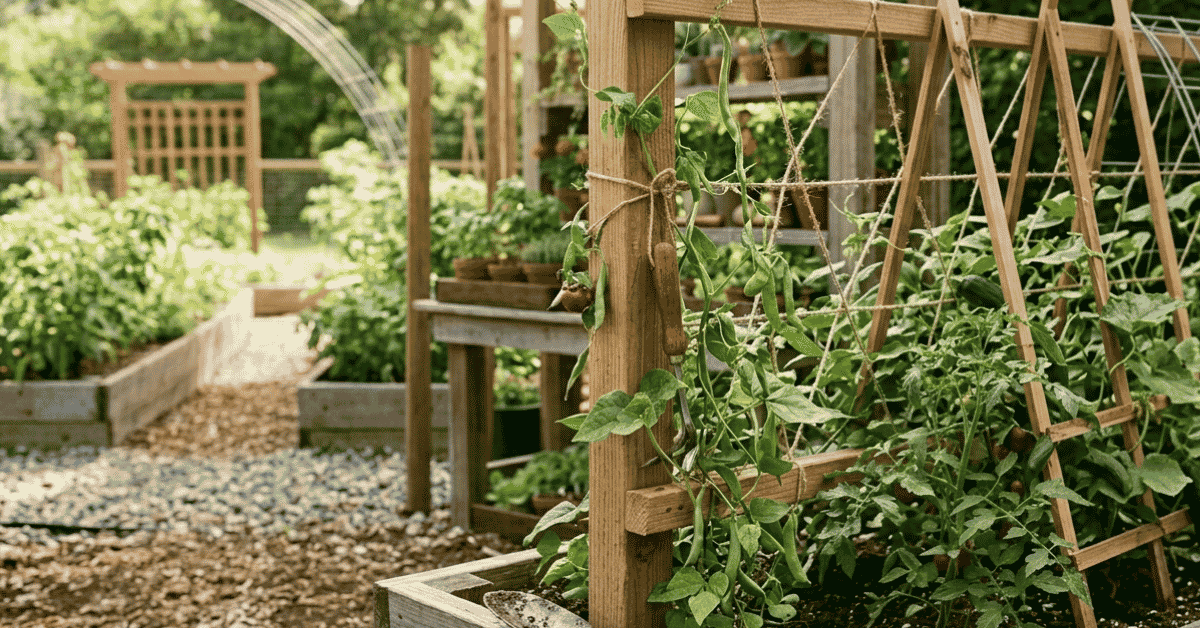
- Wood Frames: Building a simple wooden frame with mesh or slats is a solid option. You can make them any size you need. I built a neat A-frame out of scrap lumber for my peas one year. It looked rustic and worked like a charm.
- Panel Trellises: These are often made from wire mesh or metal grids attached to posts. They provide a large surface for climbing plants. I’ve seen some beautiful ones made with galvanized steel panels.
- Bamboo Structures: Bamboo is lightweight, strong, and sustainable. You can tie bamboo poles together to create teepees, arches, or simple grids. My neighbor used simple bamboo stakes to support his cucumbers, and they looked fantastic.
Netting and Fabric Supports
These offer a flexible way to support vining plants.
- Netting: You can suspend netting between posts or stakes. Plants like cucumbers, peas, and beans will naturally climb up the netting. It’s a very cost-effective option.
- Fabric Grow Bags with Supports: Some grow bags come with built-in trellising systems or attachments. These are great for small spaces and offer a neat, all-in-one solution.
Archways and Arbors
For a more decorative and grand effect, consider arches.
- Garden Arches: These are freestanding structures that allow plants to climb over a pathway or entrance. They add beauty and maximize vertical growing space. Imagine walking under an arch covered in fragrant cucumbers or flowering beans! It’s a real showstopper and a fantastic way to get plants off the ground. I saw a beautiful iron arch this past summer dripping with ripe tomatoes.
Matching Trellises to Your Vegetables
Not all vegetables are created equal when it comes to climbing. Knowing which ones benefit most from a trellis is key.
Top Veggies That Love Trellises
- Cucumbers: These are natural climbers. They have tendrils that grab onto anything. Trellised cucumbers are less prone to mildew and easy to harvest. My personal favorite way to grow them is on a this simple garden trellis.
- Tomatoes: Many tomato varieties, especially indeterminate ones (the ones that keep growing all season), need sturdy support. Cages or stakes work best for most. For larger plants, a strong cage or a well-built frame is a must.
- Pole Beans and Runner Beans: These beans are vigorous climbers and will quickly scramble up any support you give them. They are ideal for netting or tall panel trellises.
- Peas: Sweet peas and shelling peas love to climb. A simple net or a small trellis is perfect for them. They often start climbing as soon as they sprout.
- Squash and Melons (Smaller Varieties): Some smaller, vining varieties of squash and melons can be trellised. You’ll need a very sturdy support and might need to net or tie the developing fruit to prevent it from falling. A strong, wide A-frame or a heavy-duty panel can work.
- Edible Flowers: Nasturtiums and other vining edible flowers can also use trellises and add beauty to your garden.
Veggies That Might Not Need Trellises
- Bush Beans: These grow as compact bushes and don’t typically need support.
- Leafy Greens: Lettuces, spinach, and kale are low-growing and stay on the ground.
- Root Vegetables: Carrots, radishes, potatoes, and onions grow underground and don’t need climbing support.
- Bush Cucumbers/Squash: Some varieties are bred to be compact and bushy, not vining.
Building Your Own Trellis: A Quick Guide
Want to try your hand at DIY? Building a simple trellis is very rewarding. For a weekend project, an A-frame trellis is a great start.
Materials You’ll Need:
- Wooden stakes or poles (about 6-8 feet long)
- Wire or strong twine
- Screws or nails (if joining wood)
- Wire mesh or heavy-duty netting (optional)
Steps to Build a Simple A-Frame:
- Select Lumber: Choose sturdy wood that can withstand the elements. Cedar or redwood are good choices for durability.
- Determine Size: Decide how wide and tall you want your A-frame. A common size might be 4 feet wide at the base and 5-6 feet tall.
- Assemble Legs: Take two stakes. Lay them on the ground, angled at the top to form an ‘A’. Secure them together at the top with wire, twine, or a screw. Repeat for the other side.
- Connect Legs: Stand up your two ‘A’ frames, about 3-4 feet apart. Connect them at the top with another stake or a crossbar using wire or screws.
- Add Support (Optional): If using wire mesh, staple it securely to the frame. This gives smaller plants more to grab onto for support.
- Place in Garden: Position your A-frame where you want your vining plants to grow. Bury the ends slightly for stability.
This type of trellis, built yourself, can be incredibly strong and long-lasting. It’s a project that brings a lot of satisfaction. It’s amazing how a few pieces of wood can create such a functional and beautiful garden feature.
Trellis Care and Maintenance
Once your trellises are up and your plants are climbing, a little maintenance goes a long way.
- Check for Stability: Periodically check that your trellises are still firmly in the ground, especially after strong winds or heavy rain. Re-stake or tighten supports as needed.
- Prune for Airflow: As plants grow, you might need to prune some leafy growth to ensure good air circulation. This is especially important for tomatoes to prevent diseases. You might find that pruning is a great way to manage your plants on the trellis.
- Clean Up: At the end of the season, remove dead plant material from the trellises. This prevents disease overwintering. Store any removable trellises to protect them from the elements. My old wooden trellis I built, which I’ve shared insights on at this hidden dark secret, has lasted years because I clean it well.
- Repair: Inspect your trellises for any damage. Loose wires, cracked wood, or rusty patches should be repaired promptly to keep them functional and safe. A little bit of upkeep ensures your trellises serve you for many seasons.
FAQs About Vegetable Garden Trellises
What’s the best trellis material for tomatoes?
Sturdy wire cages or robust wooden frames are best. They support heavy fruit. Learn more about…
Can I trellis smaller plants like peas?
Yes, peas love to climb nets or small wire structures. They’re quite easy to support. Learn more about…
How tall should a trellis be for cucumbers?
A 5-6 foot tall trellis is usually sufficient for most cucumber varieties. Learn more about…
Do I need to tie plants to trellises?
Some plants climb on their own, others need gentle tying with soft ties. Learn more about…
Can trellises help prevent pests?
Yes, better airflow and less ground contact reduce disease and pest hiding spots. Learn more about…