
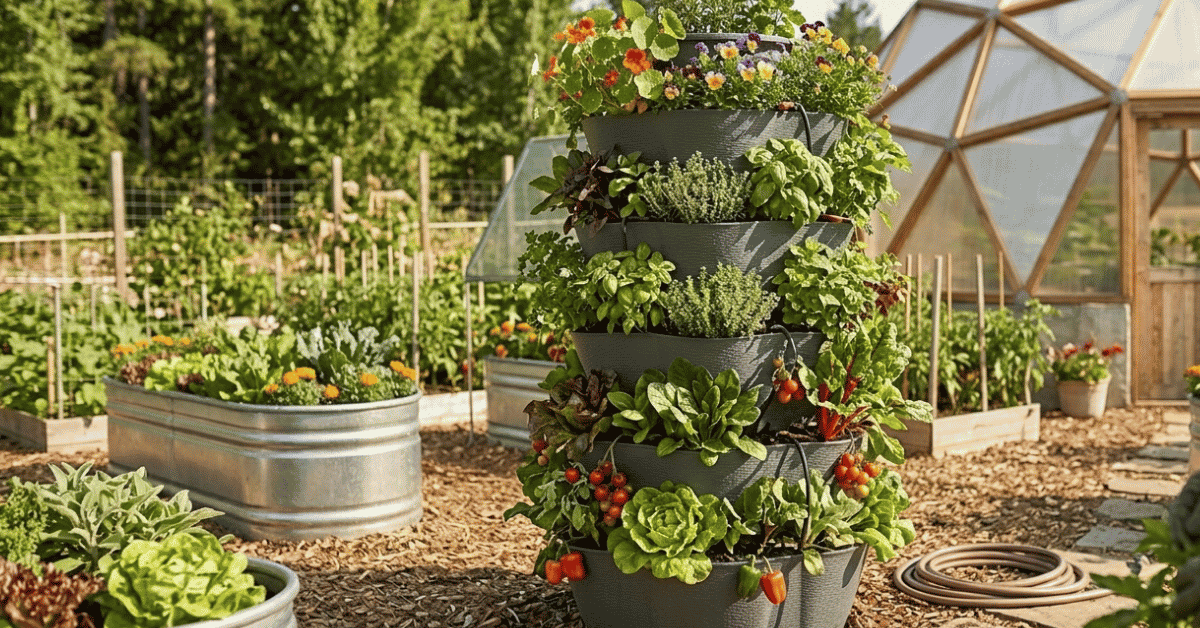
You’re looking for a better way to grow your own food. A gardening tower could be your answer. This guide shares my personal insights on making a gardening tower work for you.
Get ready to change your garden game!
Why Do I Need a Gardening Tower?
Honestly, I was skeptical at first. I love my garden, but some days, bending over is just tough. My back isn’t what it used to be.
Then I saw a gardening tower. It seemed a bit fancy. But my curiosity got the better of me.
I decided to try one.
And wow, I’m so glad I did. A gardening tower lets me grow a lot of plants in a small space. Think herbs, strawberries, and leafy greens.
They all get sunlight and air. It means less weeding, too. Plus, harvesting is way easier.
No more getting dirt all over my knees. It’s like bringing the garden up to my level. For anyone with limited space or mobility, it’s a total game-changer.
The Best Plants for Your Gardening Tower
Choosing the right plants is key to a successful gardening tower. You want things that don’t get too big. And you want plants that love growing upwards.
My first tower was full of herbs. Basil, mint, chives, parsley, they all thrived. They just needed consistent water.
The vertical nature of the tower also means plants get good air circulation. This helps prevent some common plant diseases. I’ve also had great luck with strawberries.
They trail down and look pretty. Plus, fresh strawberries are the best. Leafy greens like lettuce and spinach are also perfect.
They grow fast and you can harvest them often. Even some smaller tomato varieties or peppers can work. Just make sure they aren’t too heavy.
I learned that lesson the hard way. One vine got really big and almost tipped the whole tower over!
Fruiting Stars for Your Tower
When thinking about fruits for your tower, strawberries are the undisputed champions. They love the sun and the space to hang down. Their compact growth habit is ideal.
I find that planting them in the middle tiers works best. This gives them good sun exposure and room to spread.
Consider dwarf varieties of bushes if you’re feeling adventurous. However, these can get heavy. You need to ensure your tower is very stable.
For most people, sticking to strawberries is the safest bet for sweet, home-grown fruit.
Leafy Greens: A Tower Staple
Leafy greens are a dream in a gardening tower. They grow so quickly. You can harvest outer leaves and the plant keeps producing.
This means a continuous supply of fresh salads. I always have a mix of lettuce, arugula, and spinach. It’s so convenient to just grab what I need for lunch.
The consistent moisture and good airflow in a tower setup really help leafy greens flourish. They are less prone to pests and diseases when grown vertically like this.
Herbs: Flavor Without the Fuss
Herbs might be the easiest thing to grow in a gardening tower. They are generally small. They don’t need a lot of soil.
And most herbs love to dry out a bit between waterings. This is great because towers can sometimes drain quickly.
My go-to herbs are basil, cilantro, mint, and rosemary. I keep a mint plant on a lower level. It can be a bit invasive, so keeping it contained in the tower is perfect.
Having fresh herbs at arm’s reach makes every meal so much better. It truly elevates simple dishes.
Setting Up Your Gardening Tower for Success
Getting your gardening tower set up right is crucial. The first time I built mine, I just filled it with regular potting soil. That was a mistake.
The soil became too dense. It didn’t drain well. My plants started to look sad.
Now, I always mix in some perlite or vermiculite. This makes the soil lighter and helps with drainage. It’s like giving the roots more room to breathe.
I also make sure the tower is on a stable surface. A wobbly tower is a disaster waiting to happen. I learned that the hard way too.
A strong gust of wind and my entire tomato plant ended up on the ground.
Soil Mix Matters
The right soil blend is non-negotiable for a happy gardening tower. I’ve found that a mix of high-quality potting soil, compost, and perlite works wonders. The perlite is the key for drainage.
It keeps the soil from becoming compacted. This ensures healthy root growth.
I typically use a ratio of 2 parts potting soil, 1 part compost, and 1 part perlite. This provides nutrients and excellent aeration. It’s surprisingly light, too, which is good if you need to move the tower.
Stability is Key
I can’t stress this enough: your gardening tower needs to be stable. If it’s going on a deck or patio, make sure it’s level. Some towers come with a base that you can fill with water or sand for added weight.
I highly recommend those.
If you live in a windy area, consider staking your tower. You can use sturdy anchors to secure it to the ground. I once had a strong wind knock over a smaller tower.
It was heartbreaking. Now, I’m overly cautious about stability. It’s better to be safe than sorry.
Watering and Feeding Your Tower Garden
Watering is probably the most frequent task with a gardening tower. Because they are tall and have lots of surface area, they can dry out faster than ground beds. My rule of thumb is to check the soil moisture every day.
I stick my finger about an inch or two down. If it feels dry, it’s time to water.
I try to water in the morning. This lets the plants take up moisture before the heat of the day. And it helps prevent fungal issues that can arise from wet leaves overnight.
For feeding, I use a liquid fertilizer. I dilute it according to the package directions. I feed about every two weeks.
This gives the plants the nutrients they need to produce well. You don’t want your plants getting stressed. Stressed plants don’t produce as much.
Consistent Watering Schedule
My biggest tip for watering is consistency. Towers have a lot of soil in a small footprint. This means they can dry out very quickly, especially on hot or windy days.
I’ve developed a habit of checking my tower’s soil moisture every single morning.
If the top inch feels dry, I give it a good soaking. I usually water until I see some moisture drip from the bottom drainage holes. This ensures the entire root ball is hydrated.
Avoid overwatering, though. That can lead to root rot. That’s why checking the soil is so important.
Feeding for Productivity
To get the most out of your gardening tower, you need to feed your plants regularly. I’ve found that a good quality liquid fertilizer works best. I usually use an organic blend.
I feed my plants every two to three weeks during the growing season.
The dilution rate is important. Always follow the instructions on the fertilizer package. Too much can burn your plants.
Too little won’t give them the boost they need. It’s a balance, but once you find it, your plants will reward you.
Common Gardening Tower Problems and How to Fix Them
Even with the best setup, you might run into a few snags. One common issue is uneven watering. Water tends to run down the sides.
So, the middle plants might get less than the top or bottom. I solve this by watering slowly and thoroughly. Sometimes, I also rotate the tower to make sure all sides get a good drink.
Another thing I’ve dealt with is nutrient deficiencies. If you see yellowing leaves, your plants might need more food. Adjust your fertilizing schedule or choose a stronger blend.
Pests can also be an issue, but the elevated nature of the tower often reduces them. If you do see bugs, a strong blast of water usually helps. Or you can use an organic pest spray.
Uneven Watering Distribution
This was a big one for me early on. Water loves to find the path of least resistance. In a tower, this means it often channels down the sides.
The plants in the middle sections can end up drier than those at the top or bottom.
My solution involves slow, deliberate watering. I pour water into the top opening. Then, I let it trickle down.
I also try to water from multiple points around the top if possible. Rotating the tower while watering can help ensure even distribution.
Pest Patrol in Your Tower
While towers generally experience fewer pests than ground-level gardens, they aren’t immune. I’ve found aphids can sometimes be a problem. They love to cluster on new growth.
My first line of defense is always a strong spray of water from my hose. This physically knocks them off. If that doesn’t work, I resort to organic insecticidal soap.
I make sure to spray the undersides of leaves too. Early detection is key here. Catching them when there are only a few makes them much easier to manage.
Gardening Tower Maintenance: Keeping it Fresh
After the growing season, don’t just leave your tower empty. Clean it out well. Remove any old plant debris.
Wash the inside and outside with soapy water. This prevents diseases from lingering. I like to give mine a good scrub.
Some people like to refill their towers with fresh soil mix each year. I often just add more compost and amendments to the existing soil. This saves money and is good for the environment.
I also check the tower itself for any damage or wear. Repair anything that looks weak. A little care keeps your gardening tower producing for years to come.
Seasonal Cleaning and Soil Refresh
Once the harvest is done, it’s time for a good clean-up. I empty out all the old soil. Then, I wash the entire tower thoroughly.
I use a mild soap and water solution. This gets rid of any lingering pests or diseases.
After cleaning, I decide on the soil. For a revitalized tower, I often mix in plenty of fresh compost. I also add some slow-release organic fertilizer.
This prepares it for the next planting season. Some people opt for completely new soil mix each year, but I find rejuvenating the old soil works well and is more eco-friendly.
Winterizing Your Tower
If you live in a colder climate, think about how you’ll store your tower over winter. Some towers are made of durable plastic and can withstand the cold. I usually empty mine and store it in a shed or garage.
If the tower is metal, you might want to check for rust. A quick spray of protective oil can prevent this. Making sure it’s clean and dry before storing is essential.
This prevents mold and mildew issues. It also protects the material from harsh winter conditions.
A Look at Different Gardening Tower Types
There are many kinds of gardening towers out there. I’ve seen simple DIY versions made from PVC pipes. That’s a fun project for handy folks.
Then there are modular plastic towers. They stack up easily. Some are quite sturdy.
There are also more decorative metal or ceramic towers. They can be quite beautiful. The best type for you depends on your budget and your needs.
Think about how much you want to grow. Consider the space you have. And definitely think about how easy it is to assemble and maintain.
I started with a basic plastic one. It was great for learning. Now, I’m eyeing a larger, more robust model.
| Tower Type | Pros | Cons | Best For |
|---|---|---|---|
| DIY PVC Pipe | Inexpensive, customizable | Requires tools and DIY skills | Budget-conscious, creative gardeners |
| Modular Plastic | Lightweight, easy to assemble, stackable | Can be less durable, might fade in sun | Beginners, small spaces, moving around |
| Metal/Ceramic | Durable, aesthetically pleasing | Heavy, more expensive, can rust/chip | Permanent garden features, visual appeal |
| Fabric Pockets | Breathable, portable | Soil dries out very fast, can degrade | Temporary setups, experimenting with plants |
Is a gardening tower worth the investment?
Yes, investing in a gardening tower can be incredibly rewarding. It lets you grow more food in less space. It’s easier on your body.
And it looks pretty cool too! The initial cost can vary. Some are quite affordable.
Others are a bit pricier. But the yield and convenience often make up for it. Plus, the joy of harvesting your own fresh produce is priceless.
Learn more about optimizing your garden space.
Can I grow flowers in a gardening tower?
Absolutely! While I focus on edibles, a gardening tower is fantastic for flowers too. Think petunias, marigolds, or even trailing nasturtiums.
They add color and attract pollinators. This can benefit your edible plants as well. Just be mindful of their watering needs.
Learn more about companion planting.
How much water does a gardening tower use?
This really depends on the size of your tower, the plants you’re growing, and the weather. In hot, dry conditions, you might water daily. On cooler days, every few days might suffice.
The key is to check the soil’s moisture regularly. This ensures you’re not over or underwatering. Learn more about water-wise gardening.
What if my gardening tower gets too heavy?
If your tower feels too heavy to move, it’s probably well-established and stable! That’s a good sign. For frequent moving, you might want to refill it with lighter soil mix.
Or consider getting a tower that’s naturally lighter. Some towers have wheels. That makes them much easier to reposition.
Learn more about garden mobility solutions.
How do I start seeds in a gardening tower?
You can start seeds directly in the pockets of your gardening tower. Make sure the soil is moist and warm. Keep it consistently watered.
Some people prefer to start seeds in small pots or seed trays. Then, transplant the seedlings into the tower once they’re a few inches tall. This can give them a stronger start.
Learn more about seed starting techniques.