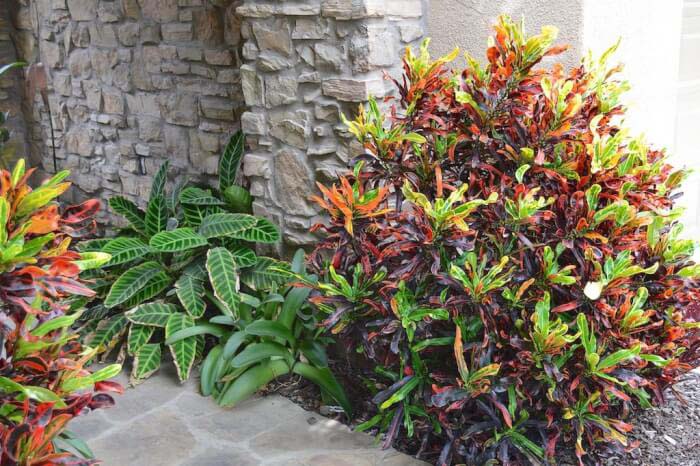
The best front yard croton garden ideas use colorful croton plants as focal points, border plants, foundation accents, or container displays. In warm parts of the United States, crotons can add lasting color to sunny entryways and tropical landscapes. In colder areas, pots make it easier to move them indoors when temperatures drop.
A front yard does not need a long row of flowers to look bright and neat. A few croton plants can bring shades of red, orange, yellow, green, and even purple to the space around your home. Their bold leaves can make a plain porch, short walkway, or bare garden bed feel more alive. The trick is to give their rich colors enough room to stand out.
Crotons, known botanically as Codiaeum variegatum, are tropical evergreen shrubs grown for their colorful leaves. They suit warm, frost-free parts of the United States, including much of South Florida, Hawaii, and other mild coastal areas. Gardeners in colder regions can still enjoy them in pots, but they need to protect the plants from cold weather. Before choosing a layout, check your local climate, sunlight, and available space.
Source: garden.eco
1. Create a Symmetrical Croton Garden
A symmetrical layout is a simple way to give your front yard a tidy, planned look. Place matching croton plants on both sides of your front door, porch steps, or main walkway. This design works well with homes that have a centered entrance or a clear path from the sidewalk to the door.
Choose crotons with similar leaf colors and growth habits for a balanced effect. You can use two large pots near the entrance or plant matching groups in the ground. Keep the plants far enough from doors and walkways so their leaves do not crowd people as the shrubs grow.
Source: garden.eco
Use matching pairs
Place two similar crotons beside the front steps or at the start of a garden path. Matching pairs create order without filling every open space.
Repeat the same colors
Choose plants with red and yellow leaves on both sides of the entrance. Repeated colors help the design feel connected.
Keep the edges neat
Use a simple bed edge, stone border, or clean strip of mulch to separate the planting area from the lawn.
How to Make the Layout Look Balanced
Start by marking the main visual points in your yard. These may include the front door, porch columns, steps, and path. Set the crotons in place while they are still in their nursery pots, then view the arrangement from the street. Move them until the design looks even from the main approach.
Leave breathing room
Follow the expected mature width on the plant label instead of spacing shrubs by their small nursery size.
Avoid crowded entrances
Keep plant leaves clear of doorways, steps, and narrow walking routes.
2. Line the Front Walkway With Colorful Crotons
A croton border can turn a plain front walkway into a colorful garden feature. Plant a loose row along one side of the path or use matching groups on both sides. This works best when the path has enough width to leave a clear walking area after the shrubs mature.
For a relaxed look, mix crotons with different leaf shapes but keep a shared color theme. Green and yellow crotons can brighten a simple entry, while red and orange leaves can create a stronger tropical feel. Repeat a few varieties instead of planting every color you can find.
Source: garden.eco
Use a single row
Plant one row beside a straight path for a clean, easy-to-read border.
Build small color groups
Place three or more crotons of a similar type together where the bed is wide enough. Grouping keeps the display from looking scattered.
Keep the path open
Allow space between the plants and the walkway so mature leaves do not block the route.
Choose a Border That Fits Your Path
A narrow path often looks better with a low, open planting scheme than with a dense hedge. For a wider walkway, larger crotons can frame the route and draw the eye toward the front door. If you need to walk past the bed to reach a gate, leave a clear gap at that point.
For narrow paths
Use compact crotons or containers that can be moved as the plants grow.
For broad paths
Combine crotons with low ground cover or a narrow mulch strip to create layers without blocking the route.
3. Use Crotons Around the Front Porch
Crotons near the porch can make the entrance feel warm and inviting. Their vivid leaves stand out against white siding, pale walls, wood trim, and neutral paving. Use them to frame the steps or soften the corners of a covered porch.
Containers are useful when the porch receives a mix of sun and shade throughout the day. They also make it easier to change the layout or protect plants when cold weather arrives. Choose sturdy pots with drainage holes, and make sure each pot can support the mature plant without tipping over.
Source: garden.eco
Place tall pots at porch corners
Use a pair of large containers to create a strong entrance feature. Keep them out of the path of doors and steps.
Mix pot sizes carefully
A large pot beside a smaller one can add depth, but repeat materials or colors to keep the arrangement connected.
Match the porch style
Plain clay, concrete-look, or dark neutral pots let colorful croton leaves take the lead.
Pick Plants for the Light Near Your Door
A covered porch may receive less light than the open yard. Crotons usually develop stronger leaf color in bright light, but a plant that has grown in shade can scorch if moved into intense direct sun too quickly. Check the light at the exact spot where the pot will sit, and increase sun exposure gradually when needed.
Bright porch
Choose a suitable croton variety and introduce it to direct sun over time.
Deep shade
Consider a different shade-tolerant plant if the porch stays dim for most of the day.
4. Combine Crotons With Ornamental Grasses
Ornamental grasses can soften the bold shape of croton leaves. Their narrow blades create a fine texture beside the croton’s broad, twisted, or pointed foliage. This contrast gives a front garden more depth without requiring a large mix of flowers.
Choose grasses that suit your climate and the light in the bed. In warm regions, some compact ornamental grasses can pair well with crotons, while in other areas a suitable local grass or grass-like plant may be a better choice. Check the mature size and water needs of both plants before combining them.
Source: garden.eco
Place grasses at the front
Use shorter grasses near the bed edge, with crotons behind them. This keeps the colorful shrubs visible from the street.
Repeat the same grass
Repeating one grass type creates a calm rhythm beside several croton plants.
Limit extra colors
Green or bronze grasses can help the red, orange, and yellow croton leaves stand out.
Build Layers Without Hiding the Crotons
Place the tallest plants toward the rear of the bed and shorter plants near the front, based on the main viewing angle. Keep enough room between each group for air to move through the foliage. Avoid choosing a grass that will spread into the walkway or crowd the croton roots.
For a small bed
Use one grass clump beside one or two crotons instead of adding several plant types.
For a wide bed
Repeat small grass groups between croton clusters to create a steady pattern.
5. Make Crotons the Main Focal Point
A focal point gives the eye one clear place to rest. A large croton with colorful leaves can serve this purpose in an open lawn, a curved bed, or a front garden near the driveway. This approach is useful when you want a bold look without planting a large number of shrubs.
Choose a plant with a strong shape and place it where it can be seen from the street. Surround it with lower green plants, mulch, or a simple stone edge. The quieter plants act like a frame, making the croton’s leaf colors easier to notice.
Source: garden.eco
Use one standout plant
Choose a croton with a broad, full form for a visible spot near the front entry or lawn edge.
Create a simple base
Use a ring of suitable low plants or mulch around the croton, leaving enough room for care and growth.
Keep nearby features quiet
Avoid placing many bright flowers, painted ornaments, and other focal points right beside the croton.
Choose the Right Place for a Feature Plant
Stand across the street and look at the front of your home before choosing the planting spot. Consider the view from the driveway and the front door as well. Do not plant the croton where it will hide house numbers, block a window, or interfere with a driver’s view near the driveway.
Near the entry
A croton can guide the eye toward the front door when the space receives enough light.
Near a lawn corner
A single feature plant can break up a large open lawn without taking up much usable space.
6. Design a Croton Hedge for Color and Screening
A row of crotons can form a colorful informal screen in a warm climate. This layout works beside a front porch, along a property boundary, or in front of a plain wall. The foliage can add visual privacy, though the amount of screening depends on the variety, mature height, and spacing.
Crotons are not the best choice for every hedge. They need warmth and suitable light, and many types grow into broad shrubs rather than narrow, formal shapes. If your front yard has limited space, use a short cluster instead of a continuous row.
Source: garden.eco
Plan the final width
Check the plant label and allow room for the full spread of each shrub.
Use repeated varieties
A single variety creates a more even screen than a mix of plants with very different sizes.
Leave room to prune
Keep the row accessible so you can remove damaged growth and maintain the desired shape.
Avoid Planting a Hedge Too Close Together
Small nursery plants may leave gaps at first, but tight spacing can create crowding as they mature. Crowded shrubs are harder to inspect and may have less airflow through their leaves. Follow the recommended spacing for the selected variety rather than trying to make the hedge look full on planting day.
For a loose screen
Use a wider spacing that allows each shrub to develop its natural shape.
For a narrow front yard
Consider a few container-grown crotons or a different, more compact plant instead of a full hedge.
7. Add Crotons to a Mixed Tropical Garden Bed
Crotons can anchor a mixed tropical bed with plants that have different leaf sizes and shapes. Large green leaves, fine fern fronds, and upright foliage can balance the bright colors of crotons. The result can feel lush without making every plant compete for attention.
Choose companion plants that share similar light, soil, and moisture needs. Tropical plants do not all need the same amount of sun, and a plant that thrives in deep shade may struggle beside a croton in a sunny bed. Group plants by their growing needs before arranging them by color.
Source: garden.eco
Pair crotons with ferns in suitable shade
Use ferns in a protected area with enough moisture and shade, while keeping sun-loving crotons in brighter spots.
Add broad green foliage
Plants with solid green leaves can create a restful background for multicolored crotons.
Use a limited plant palette
Choose two or three companion types and repeat them across the bed for a more organized look.
Use Leaf Shape as a Design Tool
Color is only one part of a good planting plan. Crotons may have narrow, curled, broad, or deeply shaped leaves, depending on the variety. Pairing these with round, broad, or fine-textured leaves creates contrast even when the companion plants are all green.
For a calm look
Mix colorful crotons with plants that have solid green foliage and simple shapes.
For a bold look
Combine contrasting leaf forms, but repeat the main colors to prevent the bed from feeling scattered.
8. Grow Crotons in Pots for Small Front Yards
Container gardening is one of the most flexible front yard croton garden ideas. It suits small porches, rental homes, paved entryways, and yards with poor native soil. Pots also make it easier to move crotons indoors when cold weather threatens.
Choose containers with drainage holes and enough space for root growth. A free-draining potting mix made for containers is usually more suitable than dense garden soil. Large pots can dry more slowly than small ones, but they may also become heavy and difficult to move.
Source: decorhomeideas.com
Use one large container
A single croton in a substantial pot can create a clear focal point beside the front door.
Group three containers
Arrange pots of different heights in a small group, using a shared color or material to tie them together.
Keep containers off the walkway
Place pots where they will not block steps, door swings, ramps, or access for deliveries.
Choose the Right Pot and Growing Mix
A pot needs drainage so excess water can escape. Avoid containers that trap water at the bottom, and do not rely on a layer of rocks to fix poor drainage. Use a suitable potting mix, then water until excess moisture drains from the holes.
For hot, sunny areas
Check pots often because warm air and sun can dry the root zone faster.
For colder regions
Use a container that you can move or protect before the first frost.
9. Design a Croton Garden for a Small Front Yard
A small front yard benefits from a simple plan with a few strong features. Too many plant types, pots, and borders can make the space feel crowded. Use crotons to add color in one or two key places, then leave some open space around the plants.
Start with the entrance and the path, since these features shape how people move through the yard. A compact bed beside the steps or a pair of containers may provide enough color. If the front yard also needs room for parking, bins, or a clear view of the road, keep plants away from those areas.
Use a single curved bed
A gentle curve can soften a square lawn or plain wall without taking up the whole front yard.
Repeat one croton variety
A repeated plant creates a clear pattern and can make a small space look more orderly.
Keep ground space open
Use a small mulch area or simple ground cover instead of filling every gap with extra plants.
Make a Simple Plan Before Buying Plants
Measure the bed and note how much sun it receives at different times of day. Mark the expected mature width of each croton, then add the companion plants around it. This basic plan can prevent the common problem of buying too many plants for a narrow space.
For a very small entry
Use one container or one compact planting group rather than a full border.
For a small lawn
Create a bed near one edge so the remaining lawn still feels open and easy to care for.
10. Match Croton Colors to Your Home’s Exterior
Croton leaves can contain several colors at once, so the home’s exterior can guide your plant choices. White, cream, gray, and other neutral walls offer a simple backdrop for vivid red, orange, and yellow leaves. Homes with colorful siding or busy stonework may look better with a smaller, more restrained croton display.
Look at the whole front of the house before choosing a color scheme. Consider the roof, trim, front door, driveway, and nearby plants. The goal is not to match every leaf to a paint color, but to create a display that feels connected to the rest of the property.
White or cream homes
Crotons with strong red, orange, and yellow markings can create a bright contrast.
Gray or stone exteriors
Green-and-yellow foliage or red-toned leaves can add warmth against a cool backdrop.
Colorful house exteriors
Choose fewer crotons and repeat one main foliage color to avoid visual clutter.
Use Mulch and Edging to Finish the Design
A neat bed edge helps colorful plants look intentional. Organic mulch can help retain soil moisture and reduce weeds, while suitable stone edging can define the planting area. Keep mulch away from direct contact with stems and trunks, and avoid piling it against the house.
For a natural look
Use a suitable organic mulch with simple edging that blends with the yard.
For a formal look
Use a clean bed line and repeat one edging material along the front garden.
11. Choose the Best Croton Planting Spot
The right planting spot depends on sunlight, warmth, drainage, and room to grow. Crotons generally develop stronger leaf color in bright light, though the amount of direct sun they can handle varies by variety and how they were grown. Plants raised in lower light may need a gradual transition to a sunnier spot.
Crotons are tropical plants that are sensitive to cold. They are most practical as permanent landscape shrubs in warm regions where hard freezes are uncommon. If your area has freezing winters, plan to grow them in containers or choose a hardy alternative for year-round outdoor planting.
Check sunlight
Observe the proposed planting site before buying a croton. Note whether it gets morning sun, strong afternoon sun, or mostly shade.
Check drainage
Avoid low spots where water sits after rain. Croton roots need a growing medium that drains well.
Check mature size
Read the label for the selected variety and allow enough space around walls, paths, and nearby shrubs.
What If Your Front Yard Gets Mostly Shade?
A shaded yard may support crotons if the light is still bright enough, but the foliage may show less vivid color and growth may become sparse. A covered porch or dense tree canopy can reduce light more than it first appears. If the site stays deeply shaded, choose a plant better suited to those conditions rather than forcing a croton to grow there.
Try a brighter edge
Place a container near an open area where it receives more daylight, while protecting it from sudden harsh sun.
Use a shade-tolerant companion
Keep ferns or other suitable shade plants in darker areas and reserve crotons for brighter parts of the yard.
12. How to Plant Crotons in a Front Yard Garden
Planting crotons is easier when the site is prepared before the shrub comes out of its nursery pot. Choose a warm period without a forecast of cold weather, and water the plant if its root ball is dry. Avoid planting into waterlogged soil or during extreme heat that could stress a newly planted shrub.
Set the croton at the same depth it grew in its container. A hole that is wider than the root ball helps you loosen the surrounding soil, but the plant should not sit too deep. After planting, water the root zone well and watch the soil as the plant settles in.
Step 1: Prepare the bed
Remove weeds and debris. Improve drainage where needed, and check that the site suits the plant’s light and warmth needs.
Step 2: Set the plant in place
Dig a hole wider than the root ball. Position the top of the root ball level with the surrounding soil.
Step 3: Backfill gently
Fill around the roots with the removed soil. Do not pack the soil so tightly that water and air cannot move through it.
Step 4: Water and mulch
Water thoroughly, then add a modest layer of mulch while keeping it away from the stems.
Step 5: Monitor new growth
Check soil moisture and watch for drooping, leaf damage, or signs of poor drainage as the croton adjusts.
How to Tell If a Newly Planted Croton Is Settling In
A healthy croton should hold most of its leaves and begin producing new growth when conditions are suitable. Some leaf drop can happen after a move because the plant is adjusting to changes in light, temperature, or watering. Check the soil and growing conditions before changing several parts of the care routine at once.
Signs of progress
Leaves remain firm, stems look sound, and new leaves begin to appear over time.
Signs to investigate
Repeated wilting in wet soil, widespread yellowing, or soft stems may point to root or watering problems.
13. Croton Care for a Colorful Front Yard
Regular care helps crotons keep their foliage full and colorful. Water when the soil begins to dry rather than following a rigid schedule, since heat, rain, soil type, and pot size all affect moisture. Container plants may need water more often than shrubs growing in the ground.
Crotons do not thrive in soil that stays soggy. At the same time, long dry spells can cause leaves to droop or fall. Check the root zone before watering, and adjust your routine as weather changes.
Water with care
Feel the soil before watering. Give the root zone a thorough drink when needed, then let excess water drain away.
Feed during active growth
Use a fertilizer suited to ornamental foliage plants and follow the label. Avoid excess fertilizer, which can damage roots or cause unwanted growth.
Prune with a purpose
Remove dead or damaged stems with clean tools. Prune lightly to shape the plant rather than cutting it back without a clear need.
Check for pests
Inspect the undersides of leaves and tender shoots for scale insects, spider mites, and other pests. Identify the problem before choosing a treatment.
Why Are My Croton Leaves Falling Off?
Leaf drop can follow a sudden change in temperature, light, watering, or location. It can also occur when roots stay too wet or when the plant dries out for too long. Check the soil first, then review recent weather and any recent move from indoors to outdoors.
Wet soil and yellow leaves
Check drainage and allow the growing medium to dry to a suitable level before watering again.
Dry soil and drooping leaves
Water the root zone thoroughly and check more often during hot, dry weather.
Damage after a cold night
Move potted crotons to a warm, protected area. Wait to assess damaged growth until the extent of injury is clearer.
14. Common Mistakes to Avoid With Front Yard Crotons
A colorful croton garden can lose its appeal if the plants are crowded, poorly placed, or grown in the wrong climate. Most problems can be reduced by checking the site before planting and allowing room for each shrub to mature. A simple layout is often easier to care for than a bed packed with many different varieties.
Croton sap can irritate the skin, and plant material should not be eaten. Wear gloves when pruning or handling damaged stems, keep cuttings away from children and pets, and wash your hands after working with the plant.
Planting in deep shade
Low light can lead to weaker growth and less vivid leaf color. Choose a brighter site or another plant suited to shade.
Overwatering
Constantly wet soil can harm roots. Improve drainage and check moisture before adding more water.
Ignoring winter temperatures
Crotons can suffer severe damage from cold and frost. Protect containers before cold weather and do not assume a tropical shrub will survive a freezing winter outdoors.
Crowding the walkway
Plants that look small at the nursery may spread widely. Check mature dimensions before setting them beside steps or paths.
Using too many colors and textures
A mix of every available croton variety can look busy. Repeat a few plants and leave room for their foliage to show.
Handle Crotons Safely
Wear gardening gloves when pruning or repotting crotons, especially if you have sensitive skin. Avoid touching your eyes while handling the plant, and clean your tools after use. If a person or pet chews the plant or develops symptoms after contact, contact an appropriate poison information service or veterinary professional for guidance.
Keep cuttings contained
Collect fallen leaves and pruned stems rather than leaving plant material where children or pets may chew it.
Clean tools after pruning
Remove sap and plant residue from tools before using them on other plants.
15. Which Front Yard Croton Design Should You Choose?
The best design depends on the size of your yard, the climate, and how much care you want to give the plants. A container display suits a small porch or a cold-winter region. A border or mixed bed can work well in a warm yard with enough light and room for mature shrubs.
Use the table below to compare common layouts. These are design options rather than a ranking, and each one still depends on the chosen croton variety and the growing conditions at your home.
For a formal home
Choose a symmetrical pair of crotons near the entry, with matching pots or neat bed edges.
For a tropical look
Combine crotons with suitable broad-leaved plants and restrained green companions.
For a small yard
Use one focal plant or a small group in containers to avoid crowding.
Compare Layouts Before You Plant
Think about what you need the garden to do. A border adds color along a path, while a focal plant draws attention to one spot. A hedge may provide a visual screen, but it needs more space and regular care than a small container display.
Lowest space commitment
One or two pots are easy to rearrange and can suit small entryways.
Strongest repeated pattern
A border or symmetrical layout creates a clear visual rhythm when there is enough room.
Most flexible for mixed planting
A broad bed lets you combine crotons with green foliage, grasses, and other plants that share similar growing needs.
16. Plan a Croton Garden That Looks Good All Year
Crotons can provide colorful foliage through much of the year in suitable warm conditions, but the garden still needs seasonal care. Heat, heavy rain, dry spells, and cold snaps can change how much water and protection the plants need. A design that suits your local climate will be easier to maintain than one built around appearance alone.
Before buying plants, check local frost patterns and the amount of sun your front yard receives across the seasons. In warm areas, you may be able to grow crotons outdoors year-round. In colder parts of the United States, plan for containers that can move indoors or use cold-hardy plants for permanent beds.
In warm regions
Inspect plants after heavy rain and during dry spells. Maintain good drainage and remove damaged foliage as needed.
In regions with cold winters
Move container-grown crotons to a warm indoor space before frost. Give them bright light and reduce watering when growth slows, without letting the root ball dry out completely.
During the growing season
Watch for new growth, check for pests, and prune only when necessary to maintain the desired form.
Keep the Design Easy to Maintain
A garden is easier to care for when each plant has enough space and similar water needs. Use repeated plant groups, clear bed edges, and accessible paths. These choices also make it easier to spot pests, remove weeds, and water the root zone without disturbing nearby plants.
Repeat plants instead of adding more types
A small set of well-chosen varieties can create a full look with less work.
Keep care access clear
Leave space to reach the back of beds and the sides of containers.
Frequently Asked Questions
Q
Are crotons good plants for a front yard?
Yes, crotons can be useful front yard plants in warm climates. Their colorful leaves add contrast near entrances, walkways, and garden beds. They need suitable light, well-drained soil, and protection from cold, so they are not ideal as permanent outdoor shrubs in every US region.
Q
Do crotons need full sun?
Crotons generally grow well in bright light, and many varieties develop stronger colors with some direct sun. The amount of sun they can handle depends on the variety and how gradually they were exposed to it. Move shade-grown plants into stronger light over time to reduce leaf scorch.
Q
Can crotons survive winter outdoors in the United States?
Crotons are tropical plants and can be damaged by cold temperatures and frost. They are best suited to outdoor landscape planting in warm regions with little or no frost. In colder regions, grow them in containers and move them indoors before freezing weather arrives.
Q
How far apart should crotons be planted?
Spacing depends on the variety and its expected mature width. Read the plant label and allow enough room for the leaves and branches to spread without blocking paths or crowding nearby shrubs. Avoid setting plants close together just to make the bed look full right away.
Q
Can I grow crotons in pots near my front door?
Yes, containers are a practical choice for front doors, porches, and small yards. Choose a pot with drainage holes and use a suitable container mix. Make sure the location gets enough light, the pot does not block access, and you can move it to shelter when cold weather threatens.
Q
Why are my croton leaves turning green or losing color?
Croton color varies by variety and growing conditions. Low light can reduce the intensity of some leaf colors, while abrupt exposure to strong sun can cause scorch. Check the plant’s light, watering, and temperature conditions, then make changes gradually rather than moving it suddenly into harsh sun.
Q
Are croton plants safe around pets and children?
Croton sap can irritate the skin, and the plant should not be eaten. Wear gloves when pruning, wash your hands after handling it, and keep leaves and cuttings away from children and pets. Contact a poison information service or veterinary professional if ingestion or concerning symptoms occur.
✦ Wrapping Up
Conclusion
Front yard croton garden ideas can work for many home styles, from a simple porch display to a layered tropical bed. The strongest designs use a clear layout, a small set of plant types, and enough open space for the colorful leaves to stand out. Symmetrical pairs, walkway borders, mixed beds, and containers all offer ways to add color without making the yard feel crowded.
Start by checking your local climate, the sunlight near your entrance, and the mature size of the croton variety you want to grow. Choose a layout that fits those conditions, then focus on drainage, steady watering, and protection from cold. A thoughtful plan will help your front yard look bright while keeping the work manageable.
💡 Key Takeaway
Measure the planting area, observe its sunlight, and choose one croton layout before buying plants. If your region gets frost, plan for containers that can move indoors or choose a cold-hardy alternative for permanent outdoor beds.