
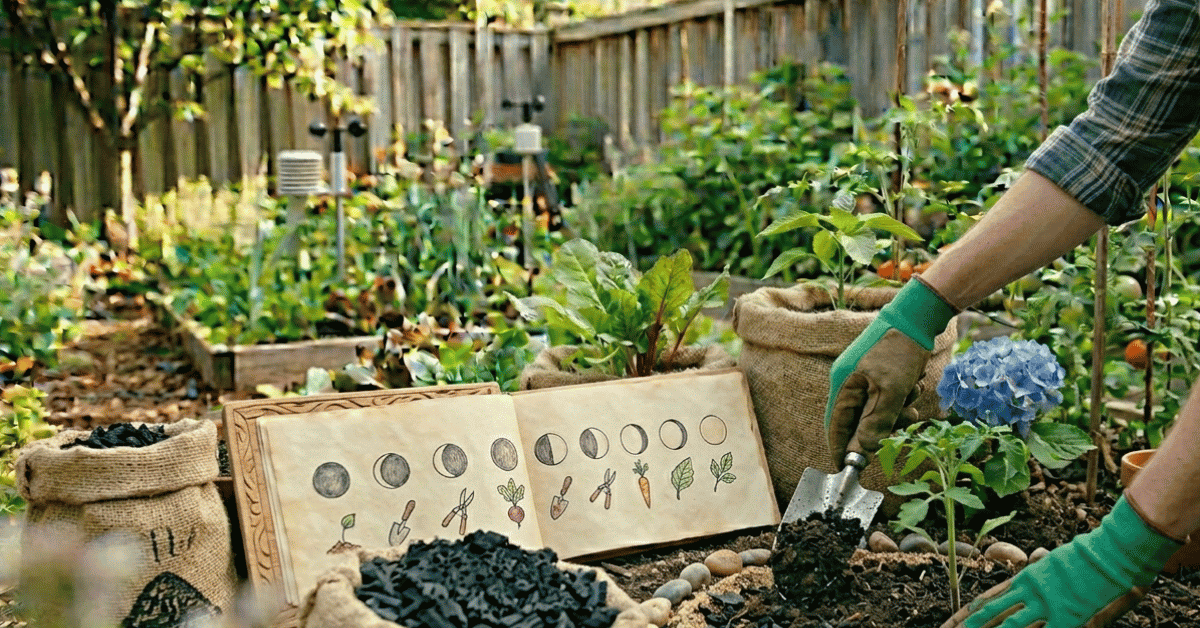
Ever feel like your garden needs a little extra something? I know I do, especially when I’m battling dry spells or my plants just aren’t taking off. Well, recently I stumbled upon something that’s truly changed my gardening game: biochar!
It’s this incredible soil amendment that makes a huge difference, and I’m so excited to share how it can help your plants thrive. Get ready for a healthier, happier garden!
Is Gardening with Biochar Really That Good?
Honestly, I was a little skeptical at first. Biochar sounds a bit fancy, doesn’t it? But after using it in my own garden beds for a couple of seasons, I can confidently say YES, it’s that good.
It’s not some magic potion; it’s a smart soil conditioner that helps your plants in so many ways. Think of it as giving your soil a superpower boost, making it more resilient and fertile. It’s a simple change that delivers impressive results, and I’ve seen my vegetables grow bigger and my flowers bloom brighter ever since I started adding it.
What Exactly is Biochar?
Let me break down what biochar is in simple terms. It’s basically charcoal, but not the kind you use for your barbecue. This charcoal is made in a special process called pyrolysis.
This involves heating organic materials like wood chips, nutshells, or crop waste in a low-oxygen environment. This process removes the water and volatile compounds, leaving behind a very stable, carbon-rich material. It looks a lot like coarse, black charcoal bits.
What’s amazing is how porous it is. These little nooks and crannies are key to its benefits in the garden.
How Does Biochar Help My Garden?
Biochar works like a sponge and a hotel for beneficial microbes. Its super porous structure means it can hold onto water and nutrients, preventing them from just washing away. This is a game-changer, especially in sandy soils or during hot, dry periods.
It also creates a fantastic home for the good bacteria and fungi in your soil. These microbes are essential for plant health, helping them access nutrients and fight off diseases. So, by adding biochar, you’re not just improving the soil structure; you’re creating a thriving ecosystem for your plants.
My First Biochar Experience
I remember the first time I decided to try biochar. My vegetable patch had been struggling with drainage and getting enough moisture. It was a pretty hot summer, and I felt like I was watering constantly, but the plants still looked stressed.
I bought a bag of garden-grade biochar, mixed it into the top few inches of my soil, and waited. Within a few weeks, I noticed a difference. The soil felt richer, and it stayed moist for much longer after watering.
My tomato plants even seemed to be producing more fruit, and the leaves looked a deeper green. It was a visible, tangible change that honestly made me a believer.
Improving Soil Structure with Biochar
One of the biggest wins with biochar is how it transforms your soil structure. It’s like giving your dirt a well-deserved makeover.
Aeration and Drainage
Poorly draining soil can drown plant roots. Biochar’s coarse texture helps to create air pockets in the soil. This makes it easier for water to drain away from the roots.
It also allows oxygen to reach them. This is crucial for healthy root development. I’ve noticed in my own garden that areas where I’ve added biochar don’t get as waterlogged after heavy rain.
The water just seems to move through more efficiently, which is great for preventing root rot.
Moisture Retention
Conversely, biochar is a fantastic water holder. Those tiny pores I mentioned earlier soak up water like a sponge. This water is then slowly released back to the plants as they need it.
This means less frequent watering for you and less stress for your plants during dry spells. My potted plants, which tend to dry out quickly, have benefited immensely. I find myself watering them perhaps half as often as I used to.
This is a huge time-saver and directly leads to happier, less thirsty plants.
Nutrient Holding Capacity
This is another big one. Biochar has a high cation exchange capacity (CEC). Don’t let the fancy term scare you!
It means biochar can hold onto positively charged nutrients in the soil, like calcium, magnesium, and potassium. Normally, these nutrients can get washed away with watering or rain. Biochar acts like a temporary storage unit, keeping these vital elements available for your plants to use.
This reduces the need for frequent fertilization and ensures your plants get a steady supply of food.
Biochar and Soil Biology
Healthy soil is packed with life. Biochar provides a perfect environment for these tiny helpers to flourish.
A Home for Microbes
As I touched on, biochar is like a microscopic apartment complex for beneficial soil organisms. The vast network of pores provides shelter and surface area for bacteria, fungi, and other microbes. These organisms are essential for breaking down organic matter and making nutrients available to plants.
They are the unsung heroes of a healthy garden. I’ve seen my compost break down faster and seemingly do more for my soil when biochar is present. It’s like the microbes are working overtime!
Enhancing Nutrient Cycling
When you have a vibrant microbial community, nutrient cycling improves. These microbes help convert organic matter into forms that plants can easily absorb. They also help make rock minerals available.
Biochar supports this process by providing a stable environment for these microbes to thrive and multiply. Over time, this leads to more fertile soil and healthier, more vigorous plant growth. I’ve found that my plants need less synthetic fertilizer now.
They seem to get what they need naturally from the soil ecosystem that biochar helps build.
Reducing Nutrient Leaching
Because biochar holds onto nutrients, it significantly reduces nutrient leaching. Nutrients that would otherwise be lost in drainage water are retained in the soil. This is good for your plants and also for the environment.
Less nutrient runoff means cleaner waterways. It’s a win-win situation. This is especially important if you’re using organic fertilizers, as you want to make sure those valuable nutrients are staying in your garden where they belong.
How to Use Biochar in Your Garden
Getting started with biochar is easier than you think. The key is to “charge” it first.
Charging Your Biochar
Raw biochar is like an empty sponge. It can absorb nutrients and water, but it needs something to hold onto! This is where “charging” comes in.
You mix your biochar with nutrient-rich materials before adding it to your soil. A great way to do this is to mix it with compost, aged manure, or a good quality organic fertilizer. Let this mixture sit for a few weeks.
This allows the biochar to absorb the nutrients and water from these amendments. I usually mix up a batch in a big tub with my compost and let it sit in a corner for a month or so. It’s ready to go when it looks and smells rich.
Application Rates
The amount of biochar you use depends on your soil type and what you’re growing. A good starting point for most garden beds is to mix about 5-10% biochar into the top 6-8 inches of soil. For example, if you have a 4×8 foot bed, and you’re digging down 6 inches, that’s roughly 16 cubic feet of soil.
You’d aim for around 0.8 to 1.6 cubic feet of biochar. It’s often sold by volume, so check the packaging. If you’re unsure, start with a lower amount.
You can always add more later in subsequent seasons. For potted plants, a 10-20% mix is generally effective.
When to Add Biochar
You can add biochar to your garden any time you’re preparing new beds or amending existing ones. The best time is usually in the spring or fall when you’re turning over the soil. Make sure to mix it in thoroughly.
You don’t want it sitting as a pure layer. It needs to be integrated with your existing soil. I find mixing it in while I’m adding compost or other soil amendments makes the process go smoothly.
Biochar vs. Other Soil Amendments
How does biochar stack up against other popular soil conditioners? It offers some unique advantages.
Biochar vs. Compost
Compost is fantastic, breaking down organic matter and adding nutrients and beneficial microbes. Biochar complements compost beautifully. While compost breaks down relatively quickly, biochar is incredibly stable and lasts for hundreds, even thousands, of years in the soil.
Biochar holds onto nutrients and water that compost might lose. I like to think of compost as the quick meal and biochar as the well-stocked pantry for the soil. Many gardeners find that a combination of both offers the best of both worlds.
I’ve found that adding biochar to my compost pile actually speeds up the composting process because it provides more surface area for microbes.
Biochar vs. Coconut Coir
Coconut coir is another popular amendment for improving soil structure, particularly for moisture retention and aeration. It’s great for container gardening and seed starting. However, compared to biochar, coco coir breaks down over time and needs to be replenished.
Biochar’s long-lasting nature is a significant advantage. It’s a one-time soil amendment that provides benefits for years to come. While coco coir is excellent for improving drainage and aeration in the short term, biochar offers a more permanent solution for soil health and nutrient retention.
It’s a bit like comparing a temporary fix to a foundational improvement. We’ve found that coconut coir for healthier plants is a great option for specific tasks, but biochar is more of a long-term soil builder.
Biochar vs. Sand
Adding coarse sand can improve drainage in clay soils. However, just adding sand without organic matter can sometimes create a concrete-like substance that is even worse. Biochar improves drainage without the risk of making the soil dense.
Its porous structure creates channels for water and air, unlike sand which can fill in pore spaces. For sandy soils, biochar acts as a sponge, holding moisture and nutrients that sand would just let pass through. I used to add sand to my heavy clay pots, but I found biochar works much better for drainage without making the soil compact.
My Biochar Comparison Table
Here’s a quick look at how biochar compares to other common soil enhancers:
| Feature | Biochar | Compost | Coconut Coir | Coarse Sand |
|---|---|---|---|---|
| Primary Benefit | Long-term soil structure, water & nutrient retention, microbial habitat | Nutrient enrichment, soil structure improvement, microbial boost | Moisture retention, aeration, good for containers | Improves drainage in clay soils |
| Longevity | Hundreds to thousands of years | Months to a few years | 1-3 years | Permanent (acts as filler) |
| Nutrient Holding | Very High | High | Moderate | Low |
| Water Retention | Very High | High | High | Low |
| Aeration | Good (creates pores) | Good | Good | Can be poor if overused in clay |
| Microbial Support | Excellent (habitat) | Excellent (food source) | Moderate | Neutral |
| Application | Mix into soil (charged) | Mix into soil (can be top-dressed) | Mix into soil (especially pots) | Mix into soil (especially clay) |
FAQs
Is biochar safe for my garden?
Yes, garden-grade biochar is completely safe. It’s made from natural materials and is inert, meaning it doesn’t break down easily. It improves soil without introducing harmful chemicals.
Learn more about how biochar can help your garden.
How much biochar should I buy?
This depends on your garden size. A common recommendation is 5-10% by volume mixed into the soil. For a 4×8 foot raised bed, you might need 1-2 cubic feet to start.
Do I have to charge biochar?
While not strictly mandatory, charging biochar makes it work much better and faster. It pre-loads it with nutrients, so it doesn’t initially pull them from your soil.
Can I use barbecue charcoal?
No, barbecue charcoal is treated with accelerants and chemicals that are not good for your soil or plants. Always use biochar specifically made for gardening.
Will biochar make my soil too alkaline?
Most biochar is slightly alkaline, which can be beneficial for acidic soils. However, it generally doesn’t raise the pH too high. It’s always good to test your soil’s pH before and after application.
You might find the benefits of copper in gardening could also be relevant for soil health.