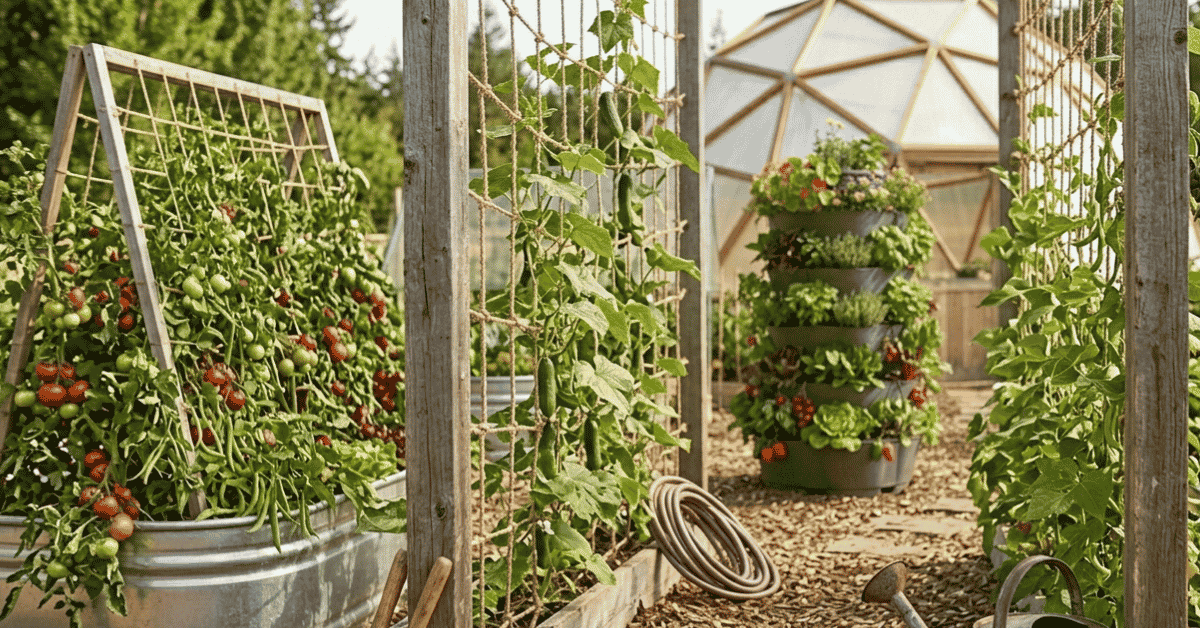
I love seeing my garden reach for the sky. Trellis gardening vegetables are a game-changer for me. It means more food from less space.
Plus, my plants look so much happier when they grow upright. Stick around, and I’ll share my secrets for a bountiful harvest using trellises.
What is Trellis Gardening Vegetables?
Trellis gardening vegetables is all about helping vining and climbing plants grow upwards. Instead of sprawling on the ground, they climb a support structure. This structure is your trellis.
It can be made of wood, metal, or even string. Think of it like giving your plants a place to stand tall. This saves space and keeps your crops clean.
I started doing this a few years back. My small backyard plot felt so much bigger. My tomatoes got more sun, and my cucumbers were easier to pick.
Why Should I Trellis My Vegetables?
You should trellis your vegetables for so many good reasons. My garden used to be a bit of a mess. Everything just sprawled everywhere.
Trellising changed all of that for me. It makes your garden look neater. It also helps your plants breathe better.
Good air flow means fewer sicknesses. And the biggest perk? You get more veggies from the same amount of ground.
It’s like magic for small spaces. I’ve seen my yield triple on some crops.
Maximizing Space
This is the biggest win. If you have a tiny garden, or even just a balcony, trellising is your best friend. Your plants grow up, not out.
This frees up valuable ground space. You can plant more of what you love or add new kinds of vegetables. My neighbor only has a small patio.
She grows tons of beans and peas on a simple wall trellis. It’s amazing what you can fit in.
Better Air Circulation and Sunlight
When plants sprawl on the ground, they can become crowded. Their leaves overlap, cutting off air. This creates a damp environment where diseases love to grow.
Trellising lifts them up. Leaves get more sun. Air flows freely around all parts of the plant.
I noticed my zucchini got less powdery mildew after I started using a taller cage. It really makes a difference.
Easier Harvesting and Pest Control
Bending over to pick produce from the ground is hard on the back. With trellised plants, your veggies are at a much easier height. Plus, fruits and vegetables that are off the ground are less likely to rot.
They also often avoid slugs and other ground-dwelling pests. I used to find half my berries nibbled by slugs. Now, they are mostly safe up on their stakes.
Encouraging Stronger Growth
Giving your plants a place to climb encourages them to grow stronger stems. They have something to hold onto. This can lead to healthier, more vigorous plants overall.
My peas seem to climb with such enthusiasm. It’s satisfying to watch them reach for the sky daily.
What Kinds of Vegetables Can I Trellis?
Lots of vegetables benefit from a little vertical support. You just need to know which ones like to climb or vine. Here are some of my favorites to trellis.
Pole Beans and Peas
These are the superstars of trellis gardening. They are naturals at climbing. Pole beans, like Kentucky Wonders, really take off.
So do sugar snap peas and snow peas. They just keep growing up and producing pods. I find I can harvest peas for weeks on end this way.
Tomatoes
While some tomatoes are bush varieties, many are indeterminate. These types grow and grow all season. They need strong support.
Tomato cages are popular, but a sturdy trellis or stake can work wonders too. I always stake my beefsteak tomatoes. They get huge and need the help.
Cucumbers and Melons
Vining cucumbers are perfect for trellises. They have tendrils that grab onto anything. Small melons, like cantaloupes or honeydew, can also be trellised.
You might need to support the fruit with netting or slings as they get heavy. I learned this the hard way with a falling watermelon!
Squash and Zucchini
Some vining varieties of squash and zucchini can be trellised. You’ll need a very strong support for these. The fruits can get quite heavy.
For smaller varieties, a robust cage or A-frame structure works well. I’ve seen people grow butternut squash up sturdy fences.
Eggplant and Peppers
While not strictly vining, some taller varieties of eggplant and peppers can benefit from staking. This keeps them from flopping over, especially when laden with fruit. It helps keep them upright and tidy.
Choosing Your Trellis Setup
There are so many ways to set up a trellis. It really depends on your space, your budget, and the plants you’re growing. My first trellis was super simple.
Now I have a few different kinds.
Types of Trellises
Here’s a look at common trellis types. I’ve tried a few personally.
- Netting: This is very affordable. You can use plastic or string netting attached to poles or a frame. It’s great for peas and beans. It’s so easy to put up.
- Cages: These are popular for tomatoes. They are usually made of wire. They offer support and containment. I prefer the taller, wider ones. They give the plants more room.
- Stakes: Simple wooden or metal stakes are good for individual plants. You tie the plant to the stake as it grows. It works well for taller peppers or tomatoes. My simple bamboo stakes have saved my plot countless times.
- Arches and Obelisks: These are decorative and functional. They provide a large vertical growing area. They look amazing covered in climbing flowers or beans. They are a bit pricier but really add charm.
- A-frames: These create a triangular shape. You can grow plants on both sides. They are very stable and good for heavier plants. I built one last year for my cucumbers. It was a huge success.
- Wire or String Systems: You can attach wires or strong strings to posts or a fence. The plants then climb these. This can be very inexpensive. A clever trick involves using old bird netting for support.
DIY vs. Store-Bought
You can buy ready-made trellises in garden centers. They are convenient. But building your own can save money.
It also lets you customize sizes. I’ve used scrap wood and old fencing to make my own structures. Simple bamboo stakes often work just fine for smaller plants.
I find that a good set of sturdy bamboo stakes saved my plot last year.
What to Consider When Choosing
Think about the weight of your mature plants. Tomatoes and heavy squashes need strong support. Consider how much space you have.
Measure before you buy or build. Also, think about the look you want. Some trellises are purely functional.
Others add beauty to your garden.
Getting Started with Trellis Gardening
It’s not complicated to start. You just need a bit of planning.
Planting Near Your Trellis
You want to plant your seeds or seedlings close to the trellis. This makes it easy for them to find it and start climbing. For vining plants like peas and beans, plant them a few inches away.
This gives their roots some room. Dig your holes or prepare your soil bed right beside where your trellis will stand.
Supporting Young Plants
As soon as your plants sprout and start to grow a bit, help them get started. Gently guide young tendrils towards the trellis. You can tie or clip them carefully.
This encourages them to attach. I usually use soft ties made from old fabric scraps. They don’t damage the delicate stems.
This small step makes a big difference.
Watering and Feeding
Trellised plants still need regular watering and feeding. Make sure you water the base of the plants. Avoid splashing the leaves too much if you can.
Good soil and regular feeding will support strong growth. Your plants will thank you with lots of produce. I always add compost.
It keeps my soil rich and my plants happy.
Trellis Gardening: A Comparison
Let’s look at some common trellis materials and their pros and cons.
| Material | Pros | Cons | Best For |
|---|---|---|---|
| Wood | Natural look, customizable, sturdy | Can rot if not treated, heavy | Arches, A-frames, sturdy stakes |
| Metal | Durable, strong, often attractive | Can heat up in sun, rusts if not coated | Cages, obelisks, decorative structures |
| Plastic | Lightweight, inexpensive, rot-proof | Can be less sturdy, less attractive | Netting, basic cages |
| Bamboo | Lightweight, strong, eco-friendly | Degrades over time | Stakes, simple supports |
I’ve found that metal is great for long-term use. But for a quick setup, bamboo stakes are fantastic. They’re so simple to use.
My simple bamboo stalks saved my plot when a storm hit last spring. They held my beans upright.
Keeping an Eye on Things
As your plants climb, keep an eye on their progress. Make sure they are well-attached. Check for any signs of stress or disease.
Early detection is key. A quick glance each day is all it takes. My tomatoes usually look so healthy when they’re on their cages.
Troubleshooting Common Trellis Issues
Sometimes things don’t go perfectly. That’s okay. Here’s what to do if you run into problems.
Plant Not Climbing
If your plant isn’t taking to the trellis, check its age and health. Young plants need a little help. Gently tie them.
Make sure the trellis surface is easy for them to grip. Sometimes, a wobbly trellis can deter them. Ensure it’s stable.
Fruit Weighing Down the Trellis
For heavy fruits like watermelons or large squash, you might need extra support. Use pieces of netting or fabric slings to cradle the fruit. This takes the weight off the stem and trellis.
I use old pantyhose for this. They stretch and hold the weight well. This is how I saved my cantaloupes from falling.
Pest or Disease on Trellised Plants
Even trellised plants can get pests or diseases. Because they are off the ground, they often get fewer. But it can still happen.
Good air circulation helps. Regularly inspect your plants. Remove any affected leaves or stems promptly.
Sometimes, a simple treatment can save the whole plant.
The Real Joy of Growing Upwards
Seeing my garden grow vertically is so rewarding. It’s more than just getting more food. It’s about making my garden beautiful and productive.
It’s a challenge that pays off in abundance. The simple act of a bean plant reaching for the sun on a trellis brings me real joy. This approach to gardening has made my yard feel so much more alive.
It’s a secret that’s really changed my plot for the better.
Can I trellis any vegetable?
No, not all vegetables are suited for trellising. Vining and climbing plants like beans, peas, cucumbers, and some tomatoes are ideal. Learn more about plant needs.
How tall should my trellises be?
Trellis height depends on the plant. Tall vining plants like indeterminate tomatoes or pole beans might need 6-8 feet. Shorter climbers can use 4-5 feet.
Learn more about plant needs.
When should I set up my trellises?
I set up my trellises when I plant my seedlings or sow seeds. This ensures they are ready for the plants as soon as they start to grow. Learn more about plant needs.
What’s the best way to support heavy fruits like melons?
Cradle heavy fruits with netting or fabric slings tied to the trellis. This distributes the weight and prevents the stem from breaking. Learn more about plant needs.
How does trellis gardening help with soil health?
By growing upwards, trellising reduces ground cover, allowing better soil aeration and reducing water retention that can harm roots. Learn more about plant needs.