
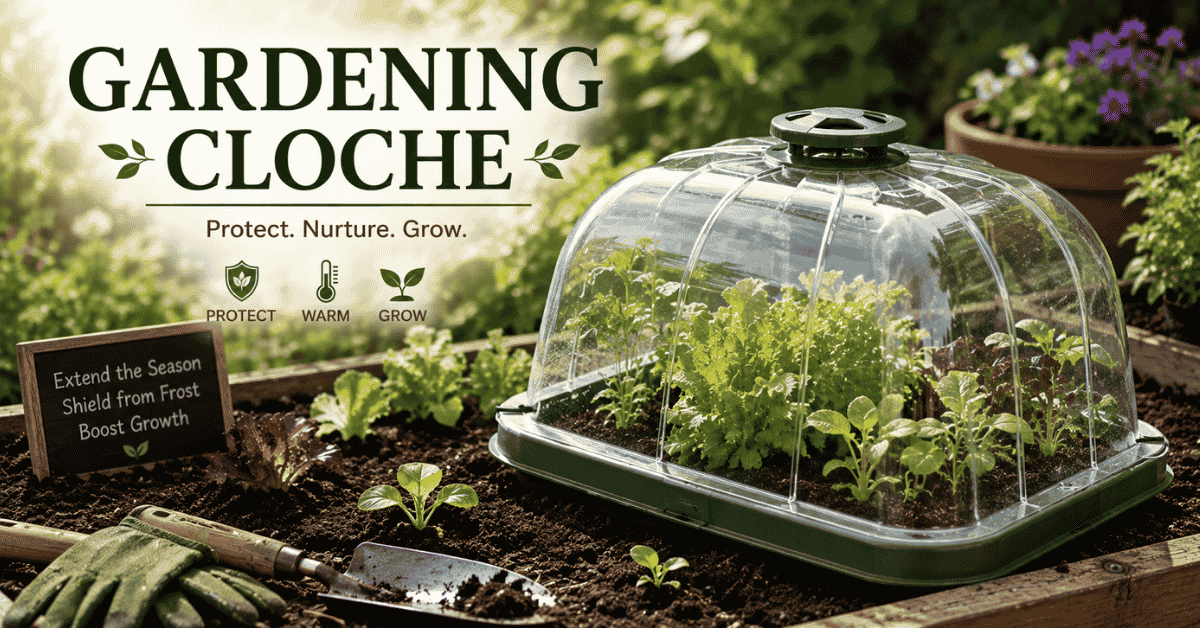
Grow prize vegetables with a brilliant gardening cloche setup. Read my true story to shield small sprouts, beat late frost, and harvest early food today!
I stood in my chilly yard last March under a gray sky. A sudden freeze was coming fast, and my tiny green sprouts looked so fragile. I felt a knot of dread in my stomach as the wind picked up. That tense day forced me to try a classic glass dome shield. This old school choice completely saved my sweet spring crops from ice damage. Now, I will help you choose the best protective covers to save your own backyard plot.
Is Using a Gardening Cloche Really Worth It?
Yes, because a gardening cloche acts like a mini greenhouse for each single plant. If you leave your young sprouts bare in early spring, the frost will kill them.
When I first started out, I lost dozens of tender seedlings to sudden cold snaps. I tried using old cardboard boxes, but they got soggy and blew away in the wind. Swapping to solid protective domes kept my small plants warm and safe from heavy rains. It traps the warmth of the sun directly in the dirt around the roots. You will see much faster growth and pick your first ripe tomatoes weeks before your neighbors do.
Selecting the Best Shield Styles for Your Beds
Not all protective covers are made from the same materials or offer the same air flow. You must match the style to your local weather and your daily routine.
Classic Glass Bell Jars
These are the heavy, beautiful domes that French growers used hundreds of years ago. They look stunning in a cottage yard and will never blow away in a bad storm.
-
The heavy weight keeps them firmly set in the loose topsoil.
-
Thick glass holds the daytime heat long after the sun goes down.
-
They protect small herbs from hungry birds and creeping garden slugs.
Cheap Clear Plastic Domes
If you have a large layout, plastic models are much easier on your wallet. I use a dozen of these light shells over my early spring lettuce rows.
Wire Mesh Pest Guards
Sometimes you do not need to trap heat; you just need to stop local wildlife. I use wire cages in May when the birds try to steal my fresh sprouts.
Mastering Temperature Control Under the Dome
A good cover can get surprisingly hot inside on a bright sunny afternoon. Managing the air flow is the true secret to keeping your crops alive.
Venting Your Covers at Noon
If the sun burns bright, the air inside a tight dome can cook a young plant. I walk out to my rectangular beds every morning around ten to check the heat.
-
Lift one side of the dome and prop it up with a small wood stick.
-
Look for water drops on the inside glass; too much moisture invites rot.
-
Set the cover back down tight before the chilly evening air rolls in.
Anchor Pins for Light Plastic Shells
Light plastic covers will flip over if a sudden spring wind gust hits your yard. I learned this when three of my plastic hats ended up in my neighbor’s oak tree. Always use long metal ground pins to hook the plastic rims deep into the dirt.
Comparing Plant Protective Covers For Home Yards
Daily and Weekly Chores for Protected Plants
Keeping your covered crops healthy takes a bit of rhythm and a few minutes each day. I spend a short time checking my rows every morning while carrying my tea.
Watering Your Sheltered Sprouts
A tight dome keeps the rain from reaching the soil right around your plant. Do not assume the dirt is damp just because it rained hard last night. I lift my covers every three days to check the ground with my bare finger. Pour water right at the base of the stem using a narrow spout can.
Cleaning the Exterior Panels
Dust and muddy splashes will block the sunlight from reaching the green leaves inside. I take an old rag and a bucket of clean water out to my beds on Saturdays. Wipe the glass or plastic sheets clear so the sun can shine straight through.
Eight Protection Blunders I Wish I Had Avoided
Leaving Domes on During Hot Sunny Days
I roasted a whole row of early bush beans by leaving my plastic covers sealed in late April. The noon sun turned the tiny spaces into hot ovens that scorched the leaves. Always vent or remove the shells when the air temperature goes past sixty degrees.
Forgetting to Press the Rims into the Dirt
If you leave a gap under the edge of the rim, cold air will seep inside. I lost two prize pepper plants because I set my glass jars carelessly on rocky ground. Press the bottom edge an inch deep into the loose compost to seal out the frost.
Using Covers That Are Too Small for the Leaves
Green sprouts grow incredibly fast when they are warm and cozy. I left my cabbage plants under small domes for too long, and the leaves bent against the hot walls. The wet foliage rotted where it touched the plastic. Move to a larger size as soon as the tips reach the outer shield.
Storing Dirty Glass Jars in the Winter Shed
Diseases from old crops can sleep on the inside walls of your gear all winter long. I infected my fresh spring greens by using unwashed glass from the previous fall season. Wash your domes with mild soap and dry them well before packing them away.
Buying Brittle Plastic Without UV Shielding
Cheap plastic will turn yellow and crack after just a few weeks of exposure to bright sun. I bought a low price pack online that shattered into sharp bits when I tried to pin them down. Spend a bit more on thick, UV treated sheets that survive multiple seasons.
Setting Glass Covers Near High Traffic Paths
Heavy glass bell jars will shatter if you hit them with a lawn mower or a stray rake handle. I broke a beautiful antique jar on a dark Tuesday afternoon while dragging my hose. Place your glass units deep inside the beds away from your main walking paths.
Ignoring the Soil Dampness Under the Shell
The soil under a sealed cover looks dark but can be bone dry just an inch below the surface. I lost several small tomato starts because I forgot that rain could not reach them. Always lift the cap to verify the dirt is truly moist.
Removing the Covers Too Fast in Spring
You cannot take a plant that has been cozy under a dome and leave it bare on a cold night. Give them a few days to adjust to the raw outdoor air. Prop the covers open wider each day for a week before you remove them for the summer.
FAQs
When should I put a gardening cloche over my small plants? Place the covers out in early spring at least two weeks before the last frost date. This warms up the dirt before you plant. Learn more about shield timing.
How do I stop bugs from getting inside my plastic domes? Choose models that feature fine mesh screens over the top air vents. This lets fresh air enter but keeps out beetles and flying pests. Learn more about pest blocks.
Can I use old plastic milk jugs as cheap plant covers? Yes, cut the bottom off a clear jug and leave the top cap off for easy air flow. It works great for budget yard plots. Learn more about homemade shields.
Do glass bell jars cause leaf burn from sun rays? They can if the air inside gets too hot during the heat of noon. Prop the edge up with a stick to let the hot air escape safely. Learn more about heat venting.
How do I clean mineral stains off my glass yard domes? Scrub the glass with a soft sponge and a splash of common white vinegar. This clears off water crust and restores full sun clarity. Learn more about dome wash.