7 Steps to a Thriving Square Foot Garden Book
I found my first square foot gardening book on a rainy Tuesday. It felt like a secret weapon for my tiny backyard. This guide breaks down how a square foot gardening book can transform your patch.
You’ll learn its core ideas and find the perfect one for you.
Why Pick a Square Foot Gardening Book?
Honestly, I was overwhelmed by traditional gardening advice. Rows and rows of plants seemed like too much work for my small space. Then I stumbled upon the idea of “square foot gardening.” My first square foot gardening book was a game-changer.
It showed me how to grow a lot in a tiny area. It was so simple and effective. I loved how it made gardening feel achievable, even for a beginner like me.
This approach changed my whole gardening outlook.
What Makes Square Foot Gardening Work?
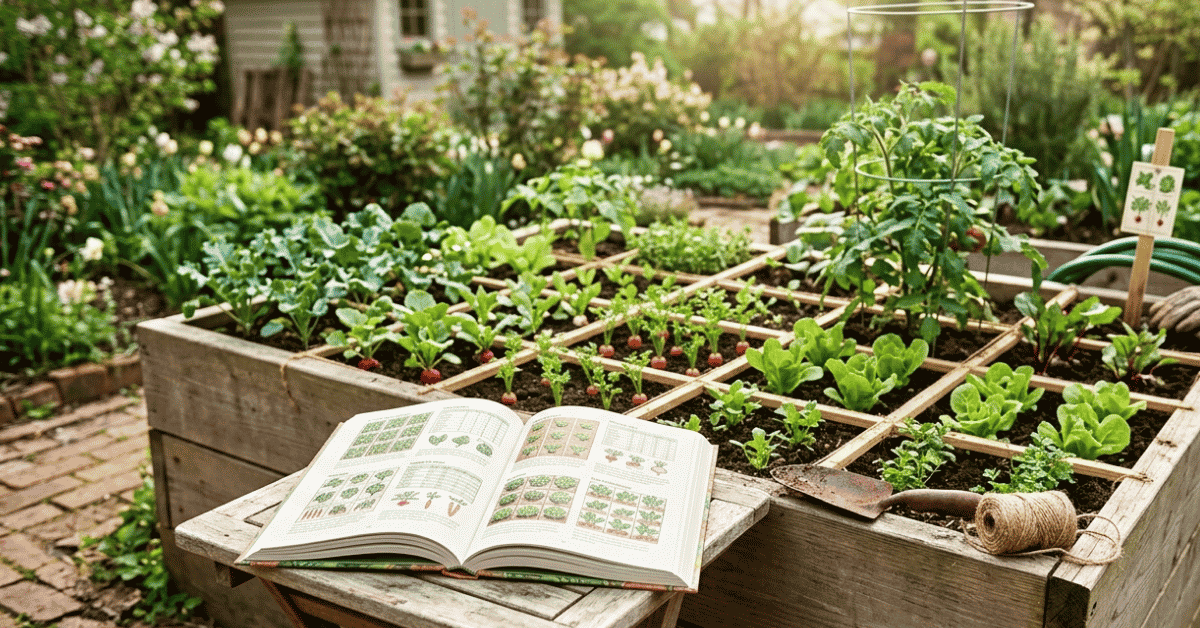
Square foot gardening is pretty straightforward. You divide your garden bed into one-foot squares. Each square has a specific number of plants.
It’s all about maximizing space and minimizing waste. My square foot gardening book explained this perfectly. It wasn’t just about the grid; it was about a special soil mix, too.
This mix drains well and provides all the nutrients plants need. It means you don’t need to constantly fertilize. My square foot gardening book called it “Mel’s Mix.” It’s a blend of compost, peat moss, and vermiculite.
This mix is key to success.
The Magic of Mel’s Mix
This special soil isn’t just dirt. It’s a carefully balanced blend. My square foot gardening book really emphasized its importance.
It’s light, airy, and full of good stuff. This helps roots grow deep and strong. It also holds moisture well but never gets waterlogged.
That’s a big deal for preventing root rot. I remember my first year; the soil was so rich. Everything just seemed to explode with growth!
My first square foot gardening book told me exactly how to make it. You mix equal parts of compost, peat moss, and coarse vermiculite. I try to get the best quality compost I can find.
It really makes a difference. We mix it all up in a big pile. It’s a bit of work, but so worth it.
Planting in Squares
This is where the “square foot” part comes in. Each square foot gets a set number of plants. The number depends on the plant’s size.
For example, a big plant like a cabbage might get one plant per square. Smaller plants, like carrots or radishes, can have up to 16 in one square. My square foot gardening book has charts for this.
It’s all laid out so clearly. You just follow the plan.
I used to just stick plants wherever they looked good. That was a mistake. With square foot gardening, you’re being smart about space.
You’re giving each plant exactly what it needs. My square foot gardening book showed me how to interplant, too. That means planting different things next to each other.
For example, planting fast-growing radishes around slower-growing tomatoes. When the radishes are harvested, the tomatoes have more room. It’s a clever system.
Finding Your Perfect Square Foot Gardening Book
There are many books out there. Each one offers a slightly different take. My first square foot gardening book was by the founder, Mel Bartholomew.
It’s the classic. It laid the groundwork for everything. But over time, others have added their own insights.
I’ve read a few since then. Each one highlights new ways to approach it. Or they focus on specific types of plants.
The Original Classic
Mel Bartholomew’s “All New Square Foot Gardening” is the original. I always recommend starting here. It’s straightforward and explains the basic principles.
It covers the soil mix, the grid system, and plant spacing. It’s the Bible for square foot gardeners. My square foot gardening book from him felt like getting instructions from the source.
It’s practical and no-nonsense. It really empowers you to start. If you’re brand new, grab this one.
It’s like a reliable mentor in book form.
Modern Takes and Specialized Guides
Since Mel’s book, many other authors have put out their versions. Some focus on organic methods. Others might dive deeper into companion planting within the square foot system.
You might find a square foot gardening book that focuses on raised beds specifically. Or one that talks about small balcony gardens.
I found a newer one recently. It had some great ideas for pest control using natural methods. That was a big help for me last summer.
Another square foot gardening book I looked at had beautiful photos. It really inspired me with different layouts and plant combinations. It’s good to explore different options.
It depends on what you’re looking for. Are you focused on organic? Do you want advanced techniques?
Or are you just starting out?
Key Components to Look For in a Square Foot Gardening Book
When you pick up a square foot gardening book, what should you expect? I look for a few key things. They make the book truly useful.
- Clear Diagrams: Visuals are super important. Especially for the grid system and plant spacing.
- The Soil Mix Recipe: This is non-negotiable. You need the exact ratio.
- Plant Spacing Charts: This is the heart of the system. How many of what go in each square.
- Crop Rotation Advice: How to avoid depleting your soil. Moving plants around each season.
- Seasonal Planting Guides: What to plant and when for your climate.
- Problem-Solving Tips: Dealing with common pests and diseases.
My square foot gardening book had all of these. It made learning so much easier. It wasn’t just words; it was a complete toolbox.
I remember flipping through the pages often. The diagrams for planting were especially helpful. I could see exactly how many tiny bean seeds to put in one square.
Comparing Square Foot Gardening Books
It’s hard to compare them directly because they all teach the same core idea. But the way they teach it can differ. Here’s a look at what you might find in different kinds of square foot gardening books.
| Feature | The Original Classic (Bartholomew) | Modern Organic Focus | Seasonal Vegetable Guides | Balcony & Small Space Focus |
|---|---|---|---|---|
| Core Philosophy | Simple, efficient system | Natural methods, no chemicals | Best harvest timing | Extreme space optimization |
| Soil Mix | Detailed “Mel’s Mix” recipe | Emphasis on compost quality | Standard mix, maybe variations | Lighter mix for containers |
| Plant Spacing | Strict charts | Charts, plus tips on companion planting | Charts, with seasonal notes | More compact varieties noted |
| Watering | Clear guidelines | Focus on water conservation | Standard advice | Drip irrigation ideas |
| Pest/Disease Control | Basic strategies | Natural sprays, beneficial insects | Common issues and fixes | Container-specific pests |
| Visuals | Functional diagrams | Beautiful photos, step-by-step | Seasonal imagery | Inspiring small setups |
I think the best square foot gardening book for you depends on your level and what you want to achieve. My first one was all about getting started. My more recent ones have helped me refine my techniques.
Making Your Square Foot Garden Bloom
Once you have your square foot gardening book, it’s time to get your hands dirty. The principles are simple, but the results are amazing. I remember my first harvest.
A basket overflowing with lettuce, radishes, and peas. It was more than I expected from such a small space.
Building Your Beds
Most square foot gardening books suggest raised beds. They are ideal because they let you control the soil. They also help with drainage and prevent soil compaction.
You can build them from wood, stone, or even repurposed materials. The key is to make them about 4-6 inches deep. This is enough for the special soil mix.
I built my own simple beds out of untreated pine boards. My first square foot gardening book showed me how. It took a weekend.
It was satisfying to build something that would produce food. My beds are about 4×4 feet. This makes it easy to reach the center from all sides.
Preparing the Soil
Remember Mel’s Mix? This is where you make it. My square foot gardening book had the precise recipe.
It’s usually equal parts compost, peat moss (or coco coir), and coarse vermiculite. You mix it thoroughly. This creates a light, nutrient-rich medium.
This soil is the foundation of your success. It provides everything your plants need.
I bought bags of compost, peat moss, and vermiculite. Then I spread them out on a tarp and mixed them with a shovel. It felt like I was creating a super-earth.
That’s what my square foot gardening book made it sound like. And in a way, it is. It’s the perfect environment for roots.
Planting Time!
Now for the fun part. Your square foot gardening book will have charts showing how many plants go in each square foot. For example:
- 1 plant: Cabbage, Broccoli, Tomato
- 4 plants: Peppers, Eggplant, Bush Beans
- 9 plants: Carrots, Lettuce, Spinach
- 16 plants: Radishes, Onions
You mark out your squares using string or a grid. Then you plant according to the charts. It’s like a puzzle.
You’re fitting everything together perfectly. This ensures each plant has enough space to grow. It also maximizes your harvest.
My square foot gardening book made this super easy to visualize. I’d lay out my seeds and just pop them in the soil. It was incredibly satisfying.
Watering and Upkeep
Square foot gardens need consistent watering. My square foot gardening book stressed that. The special soil mix drains well, but it can also dry out faster.
Check the soil moisture by sticking your finger in. If it feels dry an inch down, it’s time to water. Water the soil, not the leaves.
This helps prevent diseases.
Weeding is minimal in a well-maintained square foot garden. That’s one of the big perks! Because plants are spaced closely, they shade out weed seeds.
My square foot gardening book highlighted this benefit. It means less time spent on your knees pulling weeds and more time enjoying your harvest. It’s truly a low-maintenance system once it’s set up.
Is a Square Foot Gardening Book Worth It?
For me, absolutely. My initial investment in a square foot gardening book paid for itself many times over. It gave me the knowledge and confidence to grow my own food.
I’ve learned so much about plants and soil. It’s not just about saving money; it’s about the freshness. The taste of home-grown tomatoes is unbeatable.
If you’re looking for a simple, effective way to garden, get a square foot gardening book. It’s a gateway to a more rewarding hobby.
Do I need raised beds for square foot gardening?
Most books suggest raised beds for better soil control and drainage. You can adapt it though. Learn more about my raw guide to vegetable gardening.
Can I use square foot gardening for a balcony garden?
Yes, many books cover container versions. They adapt the soil mix and plant choices. Learn more about gardening for beginners successfully.
Where can I find Mel Bartholomew’s square foot gardening book?
His original book is widely available online and in bookstores. It’s a foundational text. Learn more about my ultimate encyclopedia gardening review.
What are common mistakes in square foot gardening?
Overcrowding plants, poor soil, and inconsistent watering are key issues. A good book helps avoid these. Learn more about my all-new square gardening success secret.
Are there newer square foot gardening books with updated info?
Yes, new editions and complementary books offer modern insights. My review of my honest encyclopedia gardening review discusses this.