Start spring seeds indoors about 4 to 8 weeks before your area’s last spring frost for many common crops. Some plants need 8 to 12 weeks, while others grow best when sown outdoors after the soil warms. Your local frost date, crop type, and seed packet should guide the final timing.
Across the United States, spring planting dates vary widely. A gardener in southern Texas may sow seeds outdoors while someone in Minnesota still has snow on the ground. The calendar alone cannot tell you when your garden is ready. Your local climate, the last spring frost, and soil temperature matter more.
The easiest way to plan is to find your area’s average last frost date, check how many weeks each crop needs indoors, and count backward. Cool-season crops such as lettuce and broccoli can often handle chilly spring weather. Warm-season plants such as tomatoes, peppers, and cucumbers need warmer conditions before they can thrive outside.
This guide explains when to start common vegetable and flower seeds, how to use a spring planting calendar, and what to do if seedlings grow too fast or too slowly. The goal is simple: healthy young plants that are ready for the garden when outdoor conditions suit them.
Source: earthsoulorganics.b-cdn.net
When Should You Start Planting Seeds for Spring?
For many US home gardens, seed starting begins in late winter and continues through spring. The exact date depends on the crop and your local climate. In colder areas, gardeners may start seeds indoors in February or March. In warmer areas, outdoor sowing can begin much earlier, and some regions have little risk of frost by early spring.
Use the average last spring frost date as a planning point, not a promise about the weather. It is a long-term estimate of when frost usually ends in your area. A late cold snap can still harm tender seedlings, so check the forecast before planting outdoors.
The seed packet often gives the clearest starting point. Look for instructions such as start indoors six weeks before the last frost or sow outdoors after danger of frost has passed. If the packet gives a range, consider your climate and the time the seedling needs to reach a good size.
Source: mothers-home.com
Start indoors
Use this method for crops that benefit from a head start, including tomatoes, peppers, broccoli, and many annual flowers.
Sow outdoors
Plant seeds directly in the garden when the crop can handle the expected weather and the soil is suitable.
Wait for warmth
Delay tender crops until frost risk has passed and the soil is warm enough for steady growth.
Why the Last Frost Date Matters
Frost can injure or kill tender plants, even when a sunny afternoon feels warm. Knowing your area’s typical last frost date helps you plan indoor sowing and decide when to move young plants outside. It also gives you a useful starting point for cool-season crops that can tolerate more chill.
Look up local frost information using a university Extension service, a regional gardening calendar, or a reliable frost-date tool. Use your ZIP code or the nearest suitable weather station when possible. A broad state-wide date may not reflect the conditions in your town, especially in hilly areas or near large bodies of water.
Use frost dates as estimates
They describe typical conditions, not a guarantee that frost cannot happen later.
Check local forecasts
A forecast of frost or a cold night may mean you should delay planting or protect suitable crops.
Spring Planting Depends on Your Region
Gardeners in the southern United States often start spring crops earlier than those in northern states. Parts of the Gulf Coast and the Southwest may have mild winters, while the Upper Midwest and northern New England can stay cold well into spring. High-elevation areas may also have later frost dates than nearby lowlands.
Use local growing conditions rather than copying a planting date from another state. A March planting guide from Georgia may not suit Wisconsin, and a calendar for coastal California may not suit a mountain town in Colorado. The crop, local frost risk, and soil temperature all help set the date.
Warm regions
Check whether winter or early spring is the main growing period for your chosen crop. Some plants struggle once summer heat arrives.
Cold regions
Plan indoor starts around your later frost date and use cold-tolerant crops for early outdoor sowing.
Spring Seed Starting Calendar for Common Vegetables
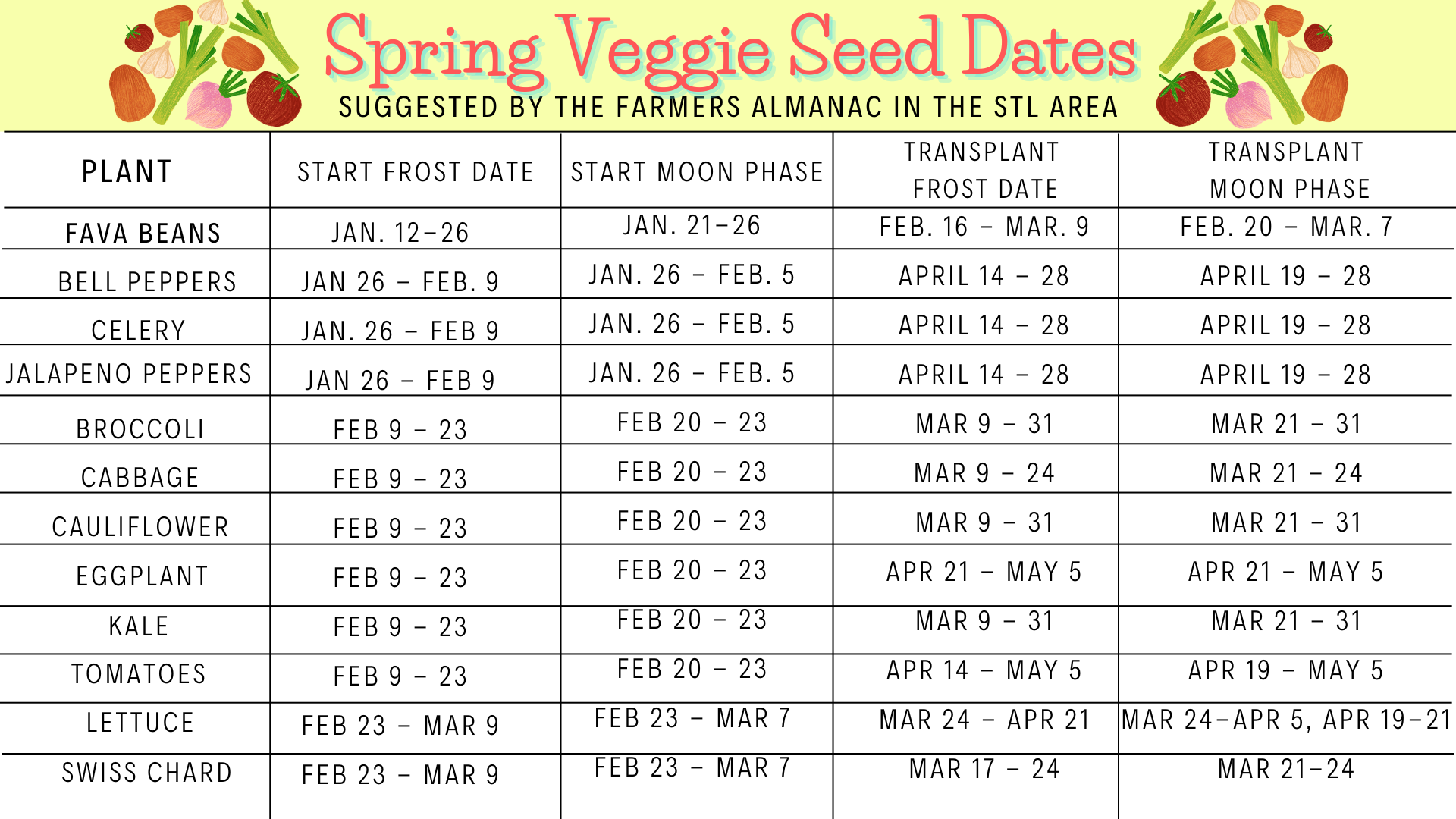
A spring seed calendar helps you decide which crops to start first. The table below gives broad planning ranges for common vegetables. These ranges are starting points rather than fixed dates, because varieties, growing conditions, and local frost dates differ.
For indoor starts, count backward from the date you expect to transplant each crop outdoors. The seed packet may give a more precise window for the variety you bought. Some crops grow quickly and do not need a long indoor stay, while others need more time to develop before transplanting.
Source: i.pinimg.com
Broccoli and cabbage
Many varieties can be started indoors around 4 to 6 weeks before transplanting, though the packet may recommend a different window.
Tomatoes
A common planning range is 5 to 8 weeks before transplanting outside.
Peppers and eggplants
These often need about 8 to 10 weeks indoors because they grow more slowly in the early stages.
Cucumbers and squash
These grow quickly and are often started only 2 to 4 weeks before transplanting, or sown directly outdoors once conditions are warm.
Approximate Indoor Seed Starting Times
Use this table to plan your first sowing dates. The weeks listed are measured backward from the intended outdoor transplant date, not from the first day of spring. Always check the seed packet because varieties can differ.
For example, if your local frost date and crop guidance point to an outdoor tomato planting date of May 10, a six-week indoor starting window begins around March 29. This is a hypothetical calculation, not a recommendation for every US location. Your safe planting date may be earlier or later.
Leaf lettuce
Often started indoors about 2 to 4 weeks before transplanting, or sown directly outdoors in suitable cool weather.
Broccoli and cauliflower
Often started indoors about 4 to 6 weeks before transplanting.
Tomatoes
Often started indoors about 5 to 8 weeks before transplanting.
Peppers and eggplants
Often started indoors about 8 to 10 weeks before transplanting.
Cucumbers, melons, and squash
Often started indoors about 2 to 4 weeks before transplanting, with direct sowing also suitable in warm soil.
Beans and sweet corn
Usually best sown outdoors after the soil warms. Starting them indoors is possible in some cases, but they can be sensitive to root disturbance.
Why You Should Not Start Every Seed at Once
Different crops grow at different speeds. Peppers may need weeks of indoor care, while cucumbers can become large enough to transplant in a short time. If you sow everything on the same day, some plants may be ready too early and outgrow their containers before the garden is ready.
Make a small calendar with a separate date for each crop. Group seeds by their recommended starting window, then label every tray with the crop name and sowing date. This simple step helps prevent mix-ups when several types of seedlings look alike.
Make separate sowing groups
Start slow-growing crops first and wait to sow fast-growing crops until their recommended window.
Keep notes
Record sowing dates, germination, and transplant dates so you can improve next season’s plan.
Which Seeds Can You Plant Outdoors in Early Spring?
Some crops can go straight into the garden before the weather turns warm. Cool-season vegetables are often the best fit because many can grow in chilly conditions that would slow or damage tender summer crops. Still, the right time depends on soil condition, the variety, and local weather.
Do not confuse frost tolerance with the ability to grow in cold, wet soil. Seeds need moisture and air, and many crops germinate slowly when the soil is too cold. Wait until the soil is workable rather than planting into ground that is soaked, compacted, or frozen.
Source: tuigarden.co.nz
Peas
Sow when the soil can be worked and is suitable for the variety. Peas prefer cool growing weather.
Spinach
Often suits early spring sowing and can tolerate cool conditions.
Radishes
Grow quickly in cool weather and are commonly direct-sown.
Carrots
Can be direct-sown once the soil is workable. Loose soil helps their roots develop well.
Lettuce
Can be sown outdoors in cool conditions, although hard freezes and extreme weather may still harm young growth.
How to Tell If Your Garden Soil Is Ready
Check the soil before you dig or sow. Take a small handful and gently squeeze it. If it forms a wet, sticky ball and smears easily, the ground may be too wet to work. If it crumbles with light pressure, it is more likely to be ready for bed preparation.
Soil temperature matters too. Different crops need different temperatures for reliable germination, so a soil thermometer can help if you plan to sow early. Check the seed packet for the crop’s preferred range instead of using one temperature for every seed.
Avoid wet soil
Working very wet soil can damage its structure and leave hard clumps that are tough for young roots to cross.
Check the crop’s needs
Cool-season seeds can often be sown earlier than heat-loving seeds, but each crop still has limits.
Read the forecast
Heavy rain, hard freezes, and sudden temperature drops can affect newly sown beds.
When to Direct-Sow Warm-Season Vegetables
Beans, corn, cucumbers, squash, and melons generally prefer warmer soil than peas or spinach. Cold soil can delay germination and leave seeds exposed to rot or other problems for longer. Wait until your local conditions suit the crop rather than sowing just because spring has begun.
Tomatoes and peppers are often started indoors in regions with a short warm season, then transplanted later. In long-season areas, some crops may be sown outdoors, but the best method still depends on the variety and local growing season.
Warm soil first
Use the crop’s recommended soil temperature and local planting guidance to choose an outdoor sowing date.
Protect tender plants
If a cold snap is forecast, delay planting or use suitable frost protection. Remove covers as needed to prevent overheating.
When to Start Flower Seeds for Spring
Flower seeds follow the same basic rule as vegetable seeds: match the sowing date to the plant’s needs and your local climate. Some annual flowers benefit from an indoor head start, while others grow well when sown straight into prepared garden soil. Perennials can have different germination needs, so check the packet for any special treatment.
For flowers that need a long growing period, indoor sowing can help them reach a useful size before planting time. Fast-growing annuals may need only a short head start, and some prefer direct sowing because they do not transplant well. Do not assume that every flower needs to be started indoors.
Source: completegardening.com
Marigolds
Often started indoors a few weeks before the expected outdoor planting date, or sown outside after frost risk has passed.
Zinnias
Usually grow quickly and can be direct-sown in warm soil or started indoors shortly before transplanting.
Cosmos
Often suit direct sowing after the soil warms, though indoor starting is possible when a head start is useful.
Petunias
May need a longer indoor growing period than fast-growing annuals. Follow the packet for light and sowing depth.
Sunflowers
Usually grow well from direct sowing after the soil has warmed. Choose the site carefully because many varieties develop long roots.
Should You Start Flower Seeds Indoors or Outdoors?
Start flowers indoors when the variety needs a long lead time or when you want more control over early growth. Direct-sow flowers when the seed packet recommends it, the soil is ready, and the plant can develop well in its final spot. This is often the easier choice for large seeds and plants that dislike root disturbance.
Some tiny flower seeds need light to germinate and should not be buried deeply. Others need a thin layer of growing mix over them. The packet’s instructions matter because seed size alone does not explain every germination need.
Check light needs
Some flower seeds need light to germinate, while others need darkness or a covering of growing mix.
Avoid early sowing without a plan
Seedlings that stay indoors too long may become crowded, weak, or root-bound.
How to Start Seeds Indoors Step by Step
You do not need a greenhouse to start seeds at home. A clean container, seed-starting mix, labels, water, and a strong light source can be enough for many common crops. Before you sow, check the crop’s growing time and make sure you have room to care for the seedlings until outdoor conditions are right.
Use a seed-starting mix made for young plants rather than heavy garden soil. Garden soil can hold too much water in a small container and may bring in weed seeds or plant disease organisms. Containers must drain well, and reused pots should be cleaned before use.
Source: cdn.mos.cms.futurecdn.net
Step 1: Choose suitable seeds
Read the packet for indoor starting time, planting depth, germination temperature, and transplant guidance.
Step 2: Prepare clean containers
Use seed trays, small pots, or clean recycled containers with drainage holes.
Step 3: Add moist seed-starting mix
Dampen the mix before sowing so it is evenly moist without being waterlogged.
Step 4: Sow at the right depth
Follow the packet. A common starting rule is to sow at a depth around twice the seed’s width, but some seeds need light and should stay at or near the surface.
Step 5: Label each container
Write the crop name and sowing date on a label so you can track growth.
Step 6: Keep the mix moist
Water gently and check the containers often. Seeds need moisture to germinate, but standing water can harm roots.
Step 7: Give seedlings enough light
Place seedlings under a suitable grow light or in a bright location that provides enough light to prevent weak, stretched growth.
How Much Light Do Seedlings Need?
Most vegetable seedlings need strong light after they sprout. A sunny window may not provide enough light during short winter days, and plants can stretch toward the glass. A grow light can help provide more even light, especially when seedlings are started weeks before spring.
Follow the light manufacturer’s guidance for distance and use. Many indoor seedlings do well with roughly 14 to 16 hours of light each day, followed by a dark period. Adjust the height as plants grow, and watch for signs that the light is too weak or too close.
Tall, thin stems
These can signal that seedlings need stronger light or a better light position.
Dry or bleached leaves
Check for excessive heat, light intensity, or poor watering before changing several conditions at once.
When Should You Thin Seedlings?
Thin seedlings when several sprouts compete in the same cell or spot. Follow the packet for spacing and keep the strongest plant when the crop is meant to grow as a single plant in each cell. Crowded seedlings compete for light, water, and room for their roots.
Use clean scissors to snip unwanted seedlings at the soil line when pulling them might disturb the roots of the plant you want to keep. Some crops can be transplanted into larger pots as they grow, but others are best left undisturbed until planting time.
Keep enough room
Good spacing helps air move around leaves and gives roots room to develop.
Avoid excess handling
Young stems and roots can be damaged easily, so move seedlings with care.
How to Harden Off Seedlings Before Planting
Harden off indoor seedlings before leaving them outside full-time. Plants raised indoors have not yet adjusted to direct sun, wind, and changing outdoor temperatures. Moving them straight from a protected room into a sunny garden can cause stress, leaf damage, or poor growth.
Begin hardening off about 7 to 14 days before transplanting when weather allows. Start with a short period outdoors in a sheltered, shaded place, then gradually increase their time outside and exposure to sunlight. Bring tender plants indoors or protect them when temperatures fall below their safe range.
Source: i.pinimg.com
Start in a sheltered spot
Choose a calm area with shade and avoid harsh midday sun on the first day.
Increase exposure slowly
Add more outdoor time and sunlight over several days as the seedlings adjust.
Watch the weather
Do not leave tender seedlings exposed to frost, strong winds, or heavy rain during the process.
Water as needed
Outdoor air and sunlight can dry containers faster than indoor conditions.
How Do You Know Seedlings Are Ready to Transplant?
A seedling is usually ready when it has healthy growth, a sturdy stem, and enough roots to hold the growing mix together without being badly crowded. The correct age depends on the crop, so use the seed packet and look at the plant’s condition rather than relying on height alone.
Choose a mild day when the soil and weather suit the crop. Water the seedlings before moving them, handle the root ball gently, and follow the recommended spacing. Water after transplanting to help the soil settle around the roots.
Look for healthy leaves
Leaves should have normal color for the crop and show no major signs of stress.
Check the roots
Roots should be developed but not packed into a tight mass around the container.
Match outdoor conditions
A healthy seedling still needs suitable temperatures and soil before it can thrive outdoors.
Common Seed Starting Mistakes and How to Fix Them
The most common seed starting problems are poor timing, weak light, and watering mistakes. A seed may sprout quickly but still struggle if the growing mix stays wet or the seedling lacks enough light. Check one condition at a time so you can identify the likely cause and make a useful change.
Starting too early can be just as troublesome as starting too late. If a seedling outgrows its container weeks before outdoor planting is safe, it may become root-bound or weak. A later sowing date often produces a stronger plant with less time spent indoors.
Source: images.squarespace-cdn.com
Problem: Seeds do not sprout
Possible causes include old seeds, unsuitable temperature, incorrect sowing depth, or a growing mix that has dried out or stayed too wet. Check the packet and growing conditions before sowing again.
Problem: Seedlings are tall and weak
Weak light is a common cause. Improve light exposure and keep the light at a suitable distance from the plants.
Problem: Seedlings wilt
Check the mix before watering. Both very dry soil and waterlogged roots can cause wilting.
Problem: White or fuzzy growth appears
Excess moisture and poor air movement can encourage mold on the surface of the mix. Improve airflow, reduce excess water, and remove badly affected material when needed.
Problem: Seedlings are ready too early
Move them into a larger pot if the crop needs more room, provide suitable light, and delay outdoor planting until the weather is safe.
Can You Start Spring Seeds Too Early?
Yes. Seeds started too early may grow into large seedlings that need more space, light, and care than you can provide. They can become tangled, root-bound, or stretched while waiting for the garden to warm up. A longer indoor growing period does not always lead to a better transplant.
Use the recommended number of weeks on the packet and count backward from the intended planting date. If you are unsure, start a small test batch rather than sowing every seed at once. You can sow more later if the first batch fails or if you have room for extra plants.
Do not rush the calendar
A warm room can make plants grow before the outdoors is ready for them.
Keep a backup plan
A small later sowing can provide replacements if the first seedlings fail.
What If You Miss the Best Starting Date?
Missing the ideal indoor sowing date does not mean you have lost the season. Some fast-growing crops can be sown directly outdoors when conditions are right. You can also buy healthy transplants for crops that need a longer head start, provided the variety suits your region and the plants are in good condition.
Check the number of days to maturity on the seed packet and compare it with the growing season remaining in your area. If a crop needs more time than your local season allows, look for an early-maturing variety or choose a crop that fits the time left.
Try direct sowing
Choose this option for crops that grow well from outdoor sowing and still have enough time to mature.
Use suitable transplants
Healthy nursery plants can save time, but they still need hardening off when they have been grown in protected conditions.
Choose a shorter-season crop
A crop with fewer days to maturity may be a better fit than one that needs a long growing season.
Build a Simple Spring Seed Starting Plan
A short written plan makes seed starting easier to manage. You do not need a complex spreadsheet. A notebook or calendar with each crop, its sowing window, and its outdoor planting needs is enough to keep the main dates in view.
Begin with the crops you want to grow, then check your local frost date and the seed packets. Work backward to set indoor sowing dates and mark when each group needs to be hardened off. Leave room to adjust the plan if spring is colder or warmer than expected.
Source: i.pinimg.com
List the crops
Write down each vegetable or flower you plan to grow and note whether it should be started indoors or outdoors.
Find the local frost date
Use a local Extension resource or a suitable frost-date tool to get a practical planning estimate.
Count backward
Use the recommended weeks before transplanting to set each indoor sowing date.
Add a hardening-off window
Set aside about one to two weeks before transplanting so seedlings can adjust to outdoor conditions.
Review weather and soil
Adjust the plan if frost remains in the forecast or the soil is too wet or cold for the crop.
A Simple Example of Counting Backward
Suppose your intended tomato transplant date is May 15 and your chosen variety calls for indoor starting six weeks earlier. Count backward six weeks on a calendar. That gives an approximate seed sowing date of April 3. If the packet recommends a different range, follow that guidance instead.
Next, plan to harden off the seedlings during the one to two weeks before transplanting, as long as the weather allows. This example shows how the calculation works; it is not a universal US planting schedule. Your own dates must reflect your local climate and the variety you grow.
Sowing date
Count backward from the intended outdoor planting date using the seed packet’s indoor growing period.
Hardening-off date
Begin gradual outdoor exposure roughly 7 to 14 days before transplanting when conditions are suitable.
Transplant date
Move the plant outdoors when the crop, soil, and forecast all allow it.
Frequently Asked Questions
Q
What month should I start seeds for spring?
Many US gardeners start some seeds indoors in February or March, but there is no single best month for every region. Warm areas may begin earlier, while cold regions may start later. Use your local last frost date, crop requirements, and seed packet to choose a suitable date.
Q
How many weeks before the last frost should I start seeds indoors?
Many common crops need about 4 to 8 weeks indoors before transplanting. Peppers and eggplants may need around 8 to 10 weeks, while cucumbers and squash often need only 2 to 4 weeks. These are general ranges, so check the packet for your variety.
Q
Can I plant seeds outside before the last frost?
Yes, some cool-season crops can be sown outdoors before the average last frost date if the soil is workable and conditions suit the crop. Peas, spinach, and radishes are common examples. Tender crops such as tomatoes and beans generally need warmer conditions and protection from frost.
Q
Is March too late to start spring seeds?
March is not too late for many crops. In some regions, it is a common month for starting tomatoes, flowers, and cool-season vegetables indoors. In warmer areas, outdoor sowing may already be underway. Check the crop’s time to maturity and your local planting window before deciding.
Q
Do seeds need sunlight to germinate?
Some seeds need light to germinate, while others germinate best when covered with growing mix. Follow the seed packet for planting depth and light needs. After seedlings emerge, most vegetable seedlings need strong light to grow sturdy stems and healthy leaves.
Q
Should I soak seeds before planting them?
Some large or hard-coated seeds benefit from soaking, but many common vegetable and flower seeds do not need it. Soaking is not a replacement for the right soil temperature, planting depth, and moisture. Check the packet or a trusted growing guide before soaking seeds.
Q
What should I do if frost is forecast after I plant?
Protect tender plants with suitable frost cover or move containers to a sheltered location when possible. Avoid letting plastic sheeting rest on plant leaves, and follow the cover’s instructions. If you have not planted yet, delaying the move outdoors may be the safer choice.
✦ Wrapping Up
Conclusion
The best time to start planting seeds for spring depends on where you live and what you plan to grow. Many crops need a few weeks indoors before transplanting, while cool-season vegetables can often go straight into the garden when the soil is ready. Warm-season crops need warmer soil and safe outdoor temperatures.
Start with your local last frost date, then count backward using the seed packet. Give indoor seedlings enough light, avoid soggy growing mix, and harden them off before transplanting. A simple calendar will help you sow at the right time without rushing every crop at once.
💡 Key Takeaway
Today, choose the seeds you want to grow, find your local average last frost date, and write down each crop’s recommended indoor starting window or outdoor sowing conditions. Use those details to build a spring planting calendar that fits your garden.