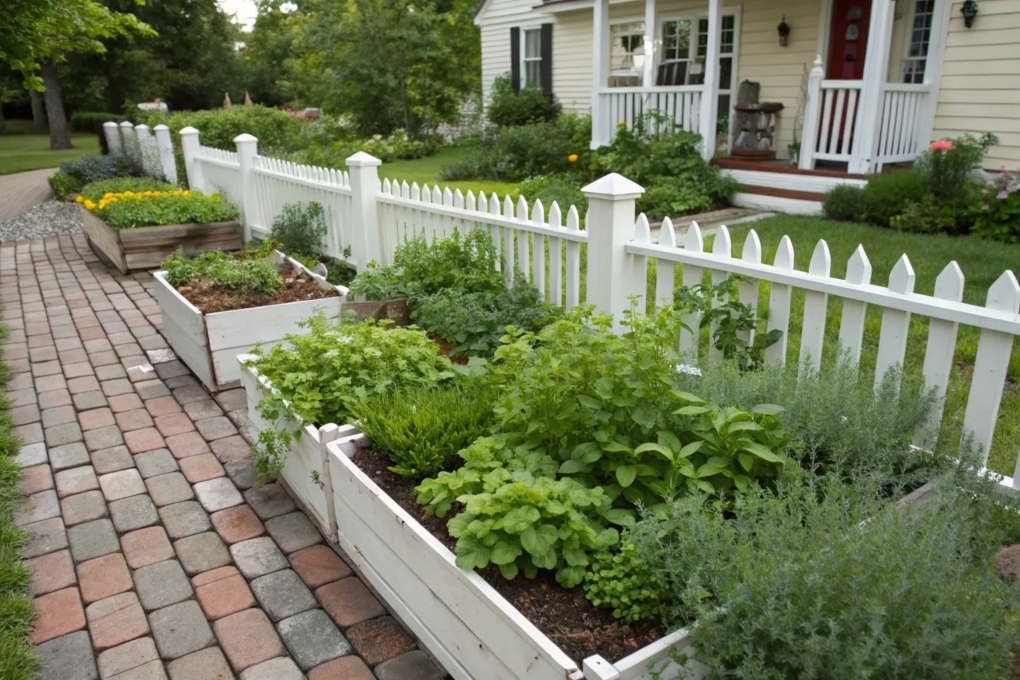
An herb garden front yard combines useful cooking herbs with attractive landscaping. Grow rosemary, thyme, basil, parsley, and other herbs in sunny beds, raised planters, pots, or neat borders that suit your home’s style and local climate.
Across the United States, a front yard can do more than hold a lawn and a few shrubs. It can grow fresh herbs for pasta, soups, salads, and grilled food while adding color and scent near your front door. The best design depends on your growing zone, sunlight, soil, and the look you want for your home.
You do not need a large lot or a costly landscape plan to get started. A narrow bed beside a walkway, a few pots near the porch, or a small raised bed can provide plenty of fresh leaves. Start with herbs that match your climate and cooking habits, then arrange them so the garden looks tidy and stays easy to reach. Before planting, check local rules, utility lines, drainage, and any limits on plants or structures in your front yard.
Source: bowlingocean.com
Why Grow an Herb Garden in Your Front Yard?
A front yard herb garden makes useful plants part of your home’s curb appeal. Many herbs have fine leaves, small flowers, or pleasing shapes that work well beside paths, entry steps, and low garden walls. Their leaves can also add scent when you brush past them on the way inside.
An edible landscape can suit many home styles. A formal brick house may look good with clipped rosemary and low thyme along a path, while a cottage-style home may suit mixed herbs and flowers. In a small urban yard, pots can provide the same practical value without taking up much ground.
The main trade-off is upkeep. A front yard is more visible than a back garden, so weeds, dry pots, and overgrown plants may stand out. Choose a design you can care for each week, and leave enough room to harvest without stepping on beds.
Source: hello-hayley.com
Fresh flavor
Pick herbs as you cook instead of buying a full bunch that may go unused in the fridge.
More visual interest
Leaf shapes, flowers, pots, and simple paths can break up a plain lawn or empty entry bed.
Flexible design
Use in-ground beds for a permanent layout or containers if you rent, have limited space, or need to move plants.
Pollinator support
Allow suitable herbs such as thyme, oregano, and chives to flower. Their blooms can provide food for visiting bees and other pollinators.
Is a Front Yard Herb Garden Right for Your Home?
This type of garden works well if your front yard gets enough light, drains well, and has a safe spot for harvesting. It may be less suitable for a deeply shaded entry or a site exposed to road spray, heavy foot traffic, or runoff from treated surfaces. In those cases, use containers in a brighter, cleaner location if one is available.
Best starting point
Try three to five herbs in a sunny bed or a few pots before changing the whole landscape.
Check local limits
Review homeowners association rules, city ordinances, easements, and any front-yard planting restrictions before building beds or removing turf.
Choose the Best Location and Layout
Start by watching the sun before you choose plants or dig a bed. Most Mediterranean herbs, such as rosemary, thyme, oregano, and sage, prefer sunny spots and well-drained soil. Parsley and mint can tolerate some shade, while basil usually grows best with plenty of light and warm weather.
Track sunlight at different times of day for several clear days. Note shade from trees, fences, porches, and nearby buildings. A spot that looks sunny in the morning may sit in shade for much of the afternoon, especially in a narrow yard.
Next, plan how people will move through the space. Keep paths clear and avoid placing plants where they can hide house numbers, cover low windows, or block sightlines near a driveway. Leave room to reach each plant for pruning and picking.
Source: garden.eco
Measure the space
Mark the bed’s length and width, then allow room for mature plants rather than judging by the size of small nursery pots.
Check drainage
Look for areas where water stands after rain. Most common Mediterranean herbs dislike soil that stays wet.
Keep access simple
Place frequently used herbs near the front steps or a path, with stepping stones or a firm walkway for easy harvest.
Plan for mature height
Keep tall rosemary and other large herbs away from narrow paths and important views.
A Simple Layout for a Small Front Yard
For a narrow entry bed, place taller herbs toward the back, low herbs near the front edge, and medium-sized plants between them. This layered arrangement gives the bed shape without hiding the plants behind one another. Repeat a few plant types to create a calm look instead of mixing every herb you can find.
A simple example is a row of compact thyme near the path, sage or oregano in the middle, and rosemary near the house where it has enough space. Adjust the arrangement to the sun direction and mature size of each plant.
Front edge
Use low thyme or compact parsley where the soil and light suit the plant.
Middle layer
Plant sage, chives, or oregano with enough space for air to move around the leaves.
Back layer
Place larger rosemary plants where they will not shade smaller herbs or crowd the house.
Seven Front Yard Herb Garden Design Ideas
The best design is one that fits your house, available space, and daily routine. A formal layout may need regular trimming, while a loose cottage bed can look good with a more relaxed mix of herbs and flowers. Containers offer another option when soil quality or yard rules make in-ground planting difficult.
Choose one main style first. You can add small details later, such as a stone edge, plant labels, or a bench. Keeping the design simple makes it easier to care for the garden and helps the plants stand out.
Source: garden.eco
Raised herb bed
A raised bed gives the garden a clear shape and can improve drainage when built and filled correctly. Choose untreated, food-safe materials and make sure the bed is deep enough for the plants.
Herb-lined walkway
Plant low thyme or compact herbs along a path, leaving enough width for safe walking and plant growth. Avoid plants that flop over the paving.
Cottage herb border
Mix herbs with suitable flowers for a softer look. Keep vigorous plants in check so they do not overwhelm smaller herbs.
Porch containers
Group pots of basil, parsley, chives, and other suitable herbs near the entry. Make sure the porch gets enough sun and can handle water runoff.
Formal geometric beds
Use square or rectangular beds with clear edges and repeated plants. This style works well near homes with simple lines and structured paths.
Herb spiral
A spiral-shaped bed creates planting zones at different heights. Use it only if you can provide the right soil moisture and drainage for each herb.
Edible border around a lawn
Replace a narrow strip of turf with herbs and flowers suited to your region. Keep the border away from areas treated with lawn chemicals unless the product label allows the intended use.
Use Paths and Edging to Keep the Garden Neat
A clear edge makes an herb garden look planned, even when the plants are informal. Brick, stone, metal edging, or a simple cut border can separate the bed from the lawn. Choose materials that fit the home and will not create a trip hazard.
Paths should stay firm and easy to walk on in wet weather. Leave enough space to carry a basket or watering can, and avoid loose stones where they may spill onto a sidewalk.
Choose simple materials
Use edging that is stable, easy to maintain, and suitable for outdoor weather in your area.
Keep plants contained
Trim herbs that lean into the path and remove weeds before they spread.
Which Herbs Grow Best in a Front Yard?
Choose herbs based on your local climate, sunlight, drainage, and how you cook. Rosemary, thyme, oregano, and sage are common choices for sunny sites with well-drained soil. Basil and parsley are useful annual or short-lived choices in many gardens, while chives often return each year in suitable climates.
Plant hardiness varies across the United States. A perennial herb may survive winter in one state but need protection or replacement in another. Check your USDA plant hardiness zone for winter temperature guidance, then confirm that the plant also suits your summer heat, humidity, and soil.
Do not assume every herb belongs in the same bed. Mint spreads by underground stems and is usually easier to manage in a pot. Basil likes warmth and regular moisture, while rosemary often suffers in soil that remains wet. Group plants with similar needs to make care easier.
Source: bowlingocean.com
Rosemary
A fragrant, woody herb for sunny, well-drained sites. Its winter survival depends on the variety and local climate.
Thyme
A low-growing herb that can work well near paths and bed edges in sunny, well-drained soil.
Oregano
A useful culinary herb that can spread over time. Give it room or trim it to maintain the layout.
Basil
A warm-season herb for sunny locations. Protect it from cold and harvest the tips to encourage branching.
Parsley
A leafy herb that often grows well with morning sun and some afternoon shade, especially in hot regions.
Chives
A compact herb with edible leaves and purple or pinkish flowers, depending on the type. It can return in suitable climates.
Sage
A useful herb for sunny beds with good drainage. Allow enough room for its mature width.
Mint
A productive herb for drinks and cooking, but its spreading roots can take over a bed. Grow it in a separate pot.
Match Herbs to Your USDA Growing Zone
The USDA plant hardiness zone map helps gardeners estimate which perennial plants may survive the average annual extreme minimum winter temperature in a location. It does not tell you everything about growing conditions. Summer heat, humidity, rainfall, wind, and soil drainage also affect plant health.
If you live in a cold northern region, you may need to grow tender basil each year and protect or replace less hardy rosemary. In warmer southern areas, heat and damp soil can pose different challenges. Gardeners in the Southwest may need to focus on watering, afternoon shade for sensitive plants, and soil that drains well.
Buy plants from a reputable local nursery when possible, and read the plant label. A locally suited variety is often easier to manage than one selected only for its appearance.
Cold winters
Select hardy perennial herbs for your zone and grow tender herbs in pots that can be moved to a protected spot.
Hot summers
Use mulch where suitable, check soil moisture often, and provide afternoon shade to herbs that struggle in intense heat.
Humid climates
Give plants enough spacing and drainage, and water near the soil rather than keeping foliage wet for long periods.
How to Plant a Front Yard Herb Garden
You can start a small herb garden with a few plants, basic garden tools, compost when needed, and a watering can or hose. The key is to prepare the site before planting and give each herb the growing conditions it needs. Do not add fertilizer or soil amendments without first considering the soil and plant requirements.
Spring is a common planting time in much of the United States, but the right date depends on local frost risk and the type of herb. Warm-season basil should go outdoors after the danger of frost has passed. Hardy perennial herbs may be planted at other suitable times when the soil and weather allow them to establish.
Source: i.pinimg.com
Step 1: Mark the bed
Lay out the bed with a garden hose, string, or stakes. Check the shape from the street and front door before digging.
Step 2: Check the soil
Assess drainage and soil texture. A soil test can help identify pH or nutrient issues before you add amendments.
Step 3: Prepare the planting area
Remove weeds and grass. Improve the soil only as needed, and avoid creating a rich, water-holding bed for herbs that prefer lean, well-drained conditions.
Step 4: Set out the plants
Arrange pots on the ground first, using mature plant sizes as a guide. Leave enough space for air movement and future growth.
Step 5: Plant at the right depth
Follow the plant label and keep the root ball at the proper level. Firm the soil gently without packing it hard.
Step 6: Water well
Water the root zone after planting so the soil settles around the roots. Check moisture again before watering next time.
Step 7: Add a suitable mulch
Use a light layer of suitable mulch where it helps retain moisture and limit weeds. Keep mulch away from the stems and crowns of plants that need dry conditions.
Should You Use Seeds or Nursery Plants?
Nursery plants offer a faster way to create a finished-looking front yard. They are helpful when you want just a few mature plants or need to fill a bed before guests arrive. Inspect plants for healthy leaves, firm stems, and signs of pests before bringing them home.
Seeds cost less for many annual herbs and allow you to grow several plants at once. However, they take more time and may need indoor starting or careful outdoor sowing. For a simple first garden, buy a few established plants and try seeds later when you know which herbs you use most.
Choose nursery plants
Use them for a quick start, perennial herbs, or a small design where plant spacing matters.
Choose seeds
Use them for annual herbs, larger quantities, and varieties available as seed but not at local nurseries.
Watering, Soil, and Ongoing Care
Good care begins with checking the soil instead of watering by a fixed schedule. New plants need steady moisture while their roots settle in, but established herbs differ in how much water they use. Hot weather, wind, container size, and soil type can all change how quickly the bed dries.
Most Mediterranean herbs prefer soil that drains well between waterings. Basil and parsley generally need more even moisture than established thyme or rosemary. Water deeply enough to reach the root zone, then let the soil conditions guide the next watering.
Container herbs may dry out faster than plants in the ground, especially in small pots or during hot summer weather. Make sure each container has drainage holes, and empty standing water from saucers. Waterlogged roots can decline even when the leaves look dry or wilted.
Source: garden.eco
Check before watering
Feel the soil a short distance below the surface or use an appropriate moisture meter. Do not rely on leaf droop alone because both dry soil and waterlogged roots can cause wilting.
Prune with care
Pinch or trim leafy herbs to encourage branching. Avoid removing too much growth at once, especially from young or stressed plants.
Remove weeds
Pull weeds while they are small so they do not compete for water, light, and nutrients.
Watch for pests
Check leaf undersides and new growth. Identify the pest before choosing a treatment, and follow all product label directions for edible plants.
Refresh containers
Replace depleted potting mix when needed and move plants if the location becomes too hot, shady, or exposed.
Common Problems and How to Fix Them
Yellow leaves, weak growth, and wilting can have more than one cause. Check soil moisture, drainage, light, and recent weather before adding fertilizer or spraying a product. Changing several things at once can make it harder to identify the real problem.
Yellow leaves and wet soil
Poor drainage or excess water may be damaging roots. Reduce unnecessary watering and improve drainage where practical.
Leggy growth
The plant may need more light or regular pinching. Move a container to a sunnier site if the herb tolerates that level of sun.
Brown leaf edges
Heat, dry soil, salt buildup, or root trouble may be responsible. Check the plant’s conditions before changing the watering routine.
Spreading beyond the bed
Contain mint and other vigorous herbs in pots or trim plants before they crowd nearby species.
Harvest Herbs Safely and Keep Them Productive
Harvest herbs once they have enough healthy growth to spare. For leafy annual herbs such as basil, regular tip pruning can encourage a fuller plant. For woody herbs such as rosemary, take small sprigs and avoid cutting deeply into old wood unless the plant type and care guidance support that method.
Pick herbs with clean hands or clean scissors, and avoid harvesting from plants that may have been exposed to road spray, animal waste, or chemicals not approved for edible crops. A front yard beside a busy road may not be a good place for edible plants if dust, runoff, or other contamination is a concern. A raised bed or containers placed farther from traffic may be a better option, though they do not remove every contamination risk.
Wash harvested herbs under clean running water before use. Dry them with a clean towel or salad spinner, and store fresh leaves in a way that suits the herb. Use clean containers and avoid leaving wet herbs in a warm place for long periods.
Source: ilonasgarden.com
Harvest in small amounts
Take only what you need and leave enough foliage for the plant to keep growing.
Keep flowers when useful
Allow some chives, thyme, or oregano to bloom if you want flowers and pollinator activity. Trim them later if you prefer a neater shape.
Label treated plants
Record any garden products used and follow the label’s edible-crop instructions and harvest interval.
Protect plants from pets
Keep animal waste away from beds and consider a barrier if neighborhood pets often enter the yard.
How Often Should You Harvest?
Harvest frequency depends on the herb, weather, and growth rate. Fast-growing basil may provide repeated harvests during warm weather, while woody rosemary grows at a different pace. Use the plant’s health as your guide rather than cutting on a strict weekly schedule.
If a plant becomes weak or stops producing fresh growth, pause heavy harvesting. Review sunlight, watering, temperature, and root health, then allow it time to recover.
Basil and parsley
Take a few healthy stems or leaves at a time, leaving enough foliage for continued growth.
Thyme and oregano
Trim small leafy sections while leaving enough growth for the plant to recover.
Rosemary and sage
Take modest sprigs and keep the plant’s natural shape in mind when pruning.
Design Choices, Costs, and Common Mistakes
The cost of a front yard herb garden depends on the size, materials, and plants you choose. A few pots and starter plants cost less than a built raised bed with stone edging and a new walkway. You can keep costs down by starting small, using sound containers you already own, and expanding only after you learn what grows well.
Avoid spending money on decorative features before you understand the site. Poor drainage, deep shade, and plants that do not suit your climate can lead to replacement costs. A basic soil check, a sun survey, and a simple planting plan can prevent many avoidable problems.
Keep the visual design consistent. Repeating two or three herb types often looks more orderly than filling every gap with a different plant. Use decorative pots, labels, and edging as accents rather than letting them crowd the growing space.
Source: bowlingocean.com
Small starter garden
Begin with three to five herbs in pots or a compact bed. This is a practical way to learn how much care your site needs.
Medium border garden
Add a defined edge, a few repeated plant types, and a clear route for harvesting.
Large designed garden
Consider raised beds, stone paths, irrigation, or a formal pattern only after checking site conditions and local rules.
Mistakes That Can Ruin a Good Layout
Crowding plants is a common design problem. Small nursery herbs may look lost in an open bed at first, but they can grow much wider over the season. Follow spacing guidance and fill temporary gaps with removable pots instead of planting extra herbs too close together.
Another mistake is grouping plants only by appearance. A bed of basil, rosemary, and mint may look attractive at planting time, but their moisture and spreading needs differ. Use separate zones or containers so you can care for each herb properly.
Planting too close
Use mature plant dimensions and leave room for airflow, pruning, and harvest.
Overwatering every herb
Check soil moisture and plant needs before watering the whole bed.
Ignoring mature height
Keep plants low near paths, windows, and driveway corners where visibility matters.
Using unsafe chemicals
Use only products labeled for the target pest and edible plant, and follow the full label, including any waiting period before harvest.
Frequently Asked Questions
Q
What are the best herbs for a front yard garden?
Rosemary, thyme, oregano, sage, basil, parsley, and chives are useful choices for many front yard gardens. The best mix depends on sunlight, drainage, local temperatures, and how you use herbs in the kitchen. Choose varieties suited to your USDA hardiness zone and summer conditions.
Q
Can I grow an herb garden in a shady front yard?
Yes, if the site receives enough light for the herbs you choose. Parsley, mint, and some chives may tolerate partial shade, but many culinary herbs grow best with several hours of direct sunlight. In deep shade, try containers in the brightest safe spot or choose plants better suited to low light.
Q
How do I make a front yard herb garden look attractive?
Use clear bed edges, repeat a small number of plants, and arrange herbs by mature height. Add a path or a few matching containers if they suit your home. Keep the layout tidy with regular pruning and remove weeds before they become noticeable.
Q
Are raised beds better than planting herbs in the ground?
Raised beds can help when the native soil drains poorly or is difficult to work, but they are not always necessary. In-ground beds may cost less and need less frequent watering. Containers are useful for spreading herbs or for sites where you need to move plants. Choose the option that fits your soil, budget, and space.
Q
Can I grow herbs near a sidewalk or busy road?
You can grow ornamental herbs near a path, but edible herbs need extra care if the area receives road spray, contaminated runoff, animal waste, or chemical drift. Consider moving edible plants farther from traffic or using containers in a cleaner location. Raised beds can help separate roots from some ground contaminants, but they do not prevent airborne dust or spray from reaching leaves.
Q
How often should I water a front yard herb garden?
There is no single watering schedule for every herb garden. Newly planted herbs need closer attention, while established rosemary and thyme in well-drained soil often need less water than basil or parsley. Check the soil before watering and adjust for rainfall, heat, wind, container size, and plant growth.
✦ Wrapping Up
Conclusion
A front yard herb garden can make your entry more useful and attractive without taking over the whole landscape. Start with a sunny or suitably lit spot, choose herbs that fit your local climate, and build a layout that leaves room for growth. A small bed or a few pots can provide fresh flavor while keeping the work manageable.
Focus on good drainage, sensible spacing, safe harvest practices, and regular checks for weeds and pests. Add paths, edging, or raised beds only when they solve a real problem or improve access. As you learn which herbs thrive and which ones you use most, you can expand the garden with confidence.
💡 Key Takeaway
This week, track the sunlight in your front yard, choose three herbs that suit your climate and cooking habits, and sketch a small layout before buying plants or digging.