How to build a vegetable garden? Learn the simple steps I used to grow fresh food at home. Start small, avoid common mistakes, and build your garden today.
A few years ago, I stood in my backyard with a shovel and no plan. How to build a vegetable garden? felt like a huge question. After plenty of trial and error, I found a simple process that worked. This guide shares the same steps I use today. Grab a notebook, pick a sunny spot, and let’s get started.
How to build a vegetable garden?
Many people think a vegetable garden needs a large yard and years of skill. That idea often stops them before they begin. My first garden was tiny. It sat in a small patch of ground beside a fence. The harvest surprised me. Fresh lettuce, tomatoes, and herbs grew better than expected.
Success starts with a good plan. A few smart choices early on can save money, time, and effort later. Site selection matters. Soil quality matters. Plant choice matters too. Once those basics are in place, gardening becomes much easier and far more enjoyable.
Start with the Right Location
Most vegetables need plenty of sunlight.
Look for a spot that gets:
- 6 to 8 hours of direct sun
- Easy access to water
- Good air flow
- Flat or slightly sloped ground
I always watch a potential garden area for a full day before digging. Shade moves more than most people realize.
Quick Site Checklist
| Factor | Ideal Condition |
|---|---|
| Sunlight | 6-8 hours daily |
| Water Access | Nearby hose or faucet |
| Drainage | No standing water |
| Air Flow | Open and breezy |
| Space | Enough for future growth |
Plan Your Garden Before Digging
Many new gardeners rush straight to planting. I almost did the same. Planning first saved me from several expensive mistakes.
Think about what you actually eat.
A family that loves salads may want:
- Lettuce
- Spinach
- Cucumbers
- Tomatoes
Someone who cooks soups often may prefer:
- Carrots
- Onions
- Beans
- Peppers
Growing food your family enjoys keeps motivation high throughout the season.
Sketch a Simple Layout
Draw the garden on paper.
Include:
- Plant rows
- Walking paths
- Water source
- Support structures
Leave enough room between plants. Crowded vegetables compete for sunlight and nutrients.
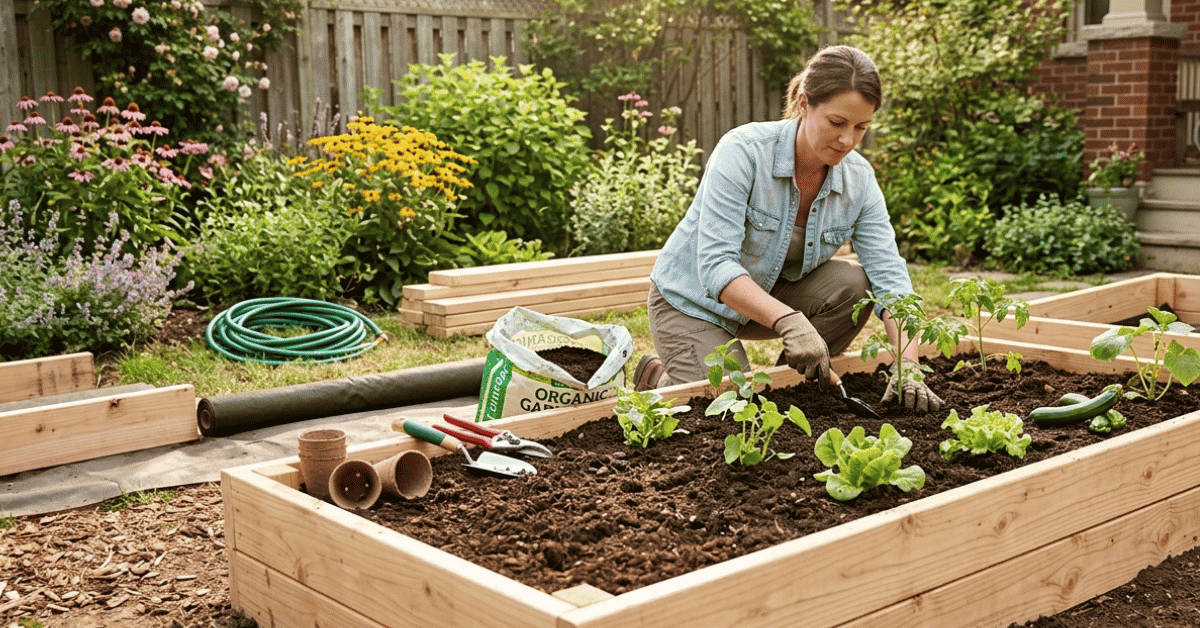
Raised Beds or Ground Beds?
Both work well.
| Option | Benefits |
|---|---|
| Raised Beds | Better drainage, easier maintenance |
| Ground Beds | Lower cost, more planting space |
My first raised bed measured 4 feet by 8 feet. That size was easy to manage and produced plenty of food.
Build Healthy Soil for Strong Growth
Healthy soil makes the biggest difference in any vegetable garden.
Plants feed from the soil. Poor soil creates weak plants. Rich soil produces stronger roots, larger harvests, and fewer problems.
I learned this lesson the hard way.
My first tomato plants struggled badly. The soil looked fine from the surface. After testing it, I discovered it lacked organic matter.
Improve Soil Naturally
Add compost before planting.
Good materials include:
- Finished compost
- Aged manure
- Leaf mold
- Grass clippings
- Organic garden compost
Mix organic matter into the top 6 to 10 inches of soil.
Basic Soil Preparation Steps
- Remove weeds.
- Clear rocks and debris.
- Loosen compacted soil.
- Add compost.
- Mix thoroughly.
- Level the surface.
Common Soil Problems
| Problem | Solution |
|---|---|
| Clay Soil | Add compost regularly |
| Sandy Soil | Increase organic matter |
| Poor Drainage | Build raised beds |
| Low Fertility | Use compost and balanced fertilizer |
Soil improvement continues every season. Good gardeners feed the soil first.
Plant, Water, and Maintain Your Vegetable Garden
Planting day feels exciting. It also brings plenty of questions.
Start with vegetables that are easy to grow.
I often recommend:
- Tomatoes
- Lettuce
- Bush beans
- Zucchini
- Radishes
- Peppers
These crops tend to reward beginners quickly.
Plant at the Correct Spacing
Read seed packets carefully.
Spacing affects:
- Air circulation
- Disease prevention
- Harvest size
- Root growth
Ignoring spacing recommendations often leads to weaker plants.
Water Consistently
Vegetables need steady moisture.
A simple rule works well:
- Water deeply
- Water early morning
- Avoid wet leaves when possible
Deep watering encourages stronger root systems.
Control Weeds Early
Small weeds become big problems fast.
Mulch helps reduce:
- Weed growth
- Soil drying
- Temperature swings
I usually apply two inches of organic mulch around established plants.
Monitor Plant Health
Check plants several times each week.
Look for:
- Yellow leaves
- Holes in foliage
- Wilting
- Pest activity
Early action prevents larger issues later.
Harvest Often
Many vegetables produce more when harvested regularly.
Examples include:
- Beans
- Cucumbers
- Zucchini
- Peppers
Frequent harvesting keeps plants productive.
Small Wins Matter
My first harvest contained only a handful of vegetables. It felt amazing. The flavor was fresher than anything from a grocery store.
Gardening builds confidence one harvest at a time. Start small. Learn steadily. Improve each season. The results often exceed expectations.
Frequently Asked Questions
How much space do I need for a vegetable garden?
A 4×8-foot garden provides enough room for several vegetables. Beginners often find this size easy to manage while still producing a useful harvest.
Can I build a vegetable garden without a backyard?
Yes. Containers, grow bags, balconies, patios, and small outdoor spaces can support many vegetables if they receive enough sunlight and water.
How often should I water a vegetable garden?
Most gardens need deep watering one to three times each week. Weather, soil type, and plant size affect the exact watering schedule.
What vegetables are easiest for beginners?
Lettuce, radishes, bush beans, tomatoes, peppers, and zucchini tend to grow well for new gardeners and provide quick, encouraging results.
How long does it take to harvest vegetables?
Many crops mature within 30 to 90 days. Radishes grow quickly, while tomatoes and peppers often require a longer growing period.