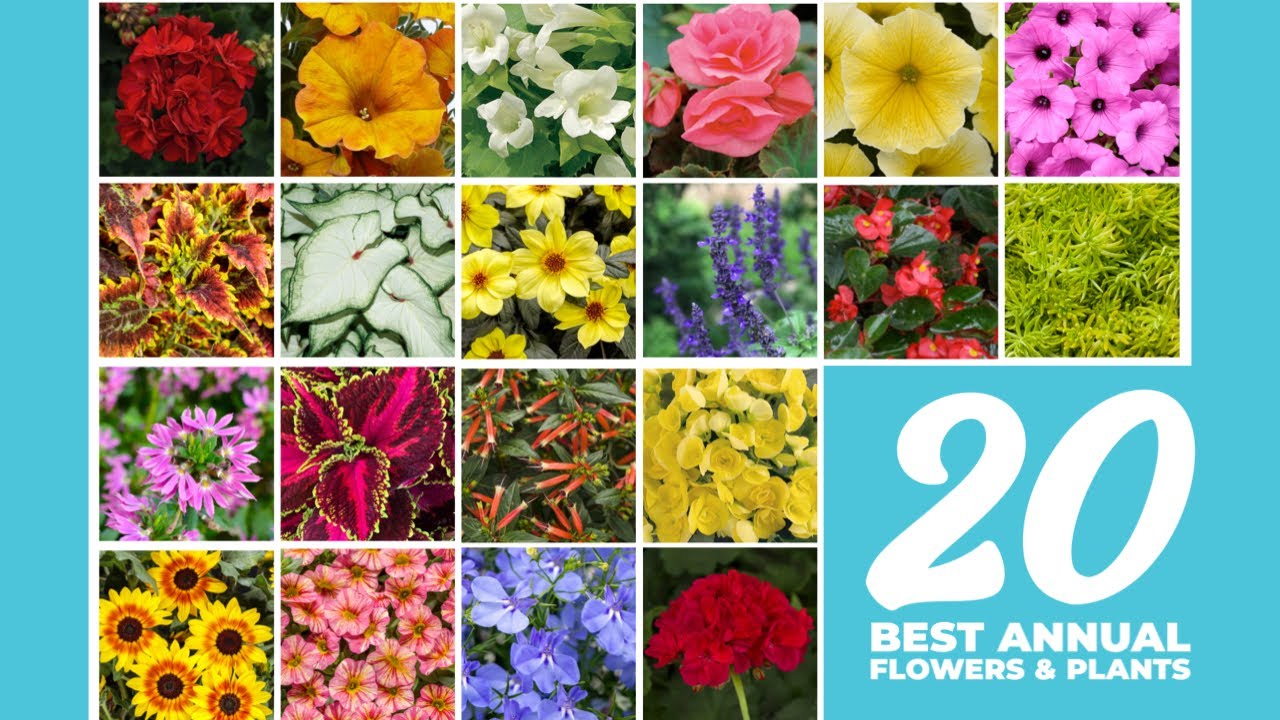
A useful list of annuals flowers includes marigolds, zinnias, petunias, cosmos, sunflowers, impatiens, begonias, snapdragons, and sweet alyssum. These plants grow, bloom, produce seeds, and finish their life cycle in one growing season. The best choice depends on your local climate, sunlight, soil, and the look you want in your garden.
Across the United States, annual flowers bring color to front yards, porch pots, raised beds, and backyard borders. In warm parts of Florida and Texas, some annuals can grow through much of the year. In colder states, gardeners often plant them after the last spring frost and enjoy their blooms until fall frost arrives.
Choosing annuals gets easier when you sort them by growing needs rather than flower color alone. A sunny flower bed can support zinnias and marigolds, while a shaded porch may suit impatiens or wax begonias. Some plants grow from seed with little fuss, while others are easier to start with nursery plants. This guide lists 30 annual flowers and explains where each one fits best.
Source: marthastewart.com
What Are Annual Flowers?
Annual flowers grow from seed, develop roots and leaves, bloom, produce seeds, and complete their life cycle within one growing season. Most do not survive winter outdoors in cold climates. Gardeners plant them each year to fill beds and containers with fresh color.
The word annual describes a plant’s life cycle, not how long its flowers last. A single annual plant may bloom for weeks or months when growing conditions suit it. The exact bloom period depends on the species, variety, weather, and care.
Annuals differ from perennials, which can live for several years, and biennials, which usually complete their life cycle over two growing seasons. Some tender perennials, including lantana, can behave like annuals in places with freezing winters.
Annuals
Complete their life cycle in one growing season. Examples include zinnias, marigolds, and cosmos.
Perennials
Live for multiple years under suitable conditions. Examples include coneflowers, daylilies, and many garden salvias.
Biennials
Usually grow leaves in the first year and flower or set seed in the second. Foxgloves and some hollyhocks fit this pattern.
Why Grow Annual Flowers?
Annuals are useful when you want a garden to look different from one season to the next. You can change the flower colors, plant height, and layout each spring without waiting years for slow-growing plants to fill a space.
Many annuals also bloom during the first growing season. This makes them helpful for new homes, empty garden beds, window boxes, and places where established perennials have not filled in yet.
Quick seasonal color
Many nursery-grown annuals begin flowering soon after planting when weather and care are suitable.
Flexible design
You can replace one color scheme with another each season or try new flower combinations.
Pollinator value
Many flowering annuals offer nectar or pollen to bees, butterflies, and other visiting insects.
List of Annuals Flowers: 30 Types to Grow
The following list includes popular annual flowers for garden beds, borders, hanging baskets, and pots. The plants differ in height, bloom shape, water needs, and light preference, so check the variety label before buying seeds or transplants.
Growing conditions can change from one region to another. A flower that thrives through a mild summer in the Northeast may struggle during a very hot Southern summer. Use the recommendations as a starting point, then match each plant to your local climate.
Source: hips.hearstapps.com
1. Marigold
Marigolds have bright yellow, orange, or gold flowers and suit sunny beds, borders, and containers. French marigolds often stay compact, while African marigolds can grow taller. Give them well-drained soil and enough space for air to move around the leaves.
2. Zinnia
Zinnias produce bold flowers in shades such as pink, red, orange, purple, and white. They prefer full sun and warm weather. They are useful for cutting gardens and can attract butterflies. Water near the soil when possible to help keep the leaves dry.
3. Petunia
Petunias are popular for porch pots, window boxes, and hanging baskets. They come in many colors and growth forms, including spreading types that trail over container edges. Most flower best with ample sunlight, regular water, and well-drained potting mix.
4. Cosmos
Cosmos have delicate, fernlike leaves and open daisy-shaped flowers. They often grow well in sunny beds with average soil. Excess fertilizer can encourage leafy growth at the expense of flowers, so avoid feeding them more than the soil and plant need.
5. Sunflower
Annual sunflowers range from short patio types to tall plants with large flower heads. Most need full sun and room for their roots and stems. Taller varieties may need support in windy places. Check the mature height and spread before planting them near paths.
6. Sweet Alyssum
Sweet alyssum forms low mounds covered with small white, pink, or purple flowers. Its honey-like scent makes it useful near walkways and container edges. It prefers good drainage and can struggle during prolonged extreme heat, though some varieties tolerate warmer weather better.
7. Impatiens
Impatiens are known for colorful blooms in shaded beds, under trees with suitable light, and on covered porches. They need moist but well-drained soil. Many types do poorly in strong afternoon sun, especially where summer heat dries the soil quickly.
8. Wax Begonia
Wax begonias have glossy leaves and small flowers in shades of pink, red, or white. They can grow in partial shade or sun, depending on the variety and climate. In hot regions, afternoon shade can help protect them from stress.
9. Snapdragon
Snapdragons grow upright flower spikes with blooms that open along the stems. They are often grown in spring or fall because they prefer cooler weather. Dwarf varieties work well at the front of borders, while taller types add height to cutting gardens.
10. Nasturtium
Nasturtiums have rounded leaves and vivid orange, yellow, or red flowers. They can spread along the ground or climb, depending on the variety. They usually grow well in sunny spots with moderate soil fertility. Some types are edible, but only eat flowers grown without unsafe chemical treatments.
11. Calendula
Calendula produces cheerful yellow and orange flowers and often grows best in cool weather. It can suit spring and fall beds in many parts of the United States. In areas with hot summers, plants may fade when temperatures rise. Calendula is sometimes called pot marigold, but it is not a true marigold.
12. Annual Vinca
Annual vinca, also called Catharanthus roseus, tolerates heat and can handle dry spells once established. It suits sunny borders and warm-weather containers. Well-drained soil is essential because wet roots can lead to disease. This plant is different from the creeping periwinkle often called vinca.
13. Celosia
Celosia has unusual flower heads that may look like feathers, flames, or soft crests. The blooms can be red, yellow, orange, or pink. These warm-season plants prefer sun and good drainage, making them useful for bright summer beds and cutting gardens.
14. Portulaca
Portulaca, often called moss rose, produces colorful flowers and fleshy leaves. It handles hot, sunny locations and dry soil better than many bedding plants. Use it in rock gardens, shallow pots, or dry borders. Avoid planting it in soil that stays wet.
15. Annual Salvia
Some salvia species and varieties are grown as annuals for their upright spikes of red, blue, purple, or white flowers. They can add height and structure to sunny beds. Check the plant label because salvia includes both annual and perennial species with different needs.
16. Floss Flower
Floss flower, also called ageratum, forms clusters of fuzzy blue, purple, pink, or white blooms. Compact varieties can work along bed edges and in containers. It usually prefers sun to partial shade and evenly moist, well-drained soil.
17. Annual Phlox
Annual phlox, or Phlox drummondii, produces clusters of star-shaped flowers. It can suit borders, cottage-style beds, and containers. Give it sunlight and drainage suited to the variety. Do not confuse it with creeping phlox and other perennial phlox types.
18. Sweet Pea
Sweet peas are climbing annuals known for fragrant flowers in many soft or bright colors. They grow best during cool weather and need a trellis or other support. In hot regions, sowing and flowering may need to take place in late winter or early spring.
19. Larkspur
Annual larkspur produces tall flower spikes and suits cool-season cutting gardens. It grows from seed and generally dislikes being transplanted after its roots become established. Choose a sunny site with good drainage, and check seed packets for local sowing advice.
20. Four O’Clock
Four o’clocks are bushy plants with trumpet-shaped flowers that often open later in the day. They grow well in warm weather and can produce blooms in several colors. Although often grown as annuals in colder places, they may form persistent tubers in mild climates.
21. Cleome
Cleome, also called spider flower, has tall stems and loose clusters of flowers with long stamens. It can create a dramatic backdrop in sunny beds. Plants may self-seed, so remove spent flowers before seed pods mature if you want to limit new seedlings.
22. Globe Amaranth
Globe amaranth produces rounded flower heads in purple, pink, white, or red. It is useful in sunny beds and dried-flower arrangements. Once established, it can tolerate some dry weather, but young plants still need water while their roots develop.
23. Annual Baby’s Breath
Annual baby’s breath, Gypsophila elegans, has airy sprays of small flowers that soften the look of a bouquet or border. It prefers sunny locations and well-drained soil. It is not the same as the better-known perennial baby’s breath used by florists.
24. Balsam
Garden balsam, Impatiens balsamina, has upright stems and flowers that may sit along the stem or among the leaves. It grows well in warm weather with regular moisture. Partial shade can help in very hot locations, while rich soil that stays soggy should be avoided.
25. Annual Gaillardia
Some gaillardia varieties are grown as annuals, although many blanket flowers are perennial. Their red, yellow, and orange blooms suit sunny, dry borders. Check the species or variety label before buying, because plant life span and cold tolerance differ.
26. African Daisy
African daisies have daisy-like flowers in white, purple, pink, orange, or yellow. Some varieties close their flowers in low light or at night. They often prefer sunny sites and well-drained soil, and they may slow down during intense summer heat.
27. Lantana
Lantana produces clusters of small flowers that can change color as they mature. It is often grown as an annual in cold regions and as a perennial shrub in warmer areas. It tolerates heat once established. Some lantana types can become invasive, and the plant is toxic if eaten, so choose varieties carefully and keep it away from children and pets who may chew plants.
28. Pansy
Pansies offer broad, colorful flowers and often perform best in cool weather. They are common choices for fall, winter, and spring displays in many US regions. In areas with very hot summers, pansies may fade or die as temperatures climb.
29. Million Bells
Million bells, or Calibrachoa, produces many small, petunia-like flowers on trailing stems. It works well in hanging baskets and mixed containers. Use a free-draining potting mix and monitor water closely because containers can dry out faster than garden beds.
30. Torenia
Torenia, often called wishbone flower, has small trumpet-shaped blooms and suits shaded or partly shaded spaces. It can work well in pots and along sheltered borders. Keep the soil evenly moist without allowing water to collect around the roots.
Which Annual Flowers Are Best for Beginners?
Marigolds, zinnias, cosmos, sunflowers, and portulaca are useful starting points for many sunny gardens. They offer different heights and flower shapes, and several can be grown from seed. Beginners should still check the local growing season and the needs of the chosen variety.
For a shady porch, try impatiens, wax begonias, or torenia. These flowers need a different plan from sun-loving annuals. A plant that struggles in deep shade will not bloom well just because it receives extra water or fertilizer.
For easy seed growing
Consider zinnias, cosmos, sunflowers, and nasturtiums when local conditions suit them.
For ready-made color
Buy healthy nursery plants of petunias, begonias, impatiens, or annual vinca.
For small spaces
Choose compact marigolds, dwarf zinnias, sweet alyssum, or million bells.
Best Annual Flowers for Full Sun
Full-sun annuals usually need about six or more hours of direct sunlight each day, though the exact need varies by plant and climate. In hot Southern states, a location with strong afternoon sun can be more stressful than a cooler northern site with the same number of daylight hours.
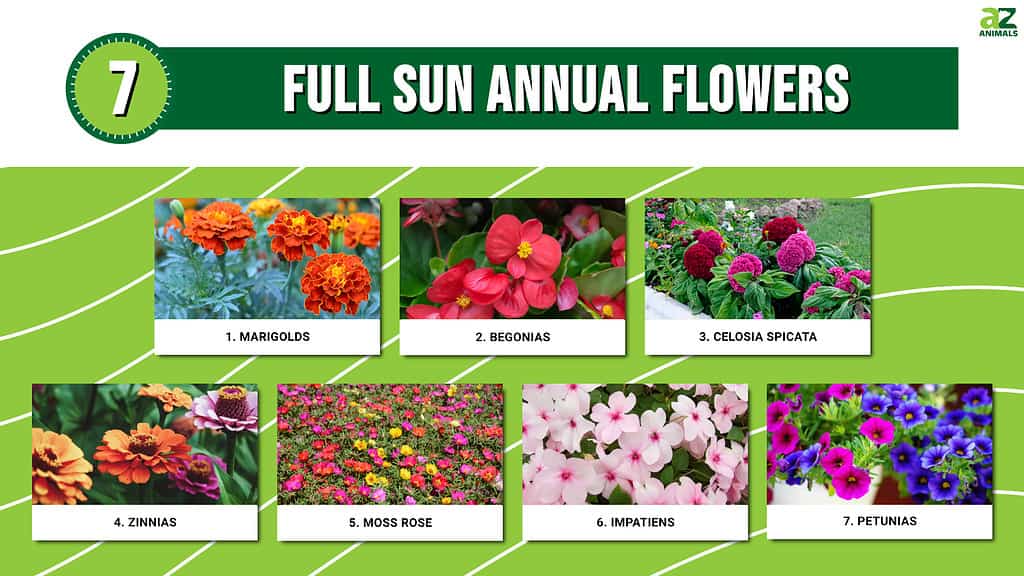
Choose flowers that can handle the heat and light of your garden. Zinnias, marigolds, cosmos, sunflowers, celosia, portulaca, and annual vinca are useful choices for many sunny spots. Lantana may also fit, depending on the variety and local growing conditions.
Source: hips.hearstapps.com
Zinnias
Use them in sunny beds and cutting gardens. Space plants to support airflow and reduce prolonged leaf wetness.
Marigolds
Plant compact types along borders and larger types farther back. They prefer well-drained soil and regular care while young.
Cosmos
Choose cosmos for an airy, informal look. They can grow in average soil without heavy feeding.
Portulaca
Use moss rose in hot, dry locations, shallow planters, or rock gardens where excess water drains away.
Annual Vinca
Choose this heat-tolerant flower for warm summer beds. Avoid poorly drained soil, especially during wet weather.
How to Protect Annuals From Summer Heat
Water deeply enough to reach the root zone, then let the soil drain. During hot, dry spells, containers may need water more often than beds. Check the soil before watering instead of following a fixed schedule that ignores rain and temperature.
A layer of suitable organic mulch can help slow water loss in garden beds. Keep mulch away from direct contact with plant stems. In containers, use a potting mix made for flowers and make sure the drainage holes remain open.
Check soil moisture
Feel the soil near the roots and water when the plant’s needs and soil conditions call for it.
Avoid wet leaves overnight
Water at the base when practical, especially where fungal leaf diseases are common.
Allow room to grow
Follow the spacing on the seed packet or plant label instead of packing plants tightly for instant fullness.
Annual Flowers That Grow in Shade
Shady areas can still support colorful annual flowers, but the amount of light matters. Full shade receives little direct sun, while partial shade gets some direct sunlight or several hours of bright filtered light. A porch that receives morning sun may support more flowers than a spot under a dense evergreen tree.
Impatiens, wax begonias, torenia, and some types of browallia can suit shaded or partly shaded areas. Read the variety label because shade tolerance differs among cultivars. In warm regions, shade can also protect plants from intense afternoon heat.
Source: hips.hearstapps.com
Impatiens
Useful for shaded beds and containers with steady moisture and good drainage.
Wax begonias
Offer glossy leaves and compact flowers. They may tolerate more sun in mild climates than in hot regions.
Torenia
Adds trumpet-shaped blooms to partly shaded pots and borders.
Browallia
Some varieties produce blue, violet, or white flowers in shade or partial shade. Check local availability and growing instructions.
How to Grow Flowers Under Trees
Tree roots compete with flowers for water and nutrients. Before planting, check whether the soil is deep enough for the annuals you choose. Avoid cutting large roots or piling soil against tree trunks to make room for a flower bed.
Use small transplants and water them carefully while they establish. If the area stays dry beneath the tree canopy, choose plants that tolerate those conditions rather than trying to keep moisture-loving flowers wet all the time.
Check the light
Watch the area during the day to see how much direct sun reaches the ground.
Protect tree roots
Plant in existing soil where possible and avoid deep digging near major roots.
Choose plants for the site
Match shade tolerance and water needs to the conditions instead of choosing flowers by color alone.
Annual Flowers for Pots, Hanging Baskets, and Small Gardens
Annual flowers are well suited to containers because their color can be moved around a patio, balcony, front step, or small yard. The key is to match the plant’s mature size to the container and provide enough room for roots to grow.
Petunias, million bells, sweet alyssum, compact marigolds, dwarf zinnias, and trailing nasturtiums are useful container options. For shaded spaces, try begonias, impatiens, or torenia. Large plants such as tall sunflowers usually need deeper, heavier pots than compact bedding flowers.
Source: thespruce.com
Thrillers
Use one taller plant to create height. A compact sunflower or upright celosia may work in a suitably large pot.
Fillers
Add plants that grow into a rounded shape. Compact marigolds and wax begonias can fill this role.
Spillers
Place trailing plants near the edge. Million bells, spreading petunias, and trailing nasturtiums can soften the container’s outline.
How to Choose the Right Container
Use a container with drainage holes and enough volume for the plant’s expected size. A pot that is too small dries out quickly and can restrict root growth. A larger container often holds moisture longer, but the mix must still drain well.
Use fresh potting mix suited to containers rather than dense garden soil. Garden soil can compact in a pot and limit air movement around roots. Water after planting so the mix settles around the roots without leaving the pot standing in a saucer full of water.
For hanging baskets
Choose trailing petunias, million bells, or sweet alyssum where sunlight and climate fit their needs.
For window boxes
Combine compact plants with similar water and light needs so one plant does not suffer while another thrives.
For small patios
Use a few well-sized containers instead of crowding many small pots together. This improves access for watering and care.
Annual Flowers by Season in the United States
The best time to plant annual flowers depends on frost dates, local temperatures, and the plant’s preferred growing season. A calendar date that works in Georgia may be too early in Minnesota. Use local frost-date guidance as a starting point, then follow the instructions for the species and variety.
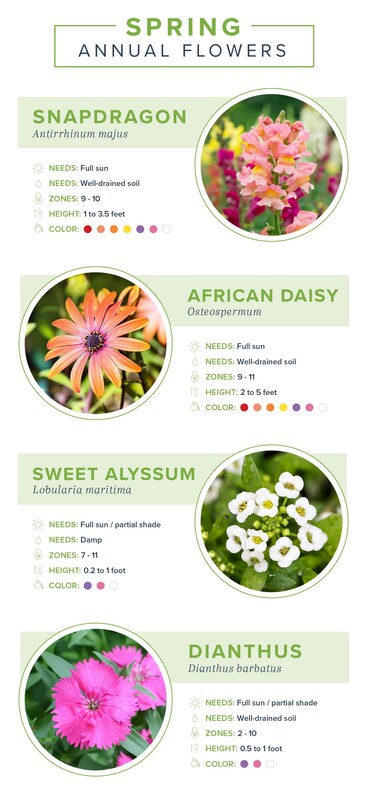
Cool-season flowers such as pansies, snapdragons, calendula, and sweet peas often perform best when temperatures are mild. Warm-season flowers such as zinnias, marigolds, celosia, and portulaca prefer warmer soil and air. Some regions have a long growing season, while others offer only a short window between spring frost and fall frost.
Source: a-z-animals.com
Early spring
In areas where conditions remain cool, consider pansies, snapdragons, calendula, and sweet peas. Protect tender plants from unexpected frost.
After the last spring frost
Plant heat-loving annuals such as zinnias, marigolds, cosmos, and sunflowers once local conditions are suitable.
Summer
Maintain warm-season annuals with suitable water and airflow. In very hot climates, some flowers may pause blooming or benefit from afternoon shade.
Late summer and fall
Where autumn weather is mild, pansies, snapdragons, and calendula can provide cool-season color. Planting dates vary by region.
What About Warm Regions Such as Florida and Texas?
Gardeners in warm regions may have a longer planting season, but extreme heat and humidity can limit the flowers that thrive during midsummer. Cool-season annuals may perform better in fall, winter, or early spring, while heat-tolerant flowers can suit the warmer months.
In frost-prone parts of Texas, planting dates still depend on local conditions. South Florida has a different climate from North Texas, so a statewide calendar may not give enough detail. Check local extension guidance for the best planting windows in your county.
For hot, sunny beds
Consider annual vinca, portulaca, celosia, and suitable zinnia varieties.
For mild cool seasons
Consider pansies, snapdragons, and calendula when temperatures fit their needs.
For humid weather
Allow proper spacing and avoid keeping foliage wet for long periods.
Comparison Table: Which Annual Flower Should You Choose?
Use this table to narrow your choices by light, common garden use, and growing season. These are general guides rather than fixed rules because varieties and local weather can change how a plant performs.
Source: realturfsolutions.com
Marigold
Light: full sun. Common use: borders and beds. Season: warm weather. Growing note: prefers well-drained soil.
Zinnia
Light: full sun. Common use: cutting gardens and beds. Season: warm weather. Growing note: space plants to support airflow.
Cosmos
Light: full sun. Common use: informal beds and cutting gardens. Season: warm weather. Growing note: avoid excessive feeding.
Petunia
Light: usually full sun. Common use: pots and hanging baskets. Season: generally frost-free weather. Growing note: water containers as needed.
Impatiens
Light: shade to partial shade. Common use: shaded beds and pots. Season: warm growing conditions. Growing note: keep soil evenly moist but not soggy.
Wax begonia
Light: partial shade to sun, depending on climate and variety. Common use: borders and containers. Growing note: protect from harsh heat where needed.
Snapdragon
Light: sun to partial sun. Common use: borders and cutting gardens. Season: cool weather. Growing note: heat may shorten flowering.
Portulaca
Light: full sun. Common use: rock gardens and dry containers. Season: warm weather. Growing note: needs good drainage.
Sweet alyssum
Light: sun to partial shade, depending on climate. Common use: edging and containers. Growing note: prolonged heat can reduce flowering.
Annual vinca
Light: full sun to partial shade. Common use: warm-climate beds and pots. Growing note: avoid waterlogged soil.
A Simple Way to Narrow Your List
Start with the planting location, not the flower name. Record whether the area gets full sun, partial shade, or deep shade, then check how quickly its soil dries after rain. These two details rule out many unsuitable choices before you spend money on seeds or nursery plants.
Next, decide whether you want a low border, tall backdrop, trailing container, or cutting garden. Choose a few flowers that share similar needs. A well-matched group is usually easier to care for than a mix of plants with very different water and light requirements.
For a bright border
Try marigolds at the front, zinnias in the middle, and tall sunflowers at the back if the bed has enough space.
For a shady porch
Combine impatiens, wax begonias, and torenia in pots with similar moisture needs.
For a dry, sunny edge
Consider portulaca and suitable annual vinca varieties where drainage is good.
How to Plant and Care for Annual Flowers
Most annual flowers grow well when planted in suitable soil, watered as needed, and given enough light. You do not need a complicated routine, but the first few weeks matter because young plants are still developing roots.
Before planting, read the seed packet or plant label. It should give useful details about spacing, sowing depth, light, and expected plant size. Follow the directions for the specific variety rather than using the same method for every annual.
Source: thespruce.com
1. Choose the site
Check sunlight throughout the day and look for soil that drains well. Avoid spots where water remains pooled after rain unless the chosen plant tolerates wet conditions.
Remove weeds and loosen the planting area. Add compost when it suits the soil and plant needs. A soil test can help identify major nutrient or pH problems before you add fertilizer.
3. Sow seeds or set out transplants
Plant seeds at the depth listed on the packet. For nursery plants, ease the root ball from its pot and set it at the recommended depth without burying the stem too deeply.
4. Water after planting
Water gently to settle the soil around the roots. Keep the root zone from drying out during establishment, but do not leave roots sitting in saturated soil.
5. Space plants correctly
Use the spacing listed for the variety. Crowded plants compete for light and air, and dense foliage can stay wet for longer after rain or watering.
6. Feed only when needed
Use a fertilizer suited to the plant and soil if feeding is needed. Too much nitrogen can promote leaf growth while reducing flowers in some annuals.
7. Remove faded flowers when useful
Deadheading means removing spent blooms before they set seed. It can encourage continued flowering in many annuals, though some varieties flower well without frequent deadheading.
How to Tell Whether Annuals Are Growing Well
Healthy annuals generally produce new leaves and stems after planting. Their color should suit the variety, and the soil should remain moist enough for steady growth without staying waterlogged. Blooming may take time, especially when plants are young or recovering from transplanting.
A lack of flowers does not always mean the plant needs more fertilizer. Too little light, excess nitrogen, heat stress, or the wrong planting season can all reduce blooms. Check the growing conditions before adding more feed.
Yellow leaves
Check watering, drainage, root health, and light before assuming the plant needs fertilizer.
Few flowers
Review sunlight, plant maturity, temperature, and fertilizer use.
Wilting
Check soil moisture and drainage. Both dry roots and waterlogged roots can cause wilting.
Spotted leaves
Look for spreading spots, prolonged leaf wetness, or pest damage. Remove badly affected leaves when appropriate and improve airflow.
Common Mistakes to Avoid When Growing Annuals
Many annual flower problems start with a mismatch between the plant and the site. A sun-loving flower placed in deep shade may produce few blooms, while a shade plant in intense afternoon sun may wilt even when the soil is damp.
Watering and feeding mistakes can cause trouble too. The goal is steady growth, not constant wet soil or rapid growth from heavy fertilizer. Simple checks often reveal the problem before you need to replace the plant.
Source: i.ytimg.com
Planting too early
Warm-season annuals can suffer when planted in cold soil or exposed to frost. Wait until local conditions suit the variety.
Watering on a fixed schedule
Weather, container size, soil type, and plant growth all affect water needs. Check the soil instead of watering every plant the same way.
Ignoring mature size
A tiny transplant can grow much larger than expected. Read the plant label and leave enough room for mature height and spread.
Using too much fertilizer
Excess feeding can lead to weak or leafy growth and may reduce flowering. Follow the label and consider soil conditions.
Choosing flowers by color alone
A beautiful plant may still fail in the wrong light or climate. Check growing needs before purchasing.
Leaving diseased plants crowded together
Remove badly affected plant material when appropriate, avoid unnecessary wetting of foliage, and provide the spacing recommended for the variety.
Are Annual Flowers Safe Around Pets and Children?
Do not assume that a flower is safe to eat just because it grows in a home garden. Some ornamental plants can cause harm if swallowed, and plants treated with pesticides or other garden chemicals may carry additional risks.
Lantana can be toxic if eaten, and many other ornamentals are not suitable as food. Keep plant labels when possible, prevent children and pets from chewing unknown plants, and contact a veterinarian or poison-control service promptly if a potentially harmful plant is swallowed. Do not induce vomiting unless a qualified professional tells you to do so.
Check plant identity
Use the botanical name as well as the common name when checking toxicity because common names can refer to different plants.
Use garden products as labeled
Follow pesticide and fertilizer label directions, including any restrictions for people, pets, and edible plants.
Separate edible flowers from ornamentals
Only eat flowers positively identified as edible and grown under suitable conditions without unsafe treatments.
How to Make Annual Flowers Bloom Longer
Many annuals keep flowering when they receive the right light, enough water, and room to grow. Some naturally bloom for longer periods than others, so choose varieties suited to the length and temperature of your local growing season.
Remove faded flowers from plants that respond well to deadheading. This can prevent energy from going into seed production and encourage more blooms. However, if you want the plants to self-seed or provide seed for next year, leave some flowers to mature.
Keep watering consistent
Avoid repeated cycles of severe drying and heavy soaking. Container plants may dry out faster than flowers planted in the ground.
Use suitable fertilizer
Feed according to plant needs and product directions. More fertilizer does not always mean more flowers.
Prune only when suitable
Pinching or trimming can encourage bushier growth in some annuals. Follow variety-specific guidance because not every plant responds in the same way.
Watch for pests
Inspect leaves and stems for aphids, mites, caterpillars, and other pests. Identify the problem before choosing a control method.
Replace plants at the right time
Some cool-season flowers decline in summer heat, while some warm-season annuals stop growing after cold weather arrives. Replacing them with plants suited to the next season can keep beds colorful.
Should You Save Seeds From Annual Flowers?
You can save seeds from many annual flowers, including open-pollinated zinnias, cosmos, and marigolds. Allow selected flower heads to mature and dry on the plant when conditions permit, then collect and store the seeds in a cool, dry place after they are fully dry.
Seeds from hybrid varieties may not grow into plants that look like the parent. Cross-pollination can also change the traits of saved seed. If you want a close match to a named variety, check whether it is open-pollinated or hybrid before saving seeds.
Select healthy plants
Collect seeds from vigorous plants with the flower traits you want to keep.
Let seeds mature
Wait until seed heads or pods are mature rather than collecting fresh, immature flowers.
Label each batch
Record the plant name and collection season, and keep seeds dry to reduce the risk of mold.
Frequently Asked Questions
Q
What are the most common annual flowers?
Common annual flowers include marigolds, zinnias, petunias, cosmos, sunflowers, impatiens, begonias, snapdragons, sweet alyssum, and nasturtiums. They differ in sunlight, water, temperature, and spacing needs, so the best choice depends on the planting site.
Q
Which annual flowers bloom all summer?
Zinnias, marigolds, petunias, annual vinca, and many varieties of celosia can bloom through much of summer when conditions suit them. Bloom length depends on the variety, climate, water, and care. Some flowers slow down during extreme heat or after frost.
Q
Which annual flowers grow best in full sun?
Zinnias, marigolds, cosmos, sunflowers, portulaca, and many celosias grow well in full sun. Most need well-drained soil and suitable watering. In very hot regions, even sun-loving plants may benefit from protection during harsh afternoon heat, depending on the variety.
Q
Which annual flowers grow well in shade?
Impatiens, wax begonias, torenia, and some browallia varieties can grow in shade or partial shade. The amount of available light matters. Deep shade beneath dense trees may support fewer flowers than a bright porch that receives gentle morning sun.
Q
Do annual flowers come back every year?
Most annual flowers do not survive winter as the same living plant, but some may self-seed and produce new plants the following season. Whether this happens depends on the species, weather, soil, and garden care. Self-seeded plants may not look exactly like the parent, especially when hybrid varieties are involved.
Q
When should I plant annual flowers?
Plant cool-season annuals when temperatures suit their growth, and wait until frost danger has passed and conditions are warm enough for tender annuals. Exact dates vary across the United States. Local frost-date information and the seed packet or plant label provide a better guide than a single national planting date.
Q
Can I grow annual flowers in pots?
Yes. Petunias, million bells, compact marigolds, dwarf zinnias, sweet alyssum, impatiens, and begonias can grow in suitable containers. Use pots with drainage holes, fresh potting mix, and enough space for mature roots. Check moisture often because pots can dry out faster than garden beds.
Q
What is the difference between annual and perennial flowers?
Annual flowers complete their life cycle in one growing season, while perennial flowers can live for several years under suitable conditions. Some plants are treated as annuals in cold climates but grow as perennials in warmer regions. Check the botanical name and local climate before deciding how long a plant will last.
✦ Wrapping Up
Conclusion
This list of annuals flowers offers choices for sunny beds, shaded porches, raised borders, hanging baskets, and small patios. Marigolds, zinnias, cosmos, and sunflowers suit many sunny sites, while impatiens, begonias, and torenia can bring color to shaded spaces. Petunias, million bells, and sweet alyssum are useful options for containers.
The best annual flowers are the ones that match your climate and growing conditions. Check sunlight, drainage, mature size, and planting dates before you buy. With proper spacing, sensible watering, and simple care, annuals can add color and variety to a garden throughout the growing season.
💡 Key Takeaway
Start with three to five annual flowers suited to your space. Check local frost dates, choose plants for the available sunlight, prepare well-drained soil, and follow the spacing and watering guidance on each seed packet or plant label.